

Urolithin A: The Mitochondria Supplement Trend: What Human Trials Actually Show

Key Takeaways
- Urolithin A is not found in food; gut bacteria make it from pomegranate and walnut polyphenols, and only about four in ten people produce meaningful amounts.
- Three randomized human trials totaling just over 200 participants, none longer than four months, form the entire controlled evidence base in people.
- The most consistent human findings are lower blood acylcarnitines and C-reactive protein, both surrogate markers rather than health outcomes.
- Trials in sedentary adults found modestly better muscle endurance and roughly 10 to 12 percent greater hamstring strength versus placebo, but no clear gain in six-minute walk distance or peak aerobic capacity.
- The lifespan claim rests on a 45 percent extension in roundworms; no human study has measured longevity, frailty, cognition or disease.
- Urolithin A holds GRAS status in the U.S. and novel food authorization in the EU, meaning regulators reviewed its safety as a food ingredient, not its effectiveness as a treatment.
Urolithin A is a compound that gut bacteria make from polyphenols in pomegranates, walnuts and berries; it triggers mitophagy, the cell's recycling of worn-out mitochondria. Small randomized trials lasting up to four months found modestly better muscle endurance and strength in older adults, but no clear gains in walking distance or aerobic fitness, and no human data on lifespan or disease. It is a dietary supplement, not an approved medicine.
Scroll through any longevity feed this winter and the same word keeps surfacing between the cold-plunge clips and the protein-powder unboxings: mitochondria. The tiny power plants inside our cells have become a wellness obsession, and one supplement has ridden that wave harder than any other. Urolithin A, a molecule most people had never heard of five years ago, is now pitched as the capsule that “cleans out” old mitochondria and hands you back the muscles of your forties.
As of early 2026, the surge is easy to trace. A handful of small randomized human trials published between 2019 and 2022 gave the compound something most supplement fads never get: measurable results in real people, including muscle biopsies. Influencers took those cautious findings and stretched them into promises about aging itself.
So what did the trials actually measure, who was in them, and how far does the evidence reach? That gap between the lab notebook and the sales pitch is where this story lives.
What is urolithin A, and why is a gut bacteria byproduct suddenly famous?
Nobody eats urolithin A. You make it, or rather your gut bacteria make it for you. When you eat foods rich in ellagitannins, a family of large plant polyphenols found in pomegranates, walnuts, raspberries and strawberries, your stomach and small intestine break them into ellagic acid. Ellagic acid then travels to the colon, where certain bacterial species strip it down further into a much smaller, more absorbable molecule: urolithin A.
That biology matters for one awkward reason. Not everyone carries the right bacteria. Feeding studies in which volunteers drink pomegranate juice and then have their blood and urine tested find that only roughly four in ten people produce urolithin A at meaningful levels. Another sizable group makes small amounts, and a portion produce essentially none. Age, diet and antibiotic exposure all appear to shape which camp you fall into, though the science on predicting your own status is still young.
The supplement industry saw an opening. If dietary production is unreliable, why not skip the bacteria and take the finished molecule directly? That is exactly what the products now trending do. The molecule in the capsules is chemically identical to the one your microbes would make; the difference is that everyone who swallows it absorbs it, producer or not.
The fame, though, comes from a second idea layered on top: that urolithin A does something remarkable once inside the cell. That claim rests on a process called mitophagy, and it is worth understanding before judging any headline.
What changed recently: the timeline behind the trend
The research arc is short enough to hold in your head, and each step is tied to a paper you can read.
In July 2016, a team publishing in Nature Medicine reported that urolithin A extended the lifespan of C. elegans roundworms by roughly 45 percent and improved running endurance in aged mice by around 40 percent. The proposed mechanism was mitophagy, the selective recycling of damaged mitochondria. That single paper seeded the whole field.
In 2019, the first human trial appeared in Nature Metabolism: a four-week safety study in about 60 sedentary older adults. It confirmed the compound was absorbed, was well tolerated, and nudged mitochondrial gene activity in muscle biopsies in the expected direction.
January 2022 brought the study most quoted online, a four-month randomized trial in JAMA Network Open involving 66 middle-aged adults. In May 2022, a second four-month trial in Cell Reports Medicine, nicknamed ATLAS, enrolled 88 adults aged 65 to 90. Both reported improvements in muscle endurance or strength alongside favorable changes in blood markers, and both missed some of their headline functional endpoints against placebo.
Since then, the human literature has grown mainly through mechanistic and pilot work, while animal studies have expanded into immune aging, brain and heart models. Regulatory milestones came earlier: the U.S. Food and Drug Administration issued a “no questions” letter to a 2018 GRAS notification for the ingredient, and the European Union authorized it as a novel food.
What has changed most in the past two years is not the evidence base. It is the volume of the conversation around it.
How urolithin A works: mitophagy in plain language
Picture a city power grid with thousands of small generators. Over decades, some of them leak, sputter and pollute more than they produce. A well-run grid identifies the failing units, dismantles them and recycles the parts. Cells do the same with mitochondria, and the process has a name: mitophagy. Mito for mitochondria, phagy from the Greek for eating.
Mitophagy slows with age. Damaged mitochondria accumulate, produce more reactive oxygen species, the chemically unstable byproducts of energy production, and burn fuel less efficiently. Muscle tissue, which is packed with mitochondria, feels this first. Researchers believe this decline contributes to sarcopenia, the age-related loss of muscle mass and strength that affects a meaningful share of adults over 70.
Urolithin A appears to switch mitophagy back on. In worms, mice and human cell cultures, it activates signaling pathways that tag worn-out mitochondria for disposal and encourages the cell to build fresh ones. In the human trials, that showed up as changes in muscle gene expression and a drop in blood acylcarnitines, fatty-acid fragments that pile up when mitochondria are handling fuel poorly.
Two caveats keep this from being a tidy story. First, mitophagy was never directly measured in living human muscle; the trials relied on gene signatures and blood proxies. Second, turning on a cellular process is not the same as changing how a person feels or functions. The distance between a biopsy and a staircase is long, and the trials are where we find out how much of it the molecule covers.
Urolithin A foods: can pomegranate and walnuts do the job?
Here is the frustrating truth about getting urolithin A from your plate. The foods are excellent, the delivery system is unreliable.
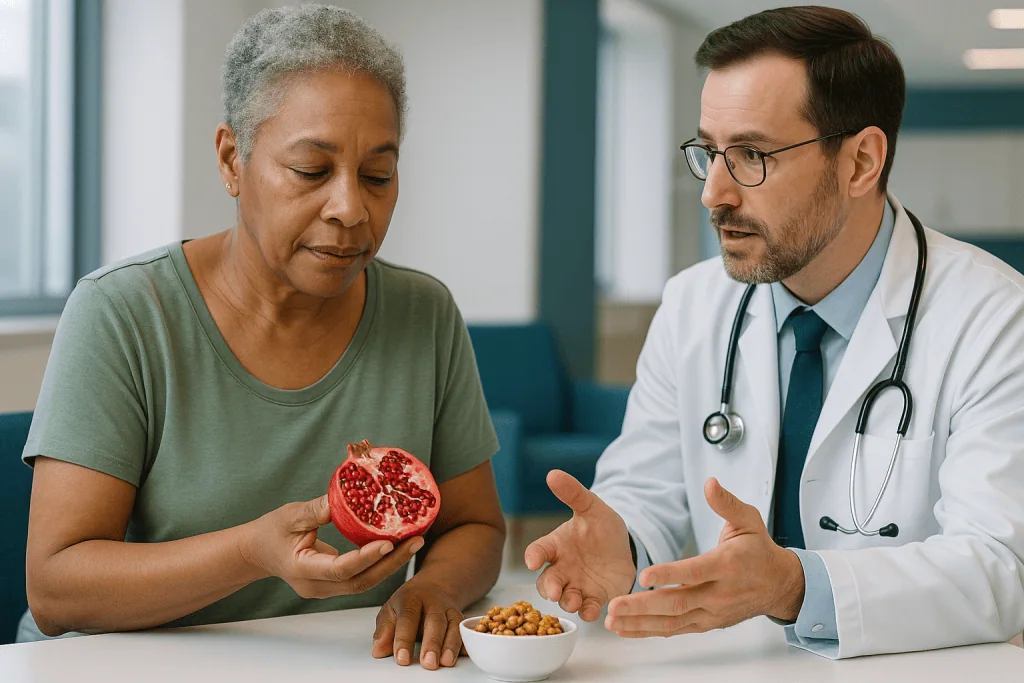
Pomegranate arils and juice, walnuts, raspberries, strawberries, blackberries and some oak-aged wines are the richest sources of ellagitannins. Eating them regularly is a sound choice regardless of urolithin A; these foods bring fiber, potassium, healthy fats and a range of polyphenols with their own observational links to heart and metabolic health.
Whether those ellagitannins become urolithin A depends on your microbiome. In feeding studies, blood levels after a glass of pomegranate juice vary enormously between people, from undetectable to substantial, and the pattern is fairly stable within an individual over time. Researchers have grouped people into high producers, low producers and non-producers. No home test currently tells you which you are, and the bacterial species involved are still being catalogued.
Even for strong producers, food delivers modest amounts. The trials used a purified form that produced blood levels a typical diet would rarely reach. That does not mean food is pointless; it means food and supplement are answering different questions. One asks whether an eating pattern supports healthy aging, and the evidence for pomegranates and nuts within a Mediterranean-style diet is broad and observational. The other asks whether a single concentrated molecule changes measurable outcomes, and that evidence is narrower but randomized.
A practical middle path for most readers: build the foods in as a matter of course, and treat the capsule as a separate decision with its own evidence and its own unknowns.
What the evidence actually says, graded by strength
Medical evidence comes in tiers, and urolithin A sits at different tiers depending on the claim.
Strong preclinical evidence (animals and cells). Multiple independent laboratories have shown that urolithin A induces mitophagy and improves muscle function in aged rodents. Worm lifespan extension is reproducible. This tier is convincing about mechanism and almost useless for predicting human outcomes; most compounds that help mice never help people.
Moderate human evidence for biomarkers. Three randomized, placebo-controlled trials with a combined total of just over 200 participants consistently found reductions in plasma acylcarnitines and, in two trials, lower C-reactive protein, a general blood marker of inflammation. Muscle biopsies showed shifts in mitochondrial gene expression. These are objective, repeatable findings, but they are surrogate markers, not health outcomes.
Limited human evidence for function. Two four-month trials reported statistically significant improvements in muscle endurance (middle-aged adults) and leg muscle strength (adults 65 to 90) compared with placebo. Improvements in six-minute walk distance and peak aerobic capacity occurred within the treated groups but did not clearly beat placebo, meaning the primary functional endpoints were largely not met. Effects were modest, participants were mostly sedentary, and follow-up ended at four months.
No human evidence exists for lifespan, disease prevention, cognitive decline, heart disease, cancer or immune outcomes. Those remain animal findings or hypotheses.
Put plainly: the evidence supports the statement “urolithin A changes mitochondrial markers and may modestly improve muscle performance in older sedentary adults over a few months.” It does not support “urolithin A slows aging.” The gap between those two sentences is the entire trend.
The human trials side by side
Numbers travel badly through social media, so it helps to lay the three key studies next to each other. Each was randomized and placebo-controlled; each was funded in part by a company that sells the ingredient, a common arrangement in supplement research that readers should weigh without dismissing the data.
| Trial | Participants | Duration | What improved vs. placebo | What did not |
|---|---|---|---|---|
| Andreux et al., Nature Metabolism, 2019 | About 60 sedentary adults, roughly 60 to 80 years old | 4 weeks | Safety and tolerability confirmed; mitochondrial gene expression in muscle rose; acylcarnitines fell | Not designed to test strength or endurance |
| Liu et al., JAMA Network Open, 2022 | 66 sedentary, overweight adults aged 40 to 64 | 4 months | Hand and leg muscle endurance; acylcarnitines and C-reactive protein fell | Six-minute walk distance and peak power output (the primary endpoints) |
| Singh et al. (ATLAS), Cell Reports Medicine, 2022 | 88 adults aged 65 to 90 | 4 months | Leg (hamstring) muscle strength, roughly a 10 to 12 percent gain; acylcarnitines and C-reactive protein fell | Six-minute walk distance and peak oxygen uptake did not clearly separate from placebo |
A few patterns jump out. Every trial lasted four months or less. Total enrollment across all three is smaller than a single mid-sized cardiology study. The most consistent wins are in blood and tissue markers; the functional wins are real but narrow, and the outcomes that matter most to daily life, how far and how fast you can walk, were not clearly changed.
None of this makes the trials weak for what they set out to do. It makes them early. Phase 2 studies exist to decide whether a larger, longer trial is worth running, and by that standard urolithin A has earned a bigger test. It has not yet passed one.
Urolithin A benefits: what improved in trials, and what didn't
Sort the claimed benefits into what was measured and what was merely hoped for, and the picture sharpens.
Muscle endurance. In the middle-aged trial, participants performed repeated contractions of hand and leg muscles until fatigue. Those taking urolithin A managed more contractions than the placebo group after four months. The gain was statistically significant but modest; it did not translate into a longer six-minute walk.
Muscle strength. In the ATLAS trial of adults 65 to 90, peak hamstring torque, essentially how hard the back of the thigh can pull, rose by roughly a tenth compared with placebo. For an older adult, hamstring strength matters for standing from a chair and for balance, so this is not trivial. Whether it persists after stopping, or compounds over years, is unknown.
Blood markers. Lower acylcarnitines suggest mitochondria were using fat more efficiently. Lower C-reactive protein suggests less low-grade inflammation. Both moved in the same direction across two trials, which is reassuring about mechanism. Neither is a health outcome; people do not feel their acylcarnitines.
Aerobic fitness. Peak oxygen uptake, the gold-standard measure of cardiorespiratory fitness, improved within treated groups but not convincingly against placebo. For comparison, a structured 12-week aerobic training program in sedentary older adults typically raises this measure by 10 to 20 percent. No supplement trial has come close.
Everything else. Energy, mood, skin, cognition, longevity: not measured in any randomized human trial. Testimonials fill that vacuum, and testimonials are exactly the kind of evidence the placebo group exists to expose.
Does urolithin A slow aging or extend lifespan?
The honest answer is that nobody knows, and the study that could answer it has not been designed, let alone run.
The lifespan claim traces back to worms. C. elegans lives about three weeks, which makes it a superb tool for screening compounds and a poor stand-in for a species that lives eight decades. Dozens of molecules extend worm lifespan; a much smaller number do anything in mice, and none has yet been shown to extend human lifespan in a randomized trial. Urolithin A has cleared the worm hurdle and shown functional gains in old mice. It has not been tested for lifespan even in mice in a definitive way.
In people, a lifespan trial would need thousands of participants followed for a decade or more. Researchers instead reach for proxies: markers of inflammation, muscle function, epigenetic “clocks” that estimate biological age from DNA methylation patterns. Urolithin A has moved some inflammatory and mitochondrial markers over four months. No published randomized trial has reported epigenetic age, frailty incidence, hospitalization or mortality.
There is also a conceptual problem with the phrase “slows aging.” Aging is not one process. Mitochondrial decline is one of roughly a dozen hallmarks scientists have proposed, alongside DNA damage, stem cell exhaustion, cellular senescence and others. A compound that improves one hallmark in one tissue is doing something interesting, not everything.
The most defensible statement, graded honestly: urolithin A targets a plausible aging mechanism, improves related biomarkers in short human trials, and has no demonstrated effect on how long or how well people live. Anyone stating otherwise is speaking beyond the data.
Immune system, brain and heart: where the science is still in animals
The newer excitement around urolithin A has drifted away from muscle and toward organs where the human data thin to nothing.
Immunity. Laboratory work has shown that inducing mitophagy in T cells, the white blood cells that hunt infected or cancerous cells, can shift them toward a longer-lived “memory stem” state that performs better in mouse tumor models. It is elegant biology and a reasonable rationale for future trials. As of early 2026, there is no randomized human evidence that urolithin A improves infection resistance, vaccine response or cancer outcomes in people.
Brain. Mitochondrial dysfunction is implicated in neurodegenerative disease, and rodent models of Alzheimer’s-type pathology have shown improved memory performance and reduced protein buildup with urolithin A. Rodent dementia models have a long record of producing findings that fail in human trials. No controlled human cognition study has been published.
Heart. Animal studies suggest protection of heart muscle cells under stress. In humans, the only cardiovascular-relevant signal is the drop in C-reactive protein, an inflammatory marker that correlates with heart risk in large observational cohorts but is not itself a proven treatment target.
Metabolism. Improved fat oxidation markers in trials have prompted speculation about weight or blood sugar. Neither body weight nor glucose control changed meaningfully in the published human studies.
Preclinical enthusiasm is where every therapy starts, and it is also where most therapies end. The right posture toward these areas is curiosity, not purchase. If and when a trial in people reads out, this magazine will cover it with the same grading applied above.
Urolithin A side effects and safety: what four months can and cannot tell you
On the safety side, the news so far is quietly good, with one large asterisk.
Across the three randomized trials, covering just over 200 participants for up to four months, researchers reported no serious adverse events attributed to urolithin A. Rates of minor complaints, chiefly mild digestive upset, were similar between the supplement and placebo groups. Standard blood panels for liver and kidney function, blood counts and lipids did not show concerning changes. The 2018 GRAS notification submitted to the FDA included animal toxicology at exposures well above those used in trials, and the agency raised no questions.
Now the asterisk. Four months is a snapshot. Many supplement and drug harms emerge only with years of use or in populations excluded from early trials. The urolithin A studies enrolled generally healthy, non-frail adults; they excluded people with significant kidney or liver disease, uncontrolled chronic illness, and those taking certain medications. Pregnant and breastfeeding women were not studied. Children were not studied. Interaction data with prescription medicines is essentially absent.
Two theoretical concerns deserve mention because they are biologically plausible rather than speculative. Any compound that reduces inflammatory markers could, in principle, blunt useful immune responses, though no trial has shown this. And mitophagy activators are being investigated in cancer biology from both directions, as potential helpers and potential complicators of treatment, which is a strong reason for anyone undergoing cancer therapy to involve their oncology team before adding any supplement.
Dietary supplements in the United States do not undergo pre-market approval for safety or effectiveness. Quality varies between manufacturers, and independent third-party testing seals are one of the few signals available to consumers.
Is urolithin A a medicine, a supplement or something in between?
Regulatory labels sound dry, but for this molecule they determine everything about what a seller may claim and what you should expect.
In the United States, urolithin A is sold as a dietary supplement ingredient. It reached that status through the GRAS pathway, short for Generally Recognized As Safe, which evaluates whether an ingredient is safe to eat at intended amounts. It does not evaluate whether the ingredient does anything for your health. In 2018 the FDA reviewed a GRAS notification for urolithin A and issued a letter stating it had no questions, which is the agency’s standard response when it does not challenge the manufacturer’s safety conclusion.
The European Union took a parallel route, authorizing urolithin A as a novel food, a category for ingredients without a significant history of consumption in Europe before 1997 that have passed a safety assessment. Again, safety, not efficacy.
Neither pathway makes urolithin A a medicine. No regulator has approved it to treat, prevent or manage any disease, including sarcopenia. Sellers in the U.S. may make structure-function statements such as “supports mitochondrial health,” accompanied by the mandatory disclaimer that the FDA has not evaluated the claim. They may not lawfully say it treats muscle loss, slows aging or protects against dementia.
Why does this matter to a reader? Because the burden of proof sits differently. A prescription medicine must demonstrate benefit in large trials before it reaches you; a supplement must merely avoid demonstrated harm. Urolithin A has more human data than most supplements on the shelf, which is genuinely to its credit. It still occupies the aisle where the evidence is yours to weigh, not the regulator’s.
Common myths about urolithin A, corrected
Viral claims tend to be half true, which is what makes them stick. Here are the ones circulating most, held against the studies.
“It reverses aging at the cellular level.” Trials show it activates a cellular maintenance process and shifts related markers over four months. Reversal of biological age has not been measured in any randomized human study.
“Clinically proven to boost energy.” No trial used a validated fatigue or energy questionnaire as a primary outcome. Muscle endurance under laboratory testing improved; how participants felt day to day was not the question asked.
“Just eat pomegranates.” Only about four in ten people convert dietary ellagitannins into meaningful urolithin A, and even they reach lower blood levels than the purified form. Pomegranates are a fine food; they are not a reliable delivery vehicle for this specific molecule.
“It’s as good as exercise for mitochondria.” Exercise remains the most powerful known stimulus for building new mitochondria and improving aerobic capacity, with decades of randomized evidence across ages and health states. The trials that tested urolithin A did so in sedentary people and did not compare it with training.
“It’s a drug they don’t want you to know about.” It is a legal food ingredient with published safety reviews, sold openly. Its limitation is not suppression; it is the absence of long-term outcome data.
“More is better.” The trials tested defined amounts under medical supervision. Exceeding what was studied has no evidence behind it and abandons the safety data that exists. Any question about amount belongs with a clinician or pharmacist, not a forum.
Who might reasonably consider it, and who should hold off
A thoughtful clinician does not ask “is this supplement good” but “for whom, for what, and compared with what.” Apply that lens and the population narrows quickly.
The people who most resemble the trial participants are adults in midlife or beyond who are largely sedentary and notice declining muscle endurance. For them, the evidence suggests a modest, measurable effect on muscle performance over a few months with a reassuring short-term safety record. That is a legitimate basis for a conversation with a doctor, particularly one who knows the person’s medications and kidney and liver function.
It is a weaker fit for younger, active adults. Their mitophagy is already stimulated by training, their baseline function is high, and no trial has shown added benefit on top of regular exercise. It is also a poor substitute for the interventions with far stronger evidence for muscle and healthy aging: resistance training two or more days a week, adequate protein intake, and treating conditions like vitamin D deficiency or untreated sleep apnea that quietly sap strength.
Several groups should not start it without explicit medical guidance, because they were excluded from trials and the data simply does not cover them:
- Anyone pregnant, breastfeeding or planning pregnancy.
- People undergoing cancer treatment or with a recent cancer diagnosis.
- Those with significant kidney or liver disease.
- Anyone taking immunosuppressants, blood thinners or multiple prescription medicines.
- Children and adolescents.
One more principle deserves to be said plainly: no supplement decision should involve stopping or adjusting a prescribed medicine. If a product seems to be helping, that is a conversation for the prescriber, not a reason to change course on your own.
When to see a doctor
Two very different situations should send you to a clinician, and it helps to separate them.
The first is the reason people reach for urolithin A in the first place. Muscle weakness and fatigue that feel new, progressive or out of proportion to age are symptoms, not inevitabilities. They can signal treatable conditions: thyroid disorders, anemia, vitamin B12 or D deficiency, depression, sleep apnea, medication side effects, early heart failure or neuromuscular disease. Sarcopenia itself has clinical criteria and responds to structured exercise and nutrition programs. A supplement should never be the first stop for a symptom that has not been evaluated.
Make an appointment promptly if you notice:
- Weakness that is worse on one side of the body or affects the face, or comes with slurred speech or vision change, which needs emergency care.
- Difficulty rising from a chair, climbing stairs or lifting the arms overhead that has developed over weeks to months.
- Unexplained weight loss alongside loss of strength.
- Muscle pain, dark urine or swelling after starting any new supplement.
- Falls, or a new fear of falling.
- Shortness of breath or chest discomfort with activity that once felt easy.
The second situation is anyone already taking urolithin A. Seek care for new rash, persistent digestive symptoms, yellowing of the skin or eyes, unusual bruising or bleeding, or any new symptom you cannot explain. Bring the product to the visit. Many people do not mention supplements to their doctor, and clinicians cannot weigh interactions they do not know about.
Every decision about starting, continuing or combining urolithin A with prescribed treatment belongs with the treating clinician, who can see the whole picture that a magazine article cannot.
Frequently asked questions
What is urolithin A in simple terms?
Urolithin A is a small molecule that certain gut bacteria produce when you eat foods rich in ellagitannins, such as pomegranates, walnuts and raspberries. Inside cells it appears to switch on mitophagy, the process that clears out damaged mitochondria and prompts the cell to build fresh ones. Supplements provide the finished molecule directly, bypassing the bacteria that many people lack.
Which urolithin A foods are the best sources?
Pomegranate arils and juice, walnuts, raspberries, strawberries and blackberries are the richest sources of the ellagitannins your gut converts into urolithin A. The catch is conversion: only roughly 40 percent of people have the bacteria to make meaningful amounts. These foods are still worth eating for fiber, healthy fats and broad polyphenol benefits regardless of how much urolithin A you produce.
What are the proven urolithin A benefits in humans?
In randomized trials lasting up to four months, urolithin A improved muscle endurance in sedentary middle-aged adults and leg strength in adults aged 65 to 90, and it lowered blood markers of mitochondrial inefficiency and inflammation. Six-minute walk distance and peak aerobic fitness did not clearly improve compared with placebo. No human trial has shown benefits for lifespan, cognition, immunity or disease.
What are the known urolithin A side effects?
Across the published trials, urolithin A was well tolerated with no serious adverse events attributed to it; mild digestive upset occurred at rates similar to placebo, and liver and kidney tests stayed stable. Those trials lasted four months or less and excluded pregnant women, children and people with significant chronic illness, so long-term safety and interactions with prescription medicines remain largely unstudied.
Does urolithin A actually slow aging?
There is no human evidence that it does. The claim comes from roundworms, which lived about 45 percent longer, and from aged mice that ran farther. In people, urolithin A has shifted mitochondrial and inflammatory markers over four months, which is interesting biology but not the same as changing how long or how well someone lives. That question would need much larger, longer trials.
Is urolithin A the same as pomegranate extract?
No. Pomegranate extract contains ellagitannins and ellagic acid, the raw materials, while urolithin A is the end product your gut bacteria may or may not make from them. Someone with the right microbes can produce urolithin A from pomegranate; someone without them will not, regardless of how much extract they take. Purified urolithin A supplements deliver the molecule itself.
How long does urolithin A take to work?
In trials, blood markers such as acylcarnitines changed within four weeks, while measurable differences in muscle endurance and strength appeared after four months of daily use. Nobody has studied whether effects continue to build beyond that point or how quickly they fade after stopping. People expecting a noticeable boost in energy within days are describing something the research never measured.
Can urolithin A replace exercise for mitochondrial health?
No. Exercise, particularly a mix of aerobic and resistance training, is the most powerful and best-proven stimulus for building new mitochondria and improving strength and fitness at every age. Urolithin A trials enrolled sedentary people and did not compare the supplement with training. The gains they found were smaller than what a structured exercise program typically delivers over the same period.
Is urolithin A approved by the FDA?
Not as a medicine. The FDA reviewed a GRAS (Generally Recognized As Safe) notification for urolithin A in 2018 and raised no questions, which allows its use as a food and supplement ingredient. That review covered safety, not effectiveness. Dietary supplements are not approved to treat, prevent or manage any disease, and sellers may not lawfully claim that urolithin A does.
Should I talk to my doctor before taking urolithin A?
Yes, especially if you take prescription medicines, have kidney or liver disease, are being treated for cancer, or are pregnant or breastfeeding, because none of those groups were included in the trials. A clinician can also check whether new weakness or fatigue points to a treatable cause. Never stop or adjust a prescribed medicine because of a supplement; that decision belongs with the prescriber.
This article is for general information only and is not a substitute for professional medical advice. Please consult a qualified doctor about your individual situation.

More from the Blog

Peptides for Weight Loss: Which Are Approved Medicines, Which Are Research Chemicals
Peptides for weight loss fall into two very different groups. Semaglutide, tirzepatide and liraglutide are regulated prescription peptides with randomized trial data showing average…
Rapamycin for Longevity: What Animal Data Show and Where Human Evidence Stands
Rapamycin, an FDA-approved transplant medicine (sirolimus), reliably extends lifespan in yeast, worms, flies and mice, including mice started late in life. In humans, evidence…

Senolytics: The “Zombie Cell” Drugs in Trials, and Why They Are Not for Sale
Senolytics are experimental drugs designed to selectively kill senescent cells, the damaged cells that stop dividing but linger and release inflammatory signals. Candidates such…

Biological Age vs Chronological Age: What Epigenetic Clocks Measure, and What They Cannot Yet Tell You
A biological age test estimates how old your body seems, usually by reading chemical marks on DNA called methylation and comparing them with patterns…

Fasting Insulin and Insulin Resistance Tests: What HOMA-IR Means and Who Should Ask for It
A fasting insulin test measures how much insulin your pancreas is releasing after an overnight fast, and HOMA-IR combines that number with fasting glucose…

What Is a Longevity Clinic? What Is Evidence-Based, What Is Marketing, and What to Ask
A longevity clinic is a private medical practice that combines standard preventive care, extensive laboratory testing, imaging and lifestyle coaching with the goal of…