

Vaginoplasty vs Perineoplasty: What Each Repair Addresses and When They Are Combined

Key Takeaways
- Perineoplasty rebuilds the perineum between the vaginal opening and anus, while posterior vaginoplasty repairs the back wall of the vaginal canal; they target neighboring but distinct tissues.
- The NHS reports that most first-time mothers having a vaginal birth experience some tear or episiotomy, and that third- or fourth-degree tears affect roughly 3 in 100 vaginal births.
- Perineorrhaphy is the immediate delivery-room stitching of a tear; perineoplasty is a planned later operation to remove scar and rejoin separated perineal muscles.
- The two repairs are often combined because the lower back vaginal wall anchors to the perineal body, so a rectocele and a deficient perineum usually occur together.
- Mainstream sources recommend pelvic floor muscle training and, for prolapse, a pessary as first-line options, with surgery generally deferred until at least a year after childbirth and after family plans are settled.
- NHS guidance on prolapse surgery describes a typical full recovery window of around six to twelve weeks, with heavy lifting avoided and intercourse resumed only after the post-operative check.
Vaginoplasty and perineoplasty are different operations on neighboring tissue. Perineoplasty rebuilds the perineum, the skin and muscle between the vaginal opening and the anus, usually after childbirth scarring. Vaginoplasty reconstructs or tightens the vaginal canal itself, or creates one in gender-affirming surgery. Surgeons often combine a posterior vaginal repair with perineoplasty when both the back vaginal wall and the perineum have weakened.
The question usually arrives sideways. A woman two years past a difficult delivery mentions to her gynecologist that tampons slip, that sex feels different, that she has a sense of something sitting low in the pelvis. The clinician examines her, nods, and says the words “posterior repair” and “perineoplasty” in the same breath. By the time she gets to the parking lot, she has typed vaginoplasty vs perineoplasty into her phone and found a wall of cosmetic surgery advertisements promising a “rejuvenated” body.
That gap, between what a surgeon means and what the internet sells, is why this explainer exists. These are real operations with real anatomy behind them, and the labels get used loosely even by people who should know better.
What follows is the plain version: what each repair fixes, why they are frequently stitched into a single operation, who tends to benefit, who is usually asked to wait, and what the weeks afterward typically look like, with every number tied to a mainstream source.
Vaginoplasty vs perineoplasty: the one-sentence difference
Here is the shortest honest answer. Perineoplasty repairs the outside; vaginoplasty repairs, reshapes or builds the inside.
The perineum is the bridge of skin, connective tissue and muscle between the vaginal opening and the anus. In a perineoplasty, a surgeon removes scar tissue and reconnects the muscles that meet at that bridge, then closes the skin so the opening of the vagina is supported again. The work sits at the doorway.
Vaginoplasty refers to surgery on the vaginal canal itself. Depending on the surgeon and the setting, that word can mean repairing a weakened back wall of the vagina that has bulged toward the rectum, narrowing a canal that has stretched, or constructing a vagina from scratch as part of gender-affirming surgery. The Cleveland Clinic describes vaginoplasty as a procedure that “creates or repairs” a vagina, which captures how broad the term has become.
Why do people confuse the two? Partly because the tissues are continuous. The lower third of the back vaginal wall rests directly on the perineal body, so a surgeon fixing one often has to address the other. Partly because marketing collapses both into “vaginal rejuvenation,” a phrase with no agreed medical definition.
Think of a house. Perineoplasty is rebuilding the front step and the door frame. Vaginoplasty is work on the hallway behind it. You can do one without the other, but if the hallway floor has sagged and the door frame has split, a builder will usually want to address both in one visit. That is the logic behind the combined operation that most patients searching this topic are actually being offered.
What is a perineoplasty, and what is perineorrhaphy?
Two terms, one region, slightly different jobs.
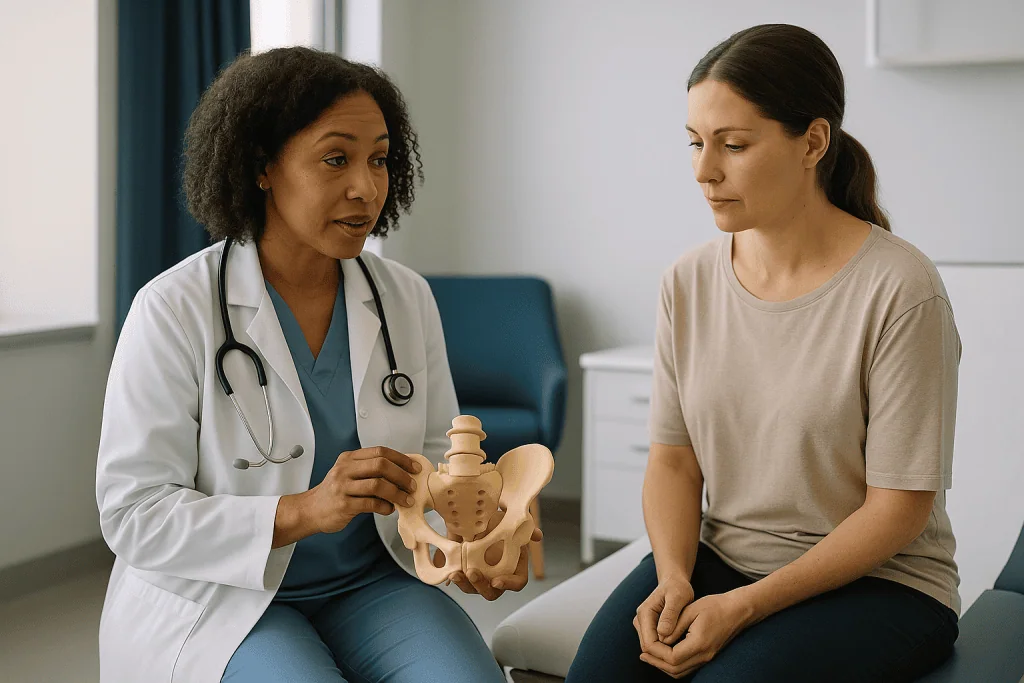
Perineorrhaphy means stitching the perineum. It is the word obstetricians use for the repair done in the delivery room after a tear or an episiotomy (a deliberate surgical cut made to widen the vaginal opening during birth). Perineoplasty means reshaping the perineum, and it describes a planned operation months or years later, when the original repair has healed badly, the muscles have separated, or a thick scar band pulls and hurts.
The NHS notes that most first-time mothers having a vaginal birth will experience some degree of tear, graze or episiotomy, and that third- or fourth-degree tears, which extend into the anal muscle, occur in roughly 3 in 100 vaginal births. The vast majority heal well with the immediate perineorrhaphy. A minority are left with a gaping introitus (the medical name for the vaginal opening), a wide perineum with little muscle bulk, or a painful ridge of scar that makes intercourse or even sitting uncomfortable.
A perineoplasty aims at those problems specifically. The surgeon excises the scar, identifies the two bulbocavernosus and transverse perineal muscles that should meet in the midline, sutures them back together, and rebuilds the perineal body so it has height and resilience again. The skin is closed in a line that usually runs from the lower vaginal opening toward the anus.
It is not a tightening of the entire vagina, and it is not a labiaplasty, which trims the labia minora and is a different conversation entirely. Its reach is the outer two to three centimeters of the opening and the muscular floor beneath it.
What does "vaginoplasty" actually mean? Three very different operations
The single most useful thing a reader can do is ask which vaginoplasty is being discussed, because the word covers at least three procedures with little in common beyond their location.
Reconstructive vaginoplasty is the pelvic floor surgeon’s version. When the back wall of the vagina loses support, the rectum can bulge forward into it, a condition the Mayo Clinic calls posterior vaginal prolapse or rectocele. The repair, also known as posterior colporrhaphy, involves opening the vaginal lining, folding and suturing the stretched connective tissue layer between vagina and rectum, trimming any redundant lining, and closing. An anterior repair does the same for the front wall and bladder.
Cosmetic or “tightening” vaginoplasty uses a similar incision but is marketed to women without prolapse who report looseness. Here the evidence thins out considerably. Mainstream sources do not endorse it as a treatment for a medical condition, and the same operation on healthy tissue carries the same risks.
Gender-affirming vaginoplasty constructs a vaginal canal, labia and clitoris, most commonly using penile and scrotal skin, in a transgender woman or non-binary person. Johns Hopkins and the Cleveland Clinic both describe this surgery in detail; it involves a different team, longer preparation and lifelong aftercare such as dilation, and it has nothing to do with perineoplasty as a childbirth repair.
So when someone online says “I had a vaginoplasty,” the sentence tells you almost nothing without context. For the rest of this article, unless stated otherwise, vaginoplasty means the reconstructive posterior repair, since that is what is usually paired with a perineoplasty.
How each repair works, step by step, in plain language
Both operations are performed through the vagina, with no abdominal incision, usually under general or spinal anesthesia (an injection that numbs the lower body). The patient lies with legs supported, and the surgeon works with headlight and fine instruments.
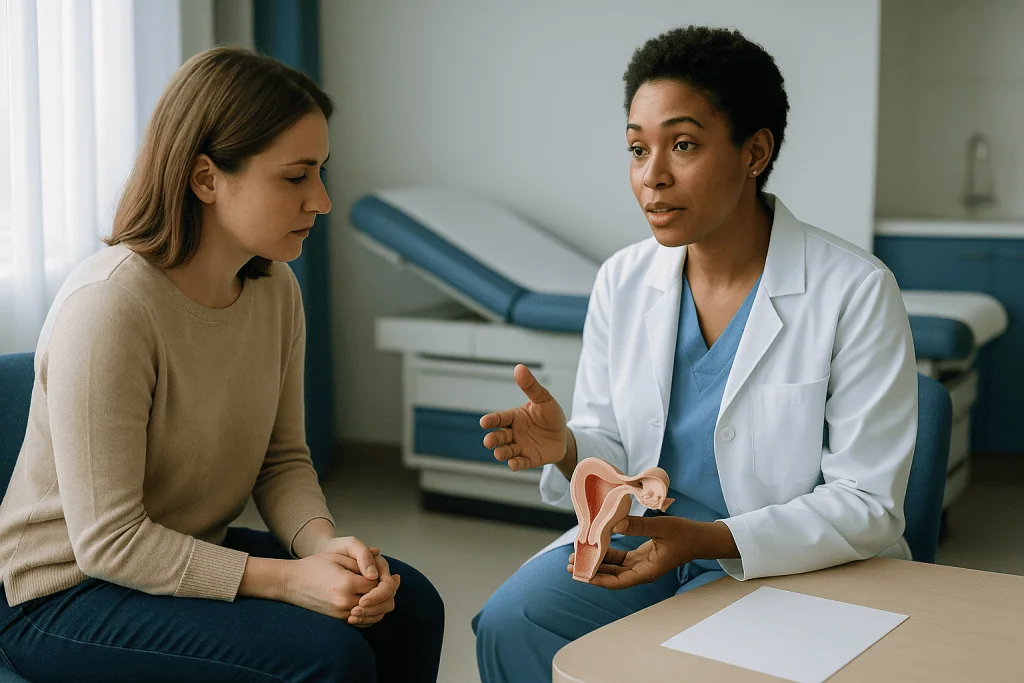
For a posterior vaginoplasty, the surgeon first injects fluid beneath the vaginal lining to lift it off the deeper layer, then makes a vertical incision along the back wall. The lining is peeled sideways to expose the rectovaginal fascia, a sheet of connective tissue that should act like a hammock keeping the rectum in its lane. Where that sheet has thinned or split, the surgeon gathers it with a row of stitches, sometimes in two layers, so it is taut again. Excess lining is trimmed and the wall is closed with dissolvable sutures.
A perineoplasty picks up where that closure ends. A wedge or diamond of scarred skin at the opening is marked and removed. Beneath it the surgeon finds the ends of the perineal muscles, which have often retracted sideways like the cut ends of a rubber band, and brings them together in the midline. This rebuilds the perineal body, the firm triangle you can feel just below the vaginal opening. The skin is then closed so the opening sits at a new, narrower calibre.
Combined, the whole operation typically takes well under two hours, and many pelvic floor units perform it as a day case or with one overnight stay, though the NHS notes that prolapse surgery may require a few days in hospital depending on what is done. The stitches dissolve on their own over several weeks. There is no packing to remove in most cases, although a catheter and vaginal pack may be used overnight.
Posterior vaginal repair and perineoplasty: why they are so often combined
If you read an operation note from a urogynecology unit, the phrase “posterior repair and perineorrhaphy” appears so often it reads as one word. There are three anatomical reasons for that.
First, the tissues share a wall. The lowest part of the back vaginal wall is anchored to the perineal body. When a difficult delivery tears or over-stretches the perineal muscles, the anchor is lost, and the back wall above it loses support too. Repairing the hammock higher up while leaving a gaping, muscle-poor opening below is like re-tiling a roof without fixing the broken gutter; the load path is still wrong.
Second, the symptoms overlap. Mayo Clinic lists the typical complaints of posterior vaginal prolapse as a soft bulge at the opening, a sense of pressure, difficulty emptying the bowel, and a feeling that the vagina is loose. A wide perineum produces the same looseness and lets the bulge appear earlier. Patients rarely arrive with one problem in isolation.
Third, the surgical approach is shared. Both repairs use the same incision line, the same anesthetic and the same recovery. Doing them in one sitting avoids a second anesthetic and a second healing period.
That said, combined is not automatic. A woman with a rectocele but an intact, healthy perineum may need the posterior repair alone. Someone whose only issue is a painful scar band at the opening, with no bulge above it, may be offered perineoplasty by itself. Your examining clinician decides based on what they feel on examination, sometimes supported by a defecography scan, which images the rectum during straining, and the decision about which components to include sits with that team, not with a brochure.
Who is usually a candidate, and who is usually asked to wait
Guideline-level practice across the NHS and major US centers points toward surgery when three conditions line up: there is a physical finding on examination that explains the symptoms, those symptoms genuinely limit daily life, and conservative measures have been tried.
People who commonly go forward include women with a confirmed rectocele that causes bowel-emptying difficulty or a bothersome bulge, women with a perineal scar that causes persistent pain with intercourse, and those with a visibly deficient perineum after a third- or fourth-degree tear who have completed any planned pregnancies.
People who are usually asked to wait, or to try something else first, include:
- Anyone within roughly the first year after childbirth, because the NHS advises that tissue continues to recover and pelvic floor strength improves with training during that time.
- Those planning another pregnancy, since vaginal delivery can undo the repair.
- Women whose main complaint is looseness without a bulge or scar, where pelvic floor muscle training is the first-line approach.
- Smokers, people with uncontrolled diabetes, and anyone with a high body weight that the anesthetist considers a risk, because wound healing and anesthetic safety are affected.
- Those with untreated constipation, which strains a fresh repair.
Conservative options matter here. The NHS recommends supervised pelvic floor exercises as a first step for mild to moderate prolapse, and vaginal pessaries, which are removable silicone supports fitted in clinic, as an alternative to surgery for those who prefer to avoid or defer an operation. Vaginal estrogen may be discussed by a clinician for postmenopausal tissue thinning; it works by restoring thickness and blood supply to the lining, and any decision about it belongs with the prescriber. None of these will rebuild a separated muscle, but they often reduce symptoms enough that surgery can be postponed or avoided.
Vaginoplasty vs perineoplasty at a glance
Sometimes a table says what three paragraphs cannot. The rows below compare the reconstructive posterior vaginoplasty with perineoplasty as typically performed in pelvic floor practice, drawing on descriptions from the Mayo Clinic, NHS and Cleveland Clinic.
| Feature | Posterior vaginoplasty (vaginal repair) | Perineoplasty |
|---|---|---|
| Tissue addressed | Back wall of the vaginal canal and the connective tissue between vagina and rectum | Perineal skin, scar and the muscles between vaginal opening and anus |
| Main problem treated | Rectocele (posterior vaginal prolapse) with bulge or bowel-emptying difficulty | Scarred, widened or painful perineum, usually after a tear or episiotomy |
| Typical incision | Vertical, inside the vagina along the back wall | Diamond or wedge at the vaginal opening extending toward the anus |
| Effect on opening size | Minimal on its own | Narrows the opening and rebuilds the perineal body |
| Effect on canal above the opening | Supports and may narrow the lower back wall | None |
| Anesthesia | General or spinal | General, spinal or occasionally local with sedation |
| Hospital stay | Day case to a few days, per NHS guidance on prolapse surgery | Usually day case |
| Often combined with | Perineoplasty; sometimes anterior repair | Posterior repair |
A few things the table cannot show. The border between the two procedures is blurry in practice; a surgeon repairing a low rectocele will almost always reconstruct at least part of the perineal body, and a thorough perineoplasty extends a short distance up the back wall. The label on the consent form may therefore underdescribe what is done, which is a good reason to ask your surgeon to draw it.
Does perineoplasty make you tighter? What the evidence actually shows
This is the most-searched question on the topic, and it deserves a careful answer rather than a sales pitch.
Mechanically, yes: rebuilding the perineal body and bringing the muscles together narrows the vaginal opening, and patients often describe a firmer sense of support at the entrance afterward. That is a direct consequence of the anatomy being restored.
What the evidence does not show is that this translates into a predictable change in sexual sensation for either partner. Sexual satisfaction depends on arousal, lubrication, pelvic floor muscle tone, relationship factors and pain, far more than on the diameter of the opening. The NHS, in its guidance on cosmetic genital surgery, cautions that there is little high-quality research on “vaginal tightening” procedures and that the benefits are not well established. Mayo Clinic and other mainstream sources frame posterior repair as a treatment for prolapse symptoms, not for sexual tightness.
There is also a risk in the opposite direction. Over-tightening the opening can cause dyspareunia, the medical word for pain during intercourse, and a scar that is too narrow may need revision. Experienced pelvic floor surgeons deliberately aim for a natural calibre, not the smallest one possible.
The honest framing is this: if pain, a gaping introitus or a bulge is interfering with sex, correcting that anatomy can remove the obstacle, and many people find intercourse more comfortable once a painful scar is gone. If the goal is simply to “feel tighter” in the absence of a physical finding, the first-line recommendation from every mainstream source is pelvic floor muscle training, which strengthens the muscles that actually contract during sex and carries no surgical risk.
Can a perineal tear heal itself, and when is surgery needed later?
Most perineal tears do heal on their own, with or without stitches, and the body’s repair is remarkably good. The NHS explains that small first-degree tears involving only skin often need no stitches at all, while second-degree tears involving muscle are stitched in the delivery room and usually heal within about a month. Third- and fourth-degree tears, which involve the anal sphincter, are repaired in theatre by an obstetrician and followed up more closely.
“Healed,” though, is not the same as “restored.” A tear can close cleanly and still leave the perineal muscles attached in the wrong place, or leave a scar that is thick and inelastic. The skin edges meet; the muscle beneath does not. This is why some women feel fine at six weeks and only notice a widened opening, a dragging sensation or pain with intercourse months later, when they return to full activity.
Signs that a healed tear may warrant a surgical opinion include persistent pain at the scar well beyond the first few months, a visible gap where the perineum should be, recurrent tearing of the scar during sex, or stool-emptying difficulty that developed after the birth. None of these are emergencies, and none of them automatically mean surgery, but they are reasons for a pelvic floor assessment rather than waiting it out indefinitely.
Timing matters. Because the NHS and most clinicians advise allowing a full year of recovery and pelvic floor training before considering elective repair, the usual advice is to use that year well: complete a supervised exercise program, treat constipation, and let hormonal changes from breastfeeding settle, since low estrogen thins vaginal tissue and can exaggerate the sense of looseness.
Risks and complications of both repairs in neutral terms
Every operation on the pelvic floor carries a recognisable set of risks, and the combined posterior repair with perineoplasty is no exception. Listing them is not meant to alarm; it is the basis of informed consent.
Common, usually short-lived problems include bleeding, bruising, wound infection and temporary difficulty passing urine, which is why a catheter is sometimes left overnight. Constipation in the first week is near-universal and is actively managed because straining stresses the fresh stitch line.
Less common but more significant risks, as described in NHS and Mayo Clinic guidance on prolapse surgery, include:
- Pain during intercourse, sometimes from a too-narrow opening or a tender scar, which may settle with time or require a release procedure.
- Injury to the rectum or, rarely, formation of a rectovaginal fistula, an abnormal connection between the two.
- Recurrence of prolapse. The NHS notes that prolapse can come back after surgery, and the risk rises with further pregnancies, chronic cough, heavy lifting and obesity.
- Changes in bowel or bladder function, including new urgency.
- Blood clots in the leg or lung, a risk with any pelvic surgery, mitigated by early walking and compression stockings.
- Anesthetic complications.
Mesh is worth a specific word. Transvaginal mesh for posterior prolapse has been withdrawn or heavily restricted in the UK and US because of erosion and pain complications; the standard posterior repair and perineoplasty use the patient’s own tissue and dissolvable sutures, with no implant. Ask your surgeon directly whether any mesh or graft is planned.
Alternatives always exist: continuing conservative management, a pessary, or in some cases no treatment at all if symptoms are mild. Weighing these against the risks is the core of the pre-operative conversation, and the decision belongs with you and your treating team.
Perineoplasty recovery time and what the first weeks usually look like
Recovery has a shape, and knowing it in advance makes the early days less unsettling.
Days one to three. Expect a sore, swollen perineum and a sensation of fullness. Walking to the bathroom is encouraged from the first day. Ice packs wrapped in cloth, short walks and keeping the area clean with plain water after using the toilet are the mainstays. Light vaginal bleeding or discharge is normal as the lining heals.
The first two weeks. Discomfort when sitting is typical, and many people favor a cushion. The first bowel movement is the milestone most patients dread; a soft stool is the goal, and the care team will usually recommend fluids, fibre and a stool softener, with the specifics decided by them. Dissolvable stitches may become visible as they loosen.
Weeks two to six. Most people feel steadily better and return to desk work within two to four weeks, though NHS guidance on pelvic organ prolapse surgery advises avoiding heavy lifting and strenuous exercise for several weeks and typically allows a full recovery period of around six to twelve weeks. Driving is usually permitted once you can brake sharply without pain and are off sedating medication.
Six weeks onward. A post-operative check confirms healing, and intercourse is usually cleared only after that review, commonly around the six-week mark, though individual timelines vary and the surgeon’s examination is what counts. Scar tissue keeps softening for up to a year, so early tightness or tenderness often eases over months.
None of these timeframes are promises; they are typical ranges, and people with larger repairs, concurrent anterior surgery or wound problems take longer. Pelvic floor physiotherapy after surgery is widely recommended to protect the result.
What people often get wrong about vaginoplasty and perineoplasty
Myths cluster around any surgery that touches sexuality, and this pair attracts more than most.
“Vaginoplasty and vaginal rejuvenation are the same thing.” Vaginal rejuvenation is a marketing umbrella with no fixed definition; it is applied to everything from laser treatments to full surgical repair. The NHS and Mayo Clinic describe vaginoplasty and posterior repair as treatments for specific anatomical problems, not as a general refresh.
“Laser or radiofrequency devices do what perineoplasty does without surgery.” Energy-based devices heat tissue and are promoted for laxity and dryness. Mainstream evidence for lasting benefit remains limited and inconsistent, and no device can rejoin separated perineal muscles. They should be described as unproven for tightening, not as a substitute for repair.
“If my tear healed, there is nothing left to fix.” As covered earlier, skin healing and muscle restoration are different things.
“Surgery will fix sexual satisfaction.” It can remove a physical barrier such as pain or a bulge. It cannot change arousal, desire or a relationship, and anyone promising otherwise is overstating the evidence.
“Tighter is always better.” Over-tightening is a recognised complication that causes pain and sometimes needs revision. Surgeons aim for normal, not minimal.
“Perineoplasty is a labiaplasty.” Labiaplasty reshapes the labia minora. Perineoplasty rebuilds the perineum. They are different procedures with different goals, even if some cosmetic practices bundle them.
“I am too old” or “too young.” Age itself is rarely the deciding factor. Tissue quality, symptoms, general health and future pregnancy plans matter more, and the examining clinician weighs all of them.
Questions to ask your care team before vaginoplasty vs perineoplasty surgery
A good consultation leaves you able to describe your own operation to a friend. These questions help get there, and none of them should be unwelcome.
- Exactly what did you find on examination, and which structures will the operation repair? Could you sketch it?
- Are you proposing a posterior repair, a perineoplasty, or both, and why that combination for me?
- What non-surgical options apply to my situation, and have I given them a fair trial?
- Will any mesh, graft or implant material be used?
- What anesthetic do you recommend, and will I stay overnight?
- What are the specific risks for someone with my history, including the chance that the prolapse returns?
- How do you decide the final size of the vaginal opening, and how do you avoid making it too tight?
- When can I expect to return to work, to exercise and to intercourse, and what would make you extend those timelines?
- What will you ask me to do about bowel habits before and after surgery?
- Will I be referred for pelvic floor physiotherapy afterward?
- How will my future plans for pregnancy affect the result?
- Who do I contact, day or night, if something worries me after discharge?
- Are you a gynecologist, a urogynecologist or a plastic surgeon, and how does your training relate to this operation?
Write the answers down. Many people find that the surgeon’s account of the operation differs in useful detail from what they read online, and having a record makes the consent form easier to understand. If any answer is vague on risks, or leans on satisfaction percentages without a source, that is worth noticing. The choice to proceed, to defer or to decline always rests with you and the clinicians examining you.
When to call your doctor after pelvic floor repair
Most recoveries are uneventful, but certain signs need same-day attention, and a few need emergency care. Keep your discharge contact number where you can find it.
Contact your care team promptly if you notice:
- Heavy vaginal bleeding, such as soaking a pad within an hour, or passing large clots.
- A fever, chills, or a wound that becomes increasingly red, hot, swollen or produces foul-smelling discharge.
- Pain that is worsening rather than easing after the first few days, or that is not controlled by what you were prescribed.
- Inability to pass urine, or urine that is cloudy, burns or has blood in it.
- No bowel movement for several days despite the measures you were given, or stool or gas passing from the vagina, which can signal a fistula.
- Stitches that appear to have come apart with a gaping wound.
Seek emergency care immediately for:
- Sudden chest pain, breathlessness or coughing blood, which can indicate a clot in the lung.
- A painful, swollen or red calf, suggesting a clot in the leg.
- Fainting, severe dizziness or a racing heartbeat with heavy bleeding.
- Severe abdominal pain with a rigid, tender belly.
Beyond the immediate recovery, some symptoms justify a routine appointment rather than a crisis call: persistent pain with intercourse after the six-week review, a return of the bulge or pressure sensation, new bowel or bladder difficulty, or a scar that stays tender months later. These are all things a pelvic floor team expects to hear about and can usually address. Whatever you read here, the clinicians who examined you and operated on you are the only people who can judge your particular situation; when in doubt, call.
Frequently asked questions
What is a perineoplasty?
A perineoplasty is a planned operation that rebuilds the perineum, the band of skin and muscle between the vaginal opening and the anus. The surgeon removes scar tissue, rejoins the perineal muscles that have separated, usually after a childbirth tear or episiotomy, and closes the skin so the vaginal opening is supported. It addresses the entrance, not the canal above it.
What is perineorrhaphy, and how is it different from perineoplasty?
Perineorrhaphy is the stitching of the perineum done immediately after a tear or episiotomy during birth. Perineoplasty is a separate, elective reconstruction months or years later when that initial repair has left scarring, a widened opening or separated muscle. Both involve suturing the same region, but the timing, goals and amount of reconstruction differ.
Does perineoplasty make you tighter?
It narrows the vaginal opening and firms the perineal body, so the entrance usually feels more supported. Mainstream guidance, including the NHS, notes there is limited evidence that this changes sexual sensation, which depends on arousal, lubrication and pelvic floor tone far more than opening size. Over-tightening can cause pain, so surgeons aim for a natural calibre.
Can a perineal tear heal itself?
Yes, most perineal tears heal on their own or with delivery-room stitches, and the NHS says they usually heal within about a month. Healing skin does not always mean the muscle beneath has reattached correctly, though. Persistent pain, a visible gap or bowel-emptying difficulty months later are reasons for a pelvic floor assessment, not necessarily for surgery.
What is posterior vaginal repair, and is it the same as vaginoplasty?
Posterior vaginal repair, or posterior colporrhaphy, tightens the connective tissue between the back vaginal wall and the rectum to treat a rectocele. Many clinicians call it a type of reconstructive vaginoplasty. It is distinct from cosmetic tightening and from gender-affirming vaginoplasty, which share the name but not the purpose. Ask your surgeon which one is being proposed.
What is the typical perineoplasty recovery time?
Soreness and swelling are expected for the first two weeks, with a gradual return to desk work after two to four weeks. NHS guidance on pelvic floor surgery describes a full recovery period of around six to twelve weeks, with heavy lifting avoided and intercourse resumed only after the post-operative check. Individual timelines vary and the surgeon sets them.
Why are vaginoplasty and perineoplasty often done together?
Because the lowest part of the back vaginal wall rests on the perineal body, damage to one usually weakens the other. A rectocele repair without rebuilding a deficient perineum leaves the support incomplete, so pelvic floor surgeons commonly combine them through the same incision under one anesthetic. Whether both are needed depends on the examination findings.
Is perineoplasty the same as labiaplasty?
No. Labiaplasty reshapes the labia minora, the inner folds at the sides of the vaginal opening, and is usually cosmetic. Perineoplasty rebuilds the perineum below the opening and is most often reconstructive after childbirth injury. Some cosmetic practices bundle them, but they address different tissues and should be discussed, consented and justified separately.
Can pelvic floor exercises replace surgery for looseness or a mild rectocele?
Often, yes, for mild symptoms. The NHS recommends supervised pelvic floor muscle training as the first step for mild to moderate prolapse and for a sense of looseness without a physical defect. Exercises cannot rejoin separated perineal muscles or close a large rectocele, but they frequently reduce symptoms enough to defer or avoid an operation.
What are the main risks of combined posterior repair and perineoplasty?
Common short-term problems are bleeding, infection, constipation and temporary urinary difficulty. Less common but significant risks described by the NHS and Mayo Clinic include painful intercourse from a tight or tender scar, injury to the rectum, recurrence of prolapse, bowel or bladder changes, and blood clots. Standard repairs use the patient’s own tissue without mesh.
References
- NHS: Pelvic organ prolapse
- NHS: Episiotomy and perineal tears
- NHS: Labiaplasty
- MedlinePlus: Kegel exercises, self-care
This article is for general information only and is not a substitute for professional medical advice. Please consult a qualified doctor about your individual situation.

More from the Blog

What Are the Risks of HD Liposculpture? Contour Irregularity, Fibrosis and Honest Limits
HD liposculpture carries the same risks as any liposuction, including contour irregularity, seroma, bruising, numbness, infection and, rarely, blood clots or fat embolism. Because…

Life After Monsplasty: Scar Placement, Clothing Choices and When Exercise Can Resume
Life after monsplasty usually means a scar tucked low in the pubic hairline or the natural crease, a supportive garment for several weeks, loose…

Questions to Ask Before an Arm Lift: Scar Position, Drains, Garments and Follow-Up
Before an arm lift (brachioplasty), ask your surgeon where the scar will sit and how long it runs, whether drains are planned and what…
Recovery After Lymphedema Surgery: Limb Elevation, Compression and Continuing Physiotherapy
Recovery after lymphedema surgery usually combines three things: keeping the operated limb raised above heart level in the early days, restarting compression garments when…

Exercise After Vaser Liposuction: From Light Walking to Your First Full Workout
Most people can start short, gentle walks within a day of vaser liposuction, add light cardio such as longer walks or easy cycling around…
Who Is a Good Candidate for a Thigh Lift? Skin Laxity, Weight Stability and Smoking
A good thigh lift candidate is an adult whose main problem is loose, sagging thigh skin (skin laxity) rather than excess fat, whose weight…