

Recovery After Lymphedema Surgery: Limb Elevation, Compression and Continuing Physiotherapy
Key Takeaways
- Lymphovenous bypass reroutes lymph into veins, lymph node transfer moves healthy nodes with their blood supply, and liposuction removes accumulated fat; each has a different recovery path.
- Elevating the limb above heart level in the early days lowers pressure in the vessels of the limb so less fluid leaks out and more drains back toward the trunk.
- Compression is usually paused over fresh microsurgical connections and restarted on the surgeon's instruction, but after liposuction it begins in the operating room and continues without a break.
- Cellulitis, a bacterial skin infection, is the complication mainstream sources most consistently flag in lymphedema; spreading redness with fever needs same-day care.
- Supervised, progressive exercise has not been shown to worsen lymphedema, so post-surgical restrictions are about protecting incisions and flaps for a period, not lifelong avoidance.
- Drainage improvements from physiologic procedures are measured over months to years with limb-volume readings, so early swelling after surgery is not a verdict on the result.
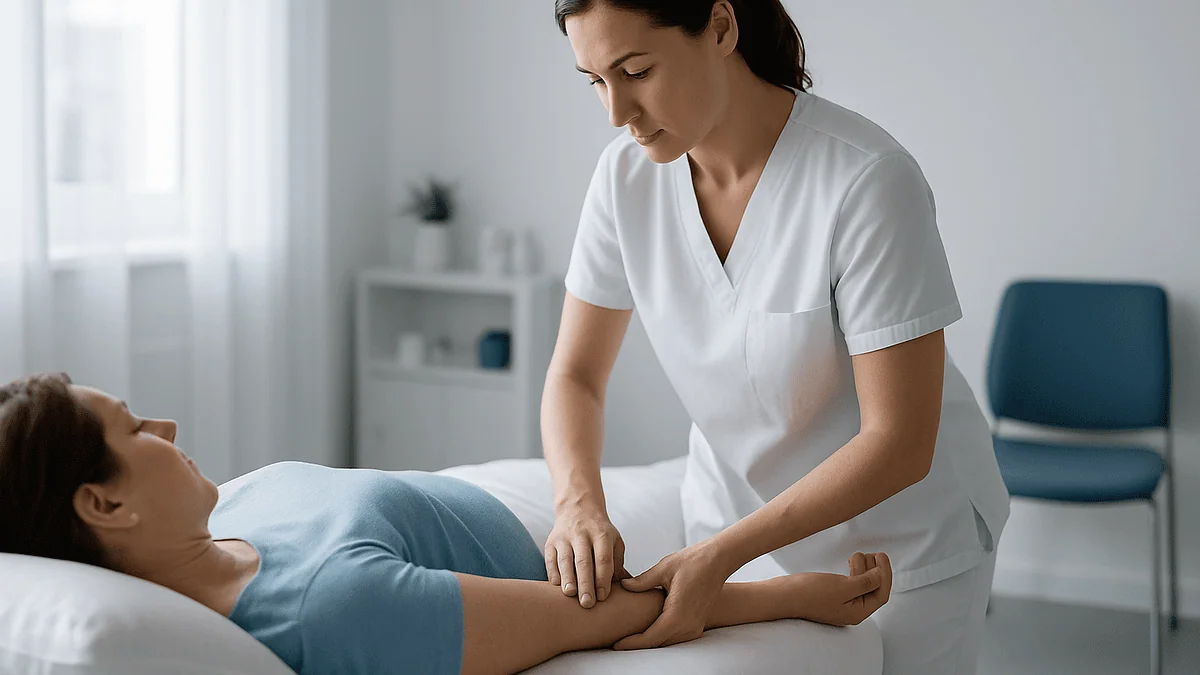
Recovery after lymphedema surgery usually combines three things: keeping the operated limb raised above heart level in the early days, restarting compression garments when the surgical team confirms the incisions can tolerate them, and continuing lifelong physiotherapy such as manual lymphatic drainage, exercise and skin care. Surgery adds to that routine rather than replacing it, and the timeline depends on the procedure performed.
The garment is folded on the arm of the sofa, still in its packet. Two pillows are stacked under a bandaged calf. A woman who has spent six years measuring her leg every Monday morning is now measuring something else: how many days until she is allowed to walk to the mailbox, and whether the pressure sleeve she has worn since her cancer treatment still belongs in her life.
People who ask about lymphedema surgery recovery are rarely asking about the operation itself. They want to know what the following weeks feel like, what they are supposed to do with the limb, and whether the daily work of compression and physiotherapy is finally over. The honest answer is layered, and it is worth taking slowly.
This explainer walks through what the surgeries actually do, why elevation and compression remain central afterwards, and how the therapy routine continues, with the evidence stated plainly where it is strong and where it is thin.
What lymphedema surgery actually does inside the limb
Lymphedema is swelling caused when lymph, the protein-rich fluid that normally drains from tissues through a network of tiny vessels and nodes, cannot leave a limb fast enough. The lymphatic system is that drainage network, and when part of it is removed, scarred by radiation or malformed from birth, fluid pools, the skin thickens and the tissue slowly stiffens. Mayo Clinic and the National Cancer Institute both describe this progression from soft, pitting swelling to firmer, fibrotic tissue over time.
Surgery tries to intervene in one of two ways. Physiologic procedures aim to improve drainage. Lymphovenous bypass, sometimes written LVB or LVA, connects small lymphatic vessels directly to nearby veins under a microscope so fluid can reroute into the bloodstream. Vascularized lymph node transfer, or VLNT, moves a small cluster of healthy lymph nodes with their blood supply from elsewhere in the body into the swollen region, where they may encourage new drainage pathways to form. Mayo Clinic lists both approaches among surgical options for people whose swelling has not responded to conservative care.
Reductive, or debulking, procedures take a different route. Suction-assisted lipectomy, more commonly called liposuction, removes the fatty tissue that accumulates in long-standing lymphedema; excisional debulking removes bulk skin and tissue in severe cases. These operations reduce volume but do not restore drainage, which is why Cleveland Clinic and the NHS both note that compression remains necessary afterwards to hold the result.
Understanding which category your operation falls into changes almost everything about lymphedema surgery recovery. A physiologic procedure is protecting delicate new connections; a reductive one is protecting a newly shaped limb from refilling. The same words, elevation and compression, mean slightly different things in each case.
Why is lymphedema so painful, and does surgery change that?
Strictly speaking, lymphedema is more often described as heavy, tight or aching than as sharply painful, but for many people those sensations add up to something that genuinely hurts. Mayo Clinic lists a feeling of heaviness or tightness, restricted range of motion and recurring infections among the common symptoms. Each has its own mechanism.
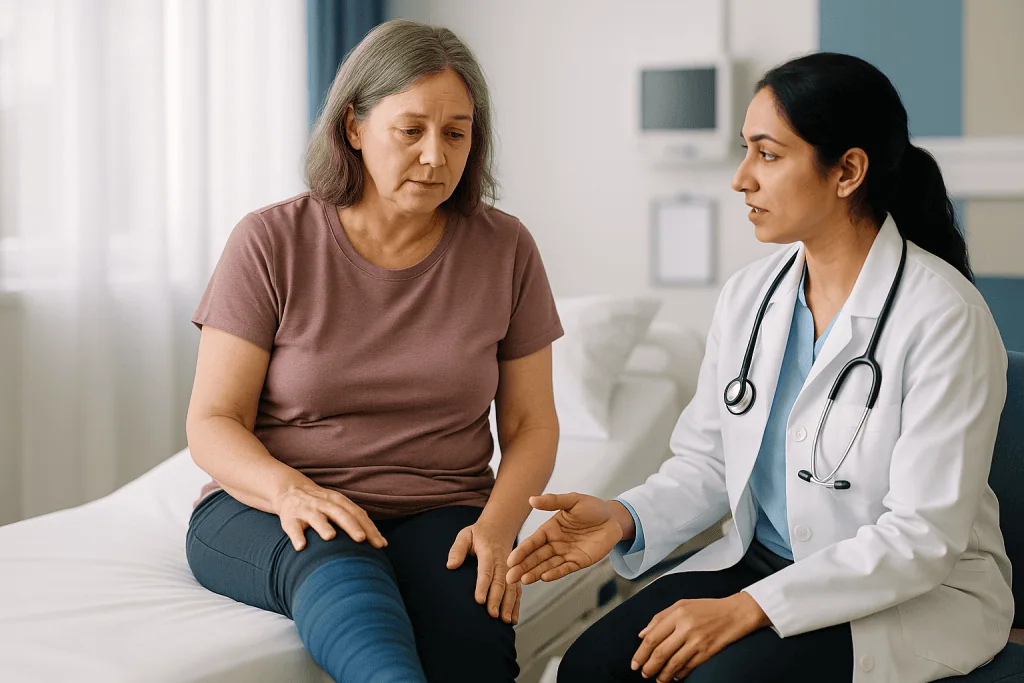
Pressure is the first. Excess fluid stretches skin and pushes on nerves, joints and the sheaths around muscles. A limb that is a size larger than its partner simply weighs more, and the shoulder or hip doing the lifting complains. Fibrosis, the gradual replacement of soft tissue with stiff scar-like protein, adds a second layer: the tissue no longer glides, so ordinary movement pulls. Infection is the third and most underestimated. Cellulitis, a bacterial infection of the skin and the tissue just beneath it, is a recognized complication of lymphedema according to both Mayo Clinic and the NHS, and each episode can leave the limb sorer and more swollen than before.
Does surgery ease this? The evidence here is modest and mostly observational. Reports of physiologic procedures often describe reductions in heaviness and in infection frequency, while liposuction studies typically measure volume rather than pain. None of the mainstream summaries cited here quotes a reliable figure for pain relief, and it would be misleading to invent one. What can be said is that early recovery involves a different kind of discomfort: incision soreness, bruising, tightness from dressings and, after liposuction, a distinctive deep ache in the treated tissue. Your team will manage that with a plan tailored to the procedure, and the prescribing clinician decides what is appropriate. Lasting change in day-to-day heaviness, where it happens, tends to be judged over months rather than weeks.
Who is usually offered lymphedema surgery, and who is asked to wait
Surgery sits near the end of a long pathway, not at the beginning. The NHS describes decongestive lymphatic therapy, a bundle of compression, manual drainage, skin care and exercise, as the mainstay of treatment, and Mayo Clinic frames surgical options as something considered when swelling persists despite that care. Most surgical teams therefore expect to see a documented period of well-fitted compression and supervised therapy before an operation is discussed.
Staging matters too. Cleveland Clinic outlines stages from a latent phase with no visible swelling through to advanced disease with thickened, hardened skin. Physiologic procedures such as lymphovenous bypass depend on finding lymphatic vessels that still work, so they are generally discussed for earlier, softer swelling. Once tissue has become largely fatty and fibrotic, drainage procedures have less to connect to, and reductive surgery may be the more logical conversation.
People are commonly asked to wait, or are not considered candidates for now, in several situations. Active cancer or ongoing cancer treatment usually takes priority. A recent bout of cellulitis needs to fully settle first, because operating into inflamed tissue raises the risk of wound problems. Uncontrolled conditions that impair healing, including poorly managed diabetes, current smoking or significant heart or kidney disease, are typically addressed beforehand. Someone who has not yet been able to wear compression consistently may be asked to build that habit first, since every surgical approach relies on it afterwards.
None of these criteria is a verdict on a person. They are an attempt to match a procedure with a limb that can benefit and a body that can heal, and the treating team weighs them case by case.
What the first days of lymphedema surgery recovery usually look like
The first thing most people notice is how much the limb is being watched. After a lymphovenous bypass, nurses check the incisions and the limb’s color and warmth regularly, because the tiny vessel connections made under the microscope are most vulnerable in the earliest hours. After a lymph node transfer, the transplanted tissue has its own blood supply that must keep flowing, so monitoring is closer still and often involves listening for a pulse in the flap. Following liposuction, attention shifts to bleeding, bruising and the fit of the dressings that wrap the treated area.
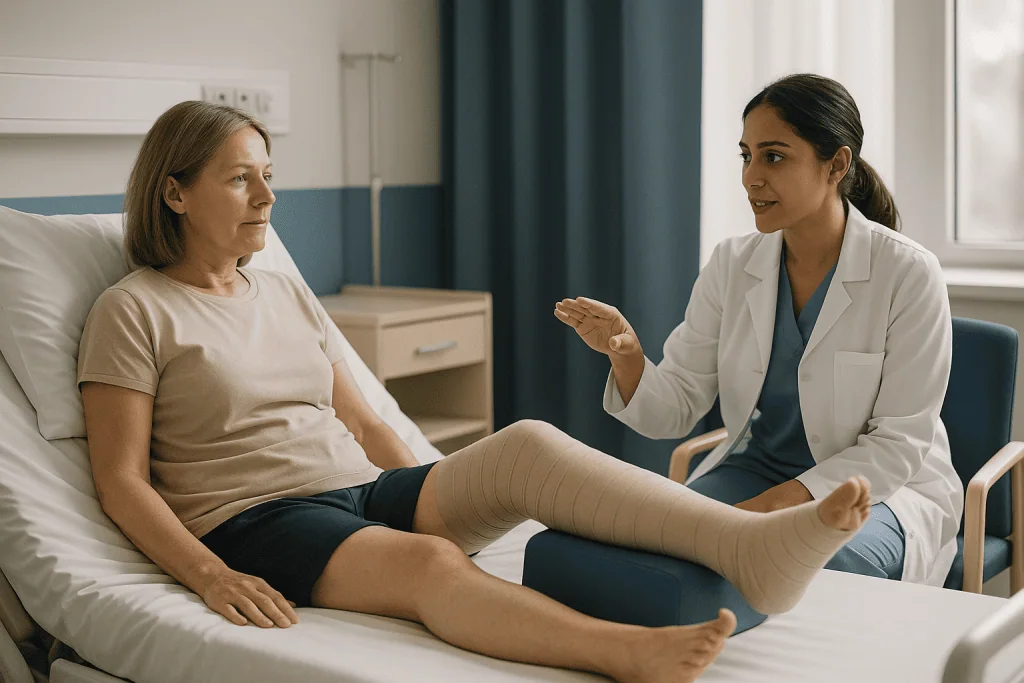
Elevation begins immediately. The limb is propped so that the hand or foot rests above the level of the heart whenever you are lying down, which uses gravity to help fluid drain toward the trunk while the tissue is still swollen from the operation itself. Drains, thin tubes that carry away fluid collecting under the skin, may be present after node transfer or debulking and are removed once output falls to a level the team is happy with.
Early movement is encouraged in a controlled way. Gentle wiggling of fingers or toes, ankle pumps and slow breathing all move lymph and reduce the risk of a deep vein thrombosis, a blood clot in a deep vein of the leg that is a recognized risk after any surgery. Walking short distances usually starts within the first day or two after most procedures, with the exact timing set by the surgeon.
Compression, notably, is often paused rather than continued in this phase. Fresh incisions and new microsurgical connections need to be protected from pressure until the team judges them ready. That pause surprises people who have worn a garment daily for years, and it is temporary.
Lymphovenous bypass recovery time versus lymph node transfer recovery
The two physiologic procedures are often mentioned in the same breath, but their recovery paths diverge. A lymphovenous bypass is performed through several small incisions, typically under an hour or two of anesthesia per site, with no tissue moved from elsewhere. A vascularized lymph node transfer involves two surgical sites, the donor area and the recipient limb, and the transplanted tissue must survive on a reconnected blood supply. Liposuction sits in a third column entirely.
| Aspect | Lymphovenous bypass | Lymph node transfer | Liposuction (reductive) |
|---|---|---|---|
| Incisions | Several small ones on the limb | Donor site plus recipient site | Multiple small access points |
| Main early risk watched | Failure of the tiny connections | Loss of blood flow to the flap; donor-site swelling | Bleeding, bruising, skin irregularity |
| Drains | Rarely | Often, at one or both sites | Sometimes |
| Compression | Paused, then restarted on the surgeon’s instruction | Paused, then restarted; donor site may also need support | Started early and worn continuously to maintain volume loss |
| What defines success | Improved drainage over months | New drainage developing over many months | Volume reduction maintained by lifelong compression |
Timelines follow from these differences. The mainstream sources cited here, including Mayo Clinic and Cleveland Clinic, describe the procedures and their goals but do not publish a single recovery timetable, and any specific week counts in this article should be read as typical ranges quoted by surgical teams rather than guarantees. Lymphovenous bypass recovery time is usually described as the shortest, with light activity resuming within a few weeks. Lymph node transfer recovery adds a healing donor site, so lifting and stretching restrictions tend to run longer, and improvements in drainage, where they occur, are judged over a year or more. After liposuction, the limb is usually wrapped continuously from the outset, and garment wear is the recovery.
Why limb elevation matters more than it sounds
Propping a limb on pillows can feel almost quaint next to microsurgery, yet elevation is one of the few interventions that costs nothing in tissue and works on basic physics. Fluid in the spaces between cells moves along pressure gradients. Raise the hand or foot above the heart and hydrostatic pressure in the veins and lymphatics of that limb falls, so less fluid leaks out of capillaries and more drains back toward the trunk. Mayo Clinic and MedlinePlus both list elevation among the standard measures for reducing lymphedema swelling.
After surgery the stakes rise. Operative swelling adds to the pre-existing lymphedema, and every extra milliliter of fluid increases tension across incisions and around any newly connected vessels. Keeping the limb elevated in the first days reduces that tension while tissue is at its most fragile. For a lymph node transfer it also reduces congestion in the flap, which helps the transplanted tissue maintain healthy blood flow.
Elevation does not mean immobility. A leg draped over a mountain of cushions for eighteen hours a day risks a stiff knee and a clot; a leg propped whenever you sit or lie, with regular ankle pumps and short walks in between, is the pattern most teams describe. For an arm, resting the hand on a pillow at chest height while seated, and on a pillow beside you in bed, achieves the same goal. The wrist should be above the elbow and the elbow above the shoulder whenever practical.
Two practical notes. Avoid bending the limb sharply at the groin or elbow while elevated, since a tight fold can obstruct the very drainage you are encouraging. And the target height is relative to the heart, not the floor, so a recliner with the legs raised but the chest also reclined does the job better than sitting bolt upright with feet on a low stool.
Compression after lymphedema surgery: when it restarts and why it does not stop
Compression is the part of recovery people most hope to leave behind, and it is the part the evidence most firmly says to keep. The NHS describes compression garments as central to long-term lymphedema management because they provide external pressure that limits fluid build-up and supports the muscle pump, the squeezing action of muscles on vessels during movement that helps push lymph along. Surgery does not remove the need for that support; at most, it may change how much is required.
Timing varies by procedure. After lymphovenous bypass and lymph node transfer, most teams pause compression over the operated areas until incisions have closed and the microsurgical connections have had time to settle, then restart with lighter pressure before returning to the usual garment. After liposuction, by contrast, compression is applied in the operating room and worn continuously, because the treated tissue will refill with fluid if it is left unsupported. In every case the surgeon sets the schedule, and it should not be guessed at from a general article.
Fit becomes newly important after surgery. A limb that has changed shape needs re-measuring, and a garment that is too loose does little, while one that is too tight can bunch and create a tourniquet effect at the wrist, ankle or knee. Many people move through a period of bandaging or adjustable wraps before a new fitted garment is ordered. Garments lose their elasticity with washing and wear and need regular replacement, as the NHS notes.
The practical goal of compression after lymphedema surgery is to hold whatever the operation achieved. Think of it less as a sentence and more as the maintenance schedule that protects an investment your body has just made.
Continuing physiotherapy: manual drainage, exercise and skin care
Decongestive therapy is a routine, not an event, and surgery slots into it. The NHS describes the standard program as a combination of compression, manual lymphatic drainage, exercise and skin care, often delivered by a lymphedema therapist and then continued at home. The National Cancer Institute’s patient summary lists the same components.
Manual lymphatic drainage, or MLD, is a gentle skin-stretching massage that encourages lymph to move from congested areas toward regions that still drain well. After surgery, therapists usually avoid the incisions and any transferred tissue at first and work on the trunk and the parts of the limb away from the operation, then gradually include the whole limb once the surgeon clears it. Where the surgery created new drainage routes, some therapists adjust their direction of stroke to encourage fluid toward those routes, though the evidence for any specific post-surgical technique is limited and comes from clinical practice rather than trials.
Exercise resumes in stages. Deep breathing and gentle range-of-motion work begin early because the diaphragm’s movement changes pressure in the chest and assists central lymph flow. Light, repetitive movement in compression follows. Strengthening returns last, and gradually.
Skin care deserves equal weight. Lymphedematous skin is prone to dryness, cracking and infection, and a surgical limb has added entry points for bacteria. Daily moisturizing with a plain unscented product, prompt cleaning of any scratch, careful drying between toes or fingers and protecting the limb from sunburn and insect bites are all part of the routine described by Mayo Clinic and the NHS.
Continuing physiotherapy after surgery is not a sign that the operation fell short. It is the environment in which any surgical benefit has a chance to show.
What exercises should I avoid with lymphedema after surgery?
Older advice told people with lymphedema to avoid lifting anything heavier than a handbag for life. That guidance has softened considerably. The National Cancer Institute’s summary notes that supervised, progressive exercise has not been shown to worsen lymphedema and may help, and Mayo Clinic encourages gentle movement as part of routine management. Restriction after surgery is therefore about timing and protection rather than permanent bans.
In the early weeks, the concern is mechanical. Movements that stretch or load an incision, strain a transferred flap or generate high pressure in the limb are the ones teams typically ask people to hold off on. In practice that means avoiding heavy lifting, pushing or pulling with the operated arm, high-impact activities such as running or jumping for an operated leg, and vigorous stretching across a donor site, until the surgeon lifts each restriction. Swimming and hot tubs wait until incisions are fully closed, both for wound protection and because heat encourages fluid to accumulate.
Once cleared, the pattern to aim for is low load, high repetition, in compression. Walking, cycling on a stationary bike, water-based exercise in a cool pool and light resistance with slow progression are commonly recommended starting points. The key words are gradual and monitored. Increase one variable at a time, watch the limb for a day afterwards and pull back if it feels heavier or looks fuller.
A few activities warrant ongoing caution even long after healing. Anything that risks a cut or puncture to the limb, saunas and prolonged heat exposure, and sudden, unaccustomed bursts of heavy exertion can each provoke swelling or infection. Wearing the garment during exercise and building intensity slowly are the two habits that let most people return to what they enjoy. Your therapist, not a search engine, should sign off on the specifics.
How long does lymphedema surgery recovery take?
This is the question everyone asks and the one the mainstream sources are most reluctant to answer with a number. Mayo Clinic, Cleveland Clinic and the NHS describe the procedures and their goals; none quotes a single recovery duration, and the small published studies vary in how they measure it. The honest response is to separate recovery into layers.
Wound healing is the first layer. Incisions from lymphovenous bypass are small and typically close within the timeframe of any minor skin surgery, a matter of a couple of weeks for the surface. Lymph node transfer adds a donor incision, often in the groin, side of the chest or neck, which can take longer and may be sorer than the limb itself. Liposuction leaves small access points that heal quickly, but bruising and numbness in the treated tissue can persist for weeks to months.
Function is the second layer. Most teams describe a return to desk-based work and light daily activity within a few weeks after bypass, somewhat longer after node transfer because of lifting and stretching restrictions around the donor site, and early mobility after liposuction provided the compression is worn. Driving, manual work and sport each get their own clearance.
Drainage is the slowest layer. New lymphatic connections and any regeneration around transferred nodes are judged over many months, and clinicians commonly measure limb volume at intervals across the first year or two rather than declaring an outcome early. Swelling may fluctuate during that time, sometimes rising before it settles.
Every one of these ranges is a typical description from surgical practice rather than a guarantee, and your own trajectory will depend on the procedure, the stage of your lymphedema and how healing proceeds. The team following you will set the milestones.
Side effects of lymph node removal, risks of surgery and the alternatives
Most people asking about lymphedema surgery have already lived through lymph node removal for cancer, and it helps to name what that earlier surgery did. Removing nodes from the armpit or groin interrupts drainage from the limb they served. The National Cancer Institute’s summary lists lymphedema itself, numbness or tingling in the inner arm or thigh, stiffness of the nearby joint, seroma, which is a pocket of fluid under the skin, and a raised long-term risk of skin infection among the recognized consequences. Knowing this explains why the same limb now needs such careful protection.
Lymphedema surgery carries its own risks, and neutral language serves better than reassurance. Any operation can involve bleeding, infection, poor wound healing, blood clots and anesthetic complications. Lymphovenous bypass adds the possibility that the tiny connections close, in which case swelling continues as before. Lymph node transfer carries a specific and important risk: harvesting nodes can, in a small proportion of cases, cause lymphedema at the donor site, so surgeons map the donor area beforehand to reduce that chance. Liposuction can leave contour irregularities, prolonged numbness and, without strict compression, rapid refilling.
Outcomes across all three approaches rest largely on case series and small cohort studies rather than large randomized trials, so figures quoted in marketing should be treated with caution. Mayo Clinic frames surgery as an option for selected people, not a routine step.
Alternatives remain legitimate choices. Well-fitted compression, manual lymphatic drainage, supervised exercise and meticulous skin care form the standard program described by the NHS, and for many people that program alone keeps swelling and infection under control. Pneumatic compression devices, which inflate sleeves in sequence to move fluid, are another conservative option Mayo Clinic mentions. Deciding between continuing that care and adding surgery is a conversation for the treating team.
What people often get wrong about lymphedema surgery recovery
The most common misunderstanding is that surgery ends the daily routine. It does not. Every mainstream source cited here describes compression and therapy as ongoing, and surgeons generally frame their procedures as a way to make that routine more effective, or in some cases lighter, rather than unnecessary. A person who abandons their garment the week the stitches come out is, in effect, testing whether the operation can work against gravity, salt and time without help.
A second myth runs the other way: that the operated limb must be kept still. Immobility is a genuine hazard after any surgery because it raises the risk of clots and stiffness, and lymph moves best when muscles contract. Gentle, cleared movement is part of recovery from the first day.
Third, many people expect the limb to look smaller as soon as the dressings come off. Operative swelling can make it look larger for a while, particularly after liposuction and node transfer, and drainage improvements from physiologic procedures are measured over months. Judging the result at week two is like judging a garden the week after planting.
Fourth, the idea that pain equals progress. Increasing pain, new redness or heat in the limb are warning signs, not evidence that tissue is healing hard. They warrant a call, not endurance.
Fifth, a belief that one procedure suits everyone. Bypass needs working lymphatic vessels; node transfer needs a safe donor site; liposuction needs a limb where fat rather than fluid dominates. Staging and imaging drive the choice.
Finally, a subtle one: that swelling that returns means the surgery failed. Lymphedema is a chronic condition, and fluctuations with heat, travel, infection or a lapse in compression happen regardless of surgery. The question is the trend over months, tracked with measurements, and that judgement belongs to the team following you.
Questions to ask your care team before and after surgery
A good consultation leaves you with a written plan and fewer surprises. The questions below are the ones patients tell therapists they wish they had asked earlier.
- Which procedure are you proposing, and is it aimed at improving drainage, reducing bulk, or both?
- What imaging showed that my lymphatic vessels or a donor site are suitable, and what did it show about the stage of my lymphedema?
- Exactly when should I stop wearing compression before surgery, and when and how will it restart afterwards?
- How high, and for how many hours a day, should the limb be elevated in the first week, and when can I ease off?
- Will I have drains, and what output level means they can come out?
- Which movements and activities are restricted, for how long, and who signs off each one?
- When can my lymphedema therapist resume manual drainage on the operated limb, and should the technique change?
- How will you measure whether the surgery has helped, at what intervals, and over what period?
- If I develop cellulitis after surgery, whom do I contact and how quickly?
- What is the plan if the procedure does not reduce my swelling?
After the operation, the questions shift. Ask what the incisions should look like at each follow-up, whether numbness or tightness you are feeling is expected, and when your garment should be re-measured. Ask your therapist to write down the home program, including the order of any self-drainage strokes, so that nothing depends on memory during a tired week.
Write the answers down and keep them with your garment prescriptions. Recovery plans evolve, and having the original version helps everyone, including you, notice when and why something changed.
When to call your doctor
Most of recovery is quiet. A small set of signs is not, and knowing them in advance means you can act quickly rather than worry vaguely. Mayo Clinic and the NHS both single out cellulitis as the complication most worth watching for in a lymphedematous limb, and it can develop fast.
Contact your surgical team or seek urgent care the same day if you notice any of the following.
- A spreading area of redness, warmth or tenderness on the limb, especially with fever, chills or feeling generally unwell; these are typical signs of cellulitis, which usually needs prompt treatment.
- Sudden increase in swelling, pain or firmness in the calf or thigh, or in the arm, which can indicate a blood clot.
- Incisions that gape, leak cloudy or foul-smelling fluid, or bleed steadily through a dressing.
- After lymph node transfer, any change in the color, temperature or texture of the transferred tissue, or a sharp rise in swelling at the donor site.
- Chest pain, breathlessness or coughing up blood, which require emergency services immediately.
- Numbness, tingling or pale, cool fingers or toes below a garment or bandage, which may mean it is too tight.
Less urgent but still worth a call within a day or two: swelling that keeps rising over several days despite elevation, a garment that no longer fits, persistent pain that is not improving week to week, or a new rash or skin breakdown under the compression.
Keep your team’s contact details somewhere obvious, and do not wait for a scheduled appointment if something feels wrong. The people who know your surgery and your limb are best placed to judge, and calling early almost always leads to a simpler answer than calling late.
Frequently asked questions
How long does it take to heal from lymphedema surgery?
Skin incisions typically close within a couple of weeks, but full recovery is layered. Light activity often resumes within a few weeks after lymphovenous bypass, longer after lymph node transfer because of the donor site, while improvements in drainage are judged over months to years. These are typical descriptions from surgical practice, not guarantees; your team sets your milestones.
What is a typical lymphovenous bypass recovery time?
Lymphovenous bypass is generally described as having the shortest recovery of the lymphedema procedures because it uses several small incisions and moves no tissue from elsewhere. Most teams describe a return to light daily activity within a few weeks, with compression restarted once incisions have settled. Changes in swelling, where they occur, appear gradually over subsequent months.
What does lymph node transfer recovery involve that bypass does not?
Lymph node transfer creates two surgical sites: the donor area, often the groin, side of the chest or neck, and the recipient limb. The transplanted tissue depends on a reconnected blood supply, so early monitoring is closer, drains are more common, and lifting or stretching restrictions around the donor site tend to last longer than after bypass.
When does compression after lymphedema surgery restart?
It depends on the procedure. After lymphovenous bypass or lymph node transfer, compression over the operated area is usually paused until incisions have closed and the new connections have settled, then reintroduced at lighter pressure. After liposuction, compression is applied immediately and worn continuously to prevent refilling. Follow your surgeon’s written schedule rather than a general timeline.
Why is lymphedema so painful?
The discomfort comes from several sources: excess fluid stretching skin and pressing on nerves and joints, the added weight of a larger limb straining the shoulder or hip, fibrosis that stops tissue gliding during movement, and recurrent cellulitis, a skin infection that lymphedema makes more likely. Mayo Clinic describes heaviness, tightness and restricted motion as typical symptoms.
What exercises should I avoid with lymphedema after surgery?
In the early weeks, teams usually ask you to avoid heavy lifting, pushing or pulling with an operated arm, high-impact activity on an operated leg, vigorous stretching across a donor site, and swimming or hot tubs until incisions have closed. Once cleared, low-load, high-repetition movement in compression is encouraged, and long-term bans are no longer standard advice.
What are the potential side effects of lymph node removal?
The National Cancer Institute lists lymphedema itself, numbness or tingling in the inner arm or thigh, joint stiffness, seroma (a fluid pocket under the skin) and a long-term increase in skin infection risk among recognized effects. In lymph node transfer, harvesting nodes also carries a small risk of new lymphedema at the donor site, which surgeons map beforehand to reduce.
Do I still need physiotherapy after lymphedema surgery?
Yes. Mainstream sources describe decongestive therapy, meaning compression, manual lymphatic drainage, exercise and skin care, as ongoing management for lymphedema, and surgery adds to that routine rather than replacing it. Therapists usually avoid incisions and transferred tissue at first, then return to the full limb once the surgeon clears it.
Why does my limb look bigger after lymphedema surgery?
Operative swelling, bruising and fluid from the procedure itself add to the existing lymphedema, so the limb can look larger for a while, particularly after liposuction or lymph node transfer. This early increase is expected. Any drainage benefit from physiologic procedures develops over months, so teams track limb volume at intervals rather than judging the result early.
Can lymphedema come back after surgery?
Lymphedema is a chronic condition, and swelling can fluctuate with heat, travel, infection or lapses in compression regardless of surgery. A temporary rise does not by itself mean the operation failed; what matters is the measured trend over months. Consistent compression, skin care and therapy give any surgical benefit the best chance of lasting, and your team judges the overall picture.
References
This article is for general information only and is not a substitute for professional medical advice. Please consult a qualified doctor about your individual situation.

More from the Blog

Exercise After Vaser Liposuction: From Light Walking to Your First Full Workout
Most people can start short, gentle walks within a day of vaser liposuction, add light cardio such as longer walks or easy cycling around…
Who Is a Good Candidate for a Thigh Lift? Skin Laxity, Weight Stability and Smoking
A good thigh lift candidate is an adult whose main problem is loose, sagging thigh skin (skin laxity) rather than excess fat, whose weight…

Planning Body Contouring as an International Patient: Stay Length, Companion and Follow-Up
Body contouring abroad planning usually means building in a longer stay than the surgery itself: public guidance suggests avoiding flights for roughly 5–7 days…

Do Fat Transfer Results Last? Why Some Grafted Fat Is Reabsorbed and What Stays
Fat transfer results can last for many years, but not all of the injected fat survives. A proportion is reabsorbed in the first weeks…

Vaginoplasty Complications Explained: Normal Healing Signs vs Reasons to Contact Your Team
Vaginoplasty complications range from common, minor wound-healing issues to uncommon serious problems. Typical healing includes swelling, bruising, light bleeding, odd-smelling discharge and small areas…
Fat Grafting Technology: How Harvested Fat Is Purified Before It Is Injected
Harvested fat is processed for grafting by separating the living fat parcels from everything else drawn out with them: tumescent fluid, blood, oil from…