

Do Fat Transfer Results Last? Why Some Grafted Fat Is Reabsorbed and What Stays

Key Takeaways
- Grafted fat must grow a new blood supply within days, and fat that fails to connect is reabsorbed, which is why early fullness fades.
- Published fat grafting reviews report retention anywhere from roughly a quarter to around four-fifths of injected volume, depending on site and technique.
- The settled result is usually judged at three to six months, once swelling has resolved and surviving fat has established itself.
- Surviving fat behaves like your other fat cells: it enlarges with weight gain and shrinks with weight loss, so a stable weight before surgery matters.
- Fat grafted into the breast can form small lumps and calcifications visible on mammograms, so every imaging service you use needs to know your history.
- Nicotine narrows the tiny vessels a graft depends on, which is why guidance advises stopping smoking before cosmetic surgery.
Fat transfer results can last for many years, but not all of the injected fat survives. A proportion is reabsorbed in the first weeks to months because grafted fat must grow a new blood supply, and published reviews report wide retention ranges. The fat that does survive behaves like living tissue, so it ages, gains and loses volume with your weight, and is usually considered long-lasting rather than guaranteed.
Three months after her procedure, a patient stands in front of the bathroom mirror turning slowly from side to side. The fullness she saw in week two has softened. Not gone, but quieter. Was that the swelling leaving, or the fat itself? And will what she sees now still be there in five years? She types the question most people type: do fat transfer results last?
It is a fair question, and the honest answer is more interesting than a yes or no. Fat transfer, also called fat grafting or lipofilling, moves your own fat from one part of the body to another. Some of that fat dies and is quietly cleared by the body. Some settles in, grows blood vessels and stays for the long haul.
This explainer walks through what actually happens to a fat graft, why the first weeks can be misleading, what the published evidence says about how much stays, and the decisions that belong with your surgical team.
Do fat transfer results last? The honest short answer
Yes, with an asterisk. The fat that survives the transfer is your own living tissue, and living tissue does not have an expiry date. It will not dissolve on a schedule the way a temporary filler does. In that sense the result is durable.
The asterisk is that not all of the fat survives. Every graft loses a share of its volume in the early months, and that share varies from person to person and from site to site. A review of fat grafting science published in the plastic surgery literature describes reported retention anywhere from roughly a quarter of the injected volume up to around four-fifths, depending on technique, recipient area and how the result was measured (NIH, PubMed). That is a wide spread, and it is the single most important thing to understand before surgery.
Why so wide? Fat is not a simple filler. It is a tissue made of fat cells, supporting cells, blood vessels and connective fibers, and each of those parts has to cope with being cut off from its blood supply for a while. The volume you see at week one is a mix of surviving fat, dying fat and ordinary post-surgical swelling. The volume you see at six months is closer to what you will keep.
Surgeons account for this by placing slightly more fat than the final target and by being candid that a second session is sometimes needed. Neither of those is a sign something went wrong. They are built into how the procedure works.
So the practical answer to whether fat transfer results last: the part that takes, lasts. How much takes is the uncertain part, and the rest of this article explains why.
How fat transfer actually works, step by step
A fat transfer has three stages, and each one influences how much volume you keep.
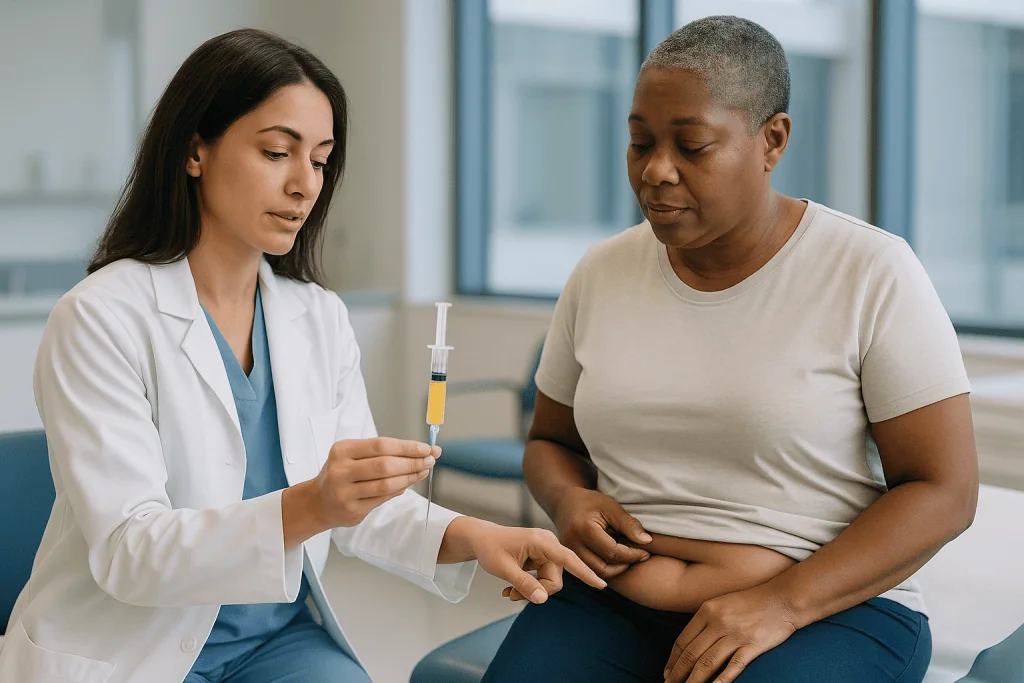
First comes harvest. A thin tube called a cannula is passed under the skin through small incisions, usually in the abdomen, flanks or thighs, and fat is drawn out by gentle suction. This is a form of liposuction, the same technique used to slim an area, but done with lower pressure to avoid damaging the cells (Mayo Clinic). The removed material, known as lipoaspirate, contains fat cells, blood, the numbing fluid used during the procedure and broken cell debris.
Second comes preparation. The lipoaspirate is cleaned so that mostly intact fat is left. Methods include letting it settle, spinning it in a centrifuge (a machine that separates layers by density), rinsing it or passing it through filters. The published literature does not show one preparation method to be clearly superior, and surgeons choose based on training, equipment and the area being treated (NIH, PubMed).
Third comes placement. The prepared fat is injected in many small threads, layered through the tissue with a blunt cannula. This is the part that matters most for survival. A single large pocket of fat would starve in the middle, because nutrients can only diffuse a very short distance. Spreading it in fine ribbons gives each fragment the best chance of touching healthy, blood-rich tissue.
The whole process is usually done under local anesthesia with sedation or under general anesthesia, depending on the volume involved and the site. Small facial grafts take an hour or so; larger body grafts take longer. Your team will explain which applies to you and why.
Why some grafted fat is reabsorbed, and what stays
The moment fat is suctioned out, it loses its blood supply. From then on, each fragment is in a race. It needs to connect to new capillaries in the recipient site before its cells run out of oxygen. Biologists call this neovascularization, which simply means the growth of new blood vessels into the graft.
Fat near the edge of each thread, in contact with living tissue, tends to win that race. Fat in the center of a thicker deposit may not. Cells that do not survive break down, and the body’s clean-up cells gradually remove them over weeks. That clearance is the reabsorption people notice as the early fullness fades.
Two other things happen alongside this. Some dead fat is not fully cleared but walled off, forming small firm areas known as fat necrosis, or fluid-filled pockets called oil cysts. These are usually harmless but can feel like lumps and can be visible on imaging, which matters in the breast (discussed later). Separately, the swelling that any surgery causes resolves in its own time, which further reduces the apparent volume.
What stays is fat that successfully plugged into the local circulation. Once it has a blood supply, it is no different from the fat that was always there. It takes part in normal metabolism, responds to hormones and changes size when your overall body fat changes.
This is why surgeons talk about the settled result rather than the immediate one. Most teams judge the stable outcome at around three to six months, once swelling has resolved and the surviving fat has established itself (NIH, PubMed). Earlier than that, you are looking at a work in progress.
Are fat grafting results permanent?
Permanent is a strong word in medicine, and it deserves careful handling here. The surviving graft is permanent in the sense that it does not dissolve or get metabolized on a timetable. A synthetic filler is broken down by the body over months; grafted fat that has taken is not.

Yet permanent should not be confused with unchanging. Three forces keep working on the result after it has settled.
Aging is the first. The face and body continue to lose volume, bone and skin elasticity over the decades. A fat graft placed in the cheeks does not stop that process. It gives you a different starting point and then ages with you.
Body weight is the second. Because the grafted cells are living fat, they enlarge when you gain weight and shrink when you lose it. The Mayo Clinic notes the same principle for liposuction: the fat cells that are removed do not come back, but the cells that remain can grow if weight increases (Mayo Clinic). The reverse is true for a graft, which can shrink with significant weight loss.
Technique and biology are the third. Variation in how fat was harvested, prepared and placed, together with factors such as smoking, blood flow in the recipient site and prior radiation treatment, all influence how much takes in the first place.
The fair way to describe fat grafting, then, is long-lasting and dynamic rather than permanent and fixed. People who understand that going in tend to interpret the changes they see over the years correctly, as normal biology rather than a failed procedure.
How much grafted fat typically survives, by treatment area
Numbers help here, as long as they are read as ranges from published series rather than guarantees. Retention is measured in different ways across studies, including photographs, three-dimensional scanning and MRI, which is one reason the spread is so wide. The figures below summarize the broad patterns described in a plastic surgery review of fat grafting science (NIH, PubMed).
| Treatment area | Typical reasons for variation | Pattern described in the literature |
|---|---|---|
| Face (cheeks, temples, under-eye, lips) | Small volumes, highly mobile areas around the mouth, thin overlying skin | Reported retention is highly variable; small threads in still areas tend to do better than larger volumes in mobile areas |
| Breast | Larger volumes, relies on how much native tissue can host the graft, prior surgery or radiation | Often quoted in the middle of the overall range; staged sessions are common for larger changes |
| Buttocks and hips | Largest volumes, deep placement, pressure from sitting during healing | Early volume loss is expected; placement depth is a safety as well as a survival issue |
| Hands | Very thin tissue, little surrounding fat | Modest, with results judged more on skin quality than volume |
Across all sites, the review describes overall retention from roughly one quarter to around four fifths of injected volume (NIH, PubMed). No area reliably sits at the top of that range, and no honest surgeon will promise where you will land.
The useful takeaway is less about the exact percentage and more about the shape of the curve: most loss happens early, then the volume stabilizes. If you are measuring your result, measure it at six months, not six days.
Who fat transfer is usually for, and who is usually asked to wait
Fat transfer suits people who want a modest, natural-feeling change in volume and who have a donor area with enough fat to spare. Common uses include restoring hollows in the face, softening contour irregularities after previous liposuction or injury, adding volume to the breast or buttocks, and improving symmetry after breast reconstruction (MedlinePlus).
It tends to work best in people who are at a stable weight, do not smoke, and have realistic expectations about the two-step nature of the result: an immediate change, then a settling period.
Several groups are usually asked to wait or to consider other options first.
- People who plan significant weight loss. Grafted fat shrinks with the rest of your fat, so grafting before a major change makes the final result unpredictable.
- People who smoke or use nicotine. Nicotine narrows small blood vessels, and the graft depends entirely on new small blood vessels. The NHS advises stopping smoking before any cosmetic surgery to reduce complications (NHS).
- People with very little body fat. There may not be enough donor tissue to harvest safely.
- People with uncontrolled medical conditions, active infection, or bleeding disorders, until these are managed.
- Anyone being treated for or recently treated for breast cancer, where timing and imaging considerations mean the decision belongs with the oncology and reconstructive teams together.
Age itself is not a barrier. What matters more is skin quality, general health and the stability of your weight.
None of this is a checklist you can self-assess from. A consultation involves examining the donor and recipient areas, reviewing your health history and talking frankly about what the procedure can and cannot deliver. The decision to proceed, wait or choose something else sits with you and your treating team.
What the first days and weeks after fat transfer usually look like
Recovery has two zones to think about: where the fat came from and where it went.
The donor area behaves like any liposuction site. Expect bruising, swelling and a dull ache for the first week or two, with a compression garment often worn to limit swelling and support the skin. The Mayo Clinic notes that swelling after liposuction typically improves over a few weeks, though the final shape of the area can take several months to settle (Mayo Clinic). Small amounts of fluid leaking from the incisions in the first day or two is normal.
The recipient area is where the early picture can mislead. In the first week the treated area usually looks fuller than the final result, because it holds the graft plus the fluid used during injection plus ordinary surgical swelling. Facial grafts can look noticeably puffy for a week or two. Over the following weeks that swelling leaves and some of the graft is reabsorbed, so the area softens.
A typical timeline many patients describe runs like this: the most visible swelling and bruising in days one to seven, a return to desk-based work within a week or two depending on the site, gradual settling across weeks three to twelve, and a stable result at roughly three to six months (NIH, PubMed; Cleveland Clinic). These are ranges, not promises, and larger body grafts take longer than small facial ones.
Practical care in this period usually centers on protecting the graft: avoiding direct pressure on the treated area, not applying heat or cold packs directly to it unless told to, and avoiding vigorous exercise until cleared. Your team will give instructions specific to your procedure, and those override any general guide.
What if I lose weight after fat transfer?
This is one of the most common questions, and the answer follows directly from how grafted fat behaves. Once it has a blood supply, it is ordinary fat. Ordinary fat responds to your overall energy balance. Lose a meaningful amount of weight and the grafted cells, like every other fat cell you own, give up some of their stored fat and get smaller.
The number of cells does not change with weight loss; their size does. That distinction matters. If you regain the weight, the cells can enlarge again. The Mayo Clinic describes the same principle after liposuction, where remaining fat cells grow with weight gain (Mayo Clinic). The graft is simply a population of fat cells that now lives in a new address.
How much a graft shrinks with weight loss depends partly on where the fat was harvested. Fat from different parts of the body has slightly different metabolic behavior, and the grafted cells are thought to keep some of the characteristics of their donor site. In practice, a small weight change of a few pounds is unlikely to be visible in the result. A large change, such as the loss that follows bariatric surgery or a major lifestyle shift, can noticeably reduce the volume.
This is why surgeons prefer to graft people who are at a weight they can maintain. It is not about judgment; it is about predictability. If you are planning to lose weight, the sensible sequence is usually to reach your target first, hold it for a period, then consider grafting.
If weight loss after grafting has reduced your result, a further session is sometimes possible once your weight is stable again. Whether that is appropriate is a conversation with your surgeon, who will weigh donor fat availability and the condition of the treated tissue.
How painful is breast fat transfer, and what does recovery involve?
Most people describe breast fat transfer as uncomfortable rather than severely painful, and much of the discomfort comes from the donor area rather than the breast itself.
The breast receives fat through a few tiny entry points, placed in many fine threads. Patients commonly report tightness, tenderness and a bruised feeling for the first week or two, which gradually eases. The abdomen, flanks or thighs, where the fat was taken, tend to be sorer, with the deep ache typical of liposuction. The Cleveland Clinic describes liposuction recovery as involving bruising, swelling and soreness that improves over the first few weeks (Cleveland Clinic).
Pain relief is usually managed with medicines prescribed or recommended by the surgical team, with the choice and timing left to them based on your history. Compression garments on the donor site help with swelling and comfort. A soft, supportive bra without underwire is often advised for the breast.
Two things are specific to the breast and worth knowing in advance.
The first is lumps. Because some grafted fat forms small areas of fat necrosis or oil cysts, you may feel firm nodules in the months after surgery. These are usually benign, but any new breast lump should be assessed rather than assumed, and your surgeon will tell you what to expect.
The second is imaging. Fat necrosis and tiny calcifications from grafted fat can appear on mammograms. Radiologists are experienced at distinguishing these from suspicious changes, but they need to know you have had fat grafting. Tell every imaging service and clinician you see.
Volume change in the breast with fat alone is usually modest, often described as a cup size or less per session, with larger changes requiring staged procedures. Whether that matches your goals is part of the consultation.
What is facial fat grafting, and how does it compare with fillers?
Facial fat grafting is the transfer of small amounts of your own fat into areas of the face that have lost volume: the temples, under-eye hollows, cheeks, the folds beside the nose and mouth, the lips and the jawline. It is often combined with a facelift, which repositions sagging tissue but does not replace lost volume on its own (MedlinePlus).
The fat is usually harvested from the abdomen or inner thigh, prepared, and injected with very fine cannulas in tiny amounts, sometimes less than a teaspoon per area. Because facial grafts are small and spread thinly, they have good contact with surrounding tissue, which helps survival. Highly mobile areas such as the lips are a known exception, where retention is often lower.
Comparing fat with injectable fillers is where people most often ask what lasts longer. Fillers made from hyaluronic acid, a sugar molecule found naturally in skin, are broken down by the body over a period that varies by product and location. Fat that has taken is not broken down on a schedule. On that measure, surviving fat is more durable.
The trade-offs run the other way too. Fillers are an office procedure with minimal downtime, are placed precisely and can be dissolved if the result is not liked. Fat requires a surgical harvest, involves a week or two of swelling and bruising, and cannot be undone easily if too much survives. Fat volume is also less predictable in the early months, as the reabsorption section explained.
Neither option is better in a general sense. Fillers suit people wanting a reversible, lower-commitment change. Fat grafting suits people wanting a longer-lasting change who accept the surgical recovery and the uncertainty of retention. Your treating team can advise which fits your anatomy and goals.
What people often get wrong about whether fat transfer results last
Myths about fat grafting mostly come from mixing up the early result with the final one. Here are the misunderstandings that come up most, with what the evidence actually shows.
Myth: what you see at week one is what you keep. The early fullness is graft plus swelling plus fluid. Reabsorption and swelling resolution take weeks to months, and the settled result is judged at around three to six months (NIH, PubMed).
Myth: if some fat is reabsorbed, the procedure failed. Some loss is expected in every graft. The published range of retention is wide, and surgeons plan for it. Loss becomes a concern only when it is far outside what your team anticipated.
Myth: grafted fat is frozen in time. Surviving fat is living tissue. It ages, and it changes with your weight. A result from your thirties will look different in your fifties, as will the rest of you.
Myth: eating more after surgery helps the graft take. There is no good evidence that deliberately gaining weight improves retention, and deliberate weight gain carries its own health costs. What the evidence does support is avoiding nicotine, which constricts the small blood vessels the graft needs (NHS).
Myth: massage helps the fat settle. Early pressure on a fresh graft can disrupt the fragile new blood vessels. Follow your surgeon’s instructions, which usually mean protecting the area, not working it.
Myth: fat transfer is risk-free because it uses your own tissue. Using your own fat removes the risk of an allergic reaction to a foreign material, but it does not remove surgical risks, which are covered in the next section.
The thread running through all of these: fat grafting is biology, not sculpture. Understanding that makes the result easier to live with.
Risks, complications and alternatives in plain language
Fat transfer is generally considered safe when performed by a qualified surgeon in an appropriate setting, but it is surgery, and surgery carries risks. The NHS lists the general risks of cosmetic surgery as bleeding, infection, scarring, blood clots and reactions to anesthesia (NHS). Fat grafting adds a few of its own.
- Lumps and oil cysts from fat that did not survive. Usually harmless, sometimes needing drainage or removal if persistent.
- Asymmetry or contour irregularity, because retention can differ between the two sides.
- Over- or under-correction, which may need a touch-up session.
- Calcification in the breast that can appear on mammograms, requiring the radiologist to know your history.
- Donor-site problems such as uneven contour, numbness or prolonged swelling, as with any liposuction (Cleveland Clinic).
- Fat entering a blood vessel. This is rare but can be life-threatening, and it has been reported particularly with large-volume buttock grafting when fat is placed into or near deep muscle. Surgical bodies have issued guidance on placement depth for this reason. Ask your surgeon directly how they address it.
Alternatives depend on the goal. For facial volume, injectable fillers offer a reversible, non-surgical option. For breast volume, implants provide a larger and more predictable change at the cost of a foreign material that may need replacement over time. For body contouring, liposuction alone, or no treatment at all, may be more appropriate. Each has its own risk profile, and a balanced consultation should walk through all of them without pushing one.
No treatment is the right choice for everyone, and choosing not to proceed is a legitimate outcome of a good consultation.
Questions to ask your care team before fat transfer
A good consultation is a two-way conversation. These questions tend to surface the information that matters most for how long your result will last and how safe the procedure will be.
- Where will the fat be harvested from, and how much do you expect to take?
- How will the fat be prepared, and why do you use that method?
- What proportion of the injected volume do you typically see retained in this area, and how do you measure it?
- Do you plan to place slightly more than the final target, and how likely is a second session?
- How deep will the fat be placed, and what steps do you take to avoid injecting into or near large blood vessels?
- What should I expect the area to look like at one week, one month and six months?
- What activity, sleeping position and clothing restrictions apply to the treated and donor areas, and for how long?
- How will my weight affect the result, and what weight do you want me to be at before surgery?
- For the breast: how will this affect mammograms, and what should I tell my imaging service?
- What are the warning signs that should make me call you, and who do I call out of hours?
- What is your experience with this specific procedure and this specific area?
- If the result is uneven or less than expected, what are the options?
Write the answers down. Comparing notes across more than one consultation is reasonable, and a surgeon who welcomes questions about retention, safety and revision is giving you useful information about how they work.
When to call your doctor after fat transfer
Most recovery symptoms, including bruising, swelling, tenderness and mild drainage from incisions in the first couple of days, are expected and settle on their own. A few signs are not expected, and they need prompt contact with your surgical team or emergency services.
Call your surgical team the same day if you notice:
- Fever, or spreading redness, warmth and increasing pain at any incision or treated area, which may indicate infection.
- Swelling that is rapidly increasing on one side, or a tense, painful area that may be a collection of blood or fluid.
- Pus or foul-smelling discharge from an incision.
- Skin over the treated or donor area turning pale, dusky or dark, which can indicate poor blood supply.
- Numbness or weakness that is new or worsening.
Call emergency services immediately if you experience:
- Sudden shortness of breath, chest pain, a racing heart, coughing up blood or confusion. These can indicate a blood clot in the lung or fat entering the bloodstream, both of which are emergencies.
- Calf pain, swelling or warmth in one leg, which can indicate a deep vein clot.
- Heavy bleeding that does not stop with gentle pressure.
- Fainting, or feeling faint on standing.
Later in recovery, any new, growing or hard lump, particularly in the breast, should be assessed rather than assumed to be fat necrosis. Your surgeon may examine you or arrange imaging.
You know your body. If something feels wrong and is not on this list, call anyway. Teams would rather hear from you about a false alarm than miss a real one. Every decision about what to do next belongs with the clinicians looking after you.
Frequently asked questions
Are fat grafting results permanent?
The fat that survives transfer is long-lasting because it is living tissue, not a filler that is broken down on a schedule. It is not unchanging, though. Surviving fat ages with the rest of you and changes size with your weight. Expect a durable but dynamic result, and judge it at six months rather than in the first weeks.
How much of the transferred fat survives?
It varies widely. A review of fat grafting science reports retention from roughly a quarter to around four-fifths of the injected volume, depending on the area treated, how the fat was prepared and placed, and how survival was measured. Your surgeon can tell you what they typically see in your specific treatment area.
What if I lose weight after fat transfer?
The grafted fat cells will shrink along with your other fat cells, which can reduce the visible result. The number of cells stays the same, so regaining weight can enlarge them again. Small fluctuations are unlikely to show; major weight loss can. Surgeons prefer to graft people at a weight they expect to maintain.
How painful is breast fat transfer?
Most people describe it as sore and tight rather than severely painful, and the donor site where fat was removed is often more uncomfortable than the breast itself. Bruising and tenderness usually ease over the first couple of weeks. Pain management is directed by your surgical team based on your history and the extent of the procedure.
What is facial fat grafting?
Facial fat grafting transfers small amounts of your own fat, usually harvested from the abdomen or thigh, into areas of the face that have lost volume, such as the cheeks, temples, under-eye hollows and lips. It is sometimes combined with a facelift. Results are longer-lasting than temporary fillers but involve a surgical recovery and less predictable early volume.
When will I see the final result of a fat transfer?
Most surgeons judge the settled result at around three to six months. Before that, the treated area contains surviving fat, fat that is being reabsorbed and ordinary post-surgical swelling, so early appearance can mislead. Larger body grafts generally take longer to settle than small facial grafts.
Can fat transfer be done more than once?
Yes. Because some volume is always lost, a second session is sometimes planned from the start, particularly for larger changes in the breast or buttocks. A repeat session usually waits until the first result has fully settled, typically several months, and depends on how much donor fat remains available. Your surgeon decides timing and suitability.
Why does the treated area feel lumpy after fat grafting?
Small firm areas are often fat necrosis or oil cysts, which form when some grafted fat does not survive and is walled off rather than cleared. These are usually harmless and may soften over time. Any new, growing or hard lump, especially in the breast, should be examined by your surgeon rather than assumed to be benign.
Does smoking affect how long fat transfer results last?
Nicotine narrows the small blood vessels that a fresh graft relies on to survive, which is why guidance advises stopping smoking and nicotine products before cosmetic surgery. Smoking also raises the risk of infection and poor wound healing. How long to stop beforehand and afterward is a decision for your surgical team.
Will fat transfer to the breast affect my mammograms?
It can. Fat necrosis and tiny calcifications from grafted fat may appear on mammograms. Radiologists are experienced at distinguishing these from suspicious changes, but they need to know your history. Tell every imaging service and clinician that you have had breast fat grafting, and keep up with the screening schedule your doctor recommends.
References
This article is for general information only and is not a substitute for professional medical advice. Please consult a qualified doctor about your individual situation.

More from the Blog

Vaginoplasty Complications Explained: Normal Healing Signs vs Reasons to Contact Your Team
Vaginoplasty complications range from common, minor wound-healing issues to uncommon serious problems. Typical healing includes swelling, bruising, light bleeding, odd-smelling discharge and small areas…
Fat Grafting Technology: How Harvested Fat Is Purified Before It Is Injected
Harvested fat is processed for grafting by separating the living fat parcels from everything else drawn out with them: tumescent fluid, blood, oil from…
Tumescent Liposuction Under Local Anesthesia: What Patients Feel During and After
Tumescent liposuction under local anesthesia removes fat from a limited area while the patient stays awake. A dilute solution of local anesthetic, adrenaline and…
Monsplasty After Major Weight Loss: Why the Mons Pubis Changes and How It Is Reshaped
Monsplasty after weight loss is a surgical procedure that removes stretched skin and excess fatty tissue from the mons pubis, the soft mound over…

Exercise After Arm Liposuction: Upper-Body Training and When the Compression Sleeves Come Off
Exercise after arm liposuction is usually reintroduced in stages: short walks within a day or two, light daily activity over the first one to…

Brazilian Tummy Tuck vs BBL: Two Very Different Procedures Behind Similar Names
A "Brazilian tummy tuck" is a marketing name for an abdominoplasty, an operation that removes loose abdominal skin, tightens the muscle wall and often…