Lymphedema Surgery
Lymphedema surgery aims to reduce chronic limb swelling and improve lymphatic drainage using microsurgical or reconstructive techniques. It is planned individually after imaging, staging, and conservative therapy review.
Quick answer
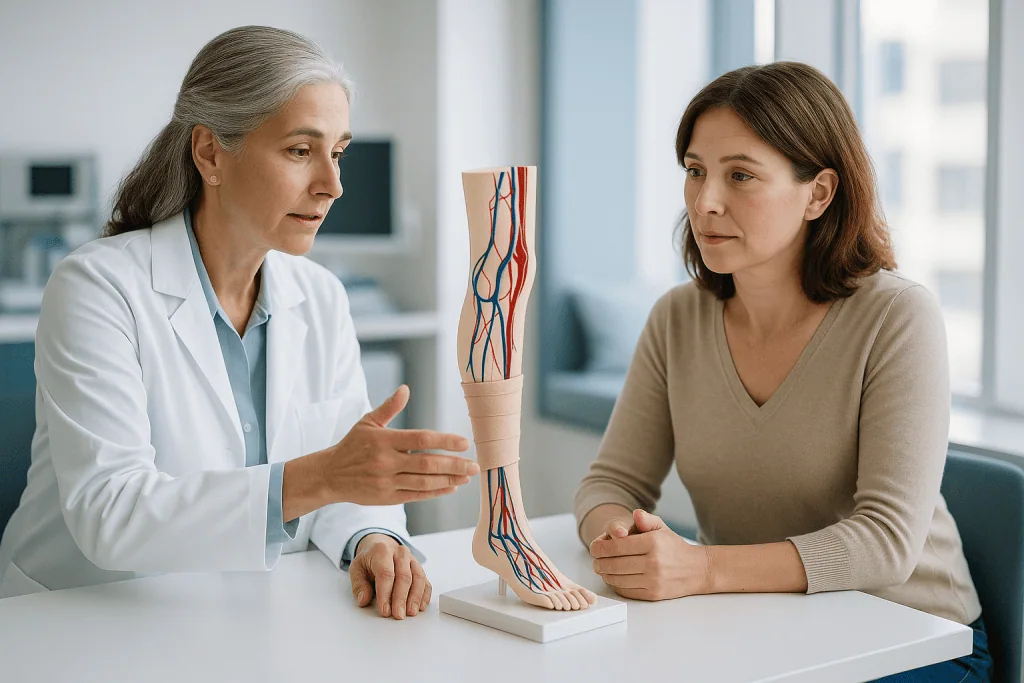
Lymphedema surgery is a group of microsurgical and reconstructive procedures that improve lymphatic drainage or reduce the volume of a chronically swollen limb. Options include lymphovenous bypass, vascularised lymph node transfer and liposuction for fibrofatty tissue. Surgery is considered when compression, manual lymphatic drainage and other conservative care no longer control swelling, and most patients continue some form of compression afterwards.
Lymphedema Treatment: When Swelling Becomes a Daily Medical Concern
Lymphedema treatment covers everything from compression garments and specialised physiotherapy to delicate microsurgery. Lymphedema surgery sits at the surgical end of that spectrum: a group of procedures designed to improve lymphatic drainage, reduce the volume of a chronically swollen limb, or both. It is considered mainly for people whose swelling persists, progresses or causes repeated infections despite properly delivered non-surgical care.
Lymphedema is more than swelling. For many patients, it is a condition that changes how a limb feels, moves, looks and functions every day. A hand may feel heavy after breast cancer treatment. A leg may become tight and difficult to fit into shoes or clothing. The skin may harden, infections may recur, and simple activities such as walking, working, exercising or travelling can require careful planning. The condition is also emotionally demanding. Patients often worry that the swelling will keep progressing, that they will depend on compression garments indefinitely, or that the condition will erode their independence.
If you are researching your options, you probably have practical questions too. Is surgery appropriate for your stage of lymphedema? Which operation suits your anatomy? Will you still need compression afterwards? How can you be sure a recommendation is based on careful evaluation rather than a single technique a clinic happens to prefer? This page answers those questions as directly as the evidence allows.
One point matters from the outset: lymphedema surgery is not a single operation, and it is not suitable for every patient. The best results come from a structured approach, accurate diagnosis, staging, a genuine trial of conservative therapy, imaging of the lymphatic system, and a personalised surgical plan. At Acibadem, patients are evaluated with this multidisciplinary perspective, particularly when lymphedema follows cancer treatment, trauma, infection or previous surgery. Timing matters because the condition can progress: in the early stages, swelling may be soft and partially reversible, while in later stages chronic inflammation leads to fatty tissue deposition, skin thickening, fibrosis, reduced mobility and recurrent cellulitis.
What Is Lymphedema Surgery?
Lymphedema surgery refers to microsurgical and reconstructive procedures used to treat abnormal lymph fluid accumulation in an arm, leg or other affected area. The goal is to improve the movement of lymph fluid, reduce swelling, prevent progression where possible, and improve quality of life. Surgery is typically considered when conservative treatments, compression therapy, manual lymphatic drainage, exercise, skin care and complete decongestive therapy, have not provided sufficient control, or when imaging shows a pattern likely to respond to surgical intervention.
Is there a surgery for lymphedema?
Yes, several, and they work in fundamentally different ways. There is no single operation for lymphedema. Broadly, the procedures fall into two families. Physiological procedures aim to restore or reroute lymphatic drainage; these include lymphovenous bypass and vascularised lymph node transfer. Reductive procedures remove the excess tissue that has accumulated over years of swelling; these include lymphedema liposuction and, in severe cases, excisional debulking. Which family is relevant depends on whether your limb is enlarged mainly by fluid or mainly by fibrofatty tissue: a distinction that imaging and clinical staging can make with reasonable precision.
Lymphaticovenous anastomosis (lymphovenous bypass)
Lymphaticovenous anastomosis, also called lymphovenous bypass, is a supermicrosurgical procedure in which tiny lymphatic channels are connected to nearby small veins. This allows lymph fluid to bypass blocked or damaged pathways and drain into the venous circulation. The vessels involved can be less than a millimetre in diameter, which is why the technique demands high magnification and specialised instruments. It is most often used in earlier or fluid-predominant lymphedema, when functional lymphatic vessels can still be identified on imaging. If the lymphatic channels have already been destroyed by long-standing disease, there is nothing left to bypass, which is one reason timing matters.
Vascularised lymph node transfer
Vascularised lymph node transfer involves moving lymph nodes, together with their blood supply, from one area of the body to the affected region. The transferred tissue may help support new lymphatic drainage pathways and improve local fluid handling over time. This procedure may be considered for patients with more advanced lymphatic damage, especially after cancer-related lymph node removal or radiation therapy. Donor-site selection is planned carefully, and mapped with imaging, to reduce the risk of causing lymphedema in another part of the body, a complication that responsible teams take seriously rather than dismiss.
Lymphedema liposuction and lipolymphedema surgery
Lymphedema liposuction, also known as suction-assisted lipectomy for lymphedema, addresses the fatty and fibrotic tissue that accumulates after long-standing swelling. It does not repair lymphatic drainage. What it can do, in selected patients, is reduce limb volume when excess tissue, rather than fluid, has become the main reason the limb remains enlarged. Lifelong compression is usually essential after this procedure; without it, the benefit is unlikely to hold. A related situation is lipolymphedema, in which abnormal fat distribution (lipoedema) coexists with lymphatic overload; what patients search for as lipolymphedema surgery usually means this same liposuction-based volume reduction, planned around both components of the problem.
Excisional and debulking procedures
In rare, severe cases, excisional or debulking operations may be considered when the size and weight of affected tissue cause major disability or recurrent infection. These procedures remove skin and subcutaneous tissue directly. They are generally reserved for advanced disease and require careful planning, because they are more extensive, leave larger scars and carry higher wound-healing demands than microsurgical options.
The most appropriate operation depends on the cause of lymphedema, its stage, the condition of the skin and soft tissues, imaging findings, previous treatments and your overall health. In many cases, surgery is combined with ongoing rehabilitation and compression rather than replacing them completely. Anyone who tells you otherwise before examining you is selling a technique, not planning your care.
Candidacy and Diagnosis: Who May Need Lymphedema Surgery?
Who is a candidate for lymphedema surgery?
Candidates are typically people whose swelling is persistent, functionally limiting, progressive or difficult to control despite properly fitted compression garments and supervised therapy. Repeated episodes of cellulitis strengthen the case, because each infection can damage remaining lymphatic vessels. Candidacy also depends on anatomy: microsurgical bypass requires visible, functioning lymphatic channels on imaging, while liposuction requires that tissue deposition, not fluid, dominates the picture. Conversely, surgery is usually deferred in patients with active skin infection, open wounds, untreated venous obstruction or uncontrolled medical disease, and it is a poor choice for anyone expecting the condition to disappear entirely. The affected area may be one arm, one leg, both legs, the genital region, the chest wall or another region, depending on the underlying cause.
Common symptoms that bring patients to evaluation include limb heaviness, tightness, aching, visible swelling, reduced flexibility, difficulty wearing clothing or shoes, changes in skin texture, and a feeling of fullness in the affected area. Some patients notice swelling that worsens during the day or after heat, long flights, prolonged standing or physical activity. Others develop repeated cellulitis: a bacterial skin infection causing redness, warmth, pain, fever and sudden worsening of swelling, one of the strongest signs that the underlying lymphatic problem is progressing.
Diagnosis begins with a clinical history and physical examination. The physician will ask when swelling began, whether it improves with elevation or compression, and whether there has been cancer surgery, lymph node removal, radiation, infection, trauma, venous disease or a family history of swelling. Limb measurements, volume assessment, skin examination and functional assessment help define severity and stage.
Because not all swelling is lymphedema, other causes may need to be excluded before surgery is even discussed. These include venous insufficiency, deep vein thrombosis, heart, kidney or liver disease, medication-related oedema, obesity-related swelling, lipoedema, inflammatory disorders and, in cancer patients, tumour recurrence. Venous studies are often part of this work-up, sometimes with input from cardiovascular specialists when obstruction or reflux is suspected. A precise diagnosis is not bureaucracy; it is the difference between an operation that helps and one that was never going to.
Specialised imaging then determines whether surgery is appropriate and which procedure is most likely to help. Techniques include indocyanine green (ICG) lymphography to visualise superficial lymphatic flow in real time, lymphoscintigraphy to assess overall drainage patterns, magnetic resonance lymphangiography to show deeper structures and tissue composition, and ultrasound to evaluate vessels and soft tissue. Imaging findings are always interpreted together with staging and symptoms, no single scan decides the plan on its own.
Conditions and Indications Treated With Lymphedema Surgery
Surgery may be used for both secondary and primary lymphedema, and the distinction shapes the plan.
Secondary lymphedema is the most common form worldwide and occurs when lymphatic vessels or lymph nodes are damaged or removed. Cancer treatment is a frequent cause: arm lymphedema after breast cancer surgery involving lymph node removal or radiation, and leg lymphedema after gynaecological, urological, melanoma or sarcoma treatment, or after colorectal and other abdominal procedures. Radiation therapy can compound the problem by scarring treated tissues. Other causes include trauma, burns, severe soft tissue injury, repeated infection, inflammatory conditions, obesity-related lymphatic overload and, in certain regions of the world, parasitic infection. In cancer-related lymphedema, lymphedema surgery is discussed only after recurrence and venous obstruction have been excluded, because swelling in a previously treated limb has more than one possible explanation.
Primary lymphedema results from developmental abnormalities of the lymphatic system. It may appear in infancy, childhood, adolescence or adulthood; some patients have congenital lymphatic malformations, while others develop swelling later without an obvious trigger. Surgery can be considered in selected primary cases, but decision-making is more complex because the lymphatic anatomy varies widely and may offer fewer usable channels for bypass.
Typical indications for surgery include persistent swelling despite conservative therapy, worsening limb volume over time, functional limitation, repeated cellulitis, discomfort related to swelling, difficulty with work or mobility, and psychological distress related to visible limb changes. In very specific cancer-related situations, preventive lymphatic procedures may be discussed at the time of lymph node removal for patients at high risk, but this requires individualised assessment and is not suitable for every case.
The indication is never based on limb size alone. Two patients with similar-looking swelling may need entirely different treatment, because one has fluid-predominant early disease and the other has advanced fibrofatty change. Modern staging and imaging exist precisely to separate the two.
Can knee replacement surgery cause lymphedema?
It can contribute, although it is not a common outcome. Any operation on a limb can disrupt superficial lymphatic channels, and knee replacement involves significant soft tissue dissection. Swelling after knee replacement is normal and usually settles over the months of recovery. In a minority of patients, particularly those with pre-existing lymphatic weakness, obesity, venous disease or a history of leg infections, swelling persists and behaves like true lymphedema. Persistent post-operative swelling has more than one possible cause, and venous problems, joint issues and lymphedema each need different management.
How to Treat Lymphedema Without Surgery
How to treat lymphedema is, for most people, first a question of conservative care, and every credible surgical programme insists on this step. The cornerstone is complete decongestive therapy (CDT), delivered by trained lymphedema therapists. It combines manual lymphatic drainage (a specialised massage technique that encourages fluid movement), multi-layer compression bandaging followed by fitted compression garments, tailored exercise that uses muscle pumping to move lymph, and meticulous skin care to prevent the cracks and dryness that invite infection. Intermittent pneumatic compression devices and weight management may be added where appropriate. For many patients, well-executed lymphedema treatment of this kind controls the condition indefinitely; for others, it establishes the baseline against which any surgical benefit will be measured.
How can you self-treat lymphedema at home?
Self-management works best as the home extension of professional therapy, not a replacement for it. Once a therapist has taught the techniques, most patients continue daily compression garment use, simplified self-drainage massage, prescribed exercises, careful skin inspection and moisturising, and protection of the limb from cuts, insect bites and sunburn. Keeping a record of limb measurements or photographs helps you and your care team spot gradual change. What self-treatment cannot do is reverse established fibrosis or replace properly fitted garments: a garment that is the wrong pressure or shape can be worse than none, which is why professional fitting matters.
What are the do’s and don’ts for lymphedema?
Practical habits make a measurable difference to daily control:
- Do wear compression garments as prescribed and replace them when they lose elasticity.
- Do keep the skin clean, moisturised and intact, infection prevention is central to lymphedema care.
- Do stay active; supervised exercise, including gradual resistance training, supports lymph flow rather than harming it.
- Do maintain a stable, healthy body weight where possible, since excess weight increases lymphatic load.
- Don’t ignore small skin injuries, athlete’s foot or nail infections on the affected limb.
- Don’t expose the limb to extreme heat for long periods, very hot baths, saunas and sunburn can worsen swelling in some patients.
- Don’t wear tight jewellery, watch straps or clothing that constricts the limb at a single point.
How often should you elevate your legs with lymphedema?
There is no universal schedule, and elevation is more useful in early-stage disease than late. When swelling is still fluid-predominant, elevating the legs above heart level during rest periods through the day, and avoiding long spells of motionless standing or sitting, can noticeably reduce end-of-day heaviness. Once fibrofatty tissue dominates, elevation alone changes little, which is itself a useful diagnostic clue. Your therapist can set a routine that fits your stage, your work and your sleep position, and will usually combine elevation with compression rather than relying on either alone.
How Lymphedema Surgery Is Performed
The surgical journey begins long before the operating room, and it follows a recognisable sequence:
- Record review and history. Prior operative reports, pathology results, radiation records, imaging, therapy notes and compression garment details are gathered.
- Confirmation of diagnosis and staging. Examination, limb measurement and exclusion of other causes of swelling.
- Lymphatic and vascular imaging. ICG lymphography, lymphoscintigraphy or MR lymphangiography to map what remains of the lymphatic system, plus venous studies.
- Optimisation. Blood tests, anaesthesia assessment, infection risk review and medication review by the treating team. Active cellulitis, open wounds, uncontrolled medical disease or untreated venous obstruction will postpone surgery until managed. Smoking cessation and, where relevant, weight management are addressed at this stage.
- The operation itself, chosen and sometimes combined according to the findings above.
- Monitored recovery and rehabilitation, with procedure-specific compression instructions.
For lymphaticovenous anastomosis, the surgeon first maps functioning lymphatic channels, usually with fluorescent lymphatic imaging, then makes very small incisions at selected points along the limb. Under high magnification, individual lymphatic vessels are joined to small nearby veins with supermicrosurgical sutures, creating alternate drainage routes. Depending on the number of bypasses and the complexity of the anatomy, surgery may take several hours. Many patients go home the same day or after a short hospital stay, although this varies by case.
For vascularised lymph node transfer, lymph nodes are harvested from a donor area together with their supporting blood vessels and transferred to the affected region. Microsurgical technique connects the blood vessels of the transferred tissue to recipient vessels so that it remains living and perfused. The hospital stay is usually longer than for bypass, because the transferred tissue must be monitored and the recovery is more extensive.
For lymphedema liposuction, small incisions allow removal of excess fibrofatty tissue along the limb. It is usually reserved for swelling that has become non-pitting, where pressing the skin no longer leaves a dent, because tissue rather than fluid fills the limb. Compression garments are fitted to a strict schedule afterwards, since the procedure reduces volume but does not restore drainage.
In complex cases, procedures are staged or combined: bypass for early functional gain, lymph node transfer for more advanced injury, volume reduction where chronic tissue change dominates. The plan is built around the patient, not around a preferred technique.
Technology supports every step. Fluorescent lymphatic imaging shows superficial lymph flow in real time; high-resolution ultrasound identifies sub-millimetre vessels and assesses venous health; MR-based lymphatic imaging reveals deeper anatomy, tissue fluid and fat deposition; operating microscopes and dedicated instruments make work on very small vessels possible; and standardised photography and volume measurement track the limb over months and years. Lymphedema surgery demands both anatomical accuracy on the day and honest measurement long afterwards.
After surgery, patients are monitored for circulation, wound healing, swelling changes, pain control and signs of infection. Early gentle movement is usually encouraged, while strenuous activity and pressure on surgical sites are restricted. Compression instructions differ by procedure: some patients pause compression briefly after microsurgical bypass to protect the new connections, while others need immediate, carefully timed compression after volume reduction. Follow-up includes wound checks, limb measurements, garment adjustment, referral back to lymphedema therapy and, in selected cases, repeat imaging. Improvement is often gradual, reduced heaviness or fewer infection episodes may come before visible volume change.
Why Acting Early Matters
Lymphedema becomes harder to treat as it advances. In early stages, excess fluid is the main problem, the tissues remain relatively flexible, and functioning lymphatic vessels are more likely to be present, which gives drainage procedures their best anatomical opportunity. Over time, chronic lymph fluid triggers inflammation: tissues thicken and stiffen, fat accumulates, skin folds deepen and infection risk rises. Once these changes are established, drainage procedures alone may not suffice, and volume reduction enters the discussion.
Delay also erodes daily function. A swollen limb alters gait, posture, shoulder movement, hand strength, balance and endurance. Recurrent cellulitis brings hospital visits and further lymphatic damage, and thickened skin creates entry points for bacteria: a cycle that becomes progressively harder to break.
Early evaluation does not mean early surgery. It means an accurate diagnosis, an honest stage assessment, optimised conservative care, and a clear answer to whether a window for microsurgical treatment exists. For many patients, that clarity is the single most valuable outcome of a thorough evaluation.
Can lymphedema cause weight gain?
Yes, in two ways. First, the retained fluid and, later, the accumulated fat in the limb add real weight: a chronically swollen leg or arm can be substantially heavier than its counterpart, which shows up on the scales. Second, the relationship runs in both directions: chronic lymph stasis encourages local fat deposition, while excess body weight increases the load on an already compromised lymphatic system and can worsen swelling. Reduced activity because of a heavy, uncomfortable limb can compound both. This is why weight management, where relevant, appears in almost every serious lymphedema management plan, surgical or not.
Benefits of Lymphedema Surgery
The potential benefits depend on the procedure, the stage of disease and long-term adherence to postoperative care. No operation removes the underlying diagnosis; the realistic aim is better control.
| Benefit | What It Means for You |
|---|---|
| Reduced limb swelling | Surgery may decrease limb volume or slow progression, making clothing, shoes, movement and daily care easier. |
| Improved lymphatic drainage | Microsurgical bypass or lymph node transfer can create new pathways for lymph fluid in carefully selected patients. |
| Fewer infection episodes | Some patients experience fewer cellulitis attacks when swelling and skin tension are better controlled. |
| Less heaviness and discomfort | Patients may feel improved limb comfort, mobility and endurance as fluid burden or excess tissue decreases. |
| More individualised long-term management | Surgery is integrated with compression, therapy, skin care and follow-up rather than treated as a stand-alone solution. |
Recovery Timeline After Lymphedema Surgery
Recovery varies by procedure, disease severity and general health, but the following timeline reflects common expectations.
| Time Period | What Patients Can Expect |
|---|---|
| Day 1 | Monitoring of pain control, circulation, wound condition and early swelling. Walking or gentle movement may begin as advised. |
| First Week | Wound care, limb positioning, limited activity and procedure-specific compression instructions. Travel plans should be confirmed with the medical team. |
| First Month | Swelling may fluctuate. Follow-up visits, garment adjustments and a gradual return to normal activities are common. Lymphedema therapy may resume when appropriate. |
| Three to Six Months | Functional changes become clearer. Some patients notice reduced heaviness, improved limb contour or fewer flare-ups. Continued compression may still be required. |
| Longer Term | Results are maintained through skin care, weight management where relevant, exercise, compression planning and periodic reassessment. Improvement after lymph node transfer may continue gradually. |
What Influences a Good Result?
A good outcome begins with matching the right procedure to the right patient. Stage is the most important variable: earlier, fluid-predominant disease may respond to lymphovenous bypass when usable channels exist; more advanced lymphatic destruction may need lymph node transfer or a combined strategy; long-standing non-pitting enlargement caused by fat and fibrosis is usually a liposuction problem, provided the patient can commit to lifelong compression.
The cause matters too. Cancer-related lymphedema after node removal or radiation has different anatomical patterns from primary lymphedema or infection-related swelling. Previous surgeries, scars, radiation fields and venous circulation all shape the plan, and in patients with a cancer history it must first be confirmed that the swelling is not recurrence, venous obstruction or another treatable cause wearing lymphedema’s clothes.
Imaging quality and interpretation are central. Lymphatic mapping shows whether functional channels exist, where bypasses could be placed and whether fluid or fibrofatty change dominates. Without that information, the risk of choosing an ineffective operation rises sharply.
Patient factors carry equal weight: stable body weight, good skin care, control of diabetes or vascular disease, not smoking, and genuine adherence to compression and rehabilitation all affect healing and long-term control. Patients with frequent infections may need an infection-prevention plan before and after surgery.
Above all, expectations should be realistic. Surgery may reduce swelling, ease symptoms and reduce complications, but it does not eliminate the condition, and many patients continue to need garments, therapy or periodic follow-up. Success in modern lymphedema care means better control of a chronic condition, not a one-time fix. The surgeon’s experience matters as much in judgement as in technique: when to operate, which incision sites to choose, whether to combine methods, how to protect donor areas and how to coordinate the aftercare that determines whether the result lasts.
Insurance and Funding: What Patients Usually Ask
Because there are no standard prices to quote responsibly, costs depend on the procedure chosen, whether procedures are combined or staged, hospital stay length, imaging requirements and rehabilitation needs: the more useful questions are about how the surgery is classified and funded.
Is lymphedema surgery covered by insurance?
Sometimes, and it depends heavily on the insurer, the country and the procedure. Physiological procedures such as lymphovenous bypass and lymph node transfer are increasingly recognised as reconstructive rather than cosmetic, particularly when lymphedema followed cancer treatment, but many insurers still assess claims case by case and expect documented evidence that conservative therapy was properly tried first. Liposuction for lymphedema is sometimes classified differently from cosmetic liposuction, and the paperwork demonstrating the medical indication matters. Before committing to any plan, patients should ask their insurer in writing how each specific procedure is classified and what documentation is required.
Does health insurance cover lymphedema surgery?
In most countries there is no single national coverage rule for lymphedema surgery; decisions are typically made on medical-necessity grounds and can vary by region, insurer and procedure. Coverage rules for conservative care, including compression supplies, have changed in recent years, so it is worth checking current policy rather than relying on older information. Patients relying on any public or national health scheme should confirm classification, prior-authorisation requirements and documentation expectations with their plan before treatment.
How Lymphedema Care Is Organised at Acibadem
Patients considering lymphedema surgery need more than an operation: they need a reliable diagnostic process, experienced clinicians and coordinated care before and after the procedure. At Acibadem, lymphedema care is approached through individualised assessment rather than a standard surgical package, and it deliberately draws on several specialties. Depending on the case, that may include microsurgically trained teams in plastic, reconstructive and aesthetic surgery, vascular specialists, oncologists, radiologists, nuclear medicine physicians, physiotherapists, rehabilitation teams, infectious disease specialists and wound care professionals. When lymphedema follows cancer treatment, multidisciplinary boards may review the broader context, cancer surveillance, prior radiation, planned oncological treatment, before a surgical decision is made.
Diagnostic pathways drive the decisions. Lymphatic imaging, vascular studies, soft tissue evaluation and functional assessment are used not to generate more tests, but to answer three questions: is surgery likely to help, which type, and how should aftercare be planned? The treatment summary is written up in a form that your own physicians and lymphedema therapists can act on, because a condition managed over years needs continuity, not just a procedure. Some patients complete evaluation and surgery in a single admission; others are better served by an imaging review first, or by staged treatment with clearly defined expectations. And a responsible evaluation does not always end in an operation: it may equally recommend continued therapy, additional imaging, infection or weight management, or structured monitoring.
What a Thorough Specialist Evaluation Draws On
The most productive lymphedema consultations are built on complete information. A specialist assessment typically draws on your medical history, prior operative and pathology reports, cancer treatment and radiation records where relevant, previous imaging, therapy notes, details of the compression garments you have used, and photographs or limb measurements taken over time. The more complete this picture, the more precisely the team can stage the disease, judge whether functioning lymphatic channels remain, and match any operation to your actual anatomy rather than to an average patient.
Lymphedema surgery works best when it is planned carefully and embedded in long-term care. The realistic goal is durable control: less swelling, fewer complications, better function, and a management plan, compression, skin care, exercise, follow-up, that you can sustain for years. Understood that way, the operation is one tool within lymphedema treatment as a whole, and choosing it well matters more than choosing it quickly.
Preparation
- Patients are assessed with a physical examination, lymphatic imaging, blood tests, and anesthesia evaluation. Existing compression therapy, skin care, medications, and infection history are reviewed. Smoking cessation and temporary adjustment of blood thinners may be recommended before surgery.
Aftercare
- After surgery, the limb is elevated and monitored for circulation, wound healing, and infection. Compression garments and physiotherapy usually continue according to the surgeon’s plan. Patients should avoid heavy activity until cleared and attend follow-up visits to track swelling reduction and recovery.
Frequently Asked Questions
What affects the cost of lymphedema surgery?
Cost depends on the diagnosis, imaging findings, limb involvement, selected technique, surgeon and hospital factors, anaesthesia, hospital stay, garments, rehabilitation, and follow-up needs. A personalised quote is only possible after a specialist reviews your medical records and images.
How can I get a personalised quote from Acibadem?
You can request a free consultation by sharing your medical history, photographs if requested, previous imaging, surgery or cancer treatment records, and details of conservative therapy. The international patient team can help coordinate record review and explain what is included in the proposed plan.
Does the quote usually include imaging and compression garments?
Inclusions vary by treatment plan. Some estimates may include standard pre-operative tests and hospital services, while specialised lymphatic imaging, custom compression garments, physiotherapy, or extended follow-up may be listed separately. Always ask for a written breakdown.
Is the cheapest option the best choice for lymphedema surgery?
Not necessarily. Lymphedema surgery is highly specialised, so the experience of the microsurgical team, availability of lymphatic imaging, multidisciplinary care, accreditation, and aftercare planning are important cost and quality factors.
Will I still need compression therapy after surgery?
Many patients continue compression and rehabilitation after surgery, at least during recovery, and some need long-term use depending on the procedure and disease pattern. Your specialist will advise based on your response and follow-up assessments.
Medically reviewed by the Acıbadem International Medical Board September 13, 2026
See our medical review board →
Update history
- PublishedJune 8, 2026
- Medical review approvedSeptember 13, 2026
- Last content updateSeptember 12, 2026
References3
- Lymphedema medlineplus.gov
- Lymphedema cancer.gov
- Lymphedema my.clevelandclinic.org
Trusted care for international patients
From the Acibadem Blog

When Compression Is No Longer Enough: How Doctors Decide Lymphedema Surgery Is the Next Step
Lymphedema surgery is usually considered only after months of consistent conservative care, including compression, decongestive therapy and skin care, has failed to control swelling,…
Doctors Performing This Treatment



Aesthetic Plastic & Reconstructive Surgery
Prof. Mehmet Veli Karaaltın, MD


Aesthetic Plastic & Reconstructive Surgery
Assoc. Prof. Erdem Güven, MD

Aesthetic Plastic & Reconstructive Surgery
Assoc. Prof. Ahmet Küçükçelebi, MD
Aesthetic Plastic & Reconstructive Surgery
Assoc. Prof. Mehmet Altıparmak, MD

Aesthetic Plastic & Reconstructive Surgery