

Water, Coffee and Fasting Before Blood Tests: The Real Rules
Key Takeaways
- Plain water never breaks a lab fast: it's explicitly permitted before fasting glucose, cholesterol, and metabolic panel tests.
- A fasting glucose test requires at least 8 hours without calories, so a 7-hour fast falls short and can nudge results across diagnostic cutoffs.
- Triglycerides peak three to four hours after a fatty meal and can stay elevated six hours or more: the main reason lipid panels sometimes require a 9-to-12-hour fast.
- Black coffee breaks a lab fast: caffeine can transiently raise cortisol and blood glucose even with zero calories.
- Biotin supplements, popular for hair and nails, can interfere with certain thyroid and cardiac-marker assays, always tell the lab what you take.
- Dehydration shrinks plasma volume and can push hemoglobin, hematocrit, albumin, and even cholesterol readings measurably higher, so drinking water improves accuracy.
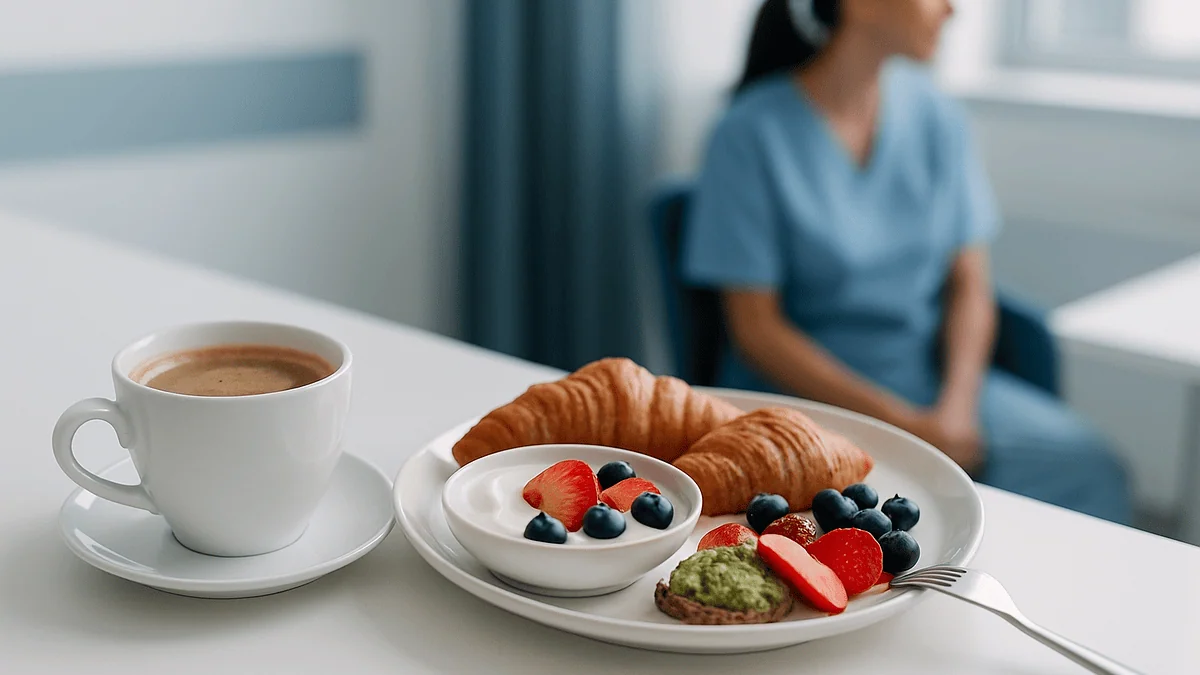
Yes, plain water is allowed, and encouraged, before virtually every blood test, including fasting tests for glucose and cholesterol. Fasting means no food and no drinks other than water, typically for 8 to 12 hours. Coffee, tea, juice, gum, and mints can all alter results. Staying hydrated actually makes veins easier to access. Follow your care team's specific instructions if they differ.
Every weekday around 7 a.m., the same quiet drama plays out in lab waiting rooms across the country. Someone clutches an empty water bottle, half-guilty, and asks the phlebotomist the question they’ve been rehearsing since 5:30: “I had a sip in the car, did I just ruin my test?”
They almost never did. But the confusion is understandable. Fasting instructions get passed along like folklore: a neighbor swears even water is forbidden, a coworker insists black coffee “doesn’t count,” and somewhere in between sits a nervous patient who skipped their morning glass of anything and now has veins as flat as a Sunday newspaper.
The actual rules are simpler, more forgiving, and better supported by evidence than most people expect. They’re also worth getting right, because a botched fast can turn one blood draw into two, and occasionally into a misleading number that follows you around your chart.
Can you drink water before a blood test?
Water is the one thing you can consume freely before almost any blood test, fasting or not. MedlinePlus, the NHS, and Mayo Clinic all draw the same line: a fast for lab work means nothing by mouth except plain water, usually for 8 to 12 hours.
The logic is chemical. Fasting exists to keep calories, fats, and sugars out of your bloodstream so the lab measures your baseline, not your breakfast. Plain water contains none of those. It doesn’t raise glucose, doesn’t add triglyceride-carrying particles, and doesn’t touch the liver enzymes or kidney markers a metabolic panel measures.
There’s a practical bonus, too. A well-hydrated body has fuller, easier-to-find veins, which means fewer needle attempts and a faster draw. Phlebotomists will tell you the hardest sticks of the day are often the patients who “were being extra careful” and drank nothing since dinner.
Two caveats keep this honest. First, “water” means water, not flavored water, sparkling drinks with citric acid and sweeteners, or electrolyte powders, which can contain sugar. Second, a handful of specialized tests (certain glucose tolerance protocols or procedures paired with sedation) come with stricter instructions. If your paperwork says otherwise, the paperwork wins. For the routine fasting panels most adults get, glucose, cholesterol, metabolic panels, sip away.
Why do some blood tests require fasting at all?
Blame the speed of digestion. Within about 15 minutes of eating carbohydrates, glucose from that food starts entering your bloodstream. A fasting glucose test is trying to answer a specific question, how well does your body regulate sugar with no food on board?, and a bagel an hour earlier makes that question unanswerable. A reading of 130 mg/dL means one thing after a 10-hour fast and something entirely different after breakfast.
Fats are slower but stickier. After a meal containing fat, your intestines package it into particles called chylomicrons that circulate for hours, triglyceride levels typically peak around three to four hours after eating and can stay elevated for six or more. Eat a rich dinner at 10 p.m. before an 8 a.m. draw and your triglycerides may still be inflated by leftovers, not biology. Enough dietary fat can even make the blood sample itself visibly cloudy, labs call it “lipemic”, which can physically interfere with how certain analyzers read other values in the same tube.
Fasting, in other words, isn’t ritual. It’s standardization. Reference ranges, the “normal” values printed beside your results, were built on fasting samples for these tests. Matching those conditions is what lets your doctor compare your number to the range, and to your own results from last year, on equal footing.
Which blood tests require fasting, and which don't?
Most blood tests don’t require fasting at all, which surprises people who assume every draw means a hungry morning. The fasting list is short and specific.
| Test | Fasting needed? | Typical window |
|---|---|---|
| Fasting blood glucose | Yes | At least 8 hours |
| Lipid panel (cholesterol, triglycerides) | Sometimes, many labs now accept nonfasting | 9–12 hours when required |
| Basic/comprehensive metabolic panel | Often, if glucose is included | 8–12 hours |
| Iron studies | Sometimes, often morning draw | Per lab instructions |
| Complete blood count (CBC) | No | |
| Hemoglobin A1c | No | |
| Thyroid panel (TSH and related) | No | |
| Vitamin D | No |
The A1c row deserves a highlight: because it measures the sugar coating on red blood cells accumulated over roughly three months, that morning’s breakfast is irrelevant. It’s one reason clinicians increasingly use it for diabetes screening: the CDC lists it among the standard tests, no fasting required.
The honest answer to “do I need to fast?” is always: whatever your ordering clinician and lab said. Requirements vary by test panel and by laboratory protocol, and guessing wrong in either direction, fasting needlessly or eating when you shouldn’t, costs you either comfort or accuracy.
Is 7 hours of fasting enough for a blood test?
Usually not, if the test formally requires fasting. The standard definition of a fasting glucose test is no caloric intake for at least 8 hours: that threshold comes from how long it takes glucose and insulin to settle back to a true baseline after a meal. Seven hours is close, but “close” is exactly where misleading results live: a glucose value taken at hour seven might sit a few points higher than your genuine fasting level, and a few points is sometimes the difference between “normal” and “prediabetes range” on paper.
Lipid panels, when fasting is requested, traditionally call for 9 to 12 hours because triglycerides clear more slowly than sugar.
So what should you actually do if you miscounted and only hit seven hours? Don’t quietly hope for the best. Tell the person drawing your blood, or call the lab beforehand. Depending on the test, they may proceed and flag the sample, ask you to wait an hour in the lobby, or reschedule. Any of those outcomes beats a borderline number that triggers a repeat test, or worse, a follow-up conversation about a “finding” that was really just a late snack.
A scheduling trick makes the whole problem disappear: book the earliest slot available and let sleep do the fasting. Finish dinner by 9 p.m., draw blood at 8 a.m., and you’ve logged 11 hours without noticing most of them.
Can I drink water while fasting for a cholesterol blood test?
Yes, water is explicitly permitted during a cholesterol fast. Mayo Clinic’s patient guidance for lipid testing is direct on this point: when fasting is requested, you avoid food and other drinks for the specified window, but water is fine throughout.
Here’s the part fewer people know: the fasting requirement for cholesterol itself has softened considerably. Research over the past decade showed that for most people, total cholesterol and HDL barely budge after eating, and LDL shifts only modestly. Triglycerides are the exception, they run roughly 20 to 25 mg/dL higher in nonfasting samples on average, which is why many labs and clinicians now accept nonfasting lipid panels for routine screening and reserve the strict fast for situations where triglycerides are the specific concern, or where a prior result was borderline.
That evolution matters practically. If you’re getting a general check and your clinician says fasting isn’t necessary, that’s not corner-cutting; it reflects current evidence. And if you are asked to fast, it’s usually because precision on triglycerides genuinely matters for your situation, so honor the full 9 to 12 hours.
Either way, hydration helps rather than hurts. A dehydrated sample can be slightly concentrated, and cholesterol values are among those that can drift upward a few percent when your plasma volume shrinks. Drinking water before a lipid draw isn’t just allowed; it’s arguably part of doing the test properly.
Does black coffee break a fast before blood work?
It does, and this is the myth that refuses to die. The reasoning usually goes: black coffee has almost no calories, so it can’t count. But labs aren’t only worried about calories. They’re worried about anything that shifts your body’s baseline chemistry, and caffeine is genuinely active stuff.
Caffeine can transiently raise cortisol and adrenaline, both of which nudge blood glucose upward. Coffee also stimulates the digestive tract and can influence circulating free fatty acids. None of these effects is dramatic, but fasting tests are often decided at the margins, a fasting glucose of 99 versus 102 lands in different categories, and “small” interference is exactly the kind that matters. MedlinePlus and NHS guidance both draw the line the same place: during a lab fast, nothing but water. No coffee, no tea, not even black, not even “just a few sips.”
The caffeine-withdrawal headache is real, and worth planning around rather than suffering through. Book the earliest appointment, bring your coffee with you in a travel mug, and drink it the moment the needle is out. Most labs have seen this move a thousand times and consider it entirely reasonable.
One more nuance: if you’re having non-fasting blood work, a CBC, a thyroid check, an A1c, your morning coffee is a non-issue. The prohibition applies only when fasting is actually required.
What shouldn't you do before a blood test?
Beyond the obvious, no food or caloric drinks during a required fast, a handful of behaviors in the 24 hours before a draw can genuinely bend your numbers.
- Alcohol the night before. Even moderate drinking can raise triglycerides and certain liver enzymes for hours afterward. Many labs suggest avoiding alcohol for 24 hours before fasting blood work.
- Hard exercise. A heavy workout can elevate muscle enzymes like creatine kinase, temporarily shift liver enzyme readings, and alter glucose. A brisk walk is fine; save the personal-record deadlift session for after the draw.
- Starting a new supplement. Biotin, popular in hair, skin, and nail products, is the classic offender, capable of distorting certain thyroid and cardiac-marker assays. Tell your care team everything you take.
- Smoking or vaping during the fast. Nicotine affects glucose and circulation; “nothing but water” includes cigarettes.
- Over-fasting. Stretching past 14 to 16 hours doesn’t earn extra credit. Prolonged fasting shifts your metabolism toward fat-burning, can alter glucose and ketone levels, and leaves you dehydrated and light-headed in the chair.
Notice what’s not on the list: your regular prescriptions. Stopping medication on your own before a test can be far riskier than any lab interference. Unless your clinician has given you specific instructions, take your usual medicines as prescribed, with water, and simply make sure the lab knows what you take.
What can throw off a blood test?
More than most people realize, and some of it happens in the chair itself.
Hydration status is the quiet heavyweight. When you’re dehydrated, your plasma volume shrinks, concentrating everything suspended in it. Hemoglobin, hematocrit, albumin, and even cholesterol can read measurably higher, a few percent, sometimes more, simply because there’s less water diluting them. It’s the same reason a strong cup of orange juice concentrate tastes different from the diluted version: nothing was added, but the ratio changed.
Posture plays a smaller, stranger role. Values for protein-bound substances can run several percent higher when you’ve been standing versus lying down, because fluid redistributes out of your bloodstream when you’re upright. Labs draw seated partly to standardize this.
Then there’s technique-adjacent interference. Vigorously pumping your fist during the draw can push potassium out of muscle cells and falsely elevate the reading: a result that occasionally sends people back for an unnecessary repeat. A tourniquet left on too long can do something similar. Neither is your fault, but staying relaxed helps.
Illness rounds out the list. An active infection, a bad night of sleep, or significant recent stress can shift glucose, white blood cell counts, and inflammatory markers. If you’re acutely sick on the day of routine screening bloodwork, it’s often worth asking whether to reschedule: a snapshot taken mid-fever tells your doctor about the fever, not about you.
How much water should you drink before a blood draw?
There’s no evidence-backed magic number, so be suspicious of anyone quoting one. The realistic goal is simply to arrive normally hydrated, not to tank up like a marathoner.
For most adults, that means a glass or two of water in the couple of hours before the appointment, on top of whatever you’d normally drink. Your body gives you a decent built-in gauge: urine the color of pale straw suggests you’re where you need to be, while dark yellow suggests you’re running behind.
Why bother? Two reasons, one about accuracy and one about comfort. Accuracy first: as covered above, dehydration concentrates the blood and can nudge several values upward. Comfort second: hydrated veins hold more volume and stand up better under the skin, which makes them dramatically easier to access. Phlebotomists consistently report that dehydrated patients, especially older adults, whose veins are already less elastic, account for a disproportionate share of failed first attempts.
Good hydration may also lower your odds of the light-headed, clammy feeling some people get during draws. That vasovagal response is more likely when blood pressure is already running low, and mild dehydration lowers it further.
Skip the temptation to overdo it. Drinking a liter in the waiting room won’t meaningfully improve the sample, will make the wait miserable, and extreme water-loading can dilute a few values in the opposite direction. Steady and normal beats heroic every time.
What happens if you accidentally eat or drink before a fasting test?
Say something. That’s the entire strategy, and it’s remarkably effective.
People break their fasts constantly: the automatic handful of cereal while packing lunches, the gulp of juice handed over by a toddler, the coffee poured on pure muscle memory. Lab staff have heard every version, and none of them will judge you. What they can do, if you tell them, is make a smart call: proceed and note the deviation on the sample, delay the draw, switch to a test that doesn’t require fasting (an A1c instead of a fasting glucose, in some cases), or rebook you.
What they can’t fix is a fast broken in silence. A fasting glucose drawn two hours after toast might come back in the prediabetes range and quietly enter your record as a data point. Now your next physical includes a conversation, a repeat test, and a small knot of worry, all traceable to a slice of bread nobody mentioned.
Scale matters, and honesty lets the professionals weigh it. A sip of black coffee at hour ten of a twelve-hour fast is a different situation from a full breakfast at hour two, and the lab may handle them differently. Your job isn’t to decide whether it counts; your job is to report it accurately and let people who process hundreds of samples a week decide.
The rescheduled draw costs you a morning. The misleading number can cost considerably more.
Gum, mints, smoking, toothpaste: the gray areas, settled
The edge cases generate more waiting-room debate than the main rules, so here’s where the evidence and standard lab guidance actually land.
- Chewing gum, even sugar-free. Skip it during a fast. Chewing triggers digestive activity and saliva flow, and many “sugar-free” gums contain sweeteners and small amounts of carbohydrate. NHS guidance on fasting for blood tests specifically says no gum.
- Mints and lozenges. Same verdict, more clearly: most contain sugar and count as breaking the fast outright.
- Smoking and vaping. Not allowed during a strict fast. Nicotine influences glucose metabolism and constricts blood vessels: the latter also makes the draw itself harder.
- Brushing your teeth. Generally fine. Brush normally, rinse, and spit; the trace of toothpaste involved isn’t consumed in any meaningful amount. If your instructions for a specialized test say otherwise, follow them.
- Diet soda and zero-calorie drinks. No. “Water only” is the standard, and artificially sweetened drinks contain acids, sweeteners, and often caffeine, three separate reasons they don’t qualify.
- Ice chips. Fine. Frozen water is still water.
A useful mental shortcut for anything not on this list: during a lab fast, if it’s not plain water, don’t put it in your mouth. That single sentence resolves nearly every gray area without needing to memorize a rulebook, and it’s exactly the standard MedlinePlus describes.
Does the time of day of your blood test matter?
For some tests, more than people expect. Your blood chemistry runs on a schedule, endocrinologists call it diurnal variation, and a few values swing widely enough across the day to change how results are interpreted.
Cortisol is the textbook case: it peaks in the early morning and falls through the day, which is why cortisol testing is often scheduled for a specific hour, sometimes 8 a.m. sharp. Iron levels can vary substantially between morning and evening in the same person on the same day, which is why iron studies frequently come with a morning-draw request. Testosterone in men peaks in the morning as well, and guidelines generally favor early draws for it.
For routine fasting tests, morning appointments win on logistics rather than biology. Reference ranges for fasting glucose and lipids were largely established using morning samples from people who fasted overnight, so drawing at 8 a.m. after sleeping through your fast matches the conditions the “normal” ranges assume. An afternoon fasting draw means going hungry and caffeine-free through a working day, which most people fail at least partially, and dehydration creeps in besides.
Consistency deserves a mention, too. If your doctor is tracking a value over time, cholesterol year over year, say, drawing at roughly the same time of day, in the same fasted state, makes those comparisons cleaner. You’re removing variables so the trend reflects your health, not your calendar.
When should you call your doctor before, or after, a blood test?
Most blood draws are uneventful. A few situations genuinely warrant a conversation with your care team, and knowing them ahead of time beats improvising at 7 a.m.
Call before your test if:
- You take glucose-lowering medication for diabetes and have been told to fast. Fasting while on these treatments can drop blood sugar too low, and your clinician may adjust the plan or timing. Never improvise this on your own.
- You’re pregnant and asked to fast, guidance sometimes differs.
- You’re unsure whether to take a regular medication during the fasting window, or whether a supplement you use (biotin especially) could interfere.
- You have a history of fainting during blood draws. Staff can have you lie down for the draw, which meaningfully reduces the risk.
Seek advice after your test if: the bruise at the site keeps expanding rather than fading, your arm becomes numb, tingling, or notably painful, or the puncture site grows red, warm, or swollen in the following days, possible signs of a hematoma, nerve irritation, or infection, all uncommon but worth prompt attention.
And if you feel light-headed immediately after a draw, tell the staff and stay seated; standing up fast is how most post-draw fainting happens. Feeling briefly woozy after fasting bloodwork is common and passes with water, a snack, and a few minutes, but nobody should white-knuckle it through the parking lot.
The one rule worth remembering
Strip away the folklore and the whole topic compresses into a sentence: during a lab fast, plain water is always in; everything else is out.
Where people actually go wrong is rarely the eating, almost nobody sits down to breakfast before a fasting draw. The errors live in the exceptions we grant ourselves: the black coffee that “doesn’t have calories,” the sugar-free gum that “isn’t food,” the seven hours that feels close enough to eight. Each one seems trivial, and each one can move a borderline number across a line that changes the conversation with your doctor.
In my view, the most underrated preparation step isn’t the fast at all: it’s disclosure. Tell the lab what you take, including supplements. Mention the sip of coffee. Flag the short fast. Laboratories have well-worn procedures for imperfect conditions, but only for the imperfections they know about. A flagged sample is useful data; an unflagged one is a small landmine in your chart.
And schedule early. An 8 a.m. appointment turns a 12-hour fast into ten hours of sleep, a shower, and a short wait, with your coffee in the car for the moment it’s over. The rules, it turns out, are less about willpower than about arithmetic and honesty. Both are easier before breakfast than most people fear.
Frequently asked questions
Can you drink water before a blood test?
Yes, plain water is allowed before virtually every blood test, including fasting tests. Standard lab guidance from MedlinePlus and the NHS defines fasting as no food or drink except water, typically for 8 to 12 hours. Water doesn’t affect glucose, cholesterol, or metabolic values, and staying hydrated makes veins fuller and easier to access. Avoid flavored, sparkling, or sweetened waters, which don’t qualify.
Is 7 hours of fasting enough for a blood test?
Usually not, if fasting is required. A fasting glucose test calls for at least 8 hours without calories, and lipid panels, when fasting is requested, typically call for 9 to 12. Seven hours can leave glucose or triglycerides slightly elevated, enough to matter near diagnostic cutoffs. If you’ve fallen short, tell the lab; they may wait, proceed with a note, or reschedule.
Can I drink black coffee before fasting blood work?
No, even black coffee breaks a lab fast. Caffeine can transiently raise cortisol and blood glucose and stimulates the digestive tract, so labs require water only during the fasting window. The workaround most people use: book the earliest appointment, bring coffee in a travel mug, and drink it the moment the draw is done. For non-fasting tests, morning coffee is fine.
Do I need to fast for a cholesterol test?
Sometimes, but less often than in the past. Evidence shows total cholesterol and HDL barely change after eating; triglycerides run roughly 20 to 25 mg/dL higher nonfasting. Many labs now accept nonfasting lipid panels for routine screening, reserving a 9-to-12-hour fast for cases where triglyceride precision matters or a prior result was borderline. Follow whatever your ordering clinician specified, and water is always allowed.
What can throw off a blood test?
Common culprits include eating or drinking anything besides water during a required fast, alcohol within 24 hours, strenuous exercise, dehydration, biotin supplements, acute illness, and even clenching your fist during the draw, which can falsely raise potassium. Dehydration alone can concentrate blood enough to elevate hemoglobin, hematocrit, and albumin by several percent. Telling the lab about anything unusual lets them interpret or flag the sample correctly.
What happens if I accidentally ate before my fasting blood test?
Tell the lab staff before the draw: that’s the whole fix. Depending on the test and what you ate, they may proceed and flag the sample, delay the draw, substitute a non-fasting alternative like an A1c, or reschedule. A quietly broken fast is the real problem: it can produce a misleading result, such as a falsely elevated glucose, that triggers unnecessary repeat testing and worry.
How much water should I drink before a blood draw?
There’s no official number: the goal is normal hydration, not water-loading. A glass or two in the couple of hours beforehand, on top of your usual intake, is plenty for most adults. Pale straw-colored urine is a reasonable sign you’re there. Good hydration keeps veins fuller for an easier draw, avoids dehydration-related concentration of blood values, and may reduce light-headedness during the stick.
Can I take my medications before a fasting blood test?
In most cases, yes, take your regular prescriptions with plain water unless your clinician has told you otherwise. Stopping medication on your own can be riskier than any effect on the lab values. The important exception involves glucose-lowering diabetes treatments, where fasting requires specific guidance to avoid low blood sugar. When in doubt, call the ordering clinician’s office before your appointment and ask directly.
Does chewing gum break a fast for a blood test?
Yes, including sugar-free gum. Chewing stimulates digestion and saliva flow, and most sugar-free gums still contain sweeteners and small amounts of carbohydrate; NHS fasting guidance specifically excludes gum. Mints and lozenges count as breaking the fast outright since most contain sugar. Brushing your teeth is generally fine, brush, rinse, and spit as usual. The reliable shortcut: if it isn’t plain water, skip it.
Does alcohol the night before affect a blood test?
It can. Even moderate drinking may raise triglycerides and certain liver enzymes for hours afterward, which is why many labs recommend avoiding alcohol for 24 hours before fasting blood work, especially lipid panels and liver-related tests. If you did drink the evening before, mention it when your blood is drawn so the result can be interpreted in context, or ask whether rescheduling makes more sense.
References
- MedlinePlus: Fasting for a Blood Test
- MedlinePlus: Blood Glucose Test
- MedlinePlus: Cholesterol Levels
- NHS: Blood Tests
This article is for general information only and is not a substitute for professional medical advice. Please consult a qualified doctor about your individual situation.

More from the Blog

Free T3: The Active Hormone Test and When It Adds Information
Free T3 measures the unbound, biologically active form of triiodothyronine, the thyroid hormone that drives metabolism inside cells. It is most useful for confirming…

BUN: The Kidney Marker Nobody Explains at the Front Desk
BUN, or blood urea nitrogen, measures nitrogen from urea, a waste product your liver makes when it breaks down protein. Because healthy kidneys filter…

The Prolactin Test: Why Levels Fluctuate and How Testing Is Done Properly
Prolactin levels swing naturally with sleep, stress, meals, exercise, and nipple stimulation, so a single mildly elevated result often means little by itself. Proper…
Can a Blood Test Detect Cancer? What Routine Work Shows, and Does Not
Routine blood work rarely detects cancer directly. Blood cancers such as leukemia can show up on a complete blood count, but most solid tumors,…

Fasting Blood Sugar: Your Morning Number, Decoded
A normal fasting blood sugar, measured after at least eight hours without food, is 70 to 99 mg/dL (3.9 to 5.5 mmol/L). Readings of…

FSH: What the Test Measures Across the Reproductive Lifespan
FSH (follicle-stimulating hormone) levels show how hard the brain's pituitary gland is working to stimulate the ovaries or testes. Typical values run roughly 4.7–21.5…