

What Does a Dental Spa Visit Include? Cleaning, Polishing and Gum Care in a Calmer Setting
Key Takeaways
- The clinical core of a dental spa visit, examination, scaling, polishing and gum charting, is identical to a standard hygiene appointment; the difference lies in comfort extras around the chair.
- "Spa" is not an acronym and has no regulatory meaning in dentistry, so the label tells you about atmosphere, not about the standard of care.
- Healthy gum pockets usually measure 1–3 mm on probing; readings of 4 mm or more suggest gum disease, and tracking these numbers across visits is the most useful measure of whether care is working.
- About 47% of US adults aged 30 and over have some form of periodontal disease, so a thorough gum assessment is not an optional add-on.
- NHS guidance sets the interval between check-ups by individual risk, from 3 months to 2 years, rather than a fixed six-monthly schedule for everyone.
- Music and aromatherapy show small, short-lived reductions in dental anxiety in some trials; clear communication, agreed stop signals and, for severe phobia, psychological therapy have stronger support.
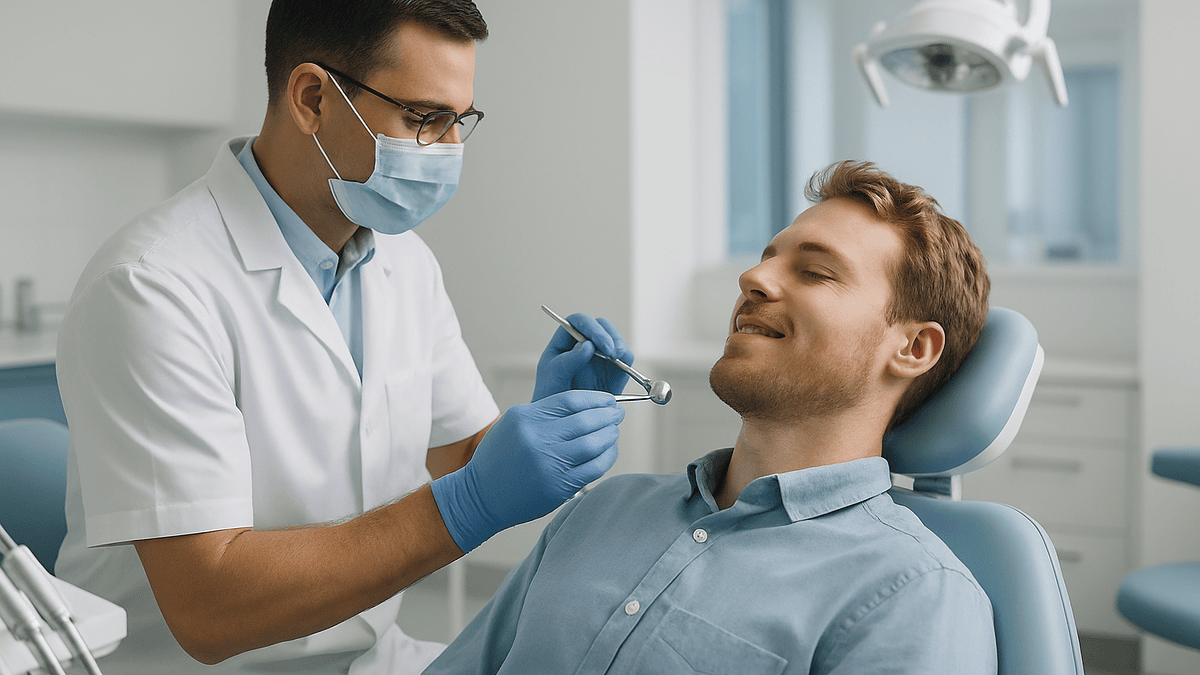
A dental spa visit usually includes the same core clinical steps as a standard hygiene appointment: an examination of the teeth and gums, removal of soft plaque and hardened tartar (scaling), polishing, and home-care advice, delivered in a quieter setting with comfort extras such as music, warm towels or aromatherapy. The extras are about relaxation; the cleaning and gum assessment carry the health value.
Maya has not sat in a dental chair for six years. Not because of pain, but because of the sound: that high whine, the scrape, the feeling of being pinned under a light. So when a sign near her office promised a “dental spa” with headphones, blankets and lavender, she stopped and read it twice.
Her question is the one that lands in search engines every day: what does a dental spa visit actually include, and is any of it different from what happens at an ordinary practice? The honest answer has two halves. The clinical half is familiar and well studied. The comfort half is newer, less studied, and easy to oversell.
This explainer walks through both, step by step, using what mainstream dental guidance says a hygiene appointment should contain, what the gum measurements mean, and where the evidence on calmer settings runs out.
What does a dental spa do that a regular dental office does not?
Strip away the decor and a dental spa is a dental practice. The people cleaning your teeth are dentists and dental hygienists; a dental hygienist is a licensed clinician trained to remove deposits from teeth and to assess gum health. The examination, the scaling and the polish follow the same clinical steps described by MedlinePlus and Cleveland Clinic for routine adult dental care.
What changes is everything around the chair. Practices that use the label typically offer a quieter reception area, noise-cancelling headphones, weighted or heated blankets, a hand or shoulder massage while you wait, scented towels, and sometimes a paraffin hand treatment. Some schedule longer appointments so nobody feels rushed. A few add wellness-flavored extras such as herbal tea or a brief guided breathing exercise before the examination begins.
None of these amenities clean teeth. That sounds obvious, yet it is the single most useful thing to hold onto. The value of a dental spa visit for your mouth rests on whether the clinical work is done thoroughly: whether the hygienist reaches below the gumline, whether gum pocket depths are recorded, whether the dentist looks for decay and checks the soft tissues of the mouth and neck. A relaxing environment can help you show up, sit still and come back, which matters enormously when avoidance is the real problem. It cannot substitute for the scaling itself.
There is also a marketing layer to notice. The word “spa” is not regulated in dentistry, so it describes an atmosphere rather than a standard of care. Two practices using the same label may differ widely in what they offer and in the training of the staff delivering the non-dental extras. When you book, it is fair to ask which parts of the visit are clinical and which are comfort.
What actually happens during a dental spa visit, step by step
The sequence is close to any well-run hygiene appointment, with pauses for comfort built in.
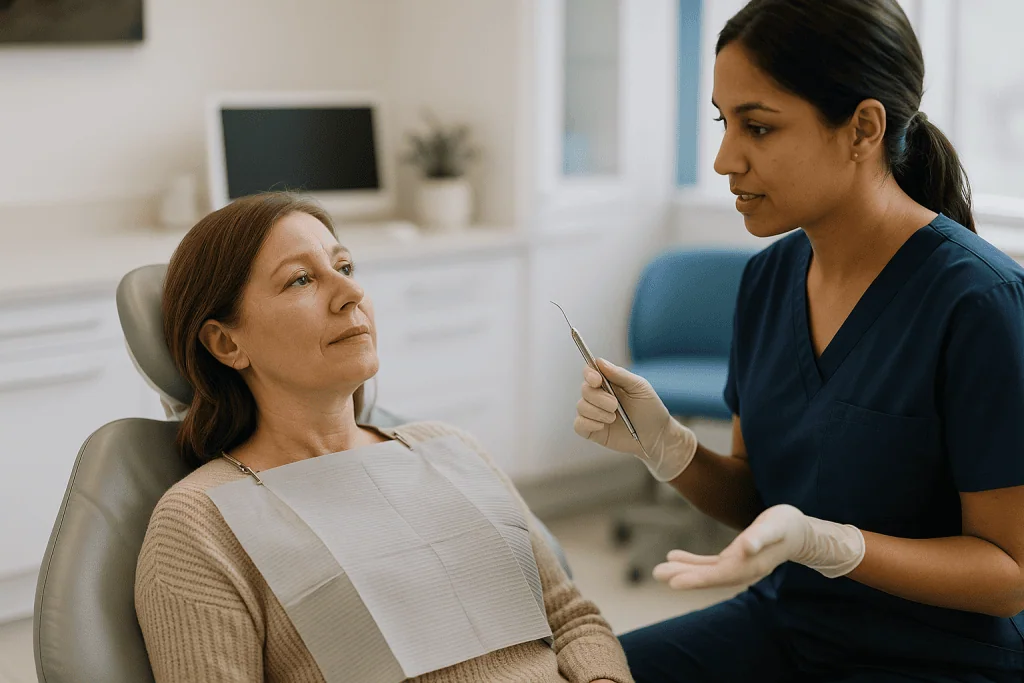
It starts with a conversation. The hygienist or dentist updates your medical history, asks about medicines, bleeding gums, sensitivity, dry mouth and any anxiety. This is where you can say how you would like the appointment paced.
Next comes the examination. The dentist looks at each tooth for decay, worn fillings and cracks, then checks the tongue, cheeks, palate and the lymph nodes of the neck. X-rays are taken only when clinically indicated, not on a fixed schedule, in line with NHS guidance that imaging frequency depends on individual risk.
Then the cleaning. Plaque is the soft, sticky film of bacteria that forms on teeth every day. Tartar, also called calculus, is plaque that has hardened with minerals from saliva and can no longer be brushed away. Scaling removes both. An ultrasonic scaler vibrates a fine metal tip thousands of times per second and sprays water, shattering tartar and flushing it out; hand scalers are curved steel instruments used to feel for and lift the remaining deposits, especially just under the gum edge. Mayo Clinic describes this combination as the standard approach for removing tartar in gingivitis.
Polishing follows: a soft rubber cup spins a mildly abrasive paste over the tooth surfaces, removing surface stain and leaving enamel smooth so plaque sticks less readily. Some practices use an air-polishing jet of fine powder and water instead.
The visit closes with home-care coaching and, where appropriate, a fluoride application; fluoride is a mineral that strengthens enamel against acid. In a dental spa setting, the extras slot around these steps: a warm towel after the polish, headphones during the scaling, a slower handover at the end.
What does spa stand for in medical terms?
It does not stand for anything. “Spa” is a word, not an acronym, and it has no formal meaning in medicine or dentistry.
The term comes from the Belgian town of Spa, whose mineral springs drew visitors for centuries, and it spread as a general word for places offering baths, rest and pampering. The popular expansion “sanus per aquam” (health through water) is a later invention with no historical basis; it is a pleasant story, not an etymology. You will sometimes see “SPA” in healthcare documents meaning something entirely different, such as service provision assessment in health-systems research, which has nothing to do with dental care.
Why does this matter for a dental spa visit? Because the absence of a formal definition means the label carries no regulatory weight. A practice can call itself a dental spa without meeting any additional standard. The clinical standards that do apply are the same ones governing every dental practice: licensing of dentists and hygienists, infection control, radiation safety for X-rays, and record keeping.
So when you evaluate a dental spa, look past the word. Useful signals are the ones you would use anywhere: Are the clinicians licensed? Is gum health measured and recorded at each visit? Are recall intervals based on your risk, as NHS guidance recommends, rather than a fixed six months for everyone? Is the hygienist willing to explain what they found?
The comfort side deserves its own scrutiny. Someone offering a hand massage in a dental practice may or may not have massage training; aromatherapy oils can trigger asthma or contact allergy in a minority of people. Asking about these details is not fussy. It is how you separate a genuinely thoughtful practice from one that has simply added scented candles to the waiting room.
Gum care: what the hygienist is measuring when they call out numbers
Midway through many hygiene visits you will hear a string of numbers: “three, two, three, four, three, two.” This is periodontal probing, and it is the most important part of gum care.
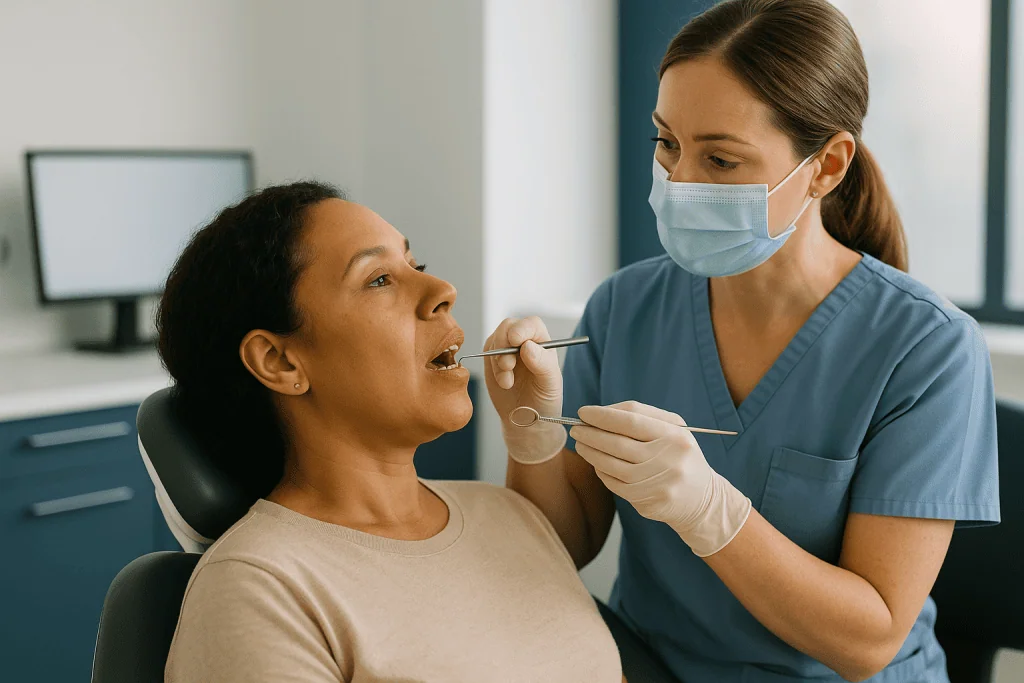
Around every tooth sits a shallow groove where the gum meets the enamel. A periodontal probe is a thin, blunt, millimeter-marked instrument slipped gently into that groove at six points per tooth. Mayo Clinic notes that a healthy groove usually measures 1–3 mm; pockets of 4 mm or more suggest gum disease, and deeper pockets indicate more advanced destruction of the bone and fibers that anchor the tooth.
Two conditions sit on this spectrum. Gingivitis is inflammation of the gum edge caused by plaque; gums look red, swell and bleed when brushed, but the supporting bone is intact. With thorough cleaning and good home care it is reversible. Periodontitis is the next stage: the inflammation has moved deeper, pockets form, and bone is lost. Lost bone does not grow back on its own, which is why periodontitis is managed and controlled rather than reversed. According to the CDC, some form of periodontal disease affects about 47% of US adults aged 30 and over, rising to roughly 70% of those aged 65 and over, so it is far from rare.
Probing depths, bleeding on probing and any gum recession are recorded as a chart. Comparing charts across visits shows whether things are stable, improving or slipping. A dental spa visit that skips this measurement, however soothing the music, is missing the step with the greatest long-term consequence.
If pockets are deep, the hygienist may recommend scaling and root planing: a deeper cleaning under local anesthetic that smooths the root surfaces so the gum can reattach. That is a separate, longer procedure planned by the dentist, not something added on the day.
Dental spa vs regular dentist: how the visits compare
The overlap is large and the differences are mostly outside the mouth. This table sets them side by side, with the med spa variant covered later included for contrast.
| Element | Standard hygiene visit | Dental spa visit | Dental med spa |
|---|---|---|---|
| Examination of teeth and soft tissues | Yes | Yes | Yes, when dental care is provided |
| Periodontal probing and charting | Should be routine | Should be routine | Should be routine |
| Scaling and polishing | Yes | Yes | Usually yes |
| Fluoride application | Based on risk | Based on risk | Based on risk |
| Comfort amenities (headphones, blankets, aromatherapy, massage) | Sometimes, limited | Central to the offer | Common |
| Longer appointment slots | Varies | Often | Varies |
| Cosmetic add-ons (whitening, facial injectables) | Whitening sometimes | Whitening sometimes | Often the main add-on |
| Clinical licensing and infection control | Required | Required | Required |
Read across the top rows and the message is plain: the parts of the appointment that protect your teeth appear in every column, because they are what dentistry is. Read down the lower rows and the differences emerge as atmosphere and optional extras.
One practical consequence follows. If your priority is a thorough clean and a reliable gum check, the deciding factors are the skill and thoroughness of the clinical team, and those cannot be inferred from the sign outside. If your priority is getting through the door after years of avoidance, the middle column may genuinely matter to you, and there is nothing frivolous about that. The mistake is confusing the two, or assuming that more comfort automatically means more careful dentistry.
Who a dental spa visit is usually for, and who is usually asked to wait
Most adults with a reasonably healthy mouth are suitable for a routine cleaning in any setting, spa or otherwise. The people who often gain the most from the calmer format are those with dental anxiety, a strong gag reflex, sensory sensitivities, or a long gap since their last appointment. For them, headphones and a slower pace are not luxuries; they are the difference between attending and cancelling.
Frequency is individual. NHS guidance recommends that the interval between check-ups be set by your dentist according to your risk, anywhere from 3 months to 2 years, rather than a fixed six-monthly rhythm for everyone. Someone with stable gums and low decay risk may be seen less often; someone with deep pockets, diabetes or a history of rapid tartar build-up may be seen more often.
Some situations mean the routine visit is postponed or reshaped, and the decision sits with the treating dentist:
- An active dental abscess, facial swelling or fever usually needs assessment and treatment first; a polish is not the priority.
- Advanced periodontitis is often better served by a planned course of deeper cleaning under local anesthetic than by a single spa-style appointment.
- People taking blood thinners, and people with certain heart valve conditions or recent joint replacements, may need the dentist to liaise with their physician about bleeding precautions or preventive antibiotics before scaling. What, if anything, is required is decided between the two clinicians, not by the patient or the practice front desk.
- Children can attend a dental spa if the practice treats children, but pediatric dentistry has its own preparation and pacing; comfort extras aimed at adults may not translate.
Pregnancy is not a reason to wait. Routine cleaning is considered safe throughout pregnancy, and gum inflammation is common in the second and third trimesters, so keeping appointments is usually encouraged.
Do calmer settings actually reduce dental anxiety? What the evidence shows
Dental anxiety is common enough that Cleveland Clinic gives it a name in its severe form, dentophobia, and treats it as a recognized barrier to care. People who fear the dentist attend less often, present later with larger problems, and then face longer, more uncomfortable treatment, which deepens the fear. Anything that breaks that loop has real clinical worth.
So what does the research say about the spa-style tools? Music through headphones has been studied more than any other environmental intervention; small trials tend to show modest reductions in self-reported anxiety during treatment, with less consistent effects on heart rate or blood pressure. Aromatherapy, particularly lavender in waiting rooms, has produced similar small, short-lived reductions in some trials and no measurable effect in others. Studies of dimmed lighting, blankets and massage are fewer, smaller, and generally of low certainty. Taken together, the evidence suggests these measures can take the edge off for some people, especially those with mild to moderate anxiety, but it does not support claims that they resolve dental fear.
The better-evidenced approaches are less glamorous. Clear communication (telling you what will happen before it happens), agreed stop signals such as raising a hand, appointments early in the day, and shorter first visits that build trust are all recommended in mainstream guidance. For severe phobia, cognitive behavioral therapy delivered by a psychologist has the strongest support, and a dental spa cannot provide it.
The practical conclusion: enjoy the headphones, but judge a practice by whether it also does the unglamorous things. A hygienist who pauses when you raise your hand does more for anxiety than any scent in the air.
What is a dental med spa, and how is it different?
A dental med spa blends a dental practice with a medical aesthetics clinic. Alongside cleaning and gum care, it offers elective cosmetic procedures, most often tooth whitening and facial injectables, sometimes skin treatments delivered by a nurse or aesthetician working under a clinician.
The clinical dentistry inside a dental med spa is subject to the same standards as anywhere else. The cosmetic layer needs a different lens, because it is elective, carries its own risks, and is frequently marketed with more enthusiasm than evidence.
Professional whitening uses peroxide-based gels, generally hydrogen peroxide or carbamide peroxide, which release oxygen that breaks down stain molecules inside enamel. It works on many extrinsic and some intrinsic stains, not on fillings or crowns, and temporary sensitivity is a well-recognized side effect. A dentist should examine for decay, cracks and gum recession before any whitening, since bleaching over an untreated problem can cause pain.
Facial injectables in this setting are usually botulinum toxin, which temporarily blocks the nerve signal that makes a muscle contract, or hyaluronic acid fillers, a gel that adds volume under the skin. Some dentists use botulinum toxin for jaw-muscle pain from clenching; the evidence for that indication is still developing. Whether a particular dentist is trained and permitted to provide these procedures depends on local regulation, which varies. Risks include bruising, asymmetry, drooping and, rarely, vascular complications with fillers.
None of this makes a dental med spa a poor choice for a cleaning. It does mean keeping the two conversations separate. Decide about your gums on the evidence about your gums. Treat any cosmetic suggestion made during the same visit as an unrelated, elective proposal to think over at home, with the freedom to decline.
Comfort and sedation options: what they do and who decides
Comfort measures fall on a spectrum, and it helps to know where the line between amenity and medicine sits.
At the gentle end are the non-drug tools already covered: headphones, blankets, agreed hand signals, a topical numbing gel on the gums before scaling, and warm water in the ultrasonic scaler, which many people with sensitive teeth find far easier to tolerate. Ask about that last one; it is a small change with a noticeable effect.
Next comes local anesthetic, an injection that numbs a section of the mouth. It is routine for deeper cleaning below the gumline and is occasionally used for a standard scale when teeth are very sensitive.
Then sedation. The most common option in dentistry is inhaled nitrous oxide, sometimes called laughing gas: a gas breathed through a small nose mask that produces relaxation while you remain awake and able to respond, and which wears off soon after the mask is removed. Oral sedation uses a tablet from the benzodiazepine class, medicines that calm the nervous system; you stay conscious but drowsy and will need someone to take you home. Intravenous sedation goes a step further and is usually reserved for longer or more invasive procedures, delivered by a clinician with specific sedation training and monitoring equipment.
Which, if any, of these is appropriate is a clinical decision. The dentist weighs your medical history, other medicines, breathing conditions, pregnancy and the length of the procedure. Sedation for a routine cleaning is uncommon; a calmer environment is usually enough, and a practice that reaches for sedation quickly for simple work deserves a question about why.
Whatever is offered, you are entitled to a plain explanation of how it works, what it will feel like, the risks, and what recovery involves, before you agree.
The following days: what to expect after a cleaning and polish
Most people leave a hygiene visit with teeth that feel smooth and slightly unfamiliar to the tongue, and that is the whole story. A few predictable sensations can follow, and knowing them in advance keeps them from being alarming.
Gums that were inflamed before the visit may feel tender and may bleed a little when brushed for the first few days. Cleveland Clinic notes that mild soreness and sensitivity after professional cleaning typically settle within a few days as the gums heal. Where tartar had built up along the gumline, removing it can expose small areas of root that were shielded; cold drinks may sting briefly for a week or two. That usually fades as the gum tightens and the tooth surface remineralizes, and a toothpaste formulated for sensitive teeth can help in the meantime.
If fluoride varnish was applied, you may be asked to avoid hot drinks and hard or sticky foods for a few hours and to skip brushing until the evening, so the varnish has time to work.
The first fortnight after a cleaning is also the best window to change habits, because you are starting from a clean surface. NHS guidance is unambiguous on the basics: brush twice a day for two minutes with a fluoride toothpaste, last thing at night and at one other time, spit rather than rinse afterward so fluoride stays on the teeth, and clean between the teeth daily with floss or small interdental brushes. Reducing how often sugar touches your teeth matters more than the total amount.
By the next appointment, the probing chart tells the story. Bleeding that has stopped and pockets that have shrunk from 4 mm toward 3 mm are the measurable signs that the combination of professional cleaning and home care is working. That, rather than how relaxed you felt, is the outcome worth tracking.
Is a dental spa visit covered by insurance?
The answer splits along the same line as everything else in this article: the clinical part often is, the spa part almost never is.
Many dental benefit plans treat a routine examination, cleaning and any indicated X-rays as preventive services, and preventive services are frequently covered at a higher level than restorative work, sometimes with a set number of cleanings per year. Periodontal probing is part of the examination. Fluoride application may be covered depending on age and plan. Deeper cleaning for periodontitis is usually classed as a separate periodontal service with its own rules.
The amenities that make a practice a dental spa, such as massage, aromatherapy, blankets and longer chair time, are not dental procedures and are not billable to a dental plan. Some practices absorb them into the ordinary visit; others itemize them as a separate comfort fee that you pay yourself. Cosmetic services offered by a dental med spa, including whitening and facial injectables, are elective and are generally excluded from dental and medical coverage alike.
Sedation sits in a gray zone. Nitrous oxide for a routine cleaning is often not covered; sedation for medically necessary procedures sometimes is, with prior authorization. Coverage rules vary by plan, by state and by the reason the sedation is being used.
The practical steps are simple. Before booking, ask the practice for the procedure codes it expects to submit and whether any comfort or cosmetic elements are billed separately. Then contact your plan and confirm what those codes cover, how many preventive visits are allowed, and whether the practice is in your network. This article does not give prices, and neither should a search result; the only figures that matter are the ones your plan and the practice put in writing for you.
What people often get wrong about dental spa visits
Some misunderstandings show up again and again, and correcting them changes how you evaluate the whole experience.
The first is that the spa setting means gentler dentistry. Thorough scaling is thorough scaling. A skilled hygienist can be gentle in any room, and an unskilled one is not improved by candlelight. Comfort comes from technique, communication and, where needed, numbing, not from decor.
The second is that a good clean removes the need to floss. Professional scaling removes what home care missed; it does not change the fact that plaque re-forms within hours. Cleveland Clinic and NHS guidance both make daily interdental cleaning the foundation, with professional visits as the periodic reset.
The third is that everyone needs a cleaning every six months. NHS guidance ties the interval to individual risk, from 3 months to 2 years. The six-month figure is a convention, not a biological rule.
The fourth is that scaling damages enamel or “loosens” teeth. Removing tartar does not harm enamel; teeth can feel looser afterward only when heavy tartar had been acting as a splint around teeth already weakened by periodontitis, and the disease, not the cleaning, is the cause.
The fifth is that bleeding gums are normal. They are common, which is different. Bleeding on brushing is the classic sign of gingivitis, according to Mayo Clinic, and it usually responds to better plaque control.
The sixth is that a dental spa can treat dental phobia. It can lower the barrier to attending, which is valuable, but severe fear generally needs a psychological approach that no practice environment provides.
The last is that whitening is part of a cleaning. Polishing removes surface stain; it does not lighten the natural shade of the tooth. Those are different procedures with different risks.
Questions to ask your care team
A calm appointment is a good moment to ask questions, and a practice that welcomes them is telling you something about itself. These are the ones that produce useful answers.
- Will my gum pocket depths be measured and recorded today, and can you show me the chart afterward?
- Based on what you found, how often should I come back, and what would change that interval?
- Did you see any areas of tartar below the gumline, and do any teeth need a deeper cleaning under local anesthetic?
- Are there signs of decay, worn fillings or cracks, and which ones need action now versus watching?
- Which of today’s steps were clinical, and which were comfort extras? Are any billed separately?
- If I feel uncomfortable during scaling, what is the agreed signal to pause?
- Can warm water or a topical numbing gel be used if my teeth are sensitive?
- Do you offer sedation, who administers it, what training do they have, and why would you recommend it for me specifically?
- I take a blood thinner, or I have a heart valve condition or a joint replacement: do you need to speak with my physician before treatment?
- What specifically should I change at home, and which interdental brush size fits my gaps?
- If I have a strong gag reflex or sensory sensitivities, how can the appointment be adapted?
- For a dental med spa: who performs the cosmetic procedures, what are their qualifications, what are the risks, and may I take the information home before deciding?
Write down the answers, especially the probing numbers and the recall interval. They are the two facts that let you compare visits over time, whichever practice you attend and however soothing the waiting room happens to be. Every treatment decision that follows from those answers belongs to you and your treating team together.
When to call your doctor
Routine cleaning rarely causes problems, and most after-effects are mild and short-lived. Some signs, though, point to something that needs prompt attention from a dentist or, in a few cases, a physician or emergency department.
Contact your dentist promptly if you notice:
- Bleeding from the gums that does not stop with gentle pressure after the visit, particularly if you take a blood-thinning medicine.
- Pain that is worsening rather than easing after two or three days, or sensitivity that persists for several weeks.
- A tooth that has become noticeably loose, or a filling or crown that has come out.
- A sore, patch or lump in the mouth that the dentist noted and that has not healed within a few weeks.
Seek urgent care the same day, or emergency care if it is out of hours, if you develop:
- Swelling of the face, jaw or floor of the mouth, especially if it is spreading or makes it hard to swallow or breathe.
- Fever with dental pain, which can signal a spreading infection.
- Any breathing difficulty, rash, dizziness or fainting after sedation, local anesthetic or a cosmetic injection.
- Sudden severe pain, skin color change or vision disturbance after a facial filler, which can indicate a blocked blood vessel and needs immediate assessment.
Outside the context of a visit, the reasons to book an appointment rather than wait for the next scheduled one include gums that bleed most times you brush, persistent bad breath that does not clear with cleaning, gums pulling away from the teeth, and teeth that have shifted or feel different when you bite. These are the signs Mayo Clinic and the CDC associate with gum disease that is progressing, and earlier assessment gives more options for controlling it. Your treating team, not a symptom list, decides what they mean for you.
Frequently asked questions
What does a dental spa do?
A dental spa provides ordinary dental care, chiefly examinations, professional cleaning and gum assessment, in a setting designed to feel calm, with extras such as headphones, blankets, aromatherapy or a hand massage. The clinicians are licensed dentists and hygienists following the same standards as any practice. The amenities aim to reduce anxiety; they do not change what a cleaning involves or how thorough it is.
Is a dental spa visit covered by insurance?
Often the clinical part is and the spa part is not. Many dental plans treat an examination, routine cleaning and indicated X-rays as preventive services, subject to plan limits, while comfort amenities and cosmetic add-ons are excluded. Ask the practice which procedure codes it will submit and whether extras are billed separately, then confirm coverage and network status directly with your plan before booking.
What is a dental med spa?
A dental med spa combines dental care with elective cosmetic services, typically tooth whitening and facial injectables such as botulinum toxin or hyaluronic acid fillers, sometimes alongside skin treatments. The dentistry follows normal clinical standards; the cosmetic procedures are elective, carry their own risks, and are governed by local rules on who may perform them. Treat any cosmetic suggestion as a separate decision to consider at home.
What does spa stand for in medical terms?
Nothing. Spa is a word derived from the Belgian town of Spa, famous for its mineral springs, not an abbreviation. The often-quoted Latin phrase “sanus per aquam” is a modern invention. In healthcare documents “SPA” occasionally appears as an unrelated acronym, for example in health-systems research, but in dentistry the term has no formal definition and no regulatory standard attached to it.
How is a dental spa vs regular dentist visit different for my teeth?
For your teeth, not much. Both should include an examination, periodontal probing, scaling to remove plaque and tartar, polishing and home-care advice. The difference is the environment and pacing. What determines the benefit to your mouth is the thoroughness of the clinical team, which cannot be judged from the label; ask whether gum depths are charted and how recall intervals are decided.
Does a dental spa cleaning hurt less?
The setting itself does not change how scaling feels; technique, communication and numbing do. Comfort comes from a hygienist who works carefully below the gumline, agrees a stop signal, uses warm water in the ultrasonic scaler for sensitive teeth and offers topical numbing gel or local anesthetic where needed. Any of these can be requested at any practice, spa or otherwise.
How often should I have a dental spa visit?
As often as your dentist recommends based on your risk. NHS guidance sets check-up intervals between 3 months and 2 years depending on factors such as gum health, decay history, diabetes and how quickly tartar builds up. The traditional six-month rhythm is a convention rather than a rule; someone with stable gums may be seen less often, someone with deep pockets more often.
Can a dental spa treat gum disease?
Early gum disease, gingivitis, is managed with professional cleaning plus daily plaque control at home, which any competent practice can provide. Established periodontitis usually needs deeper scaling and root planing under local anesthetic, planned over more than one appointment, and sometimes referral to a periodontist. Lost bone does not regrow on its own, so the goal is control and stability, tracked through probing charts over time.
Is sedation offered at a dental spa safe for a routine cleaning?
Sedation for a simple cleaning is uncommon and is a clinical decision, not an amenity. Inhaled nitrous oxide, oral benzodiazepines and intravenous sedation each have specific training, monitoring and medical-history requirements. Whether any is appropriate depends on your health, other medicines and the procedure planned. Ask who administers it, why it is recommended for you, and what the risks and recovery involve.
What should I expect in the days after a dental spa cleaning?
Mild gum tenderness and a little bleeding on brushing for a few days are common, especially if gums were inflamed beforehand, and usually settle as they heal. Some people notice brief cold sensitivity where tartar had been covering root surfaces. Worsening pain, bleeding that will not stop, facial swelling or fever are not expected and warrant a prompt call to your dentist.
References
This article is for general information only and is not a substitute for professional medical advice. Please consult a qualified doctor about your individual situation.

More from the Blog

Anesthesia for Impacted Tooth Removal: Local, Sedation or General and What You Feel
Impacted tooth removal is usually done with one of three anesthesia approaches: a local anesthetic that numbs the jaw while you stay awake, sedation…

Smile Makeover Timeline: How Whitening, Bonding and Veneers Are Sequenced Visit by Visit
A smile makeover timeline usually spans several weeks to a few months and follows a fixed order: a full dental examination and any needed…
What an Oral and Maxillofacial Surgeon Treats: Impacted Teeth, Cysts, Trauma and Jaw Alignment
An oral and maxillofacial surgeon treats conditions of the mouth, jaws and face that go beyond routine dentistry: impacted or difficult wisdom teeth, cysts…

Is Orthognathic Surgery Painful? Numbness, Swelling and How Discomfort Is Managed
Orthognathic (corrective jaw) surgery is usually described as less painful than people expect, because the surgery is done under general anesthesia and the nerves…

Which Aesthetic Dentistry Option Fits the Flaw? Whitening, Bonding and Veneers Compared
Whitening, bonding and veneers solve different flaws. Whitening lightens natural enamel but cannot change shape or brighten fillings and crowns. Composite bonding adds tooth-colored…

How a Gummy Smile Is Assessed: Measuring Gum Display, Lip Movement and Tooth Shape
A gummy smile assessment measures how much gum shows above the upper front teeth during a full smile, usually with a ruler, photographs and…