

What Happens at an Obesity Medical Assessment? Body Composition, Labs and Weight History

Key Takeaways
- Under NHS thresholds, a BMI of 30 to 39.9 is classed as obesity and 40 or above as severe obesity, but BMI cannot distinguish fat from muscle or show where fat is stored.
- Waist circumference of 94 cm or more in men and 80 cm or more in women signals increased risk in NHS guidance, with lower cut-offs for South Asian and several other ancestries.
- The core blood tests, per Mayo Clinic, are cholesterol, liver function, fasting glucose and thyroid; hemoglobin A1c usually completes the glucose picture.
- PBF means percent body fat, estimated by bioimpedance or DEXA; it adds information for tracking change but has no universally agreed diagnostic cut-off.
- The Edmonton Obesity Staging System grades health impact from 0 to 4 independently of weight, and stage 4 means severe, potentially end-stage related disability.
- NHS criteria generally consider bariatric surgery assessment at a BMI of 40 or above, or 35 to 40 with a serious related condition, after other methods have been tried.
An obesity medical assessment typically combines a detailed weight and health history, measurements such as body mass index and waist circumference, a physical exam, and blood tests that look for related conditions like high blood glucose, abnormal cholesterol, liver changes and thyroid disorders. Some programs add body composition testing. The goal is to understand what is driving weight gain and what health risks are present, so the care team can plan treatment together with you.
The appointment letter says “weight management assessment,” and that single line can carry a surprising amount of weight of its own. Many people arrive expecting a lecture, a scale and a number. What they usually get is closer to a detective interview: a clinician who wants to know when the weight changed, what else changed at the same time, and what the body is doing beneath the surface.
That is the real purpose of obesity medical evaluation tests. The scale is the least interesting part. A good assessment asks whether sleep apnea is quietly exhausting you, whether a medicine added three years ago shifted your appetite, whether blood glucose has crept upward, and whether fat is sitting around the organs rather than under the skin. Each answer changes what treatment makes sense.
This explainer walks through what actually happens, which tests are standard and which are optional, how staging works, and what the weeks afterward tend to look like. Think of it as a map, not a verdict. The decisions stay with you and your treating team.
How is obesity diagnosed, and why BMI is only the starting point
Body mass index, or BMI, is a ratio of weight to height squared that estimates whether weight is likely to affect health. Most clinicians still open with it because it is quick, free and reasonably predictive across large populations. Under the thresholds used by the NHS, a BMI of 25 to 29.9 falls in the overweight range, 30 to 39.9 is classed as obesity, and 40 or above is often described as severe obesity. Many services split the obesity range further into class I (30 to 34.9), class II (35 to 39.9) and class III (40 and above), a convention Mayo Clinic also describes.
Here is the honest limitation. BMI cannot tell muscle from fat, and it cannot see where fat is stored. A strength athlete can register a BMI above 30 with a low body fat percentage, while a person with a BMI of 27 can carry substantial abdominal fat and the metabolic risks that come with it. BMI thresholds were also derived mainly from populations of European ancestry; the NHS notes that people from South Asian, Chinese, other Asian, Middle Eastern, Black African or African-Caribbean backgrounds face higher health risks at lower BMI values, which is why lower cut-offs are used for those groups.
So how is obesity diagnosed in practice? BMI opens the conversation, waist measurement sharpens it, and the history, exam and blood work decide what the number actually means for you. The World Health Organization defines obesity as abnormal or excessive fat accumulation that presents a risk to health, and that phrase, “risk to health,” is the part a proper assessment is designed to measure. The number on the scale is a screening signal. The diagnosis is a clinical judgment built from several pieces.
What actually happens at an obesity medical evaluation, step by step
Most assessments follow a recognizable rhythm, even though the order varies between primary care, endocrinology and bariatric surgery programs. Expect the appointment, or the first of several, to look roughly like this.
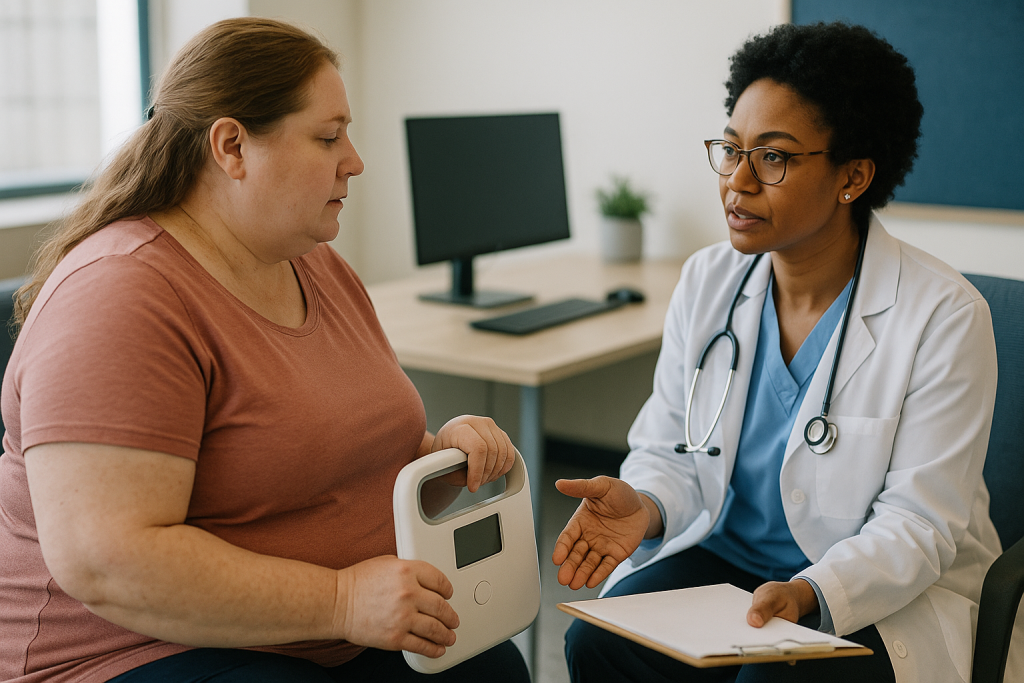
- A structured conversation about your weight across your life, including childhood, pregnancies, illnesses, job changes, bereavements and previous attempts to lose weight.
- A review of every medicine and supplement you take, because several common prescriptions can promote weight gain.
- Questions about sleep, snoring, mood, appetite patterns, binge eating, alcohol and physical activity.
- Measurements: height, weight, BMI, waist circumference, blood pressure and resting heart rate.
- A physical exam looking for signs of related conditions, such as skin changes that can accompany insulin resistance, joint problems, or swelling in the legs.
- Blood tests, either drawn that day or arranged for a fasting visit.
- In some programs, a body composition scan and, where symptoms warrant, a sleep study or heart assessment.
The NHS describes the primary care version of this: the clinician measures BMI and waist, may check blood pressure, cholesterol and glucose, and asks about lifestyle, family history and how weight is affecting your wellbeing. A specialist or surgical program adds depth rather than changing the shape of the visit.
Two things tend to surprise people. The first is how much time goes to talking rather than testing; the history often carries more diagnostic value than any single lab. The second is that nobody sensible rushes to a plan in the first meeting. A thorough evaluation is designed to rule things in and out before anyone recommends a diet, a medicine or an operation.
Why your weight history matters more than the number on the scale today
Ask any experienced weight-management clinician which part of the assessment they would keep if they could keep only one, and most will say the history. A single weight measurement is a snapshot. A weight history is a film, and the plot usually explains the ending.
Clinicians look for the shape of the curve. Steady gain since adolescence suggests different drivers than a sudden 20-kilogram rise over 18 months. The second pattern prompts a closer look at new medicines, a thyroid that has slowed, a change in mobility after injury, a period of depression, or less commonly an endocrine disorder such as excess cortisol. They ask what was happening in life at each turning point, because weight tends to move with sleep, stress, shift work, menopause, and the end of a sport or physical job.
Previous weight-loss attempts are equally informative. Someone who has lost and regained weight several times with structured programs has demonstrated that behavior change alone has not held, which is relevant information when the team weighs medication or surgery. Mayo Clinic lists this review of weight history, past efforts, eating and exercise patterns, stress, and family history as a core part of diagnosis.
Family history completes the picture. Obesity has a strong heritable component, and clusters of type 2 diabetes, early heart disease or sleep apnea in close relatives raise the stakes for screening. None of this is about assigning blame; it is about identifying what is modifiable and what needs medical treatment rather than willpower. A good history also captures what you want: better mobility, fewer medicines, a pregnancy, relief from joint pain. Those goals shape the plan as much as any lab result.
What is the PBF test, and which body composition test for obesity is actually used?
PBF stands for percent body fat: the share of your total weight that is fat tissue rather than muscle, bone, organs and water. It is the number people most often ask about after reading about “body composition,” and it answers the question BMI cannot: how much of this weight is fat?

Several methods estimate it, with different trade-offs.
- Bioelectrical impedance analysis (BIA) passes a tiny, painless electrical current through the body and estimates fat from how the tissues resist it. It is fast and widely available, but hydration, recent meals and exercise shift the result noticeably.
- Dual-energy X-ray absorptiometry (DEXA) uses two very low-dose X-ray beams to map fat, lean tissue and bone across the whole body. It is considered more precise and can distinguish regional fat, including the abdominal region.
- Skinfold calipers and air-displacement plethysmography exist but are less common in routine clinics.
Here is what the evidence supports and what it does not. Body composition testing is useful for tracking change, because a person can lose fat and gain muscle while the scale barely moves. It is also useful when BMI is misleading, such as in very muscular people or older adults who have lost muscle. What it does not yet have is a universally agreed diagnostic cut-off; percent body fat thresholds vary by method, age, sex and the reference population used, so a body composition test for obesity adds information rather than replacing clinical judgment.
Most guideline bodies, including the NHS and WHO, continue to anchor diagnosis on BMI plus waist circumference, with body composition as an optional refinement. If your program offers a scan, it is reasonable to ask which method is used, what the result will change, and whether the same method will be repeated later so comparisons are fair.
Waist circumference and why abdominal fat gets its own measurement
Fat under the skin on the hips and thighs behaves differently from fat packed around the liver, pancreas and intestines. That deeper store, called visceral fat, is metabolically active: it releases fatty acids and inflammatory signals into the bloodstream feeding the liver, which helps explain why abdominal obesity tracks so closely with insulin resistance, abnormal cholesterol and cardiovascular disease. Harvard Health summarizes this evidence plainly, noting that waist size predicts health risk even among people whose BMI sits in the normal range.
The measurement itself is simple and should be done with a flexible tape, usually at the midpoint between the lowest rib and the top of the hip bone, at the end of a normal breath out, without the tape compressing the skin. Done consistently, it is one of the most informative numbers in the entire assessment.
Thresholds differ slightly between organizations. The NHS flags increased risk at a waist of 94 cm or more for men and 80 cm or more for women, and high risk at 102 cm or more for men and 88 cm or more for women. Harvard Health cites the commonly used United States figures of 40 inches for men and 35 inches for women as the point where risk rises substantially. As with BMI, lower thresholds apply to people of South Asian and several other ancestries.
Some clinics also calculate waist-to-height ratio, which adjusts for the obvious fact that taller people have larger waists. Whichever version your team uses, the point is the same: two people with identical BMI can have very different waist measurements, and the one with more abdominal fat generally needs closer attention to glucose, lipids and liver health. It is a tape measure, but it is doing serious work.
What labs should I check for abnormal weight gain? The standard blood tests for obesity
Blood tests in an obesity assessment serve two purposes: finding conditions that cause weight gain, and finding conditions that weight gain causes. The panel is not exotic, and most of it is routine primary care work.
Mayo Clinic lists the typical core: a cholesterol test, liver function tests, a fasting glucose measurement, and a thyroid test. In practice the glucose picture is usually completed with hemoglobin A1c, which reflects average blood glucose over roughly the previous two to three months. Together these tests screen for prediabetes and type 2 diabetes, dyslipidemia (an unhealthy pattern of blood fats), and metabolic dysfunction-associated steatotic liver disease, formerly called fatty liver, which often shows up first as mildly raised liver enzymes.
Thyroid-stimulating hormone is checked because an underactive thyroid can slow metabolism and cause modest gain. It is worth saying what the evidence shows here: hypothyroidism is a real but uncommon cause of substantial weight gain, and treating it rarely produces large losses on its own. Testing is sensible; expecting it to be the whole answer usually is not.
Depending on history, clinicians may add kidney function, a full blood count, vitamin D, iron and vitamin B12 (particularly before bariatric surgery, when baseline nutrient levels matter), uric acid if gout is suspected, and reproductive hormones when irregular periods or excess hair growth suggest polycystic ovary syndrome. When weight gain has been rapid and accompanied by features such as easy bruising, muscle weakness or a rounded face, a test for excess cortisol may be ordered to look for Cushing’s syndrome, which is rare but important.
If you are asking what labs to check for abnormal weight gain, the short version is: glucose, lipids, liver enzymes and thyroid as the foundation, with everything else guided by your story. Your clinician decides the list; home test kits cannot replace that judgment.
Obesity medical evaluation tests at a glance
The table below gathers the common components in one place. Not every person has every test; the right-hand column explains what typically prompts each one. Your team chooses the combination.
| Test or measure | What it shows | Who usually has it |
|---|---|---|
| BMI | Weight relative to height; screening category | Everyone, as the opening measure |
| Waist circumference | Proxy for abdominal and visceral fat | Everyone with BMI under 35; often above too |
| Blood pressure and heart rate | Cardiovascular strain | Everyone |
| Fasting glucose and hemoglobin A1c | Prediabetes and type 2 diabetes | Everyone |
| Lipid panel | Cholesterol and triglyceride pattern | Everyone |
| Liver enzymes | Possible fatty liver disease | Everyone |
| Thyroid-stimulating hormone | Underactive thyroid | Most people, especially with recent gain |
| Iron, B12, vitamin D, folate | Baseline nutrition status | Before bariatric surgery; when symptoms suggest |
| Cortisol testing | Rare hormone excess (Cushing’s) | Only when specific features are present |
| Body composition (BIA or DEXA) | Percent body fat, lean mass, regional fat | Optional; program-dependent |
| Sleep study | Obstructive sleep apnea | Snoring, daytime sleepiness, witnessed pauses |
| Electrocardiogram or echocardiogram | Heart rhythm and pump function | Before surgery; cardiac symptoms or risk |
| Psychological assessment | Eating patterns, mood, readiness | Standard in surgical and specialist programs |
Two observations are worth drawing out. First, the mandatory rows are inexpensive and familiar; the sophisticated-sounding tests are mostly conditional. Second, the sleep study deserves more attention than it usually gets. Obstructive sleep apnea, where the airway repeatedly narrows during sleep, is common in people with obesity, worsens fatigue and blood pressure, and is routinely screened for before any operation because it affects anesthesia safety. If you snore loudly or wake unrefreshed, mention it even if nobody asks.
The obesity staging system: what does stage 4 obesity mean?
People searching for “stage 4 obesity” are usually running into one of two different systems, and the distinction matters.
The first is the BMI class system described earlier, which tops out at class III, a BMI of 40 or more. There is no “class 4” in that scheme, though some writers loosely use “stage 4” to mean a BMI above 50, sometimes called super obesity. That is a size descriptor, not a health assessment.
The second is the Edmonton Obesity Staging System (EOSS), proposed by Sharma and Kushner and published in the peer-reviewed literature indexed on PubMed. EOSS deliberately ignores how much a person weighs and instead grades how much the excess fat is harming them, on a scale from 0 to 4.
- Stage 0: no detectable risk factors, physical symptoms or functional limits.
- Stage 1: mild, subclinical risk factors such as borderline blood pressure or glucose, or mild symptoms.
- Stage 2: established disease requiring treatment, such as type 2 diabetes, sleep apnea or osteoarthritis, with moderate limits on daily life.
- Stage 3: significant end-organ damage, such as a previous heart attack, heart failure or diabetic complications, with major functional impairment.
- Stage 4: severe, potentially end-stage disabilities from the related conditions.
Why does a clinician bother with this? Because two people with the same BMI can sit at stage 0 and stage 3, and the second person needs faster, more intensive treatment. The staging approach is also kinder: it describes health, not appearance. In studies of the system, the stage predicted outcomes better than BMI alone, which is the main reason specialist services have adopted it.
If your assessment letter or clinic notes include an EOSS stage, ask what drove it. The stage is a summary of problems that can each be treated, and it can move in the right direction as those problems are managed.
Screening for the conditions that drive weight gain, and the ones that follow it
The assessment is as much about neighbors as about weight. Several conditions either push weight upward or arrive because of it, and finding them changes treatment.
On the “causes” side, the list is shorter than most people hope. Hypothyroidism, Cushing’s syndrome and some rare genetic syndromes can cause gain, but together they account for a small fraction of cases. Far more often the driver is a medicine. Certain antidepressants, antipsychotics, mood stabilizers, corticosteroids, some diabetes medicines and some blood pressure or seizure medicines are associated with weight gain through effects on appetite, fluid balance or metabolism. A careful medication review can identify an alternative within the same class that is weight-neutral, but that is a conversation for the prescriber; nobody should stop a medicine on their own because of this article.
Polycystic ovary syndrome deserves its own mention. It affects a meaningful share of women of reproductive age, involves insulin resistance, and tends to make weight gain easier and weight loss harder. Irregular periods, acne and excess hair growth prompt hormone testing and sometimes a pelvic ultrasound.
On the “consequences” side, the usual suspects are type 2 diabetes, hypertension, dyslipidemia, fatty liver disease, obstructive sleep apnea, osteoarthritis of weight-bearing joints, gastroesophageal reflux and, over the longer term, several cancers and cardiovascular disease. The WHO fact sheet on obesity sets out this range of associated conditions. Screening for them is why the assessment includes blood pressure, lipids, glucose, liver enzymes and sleep questions rather than just a scale.
Finding one of these conditions is not a failure; it is the point. Treated sleep apnea can restore the energy needed to be active. Managed glucose protects the kidneys and eyes. Each finding becomes part of a plan that improves health even before weight changes.
The conversation about eating, mood and sleep: the psychological part of the assessment
Specialist and surgical programs almost always include a psychological assessment, and it is the part people dread most. In practice it is a structured, respectful conversation, not an interrogation, and its purpose is to make treatment safer and more likely to help.
Clinicians ask about eating patterns because some are clinically distinct. Binge eating disorder, which involves repeated episodes of eating unusually large amounts with a sense of loss of control, is more common in people seeking weight treatment than in the general population and responds to specific therapies. Night eating, grazing and emotional eating are also explored, not to judge them but because the right strategy depends on the pattern. Bariatric surgery, for example, changes stomach capacity but not the urge to eat in response to distress, so untreated binge eating is usually addressed first.
Mood and anxiety are assessed because they travel with weight in both directions: depression can reduce activity and increase comfort eating, and living with obesity in a stigmatizing world affects mood. Sleep is covered because short or fragmented sleep shifts appetite hormones and is linked to weight gain. Alcohol and other substance use are discussed because they matter for liver health, for any medication, and for surgical safety.
The assessment also explores readiness and expectations. What do you hope treatment will change? What support exists at home? Have you understood that surgery requires lifelong changes to eating and supplements? Programs ask these questions because honest answers predict how well any plan will hold.
A psychological assessment is not a test to pass or fail. Its most common outcomes are reassurance, a referral for support that makes the whole plan work better, or a brief pause to treat something that would otherwise undermine it.
Who is usually referred for a full evaluation, and who is asked to wait
Not everyone who wants help needs the full specialist workup, and not everyone who wants surgery is assessed for it straight away. The pathway tends to run in tiers.
Primary care handles the first layer: BMI, waist, blood pressure and basic labs, with advice and often a referral to a lifestyle or dietetic program. Referral to a specialist weight-management service usually follows when BMI is 30 or above with related conditions, or above 35 regardless, or when primary care efforts have not changed the picture. The NHS describes this stepped approach.
Assessment for bariatric surgery, in the NHS framework, is generally considered for adults with a BMI of 40 or above, or 35 to 40 with a serious condition that could improve with weight loss, such as type 2 diabetes or high blood pressure, who have tried other methods and are fit enough for anesthesia and committed to long-term follow-up. Some guidance allows consideration at lower BMI thresholds when type 2 diabetes has been recently diagnosed, and lower cut-offs apply for people of South Asian and certain other ancestries. Lifelong follow-up is part of the deal, not an optional extra.
Who is typically asked to wait? People with an untreated eating disorder, an unstable psychiatric illness, active substance misuse, a recent cardiac event, uncontrolled sleep apnea, or a current pregnancy or plans to become pregnant in the near future. Waiting in these situations is protective rather than punitive: each is a condition that raises surgical or anesthetic risk, or that would make the required changes after surgery much harder.
Adolescents follow a separate pathway through pediatric services, with extra emphasis on growth, family involvement and psychological maturity. For everyone, the decision about which tier is appropriate sits with the treating team, informed by the assessment and by your own goals.
What the following weeks usually look like after the assessment
The assessment rarely ends with a single visit. Think of the weeks that follow as the results phase, when the pieces are assembled into a plan.
Blood results typically return within days, and the clinician reviews them against your history. A raised hemoglobin A1c may trigger a diabetes conversation and a referral to a dietitian. Abnormal liver enzymes may prompt an ultrasound of the liver. Loud snoring with daytime sleepiness leads to a sleep study, which can take several weeks to arrange and interpret. Each branch adds a step, and the total length of the evaluation depends on how many branches your results open. Surgical programs typically take longer because they require anesthetic review, nutrition assessment and psychological evaluation before a decision is made.
The plan itself is usually layered. Nearly everyone leaves with lifestyle and dietary support as the foundation, because it underpins every other option and remains necessary alongside medication or surgery. Where clinically appropriate, the team may discuss medicines, which in current practice mostly work by acting on appetite and fullness signaling in the gut and brain. Whether, when and which to use is a prescriber’s decision based on your full assessment; this article does not recommend starting or changing any medicine. For those on a surgical pathway, the next steps include education sessions, a pre-operative eating plan and further tests.
Practical things help during this phase: keep a list of questions, bring a trusted person to review appointments, and ask for copies of results so you understand the numbers. If something was promised and has not arrived, chase it. Weeks drift easily in a multi-step pathway, and you are allowed to be the person who keeps it moving.
What people often get wrong about obesity medical evaluation tests
Myths cluster around this topic, and a few of them actively get in the way of good care.
“It is just a weigh-in.” The scale takes seconds; the useful part is the history, the waist measurement, the labs and the staging. If an appointment really is only a weigh-in, ask for more.
“A blood test will find the hormone problem causing my weight.” Thyroid and cortisol testing is appropriate, but these conditions explain only a small minority of weight gain. The evidence is clear that most weight gain reflects a mix of genetics, environment, medicines, sleep, and appetite regulation, not a single hidden gland.
“Normal labs mean I am fine.” Normal glucose and cholesterol are good news, but they do not remove the mechanical, respiratory and joint effects of excess weight, and they do not predict how labs will look later. Staging systems exist precisely because risk is more than one lab panel.
“A high body fat percentage from a home scale is a diagnosis.” Consumer bioimpedance devices vary with hydration and are not calibrated for diagnosis. They can track trends; they cannot stage obesity.
“BMI over 40 means surgery is automatic.” BMI is one entry criterion. Fitness for anesthesia, psychological readiness, treated sleep apnea and commitment to follow-up all count, and plenty of people with high BMI are better served, at least first, by other treatment.
“The assessment is there to judge me.” The modern framing, reflected in NHS and WHO materials, treats obesity as a chronic, relapsing condition with biological drivers. A clinician who leaves you feeling shamed is not following that framing, and it is reasonable to say so or to ask for a different clinician.
Getting these right turns the assessment from a hurdle into a tool.
Questions to ask your care team
Assessments move quickly, and the questions that matter most are easy to forget in the room. Bring this list, or your own version of it.
- Which measurements and blood tests are you doing today, and what is each one for?
- What is my BMI and waist circumference, and how do you interpret them given my age, sex and ancestry?
- Do you use a staging system such as the Edmonton scale, and where do my results place me?
- Do any of my current medicines tend to promote weight gain, and are there alternatives you would consider?
- Should I be screened for sleep apnea, fatty liver disease or polycystic ovary syndrome based on my history?
- Will I have a body composition test, which method is used, and will it be repeated the same way later?
- Which of my results are abnormal, and what happens next for each one?
- What treatment options are open to me at this stage, and what would move me to a different option?
- If surgery is a possibility, what does the full pre-operative pathway involve and what could pause it?
- How will follow-up work, how often will we repeat tests, and who do I contact between visits?
- Can I have a written summary or a copy of my results?
A good team welcomes these questions and will answer in plain language. Asking them also tells you something about the service: whether it has a structured pathway, whether it treats obesity as a medical condition, and whether it plans to walk alongside you over months rather than hand you a leaflet. You are not being difficult by asking. You are being a well-informed partner in a decision that is ultimately made together with your treating team.
When to call your doctor
An obesity assessment is planned care, not an emergency, but the conditions it screens for can produce symptoms that should never wait for the next scheduled visit. Contact your doctor promptly, or seek urgent care, if you notice any of the following.
- Chest pain or pressure, pain spreading to the arm, jaw or back, or sudden breathlessness, particularly with sweating or nausea. These can signal a heart attack and need emergency services.
- Sudden weakness or numbness on one side, facial drooping, slurred speech or confusion, which can indicate a stroke.
- A swollen, warm or painful calf, especially with breathlessness or chest pain, which may suggest a blood clot.
- Extreme thirst, passing large volumes of urine, blurred vision, drowsiness or vomiting, which can indicate very high blood glucose.
- Severe headache with very high blood pressure readings, or a blood pressure reading far above your usual range.
- Loud snoring with witnessed pauses in breathing, waking gasping, or falling asleep while driving, which make untreated sleep apnea a safety issue.
- Yellowing of the skin or eyes, dark urine or persistent right upper abdominal pain, which can reflect liver problems.
- Rapid, unexplained weight gain over weeks with swelling of the legs or abdomen, or rapid unintentional weight loss.
- Thoughts of self-harm, or a sense that eating has become out of control and frightening.
Call sooner rather than later if test results were abnormal and no one has followed up, if you develop side effects from any treatment that was started, or if you are pregnant or planning pregnancy and are on a weight-management plan. Your treating team is the right place for these questions; this article cannot diagnose or decide for you, and nothing here replaces that relationship.
Frequently asked questions
How is obesity diagnosed by a doctor?
Doctors diagnose obesity by combining BMI with waist circumference, a physical exam, a detailed weight and health history, and blood tests for related conditions. A BMI of 30 or more is the screening threshold in most guidelines, but the diagnosis also considers fat distribution, ancestry-specific cut-offs and whether health problems linked to excess fat are already present. Specialist services may add body composition testing and a staging score.
What labs should I check for abnormal weight gain?
The foundation is fasting glucose with hemoglobin A1c, a lipid panel, liver enzymes and thyroid-stimulating hormone, which Mayo Clinic lists as standard. Depending on symptoms, a clinician may add cortisol testing for suspected Cushing’s syndrome, reproductive hormones for possible polycystic ovary syndrome, and nutrient levels such as iron, B12 and vitamin D. Your doctor chooses the panel based on your history rather than a fixed list.
What is the PBF test in obesity evaluation?
PBF is percent body fat, the proportion of your weight that is fat tissue. It is usually estimated with bioelectrical impedance, which runs a tiny current through the body, or DEXA, a low-dose X-ray scan that maps fat, lean tissue and bone. The test helps track changes that the scale misses, but thresholds vary by method and population, so it supplements rather than replaces BMI and waist measurement.
How can I check if I have obesity at home?
You can calculate BMI from your height and weight and measure your waist at the midpoint between your lowest rib and hip bone after breathing out. A BMI of 30 or more, or a waist of 94 cm or more for men and 80 cm or more for women, suggests increased risk under NHS guidance. Home checks are a prompt to see a clinician, not a diagnosis, because risk depends on history, labs and ancestry.
What is stage 4 obesity?
Stage 4 refers to the top level of the Edmonton Obesity Staging System, which grades health impact rather than weight. It describes severe, potentially end-stage disability from conditions related to excess fat, such as advanced heart or diabetic disease. It is different from BMI classes, which end at class III (BMI 40 or above). Some writers loosely say stage 4 for BMI above 50, but that is a size label, not a clinical stage.
Which body composition test for obesity is most accurate?
DEXA scanning is generally considered more precise than bioelectrical impedance because it measures fat, lean tissue and bone directly and can show regional fat distribution. Impedance devices are convenient but shift with hydration, meals and exercise. Whichever method a program uses, repeating the same method under similar conditions matters more than the choice itself when the goal is tracking change over time.
What is the obesity staging system and why do clinics use it?
The Edmonton Obesity Staging System scores from 0 to 4 based on risk factors, physical symptoms, established disease and functional limits, ignoring BMI. Clinics use it because two people with identical weight can face very different health risks, and in published studies the stage predicted outcomes better than BMI alone. It also frames obesity as a health issue rather than an appearance issue.
Which blood tests for obesity are done before weight-loss surgery?
Pre-operative panels typically repeat glucose, lipids, liver enzymes and thyroid, and add baseline nutrient levels such as iron, vitamin B12, folate and vitamin D, because surgery alters absorption and these will be monitored for life. Kidney function, a full blood count and clotting tests are common. Most programs also arrange an electrocardiogram and screen for sleep apnea. The surgical team sets the exact list.
Do I need to fast before an obesity assessment?
Often yes, if fasting glucose or a lipid panel is planned, and your clinic will tell you in advance. Hemoglobin A1c does not require fasting. If a bioimpedance body composition test is scheduled, you may also be asked to avoid heavy exercise and alcohol beforehand and to arrive normally hydrated, because those factors change the reading. Ask the service for its specific preparation instructions.
What happens if my obesity medical evaluation tests are all normal?
Normal results are good news and do not mean the assessment was wasted. They establish a baseline, place you at a lower stage in staging systems, and shape a plan that focuses on preventing future problems. Clinicians will still consider joint, respiratory, sleep and mental health effects of weight, repeat key tests over time, and discuss treatment options based on your goals and overall risk.
References
This article is for general information only and is not a substitute for professional medical advice. Please consult a qualified doctor about your individual situation.
Add us as a Preferred Source to see more of our trusted health content across Google Search, AI Overviews and Discover.

More from the Blog

The First Night Home After a Sleeve Gastrectomy: A Practical Guide for Companions
Caring for someone after sleeve gastrectomy on the first night is mostly calm logistics: helping them sip clear fluids slowly and often, walking a…

Which Tests Confirm Metabolic Syndrome? Fasting Bloods, Waist Measurement and Blood Pressure
Metabolic syndrome is confirmed when a person meets at least three of five measurable criteria: a large waist circumference, raised blood pressure, raised fasting…

When a Gastric Band Stops Working: Removal, Conversion to Sleeve or Bypass Explained
When a gastric band stops working because of slippage, erosion, reflux, intolerance or regained weight, the band is usually removed laparoscopically and, if appropriate,…

Gastric Laparoscopic Surgery Aftercare: Normal Shoulder Pain vs Signs That Need a Call
After laparoscopic stomach surgery, an ache in one or both shoulders is usually referred pain from the carbon dioxide gas used during the operation…

Gastric Sleeve Myths, Corrected: Stretching the Pouch, Never Eating Normally and More
Most gastric sleeve myths do not survive contact with the evidence. The stomach does not grow back, and while the remaining sleeve can relax…

Bariatric Contouring Recovery: Compression Garments, Early Walking and Lifting Limits
Recovery from body contouring after major weight loss usually centers on three habits: wearing a surgeon-fitted compression garment for several weeks to limit swelling…