

What to Eat After Gastroenteritis: Rebuilding a Normal Diet Without Setting Off Symptoms
Key Takeaways
- Mainstream guidance no longer asks you to fast after a stomach bug: eat as soon as you feel able, because nutrients in the gut help the intestinal lining repair itself.
- Oral rehydration solution works through a sodium-glucose transporter that keeps absorbing water even when a virus has disrupted other pathways, which is why it outperforms water or sports drinks.
- Temporary dairy intolerance after gastroenteritis comes from losing lactase on the damaged villus tips and usually resolves within days, not weeks.
- Norovirus symptoms typically last one to three days, but people remain contagious for at least 48 hours afterward and should not prepare food for others in that window.
- The BRAT diet is a fine first meal but lacks protein and micronutrients, so broadening the menu by day two or three supports recovery better than staying restricted.
- A meta-analysis indexed on PubMed estimates roughly one in ten people develop irritable bowel syndrome in the year after infectious gastroenteritis, so lingering symptoms deserve medical assessment rather than ongoing home restriction.
After gastroenteritis, start with fluids, water, oral rehydration solutions, diluted juices or broth, then add small, easily digested meals as soon as your appetite returns, usually within a day or two. Plain starches, lean proteins, cooked vegetables and bananas are commonly well tolerated. Most people can pause dairy, alcohol, caffeine, fatty and very spicy foods for a few days, then rebuild a normal diet gradually.
The kettle is on, the toast is made, and you are standing in the kitchen at seven in the morning wondering whether you dare eat it. Forty-eight hours ago your body rejected everything you offered it. Now the nausea has faded to a dull unease, your legs feel hollow, and the question of what to eat after gastroenteritis has become surprisingly loaded. Toast feels like a gamble.
That hesitation is common, and it is not irrational. A stomach bug leaves the gut lining irritated, the appetite unreliable and the mind wary. Yet the evidence on refeeding is clearer than the folklore suggests: there is no special healing menu, and waiting too long can slow recovery rather than protect it.
This explainer walks through what actually happens inside the intestine, when to start eating, which foods are usually gentle, which are worth pausing, and what a realistic recovery timeline looks like, so the toast stops feeling like a risk.
What actually happens inside your gut during and after gastroenteritis
Gastroenteritis is inflammation of the stomach and intestines, most often caused by a virus such as norovirus or rotavirus, and sometimes by bacteria or parasites. The word sounds grand, but the mechanism is fairly simple. The lining of the small intestine is carpeted with villi, tiny finger-like folds that absorb nutrients and water. Viruses infect the cells on those tips, disrupt their work, and trigger the gut to push fluid the wrong way: into the bowel rather than out of it. The result is watery diarrhea, while irritation of the stomach and signals from the brain’s vomiting center produce nausea and vomiting.
Two consequences matter for eating. First, the damaged villus tips carry the enzymes that finish digestion, including lactase, the enzyme that breaks down the milk sugar lactose. When those cells are shed faster than they are replaced, dairy can temporarily cause bloating or looser stools even in people who normally tolerate it well. Second, the intestinal wall is unusually good at repairing itself. Cells at the base of each villus divide constantly, and new absorptive cells migrate to the surface over a few days. That turnover is why most people recover without any intervention beyond fluids and rest.
Food plays a part in that repair. Nutrients in the gut lumen stimulate cell growth and blood flow to the lining; an empty bowel does not heal faster than a gently fed one. The NIH’s digestive diseases institute makes this point plainly: once you can keep food down, you can return to your normal diet, adjusting only for what your stomach tolerates.
The illness itself is usually short. The CDC notes that norovirus symptoms typically last one to three days, and Mayo Clinic describes viral gastroenteritis symptoms lasting one or two days in most people, occasionally up to ten. The eating question, then, is less about weeks of restriction and more about a smooth handover from fluids to food over a few days.
When to start eating after a stomach bug
Earlier than most people think. The traditional advice to “rest the bowel” for a day or more has largely been abandoned in mainstream guidance. The NHS tells adults and children with diarrhea and vomiting to eat when they feel able to, and to stay hydrated in the meantime; it does not ask anyone to fast. Guidance for children in the United States has for years favored an early return to an age-appropriate diet, because prolonged withholding of food does not shorten the illness and can leave a child weaker.
A sensible rule of thumb: once vomiting has settled for a few hours and you can hold down sips of fluid, you can try a small amount of food. Appetite is a reasonable guide. If the thought of eating makes your stomach turn, wait a little longer and keep sipping. If you feel a flicker of hunger, follow it, even if the first meal is only a few crackers or a spoonful of rice.
Eating while you still have diarrhea is not a mistake. Loose stools may continue for several days after the vomiting stops: the NHS notes diarrhea usually settles within five to seven days while vomiting resolves within one or two, and waiting for the bowel to be perfectly normal before eating would mean going most of a week on fluids alone. That is neither necessary nor helpful. Food, particularly starch, actually helps the intestine reabsorb water and sodium, which is the principle behind rice-based and cereal-based rehydration approaches used worldwide.
The one situation where holding off makes sense is active, repeated vomiting. Food swallowed into a stomach that is emptying itself every twenty minutes will come straight back, adding to fluid losses. In that phase the priority is small, frequent sips rather than meals, and if even sips will not stay down for more than a few hours, that is a reason to seek medical advice rather than to keep trying.
Fluids first: why rehydration comes before any food plan
Nobody has ever been harmed by delaying breakfast for half a day; plenty of people have ended up in an emergency department because they lost more fluid than they replaced. Dehydration, not hunger, is the real danger of gastroenteritis, particularly for infants, older adults and anyone with kidney disease or heart failure.
Water is a good start but not a complete answer. Diarrhea drains sodium and potassium along with water, and these electrolytes, the dissolved salts that keep nerves, muscles and fluid balance working, need replacing too. Oral rehydration solution is a drink formulated with a specific balance of glucose and salts. The glucose matters for a physiological reason: the intestine has a transporter that moves sodium and glucose across the gut wall together, and water follows. That pairing keeps working even when a virus has crippled other absorption routes, which is why the WHO and CDC both treat oral rehydration as the cornerstone of managing diarrheal illness.
Diluted fruit juice, clear broths and weak tea can also contribute fluid and some electrolytes. Sports drinks are less ideal than they appear; many carry more sugar than the gut can handle well in this state, which can worsen diarrhea, and they are usually low in sodium. Plain water alone in very large volumes, without any salt intake, is not ideal either for someone with heavy losses.
Practical signs that fluid intake is keeping pace include passing pale urine several times a day, a moist mouth and steady energy. The NHS lists dark, strong-smelling urine, passing urine less often than usual, dizziness on standing, tiredness and a dry mouth as signs of dehydration that warrant attention. Children and older adults can slip into dehydration quickly and may not complain of thirst, so watching output rather than waiting for complaints is the safer habit.
Only once fluids are staying down does the food question become the main event.
What to eat after gastroenteritis in the first 24 to 48 hours
Think small, bland, and warm rather than special or restrictive. The first meals after a stomach bug have two jobs: to deliver some calories and salt without provoking nausea, and to test what your gut will accept. Portion size matters more than the exact food. A few tablespoons every couple of hours are far easier to tolerate than a full plate at noon.
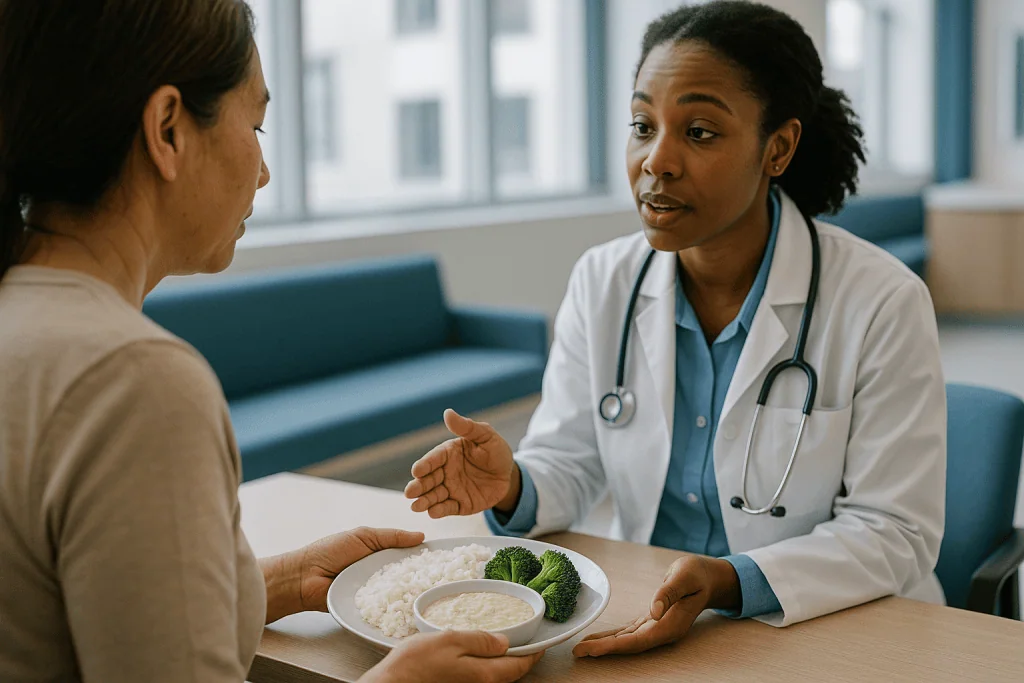
Foods that are commonly well tolerated in this window include:
- Plain starches such as white rice, plain pasta, potatoes without skins, oatmeal, plain crackers and toast
- Bananas, applesauce and stewed or canned fruit without added sugar
- Clear soups and broths with soft noodles or rice
- Eggs, poached or scrambled with little fat
- Skinless chicken or white fish, steamed or poached
- Well-cooked, low-fiber vegetables such as carrots, zucchini or green beans
- Plain yogurt, if it does not cause bloating
None of these has magical properties. Their appeal is simply that they are low in fat, low in insoluble fiber and mild in flavor, which means they pass through the stomach quickly and demand little of the recovering intestine. Salted broths and crackers also quietly replace sodium. Bananas and potatoes contribute potassium, which is lost in diarrhea.
Temperature and texture are worth attention. Many people find lukewarm or room-temperature food easier than very hot or very cold dishes when nauseated, and soft or moist textures go down more easily than dry or crunchy ones. Strong smells from frying or spices can trigger nausea before the first bite, so plain cooking methods help.
If a food sits uneasily, that is information rather than failure. Step back to fluids for an hour or two and try again with a smaller amount. Most people find that by the second day they can eat modest meals of the foods above without difficulty, and the transition to ordinary eating begins.
Is the BRAT diet still recommended after a stomach bug?
Bananas, rice, applesauce and toast, the BRAT diet, has been passed down through generations of parents and pediatricians. It is not harmful for a day, and its components appear on almost every list of gentle foods. But as a formal plan it has fallen out of favor with mainstream guidance, and the reason is instructive.
The problem is not what BRAT includes but what it leaves out. All four foods are low in protein, fat and most micronutrients. A day of them is fine; several days leave a recovering body short of the building blocks it needs to repair the intestinal lining and restore energy. The NIH’s digestive institute advises returning to a normal diet as soon as you can tolerate it rather than restricting to a limited list, and pediatric guidance in the United States has long favored an age-appropriate diet over a bland-only regimen because restrictive diets do not shorten diarrhea and may prolong recovery from the nutritional dip.
The Cleveland Clinic frames it similarly: bland, easily digested foods are reasonable while you feel unwell, but they are a stepping stone rather than a treatment. The intestine repairs itself using amino acids from protein, energy from carbohydrate and fat, and micronutrients such as zinc. A menu of toast and applesauce provides mainly the carbohydrate.
So the honest position is this. BRAT foods are a perfectly good place to begin, particularly if they are what you can face. They are not a prescription, and there is no evidence that staying on them for days heals anything faster. Add an egg, some poached chicken, a little yogurt or cooked vegetables as soon as they appeal, and let the list broaden daily.
What people are really doing when they cling to BRAT is avoiding a bad outcome, another bout of diarrhea. Understanding which foods genuinely tend to provoke symptoms, discussed next, is a more precise way to achieve the same goal without under-eating.
Foods to avoid after gastroenteritis, and for how long
The list of foods to pause is shorter than the list of foods to eat, and the pause is measured in days rather than weeks. Mayo Clinic’s advice on viral gastroenteritis is to avoid certain foods and drinks until you feel better, not indefinitely. The categories below are the ones most consistently associated with renewed symptoms in a recovering gut.
Dairy other than yogurt. Because the virus strips the villus tips that carry lactase, milk, cream and ice cream can cause bloating, cramping and looser stools for a few days. Mayo Clinic suggests pausing dairy for a few days. Hard cheeses and plain yogurt, which are lower in lactose, are often tolerated sooner.
High-fat and fried foods. Fat slows stomach emptying and stimulates gut contractions, both of which can aggravate nausea and diarrhea. Burgers, pastries, creamy sauces and fried snacks are worth postponing for a few days.
Very spicy or heavily seasoned dishes. Capsaicin and strong spices can irritate an already inflamed lining.
Caffeine and alcohol. Both stimulate the bowel, both have a mild diuretic effect that works against rehydration, and alcohol directly irritates the stomach. Mayo Clinic and the NHS both list them among things to skip while unwell.
Very sugary drinks and sweets. Concentrated sugar draws water into the bowel and can worsen diarrhea, which is why undiluted juice and soda are poor rehydration choices.
Large amounts of raw vegetables, whole grains and beans. Insoluble fiber and fermentable sugars are healthy in normal times but can produce gas and urgency in a tender gut. Reintroduce them gradually rather than all at once.
Artificial sweeteners such as sorbitol, found in sugar-free gum and candies, have a laxative effect and are best avoided too.
The timeline is individual. Many people can reintroduce most of these within two to five days, guided by how the gut responds. Persistent intolerance beyond a couple of weeks deserves a conversation with a clinician, discussed further below.
Why is it so hard to eat after norovirus, and what to eat after norovirus specifically
Norovirus earns its reputation. It causes the majority of gastroenteritis outbreaks in the United States, according to the CDC, and it tends to arrive violently: sudden, forceful vomiting, cramping and watery diarrhea, often within a day of exposure. Symptoms usually last one to three days, but the aftermath, an appetite that has simply switched off, can outlast the vomiting.
Several things are happening at once. Vomiting is coordinated by a region in the brainstem, and after an intense episode that circuit stays primed; the smell or thought of food can trigger nausea for a day or more even when the virus is retreating. Stomach emptying may be sluggish during recovery, so small amounts feel filling. Dehydration itself blunts appetite and causes headache and fatigue that make the effort of eating unappealing. And there is a learned component: the brain forms rapid aversions to foods eaten shortly before vomiting, which is why the last thing you ate before falling ill may seem repulsive for weeks.
None of this means the gut cannot handle food. It means the desire lags behind the capacity. The practical response is to separate the two: keep fluids steady, then offer the body small, low-odor foods it has no negative associations with. Plain rice, crackers, broth, banana and toast are popular precisely because they smell of very little.
Norovirus recovery also carries a hygiene dimension that affects the kitchen. People remain contagious for at least two days after symptoms stop, and the NHS advises staying away from work or school for 48 hours after the last episode of vomiting or diarrhea, and not preparing food for others during that time. The CDC emphasizes soap-and-water handwashing because alcohol-based sanitizers work poorly against this virus. If you are the household cook and you are the one recovering, this is a legitimate reason to let someone else handle meals for a couple of days.
Appetite generally returns within a few days. If it does not, or if weight loss continues, it is time to check in with a clinician.
How to heal your stomach after gastroenteritis: what "healing" really means
Search for how to heal the stomach after gastroenteritis and you will find bone broth, ginger, activated charcoal, apple cider vinegar and a dozen supplements, each promising to “restore” the gut. The honest answer is less marketable. The intestine heals itself, quickly and reliably, and the main things you can do are avoid getting in its way and supply the raw materials.
Repair depends on cell division at the base of the villi, which requires energy, protein and a handful of micronutrients. Eating a reasonable amount of ordinary food does more for that process than any single “healing” ingredient. Adequate hydration keeps blood flowing to the gut wall. Sleep matters because the body prioritizes tissue repair during rest. Avoiding alcohol and anti-inflammatory painkillers that irritate the stomach lining, where a clinician agrees, removes two common sources of ongoing insult.
What about the popular remedies? Ginger has some evidence for easing nausea in other settings, such as pregnancy and chemotherapy, and a mild ginger tea is unlikely to do harm; the evidence specifically in gastroenteritis is thin. Broth is a reasonable source of fluid and salt; claims that its collagen “seals” the gut are not supported by clinical evidence. Charcoal, vinegar and detox products have no demonstrated benefit for viral gastroenteritis, and some can interfere with medicines or cause their own gastrointestinal upset.
The gut microbiome, the community of bacteria living in the intestine, is disturbed by the illness and by any antibiotics used, and it too recovers on its own over days to weeks. Eating a varied diet with fiber, once tolerated, feeds the bacteria that normally dominate a healthy gut. Fermented foods such as yogurt may help some people feel better and are safe to try, though the evidence that they speed recovery is inconclusive.
“Healing the stomach,” then, is mostly patience plus nutrition. If symptoms persist beyond the expected window, the next step is medical assessment rather than a stronger supplement.
What to eat after gastroenteritis week by week: a realistic timeline
Recovery rarely follows a neat schedule, but most people move through recognizable phases. The table summarizes what each phase usually looks like, what tends to be tolerated, and what is commonly worth pausing. Timeframes are typical ranges drawn from NHS and Mayo Clinic descriptions of the illness, not deadlines.
| Phase | What is usually happening | Foods commonly tolerated | Often worth pausing |
|---|---|---|---|
| Active vomiting (hours to 1–2 days) | Stomach emptying itself; fluid loss is the main risk | Small, frequent sips of water, oral rehydration solution, diluted juice, broth | Solid food until vomiting settles; sugary or fizzy drinks |
| First meals (day 1–2 after vomiting stops) | Appetite flickering; diarrhea may continue | Crackers, toast, rice, banana, applesauce, broth with noodles, eggs | Milk, cream, fried and spicy food, alcohol, caffeine |
| Rebuilding (days 2–5) | Villi regenerating; energy returning | Poached chicken or fish, cooked vegetables, potatoes, oatmeal, yogurt, hard cheese | Large raw salads, beans, very rich meals, milk if still causing bloating |
| Back to normal (days 5–14) | Diarrhea usually resolved; occasional loose stool | Ordinary varied diet, whole grains and fiber reintroduced gradually | Anything that clearly still triggers symptoms; alcohol in excess |
| Beyond two weeks | Most people fully recovered | Normal diet | Persistent symptoms warrant medical review rather than further restriction |
Two patterns are worth noting. Energy often returns before appetite does, and appetite often returns before the bowel is entirely settled. Neither lag is a reason to restrict food; both are normal sequences of recovery.
The NHS expects diarrhea to stop within about five to seven days and vomiting within one or two; Mayo Clinic notes symptoms occasionally last up to ten days. If you are still unwell beyond those ranges, or getting worse rather than better at any point, the timeline has stopped being reassuring and a clinician should take a look.
Who can go straight back to normal eating, and who is usually asked to take it slowly
For a healthy adult with a straightforward viral illness, the answer is simple: eat what appeals as soon as it appeals, ease off dairy and richer foods for a few days if they cause trouble, and expect to be back to a normal diet within a week. Most of the caution in this article is precautionary rather than mandatory.
Several groups are usually advised to be more deliberate, or to involve a clinician early.
Infants and young children. Breastfed babies should continue breastfeeding throughout, and formula-fed babies should continue their usual formula; guidance from the NHS and CDC does not recommend diluting formula or switching to special products without medical advice. Older children can resume their normal diet as soon as they will eat. Because children dehydrate quickly, fluid intake is monitored more closely than food intake.
Older adults. Thirst sensation dulls with age, kidney reserve is lower, and many take medicines, diuretics, blood pressure drugs, diabetes medicines, whose effects change when someone stops eating and drinking normally. Older adults are more likely to need a clinician’s input on whether any medicine should be temporarily adjusted, a decision that rests with the prescribing team.
People with diabetes. Illness raises blood glucose while poor eating lowers it, and some medicines carry specific risks during dehydration. Anyone with diabetes should follow their sick-day plan and contact their care team if unsure.
People with inflammatory bowel disease, celiac disease or a history of bowel surgery. A stomach bug can be hard to distinguish from a flare, and the usual gentle-food advice may need tailoring.
People with weakened immunity, kidney disease or heart failure, and those who are pregnant. The margin for dehydration is narrower, and the NHS lists these groups among those who should seek advice sooner.
In every case, the principle is the same, fluids first, food as tolerated, but the threshold for picking up the phone is lower.
Do probiotics, supplements or medicines help you eat again sooner?
Probably less than the shelves suggest. A few categories deserve an honest look, because people ask about them constantly and the evidence is uneven.
Probiotics. These are live bacteria or yeasts taken in the hope of restoring gut flora. Reviews have reached mixed conclusions, and large, well-designed trials in children with acute gastroenteritis have not shown a clear benefit on the course of the illness. Mainstream guidance from the NIH and NHS does not recommend them routinely. Plain yogurt is a reasonable food to eat if you enjoy it; buying a supplement in the expectation that it will shorten recovery is not well supported.
Zinc. The WHO recommends zinc supplementation for children with diarrhea in low-income settings where deficiency is common, and the evidence there is reasonable. In well-nourished populations the benefit is far less clear, and it is not part of routine advice in the United States or United Kingdom.
Anti-nausea medicines. Antiemetics block signals in the brain’s vomiting pathway and can make it possible to keep fluids down. Whether one is appropriate depends on age, other medicines and the cause of the illness, and it is a decision for a clinician.
Antimotility agents. Medicines in this class, such as loperamide, slow the movement of the bowel and reduce stool frequency. They are not recommended for young children, and the NHS and Mayo Clinic advise against them when there is blood in the stool or high fever, because slowing the gut can be harmful in certain bacterial infections. Anyone considering one should check with a clinician or pharmacist.
Antibiotics. Most gastroenteritis is viral, and antibiotics do nothing against viruses. In some bacterial cases they can prolong carriage or worsen outcomes. They are prescribed only in specific circumstances after assessment.
The medicine with the best evidence in gastroenteritis is oral rehydration solution. Nothing else on this list comes close, and none of them substitutes for the gradual return to ordinary food.
What people often get wrong about eating after a stomach bug
Some of the most common beliefs about post-gastroenteritis eating are well meaning and wrong. Correcting them saves days of unnecessary misery.
“Starve the bug.” Fasting does not shorten a viral infection, and the intestine repairs faster with nutrients present than without. Guidance from the NHS and NIH is to eat when you feel able.
“Wait until the diarrhea has completely stopped.” Loose stools can persist for up to a week after vomiting ends. Waiting that long to eat leaves people weak and slows recovery. Starchy foods actually help the gut reabsorb water.
“Flat soda or sports drinks are the best rehydration.” Both are typically high in sugar and low in sodium, roughly the opposite of what oral rehydration solution provides. They are better than nothing but not the best choice.
“Dairy is off the menu for weeks.” Temporary lactase loss usually resolves within days. Mayo Clinic suggests pausing dairy for a few days, not weeks, and low-lactose options such as yogurt and hard cheese are often fine sooner.
“You must stick to BRAT until you are better.” A restricted diet lacks protein and micronutrients the gut needs. Broaden the menu as soon as foods appeal.
“Antibiotics will clear it up.” Most cases are viral; antibiotics are useless against viruses and can occasionally make bacterial cases worse.
“Once I feel better I’m no longer contagious.” Norovirus continues to shed for at least 48 hours after symptoms end, which is why the NHS asks people to stay home and avoid preparing food for others during that window.
“Hand sanitizer is enough.” The CDC is explicit that alcohol-based gels are less effective against norovirus than washing with soap and water.
“Something I ate must have caused it.” Food poisoning is one cause, but norovirus and other viruses spread readily from person to person, and the last meal is often blamed unfairly.
When symptoms linger: post-infectious IBS and temporary lactose intolerance
Most people are eating normally within a week or two. A minority find that their gut does not fully settle, and two patterns account for most of these cases.
Temporary lactose intolerance. Because the enzyme lactase lives on the villus tips that the virus damages, milk sugar may go undigested for a while, fermenting in the colon and causing gas, bloating and loose stools. This is not a permanent change and does not mean you have developed a milk allergy. Most people find dairy tolerable again within days; Mayo Clinic suggests pausing it for a few days while recovering. If dairy still causes symptoms after a couple of weeks, a clinician can help sort out whether something else is going on.
Post-infectious irritable bowel syndrome. Irritable bowel syndrome, or IBS, is a disorder of gut function marked by abdominal pain with altered bowel habit in the absence of structural disease. A well-recognized subgroup develops it after an episode of gastroenteritis. A systematic review and meta-analysis published in Gastroenterology and indexed on PubMed estimated that roughly one in ten people develop IBS in the year following infectious enteritis, with higher risk after bacterial infections, more severe illness, and in those with anxiety or depression. The mechanism is thought to involve low-grade inflammation, altered gut nerve sensitivity and changes in the microbiome.
The distinction matters for eating. Post-infectious IBS is usually managed with the same approaches as other IBS, regular meals, attention to trigger foods, sometimes a structured dietary approach guided by a dietitian, rather than continued “recovery” eating. Many people improve gradually over months. It is not a sign of ongoing infection or of damage that requires special healing foods.
Ongoing symptoms also need to be distinguished from other conditions: a bacterial or parasitic infection that was never identified, celiac disease unmasked by the illness, or inflammatory bowel disease. That is a diagnostic question for a clinician, and it should not be answered by trial-and-error restriction at home.
Questions to ask your care team
Most bouts of gastroenteritis never involve a clinician, and that is appropriate. When you do speak to one, because you are in a higher-risk group, because symptoms are lasting longer than expected, or because a family member is unwell: a few well-aimed questions make the conversation more useful.
- Given my age and health conditions, are there any signs of dehydration I should watch for particularly closely?
- Should I use an oral rehydration solution, and how will I know whether I am keeping up with fluid losses?
- Do any of my regular medicines need to be paused or adjusted while I am not eating and drinking normally? (This is especially relevant for diabetes medicines, diuretics and blood pressure drugs, and the decision rests with the prescriber.)
- Is there anything about my situation that makes an anti-nausea or antidiarrheal medicine appropriate, or inappropriate?
- Do I need a stool test? When is testing useful and when is it not?
- How long should I stay away from work, school or caring for others, and when can I safely prepare food for the household?
- If I am still having symptoms after a week or two, what should the next step be?
- For a child: what fluid intake and urine output should I be aiming for, and what would make you want to see them in person?
- For someone with inflammatory bowel disease or another gut condition: how do I tell a stomach bug from a flare, and does my usual plan change?
- Are there any foods I should specifically avoid for longer given my history?
Writing down the timeline, when symptoms started, how often vomiting and diarrhea have occurred, what fluids have stayed down, any fever, any blood, helps a clinician far more than a general description of feeling terrible. If you are caring for someone else, note how often they are passing urine; it is one of the most useful pieces of information you can provide.
When to call your doctor
Gastroenteritis is usually a self-limiting illness, but certain signs mean the situation has moved beyond home care. The NHS, Mayo Clinic and CDC broadly agree on the red flags below. Seek medical advice promptly, and urgent or emergency care for the more severe items, if any of these apply.
- Signs of dehydration that are not improving with fluids: passing little or no urine, very dark urine, dizziness or fainting on standing, confusion, rapid heartbeat, or extreme drowsiness
- Inability to keep any fluids down for more than a few hours, or repeated vomiting for more than two days in an adult
- Diarrhea lasting more than seven days, or vomiting lasting more than two days
- Blood in the stool, black or tarry stools, or vomiting blood
- Green or yellow-green vomit, which can suggest a blockage
- Severe or worsening abdominal pain, or pain localized to one area
- A high fever, or any fever in a very young infant
- Recent travel abroad, which raises the possibility of a bacterial or parasitic cause needing specific treatment
- Symptoms in someone who is pregnant, over 65, has a weakened immune system, or has kidney disease, heart failure or diabetes
For babies and young children, additional warning signs include a sunken soft spot on the head, no wet diapers for several hours, crying without tears, unusual sleepiness or irritability, and refusing to drink. Children lose proportionally more fluid than adults and can deteriorate quickly; if you are worried, that alone is reason enough to call.
Anyone who develops symptoms of gastroenteritis shortly after starting antibiotics, or who has been in hospital recently, should also seek advice, since a bacterial infection called Clostridioides difficile needs different management.
What to eat matters, but it is never the urgent question. If you are unsure whether a symptom is a red flag, treat it as one and make the call. Every decision about tests, medicines and next steps belongs with the clinician who can examine you.
Frequently asked questions
What can I eat after recovering from gastroenteritis?
Start with small portions of plain starches, lean protein and cooked vegetables, rice, toast, crackers, potatoes, eggs, poached chicken, bananas, applesauce and broth, then widen the menu daily as your appetite allows. Most people are back to an ordinary varied diet within about a week. Pause dairy, fried, spicy and very sugary foods, alcohol and caffeine for a few days if they provoke symptoms, then reintroduce them gradually.
When should you start eating again after gastroenteritis?
As soon as vomiting has settled for a few hours and you can keep fluids down. The NHS advises eating when you feel able, and NIH guidance is to return to your normal diet as soon as you tolerate it. There is no benefit in fasting for a set period, and ongoing diarrhea is not a reason to delay, starchy foods actually help the gut reabsorb water.
How do you heal the stomach after gastroenteritis?
Mostly by letting it heal itself. The intestinal lining regenerates over a few days, and the useful supports are steady hydration, sleep, and a gradually widening ordinary diet that supplies protein and micronutrients. Popular remedies such as bone broth, charcoal or vinegar have no clinical evidence of speeding recovery. If symptoms persist beyond two weeks, medical assessment is the right next step, not a stronger supplement.
Why is it so hard to eat after having norovirus?
Because the brain’s vomiting circuit stays primed after intense vomiting, stomach emptying is sluggish, dehydration blunts appetite, and the mind forms rapid aversions to whatever was eaten before falling ill. Norovirus symptoms usually last one to three days, but appetite can lag behind. Small, low-odor foods and steady fluids help bridge the gap, and appetite generally returns within a few days.
What are the main foods to avoid after gastroenteritis?
Milk and cream (yogurt and hard cheese are often fine), fried and fatty foods, very spicy dishes, alcohol, caffeine, sugary drinks and sweets, artificial sweeteners such as sorbitol, and large amounts of raw vegetables, beans or whole grains. Mayo Clinic advises avoiding these until you feel better, typically a few days. Reintroduce them one at a time and let your gut’s response guide the pace.
What should I eat after norovirus if I still have diarrhea?
The same gentle foods that suit early recovery: rice, toast, crackers, potatoes, bananas, broth, eggs and cooked vegetables. Continuing to eat while diarrhea persists is recommended, not discouraged, because carbohydrate helps the intestine absorb water and sodium. Keep drinking oral rehydration solution or diluted juice alongside meals, and pause dairy and fatty foods until stools begin to firm up.
How long does a stomach bug usually last?
The NHS says vomiting usually settles within one or two days and diarrhea within five to seven days. Mayo Clinic notes viral gastroenteritis symptoms typically last one or two days but occasionally up to ten. Norovirus itself usually causes symptoms for one to three days. Symptoms lasting longer than these ranges, or worsening at any point, warrant medical advice.
Can I drink milk after gastroenteritis?
Usually yes, after a short pause. The virus damages the cells that produce lactase, so milk can cause bloating and loose stools for a few days. Mayo Clinic suggests avoiding dairy for a few days while recovering. Yogurt and hard cheese, which are lower in lactose, are often tolerated sooner. If milk still causes symptoms after a couple of weeks, discuss it with a clinician.
Do probiotics help you recover from gastroenteritis faster?
The evidence is mixed and mainstream guidance does not recommend them routinely. Large trials in children with acute gastroenteritis have not shown a clear benefit on the course of illness. Eating plain yogurt is a reasonable food choice if you enjoy it, but oral rehydration solution remains the intervention with the strongest evidence. Any decision about supplements is best discussed with your care team.
When is it safe to cook for my family after a stomach bug?
The NHS advises waiting until 48 hours after your last episode of vomiting or diarrhea before preparing food for others, because norovirus continues to shed after symptoms stop. Wash hands thoroughly with soap and water rather than relying on alcohol gel, which the CDC notes is less effective against norovirus, and clean kitchen surfaces carefully before resuming.
References
- NHS – Diarrhoea and vomiting
- NIDDK (NIH) – Eating, Diet, & Nutrition for Viral Gastroenteritis ("Stomach Flu")
- CDC – About Norovirus
- Cleveland Clinic – Gastroenteritis
This article is for general information only and is not a substitute for professional medical advice. Please consult a qualified doctor about your individual situation.

More from the Blog

Planning Endoscopy or Colonoscopy in Istanbul: Stay Length, Sedation and the Trip Home
If you are having an upper endoscopy or colonoscopy while away from home, the medical picture is reassuring but not instant: both are usually…

Which H. Pylori Test Comes First for a Stomach Ulcer? Breath, Stool and Biopsy Compared
For a suspected stomach ulcer, most guidelines favor a non-invasive H. pylori test first, usually a urea breath test or a stool antigen test,…

What Remission Looks Like in Autoimmune Hepatitis and Why Monitoring Continues
Autoimmune hepatitis remission means the immune attack on the liver has quieted: liver enzymes and immunoglobulin G return to normal, and a biopsy, if…

Lactose Intolerance Myths: Do You Have to Give Up All Dairy for Good?
No. Most people with lactose intolerance do not need to give up all dairy. The condition means the small intestine makes less lactase, the…

Preparing for Varices Endoscopy: Fasting, Clotting Tests and the Blood Thinner Question
Preparing for varices endoscopy usually means fasting for several hours beforehand, having blood tests that check clotting and platelet levels, and reviewing every medicine…

Why Cirrhosis Patients Have Regular Ultrasound Scans and Blood Tests: Surveillance Explained
People with cirrhosis have an ultrasound scan and blood tests about every six months because scarred liver tissue carries a higher risk of liver…