

What to Stop Before a Chemical Peel: Retinoids, Scrubs, Waxing and Sun Exposure

Key Takeaways
- The Mayo Clinic advises stopping facial scrubs, masks, depilatory creams and electrolysis for about a week before a chemical peel, and not shaving the area from 24 hours beforehand.
- Topical retinoids thin the outer skin layer and increase how deeply a peel penetrates, so they are usually paused before the procedure, though a clinician may deliberately prescribe one in the weeks beforehand and stop it shortly before.
- A fresh tan signals activated pigment cells, and peeling tanned or burned skin raises the chance of patchy darkening or lightening, which is higher in darker skin tones.
- Oral isotretinoin changes wound healing, and the Mayo Clinic cites a typical gap of about six months after a course before a chemical peel is considered.
- Even one past cold sore matters, because a peel can reactivate the herpes simplex virus across healing skin, and clinicians may prescribe antiviral cover.
- Healing after a light peel typically takes 1 to 7 days and after a medium peel 7 to 14 days, with redness after medium and deep peels that can persist for months (Mayo Clinic).
Before a chemical peel, people are usually asked to pause topical retinoids and exfoliating acids, stop facial scrubs, masks and exfoliating devices, avoid waxing, depilatory creams, electrolysis and laser hair removal on the treatment area, skip shaving for about a day, and avoid unprotected sun exposure or tanning. Specific timings vary by peel depth, so follow the written instructions from your treating team.
The appointment is on the calendar, the deposit is paid, and now a small worry surfaces on a Tuesday evening in front of the bathroom mirror: that tube of tretinoin, the one you have used faithfully for two years, is it a friend or a problem this week? And what about the exfoliating pads, the eyebrow wax booked for Saturday, the beach weekend your sister planned?
These are the right questions. Knowing what to avoid before a chemical peel matters more than most people expect, because a peel is not a facial. It is a controlled chemical injury, and the result depends as much on the skin you bring to the room as on the acid the clinician paints across it.
This explainer walks through the four things clinicians most often ask people to stop, why each one changes how the acid behaves, what the typical timelines look like, and which decisions belong with your treating team rather than a search bar.
What to avoid before a chemical peel, and why the list exists
Almost every pre-peel instruction sheet comes down to the same four themes: retinoids, scrubs, hair removal and sun. Each one does something to the skin barrier, the thin outer layer that controls how much of anything, including a peel solution, gets through.
A peel works by dissolving a measured depth of skin. If the barrier is already thinned by a retinoid, roughened by a scrub, lifted off by wax or inflamed by sunburn, the acid penetrates faster and less evenly than the clinician planned. The practical consequences are the problems the Mayo Clinic lists among chemical peel risks: prolonged redness, patchy darkening or lightening of the skin, scarring and infection.
So the list is not about being cautious for its own sake. It is about making the skin predictable. A clinician choosing a light glycolic acid peel for someone with fresh, calm skin can estimate how deep it will go and how long the result will take to show. The same peel on skin that was waxed yesterday behaves like a stronger product.
Timelines on these lists are typical ranges, not rules carved in stone. The Mayo Clinic describes stopping certain hair removal methods and facial scrubs or masks for about a week before a peel, and pausing shaving the day before. Your own instructions may be longer or shorter depending on the peel depth, your skin type and your history. When the sheet in your hand disagrees with a sheet on the internet, the one from your treating team wins.
The sections that follow take each theme in turn, then put the timing together in a single table.
How a chemical peel actually works on your skin
A chemical peel is a procedure in which an acid solution is applied to the skin to remove its outer layers in a controlled way, so that smoother, more evenly pigmented skin grows back in their place. The Mayo Clinic groups peels into three depths, and the depth decides almost everything else.
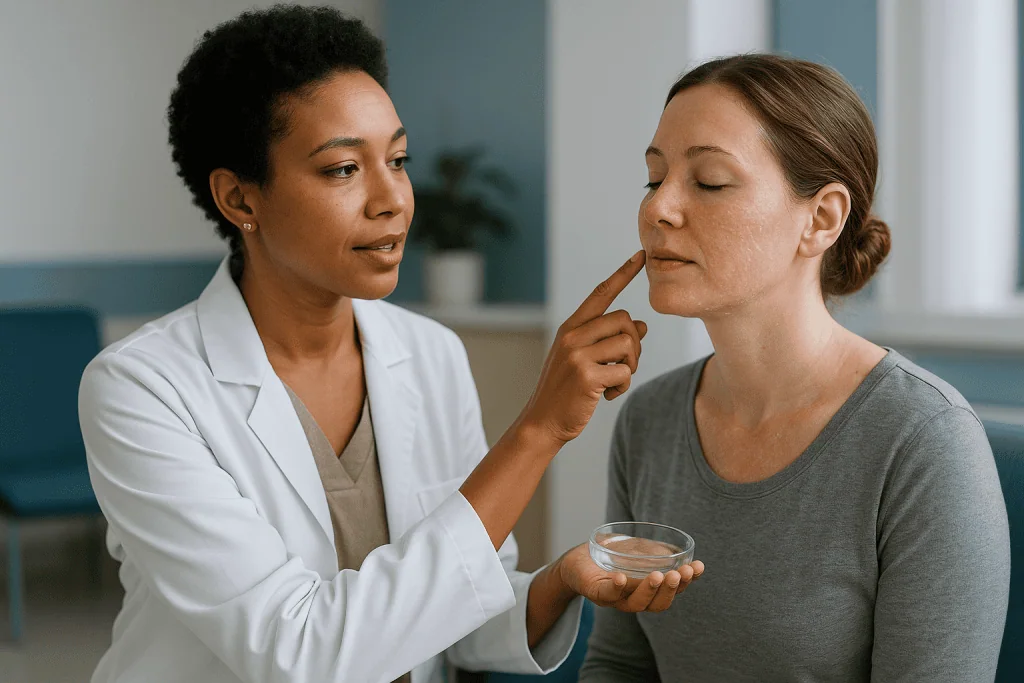
A light, or superficial, peel removes the epidermis, the outermost layer. Alpha hydroxy acids such as glycolic or lactic acid, or a beta hydroxy acid such as salicylic acid, are typical. The skin feels tight and flakes for a few days.
A medium peel reaches the upper part of the dermis, the living layer beneath the epidermis that holds collagen. Trichloroacetic acid, sometimes combined with glycolic acid, is the usual agent. Swelling and crusting are expected.
A deep peel goes further into the dermis, classically with phenol. It is a significant procedure, often done with sedation and heart monitoring, and the Mayo Clinic notes it is usually performed only once.
The mechanism in every case is the same: the acid breaks the bonds holding dead and damaged cells together, the body responds with inflammation, and new cells migrate across the wound from hair follicles and the surrounding edge. That repair process is why pre-peel preparation matters so much. Hair follicles that were just waxed, or a dermis already inflamed by sun, cannot supply the orderly new skin the clinician is counting on.
Understanding this also explains why peel instructions are oddly specific. The clinician is not guessing. Each item on the list protects one step in that repair sequence.
Who a chemical peel is usually for, and who is usually asked to wait
Clinicians commonly offer chemical peels for fine lines, uneven pigmentation, sun damage, acne and acne scarring, and rough skin texture, according to the Cleveland Clinic. The depth chosen depends on the concern, the person’s skin tone and how much downtime they can accept.
Several groups are routinely asked to wait or to consider another option. The Mayo Clinic flags people who have taken oral isotretinoin, an acne medicine that profoundly changes how skin heals, within the previous six months. It also lists a personal or family history of keloids, which are raised scars that grow beyond the original wound, and darker skin tones, who face a higher chance of post-inflammatory hyperpigmentation, the darkening that can follow any skin inflammation. Pregnancy is another situation in which many clinicians defer peels.
Active infections matter too. A cold sore, an impetigo patch or an open acne cyst in the treatment area is a reason to reschedule, because a peel can spread the infection across newly opened skin. Recent sunburn, a fresh tan, broken skin and any recent cosmetic procedure on the same area are also common reasons for postponement.
None of this means a peel is off the table forever. It means the clinician wants a healed, calm, uninfected face to work with, and that assessment belongs to the treating team at an in-person consultation. A good consultation includes a look at your skin under good light, a run through your medicines and supplements, and a frank discussion of whether a lighter peel, a series of lighter peels, or a different treatment altogether fits your goals better.
Retinol before a chemical peel: why clinicians usually ask you to pause it
Retinoids are a family of vitamin A derivatives, including prescription tretinoin and over-the-counter retinol, that speed up skin cell turnover. Harvard Health explains that they work by increasing collagen production and encouraging new blood vessel growth, which is why they are widely used for fine lines and acne. The same mechanism is the reason they are paused before a peel.
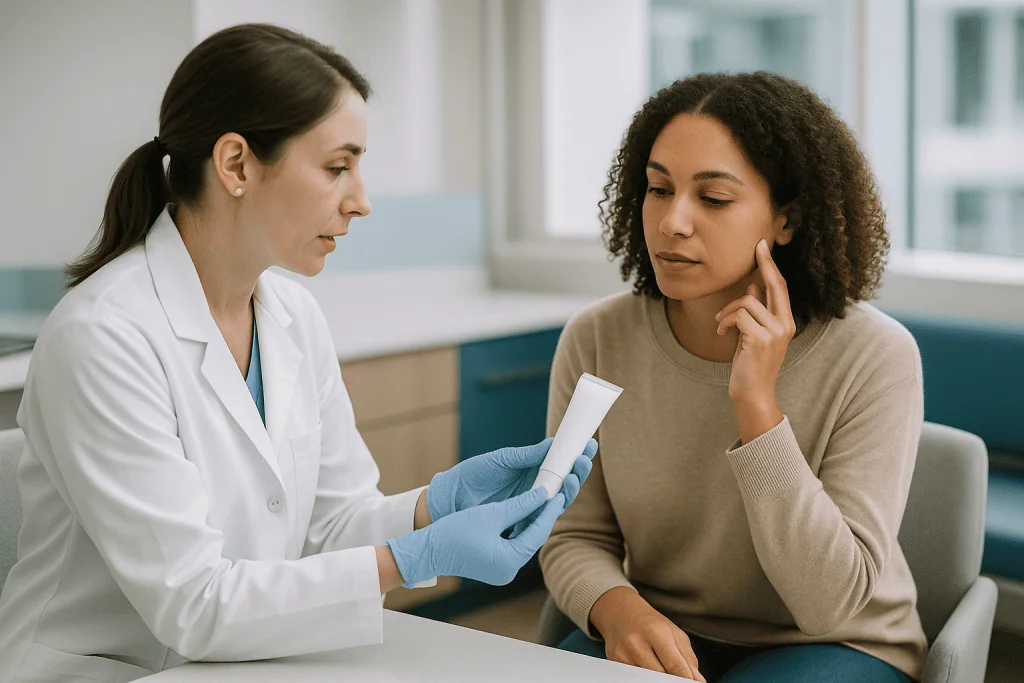
Skin on a retinoid has a thinner, more loosely packed outer layer. MedlinePlus lists peeling, redness, dryness and increased sensitivity to sunlight among the expected effects of topical tretinoin. Apply a peel solution to that skin and it penetrates deeper and faster than the clinician planned, which raises the chance of excessive redness, prolonged peeling and uneven pigment change.
There is a nuance worth stating honestly. The Mayo Clinic notes that a clinician may deliberately prescribe a retinoid cream in the weeks leading up to a peel, because pre-treated skin can heal more predictably once the retinoid is then stopped shortly before the procedure. So retinoid use before a peel is not simply forbidden; it is timed. Many instruction sheets ask for a pause of several days to a week before a light peel and longer before a medium or deep one, but the exact window is set by the person doing the peel.
Two practical points follow. First, tell your care team every retinoid you use, including the one inside a combination night cream or an acne gel you have forgotten the name of. Second, do not stop a prescribed retinoid for another condition without a word with the prescribing clinician; a quick message is usually all it takes.
Scrubs, exfoliating acids and devices: giving the skin barrier a rest
Physical scrubs, exfoliating acids and cleansing devices all do a gentler version of what a peel does. Used in the days before a professional peel, they stack one injury on top of another.
Grainy scrubs create microscopic scratches in the outer layer. Washcloths, cleansing brushes and dermaplaning, the removal of fine facial hair and dead cells with a blade, have a similar effect. Chemical exfoliants such as glycolic, lactic or salicylic acid in toners, pads and serums thin the outer layer chemically. The skin may look brighter for a day, but its barrier is compromised, and a peel applied on top will not behave as expected.
The Mayo Clinic advises avoiding facial masks and facial scrubs in the week before a peel. Many clinicians extend that to any at-home acid product and to in-office exfoliating treatments such as microdermabrasion.
Benzoyl peroxide, a common acne ingredient, is another one worth mentioning because it dries and irritates skin in a way that is easy to overlook. Vitamin C serums are usually tolerated, but high-strength ascorbic acid formulas are acidic and can sting on compromised skin, so some clinicians ask for a short pause.
The simplest approach for the final week is a bland routine: a gentle non-foaming cleanser, a plain moisturizer and a broad-spectrum sunscreen. It feels underwhelming after years of active ingredients, and that is the point. The clinician wants skin that is calm, hydrated and boring on the day.
If you are unsure whether a product counts as an exfoliant, bring the bottle or a photo of the ingredient list to the consultation. It takes a minute and removes the guesswork.
Waxing before a chemical peel: hair removal, shaving and threading
Waxing pulls hair out at the root, and with it a layer of skin cells. The surface looks smooth, but under magnification it is a field of tiny open follicles and a thinned barrier. Peel solution applied over freshly waxed skin burns more deeply and more unevenly, which is why hair removal appears on every pre-peel list.
The Mayo Clinic advises avoiding certain hair removal techniques in the week before a peel, naming electrolysis and depilatory creams, and most clinicians treat waxing, sugaring and threading the same way. Laser hair removal on the treatment area is also usually separated from a peel by a longer gap because both treatments inflame the skin, and the exact interval is set by the treating team.
Shaving is gentler but still removes surface cells. The Mayo Clinic advises not shaving the treatment area beginning 24 hours before the peel. For someone planning a peel on the chin or upper lip, that means booking the appointment with a slightly stubbly day in mind.
Eyebrow tidying is the one people forget. An eyebrow wax two days before a forehead peel can leave two stripes of over-treated skin above the brows. If the brows need attention, do it well ahead of the peel or wait until the skin has healed afterward.
A practical tip: if you have a regular waxing appointment, move it rather than cancel it, and tell the technician why. Freshly peeled skin cannot be waxed either, so there is usually a window of a few weeks on either side of the procedure when hair removal in the treated area is off the table. Your care team can tell you when it is safe to resume.
Sun exposure and tanning before a chemical peel
Sun is the item most likely to derail a peel, because its effects last longer than a scrub’s and are harder to see.
Ultraviolet light damages skin cells, triggers inflammation and stimulates melanocytes, the pigment-producing cells. A tan is the visible sign that melanocytes are already on high alert. The Mayo Clinic lists changes in skin color, both darkening and lightening, among the risks of peels, and notes that the risk is higher in people with darker skin and after sun exposure. Peeling tanned or recently burned skin invites blotchy, uneven pigment that can take months to settle.
The Mayo Clinic advises avoiding unprotected sun exposure before a peel, and many clinicians ask for several weeks of diligent protection for medium and deep peels. Tanning beds count as sun, and so do self-tanners in a different way: they stain the outer layer, which makes the skin’s response during the peel harder for the clinician to read.
Protection means more than skipping the beach. The CDC recommends broad-spectrum sunscreen with SPF 15 or higher, shade, long sleeves and a wide-brimmed hat, and notes that UV rays are strongest in the middle of the day and reflect off water, sand and concrete. The Mayo Clinic suggests SPF 30 or higher for everyday use and reapplication every two hours when outdoors.
If a sunburn happens anyway, call before the appointment rather than hoping it fades. Rescheduling by a couple of weeks is a minor inconvenience. Pigment change from peeling burned skin is not.
Medicines, supplements and history your care team needs to know about
Some of the most important things to stop, or at least to declare, are not skincare products at all.
Oral isotretinoin is the clearest example. It is an acne medicine that shrinks oil glands and alters wound healing. MedlinePlus advises people taking it to avoid cosmetic procedures that smooth the skin, including chemical peels, during treatment and for a period afterward because of the risk of scarring. The Mayo Clinic cites six months as the usual gap. Never stop isotretinoin or any prescription on your own to meet a peel date; that conversation belongs with the prescribing clinician.
Cold sores matter because the herpes simplex virus lives in nerve endings and reactivates when skin is injured. A peel across the lips or lower face can trigger an outbreak that spreads over the healing area. The Mayo Clinic notes that clinicians may prescribe an antiviral medicine before and after a peel for people with a history of cold sores, so mention even one episode from years ago.
Photosensitizing medicines, those that make skin more reactive to light, deserve a mention: some antibiotics, some diuretics and some acne treatments fall in this group, and the clinician may adjust timing. Blood thinners, immunosuppressants and recent courses of oral steroids affect healing and bleeding. A history of keloid scars, radiation to the face, recent facial surgery, autoimmune skin disease or vitiligo also changes the plan.
Bring a written list, including supplements and anything bought online. Clinicians are not judging; they are checking the one detail that would make them choose a lighter peel or a later date.
What to stop and when: a typical timeline before a chemical peel
The table below gathers the common instructions into one place. The timings reflect what the Mayo Clinic and the Cleveland Clinic describe as typical for light to medium peels; your own sheet may differ, and it takes priority.
| Item | Typical guidance before the peel | Why |
|---|---|---|
| Topical retinoids (tretinoin, retinol, adapalene) | Paused for several days to a week or more, as directed; sometimes prescribed beforehand then stopped | Thins the outer layer, increases penetration |
| Exfoliating acids, scrubs, masks, devices | Stopped for about a week (Mayo Clinic) | Compromises the barrier, stacks injury |
| Waxing, depilatories, electrolysis, threading | Avoided for about a week (Mayo Clinic) | Opens follicles, removes surface cells |
| Shaving the treatment area | Stopped from 24 hours before (Mayo Clinic) | Removes surface cells, causes micro-nicks |
| Unprotected sun, tanning beds, self-tanner | Avoided in the weeks before, with daily sunscreen | Primes pigment cells, inflames skin |
| Oral isotretinoin | Usually a gap of about six months after the course (Mayo Clinic) | Impaired healing, scarring risk |
| Cold sore history | Declared; clinician may prescribe antiviral cover | Peel can trigger and spread outbreak |
| Other cosmetic procedures on the same area | Interval set by the treating team | Cumulative inflammation |
Two things stand out when the list sits together. First, most items cluster in the final week, which makes the week before a peel a genuinely low-maintenance one: cleanse, moisturize, protect, and leave the skin alone. Second, the long-range items, isotretinoin and sun habits, cannot be fixed in a week. They are reasons to plan a peel months ahead rather than on impulse.
If anything in the table surprised you, raise it at the consultation. A clinician would far rather adjust the date than discover a conflict on the day.
How to prepare for a chemical peel in the final week
Once the stopping is done, preparation turns into a short list of gentle habits.
Keep the skin hydrated. A plain moisturizer twice a day helps the barrier recover from whatever actives were stopped and gives the clinician a calm, even surface. Avoid new products entirely; this is not the week to try a sample from a friend.
Protect from sun every day, including cloudy ones. The CDC notes that UV rays can reach skin through clouds and reflect off surfaces, so a broad-spectrum sunscreen in the morning is part of preparation, not an optional extra.
Arrive with clean, product-free skin. Most clinics ask for no makeup, no sunscreen and no moisturizer on the day so the solution contacts skin directly and evenly. Bring a hat and sunglasses for the journey home, because the skin will be more light-sensitive from the moment you leave.
Plan the calendar. The Mayo Clinic describes healing of 1 to 7 days after a light peel, 7 to 14 days after a medium peel, and about two weeks of initial healing after a deep peel, with redness that can persist for months. Work events, photographs and holidays should sit outside those windows. For a medium or deep peel, arrange someone to drive you home if sedation is planned.
Ask what you will need afterward. A gentle cleanser, a bland ointment or moisturizer as the clinician specifies, and sunscreen are the usual essentials. Having them on the bathroom shelf before the appointment removes a trip to the shop on a day when you would rather not be out in daylight.
Finally, sleep and eat normally. Preparation for a peel is unglamorous. That is a feature.
What the days and weeks after a chemical peel usually look like
Knowing the typical arc helps you tell normal healing from something that needs a call.
After a light peel, the Mayo Clinic describes redness, dryness and mild irritation that are usually less noticeable with each repeat treatment, with healing over 1 to 7 days. The skin may look slightly pink and feel tight, then flake lightly for a few days. Makeup can often be worn the next day, but confirm with your clinician.
A medium peel produces more visible change. The Mayo Clinic describes redness and swelling, a stinging sensation, and skin that may blister and crust before peeling off over 7 to 14 days. Swelling can be most obvious around the eyes in the first couple of days. New skin that emerges is often pink and sensitive, and the Mayo Clinic notes redness can last for months after a medium peel.
A deep peel involves severe redness and swelling, bandaging in some cases, prescribed pain relief, and about two weeks before new skin develops, with redness persisting for several months, again per the Mayo Clinic. Follow-up visits are routine.
Across all depths, the skin is more vulnerable to sun during healing, and the Mayo Clinic advises that treated skin may be more sensitive to the sun for a time afterward, so protection continues well past the point where the skin looks normal. Results from a single light peel are subtle, which is why light peels are often planned as a series at intervals set by the clinician. Medium and deep peel results take weeks to months to fully declare themselves as swelling resolves and pigment settles.
What to avoid after a chemical peel
The after-list mirrors the before-list, with one addition that trips up nearly everyone: picking.
Do not peel the peeling skin. Flakes and crusts are protecting the new cells beneath them. Pulling them off early exposes raw tissue and is a common route to scarring and dark patches. Let them come away on their own in the shower or with a gentle cleanser.
Keep retinoids, exfoliating acids, scrubs and devices paused until the clinician clears them. Reintroducing an acid onto skin that is still repairing undoes the benefit and extends the redness. The same applies to waxing, threading and shaving in the treated area until the skin is fully closed.
Avoid sun. The CDC’s basics apply with extra force: shade, a wide-brimmed hat, sunglasses, and broad-spectrum sunscreen once the clinician confirms the skin can tolerate it. Early on, physical shade and a hat do most of the work because sunscreen may sting on open skin.
Skip heat. Saunas, hot showers aimed at the face, intense exercise and steam rooms increase blood flow and swelling, and sweat can irritate healing skin. Swimming pools and hot tubs introduce chlorine and bacteria to open areas.
Hold off on makeup until the clinician says otherwise, and when you resume, use clean brushes or sponges. Avoid new skincare products for the healing period; this is a bad time to discover an allergy.
Finally, resist comparing your face to day-by-day photos online. Healing varies with peel depth, skin type and the individual. The reference point that matters is the one your care team gave you, and a quick photo sent to them answers most worries faster than a search engine.
What are the negatives of a chemical peel? Risks in plain language
Chemical peels are widely performed and generally well tolerated when matched to the right skin and done by trained hands, but they carry real risks that deserve a plain statement.
Redness, scaling and swelling are expected rather than complications, though the Mayo Clinic notes that after a medium or deep peel, redness can last for several months.
Scarring is uncommon but possible, most often on the lower face. Pigment change is the risk clinicians think about most: the Mayo Clinic describes both hyperpigmentation, where treated skin becomes darker, which is more common after superficial peels, and hypopigmentation, where it becomes lighter, which is more common after deep peels. People with darker skin tones carry a higher chance of these changes, and sometimes the change is permanent.
Infection can follow any peel. Bacterial and fungal infections occur, and a flare of herpes simplex, the cold sore virus, is a recognized complication, which is why antiviral cover may be prescribed for people with a history.
Deep phenol peels carry risks beyond the skin. The Mayo Clinic notes that phenol can be absorbed and affect heart rhythm, liver and kidney function, which is why these peels are done in short stages with monitoring and are reserved for selected people.
A less dramatic negative is simply underwhelming results. A single light peel changes texture and brightness modestly; it does not remove deep wrinkles or sagging. People expecting a surgical result from a superficial treatment are often disappointed, and that gap is best closed at the consultation, not afterward.
Alternatives exist for most goals, including topical treatments, laser resurfacing, microneedling and, for laxity, surgical options. Which fits depends on the problem, the skin and the person, and that judgment sits with the treating team.
What people often get wrong about preparing for a chemical peel
A few persistent myths cause more trouble than the acid itself.
“Exfoliating beforehand gives the peel a head start.” It gives the acid a thinner barrier to cross, which means deeper, less even penetration and more risk, not more benefit. The clinician chooses the depth; home exfoliation changes it without anyone’s consent.
“Retinoids are always banned before a peel.” Not quite. The Mayo Clinic notes that a retinoid may be prescribed before a peel to help healing, then stopped shortly beforehand. The error is not using a retinoid; it is using one right up to the appointment without telling anyone.
“A base tan protects the skin.” A tan is evidence of UV damage, and it marks skin whose pigment cells are already activated. Peeling tanned skin raises the chance of blotchy pigment, the opposite of protection.
“More peeling means a better result.” The visible flaking after a peel is a byproduct, not the mechanism. Light peels may barely flake and still improve texture over a series. Chasing dramatic shedding usually means chasing a deeper injury than the goal requires.
“If my face is red for weeks, something went wrong.” After a medium or deep peel, the Mayo Clinic describes redness that can last months. Prolonged redness alone is expected; redness with increasing pain, pus or spreading swelling is a different matter, covered below.
“Waxing is fine as long as it’s not the day before.” The typical window is about a week, and freshly waxed skin a few days out can still react unevenly. When in doubt, move the wax, not the peel.
“At-home peel kits are the same thing, just cheaper.” Concentrations, pH and application control differ enormously. Mixing an at-home acid with a professional peel in the same fortnight is a reliable way to over-treat.
Questions to ask your care team before a chemical peel
A consultation goes better with a short list in hand. These are the questions that most often change the plan.
- Which depth of peel are you recommending for my concern, and why that one rather than lighter or deeper?
- Which acid or combination will you use, and what is the typical healing time for it?
- Here is my full list of skincare products and medicines, including retinoids, acne treatments and supplements. Which ones should I pause, and from what date?
- I have used isotretinoin, or I have a history of cold sores, keloids or pigment problems. Does that change the plan?
- How many weeks of sun protection do you want before the peel, and what counts as adequate?
- When should my last wax, threading or shave in the treated area be?
- What should my skin look like on the day I arrive: cleansed, no sunscreen, no makeup?
- What will I need at home afterward, and when can I restart my usual routine?
- What is normal during healing, and what would make you want to see me early?
- How will you follow up, and who do I contact out of hours?
- If this peel is part of a series, what interval do you plan between sessions?
- What are the alternatives for my concern, and what would you suggest if you were not able to offer a peel?
Write the answers down. Pre-peel instructions tend to arrive as a verbal list at the end of a busy appointment, and the detail that matters most, the date to stop a particular cream, is the one most easily lost. Ask for the instructions in writing or in the patient portal, and read them twice: once when you receive them and once a week before the appointment, when it is still easy to act on them.
When to call your doctor before or after a chemical peel
Most pre-peel questions can wait for the consultation, but a few situations mean a call before the appointment, and a few after it mean a call the same day.
Before the peel, contact the clinic if you develop a cold sore, a rash, a sunburn, a new acne flare with open lesions, or any broken skin in the treatment area. Do the same if you have started a new medicine, especially an antibiotic, an acne treatment or anything that lists sun sensitivity as a side effect, or if you realize you used a retinoid, an exfoliating acid or had hair removal inside the window you were asked to avoid. Rescheduling is routine and far better than an uneven peel.
After the peel, call your treating team promptly if you notice any of the following red-flag signs:
- Pain that increases rather than eases after the first day or two
- Spreading redness, warmth or swelling beyond the treated area
- Yellow or green discharge, pus-filled bumps or honey-colored crusting
- Clusters of small blisters, particularly around the mouth, which can signal a cold sore outbreak
- Fever, chills or feeling generally unwell
- Areas that look grey, white or unusually deep, or any skin that appears to be breaking down
- Dark or light patches developing as the skin heals
- After a deep peel, palpitations, dizziness or confusion, which need urgent assessment
Seek emergency care for difficulty breathing, facial swelling that affects the airway, or a rapidly spreading infection with fever. These are rare, but they are the reason every reputable clinic gives an out-of-hours number.
When something looks wrong but you cannot tell if it is serious, send a photograph and a short description to your care team. They know what your peel should look like at this stage, and they would rather answer an unnecessary message than miss an early infection. Every decision about treatment, including whether to intervene, belongs with them.
Frequently asked questions
What should I do to prepare my skin for a chemical peel?
Keep the final week simple: a gentle cleanser, a plain moisturizer and daily broad-spectrum sunscreen, with retinoids, exfoliating acids, scrubs, masks and hair removal paused as your clinician directs. Avoid sun and tanning in the weeks beforehand, declare every medicine and skincare product at the consultation, and arrive with clean, product-free skin. The exact timings depend on the peel depth and are set by your treating team.
How long before a chemical peel should I stop retinol?
Many instruction sheets ask for a pause of several days to a week before a light peel and longer before a medium or deep one, but there is no single universal number. The Mayo Clinic notes that a retinoid may even be prescribed beforehand and then stopped shortly before the procedure. Follow the written timing from the clinician performing your peel, and do not stop a prescription for another condition without checking with the prescriber.
Can I wax my face before a chemical peel?
It is best avoided. The Mayo Clinic advises stopping hair removal methods such as depilatory creams and electrolysis for about a week before a peel, and clinicians generally treat waxing, sugaring and threading the same way because they lift surface cells and open follicles, which makes the acid penetrate unevenly. Shaving the treatment area is usually stopped from 24 hours before. Move the waxing appointment rather than the peel.
What happens if I get sunburned before my chemical peel?
Call the clinic and expect to reschedule. Sunburned skin is inflamed and its pigment cells are activated, so a peel on top raises the risk of prolonged redness and patchy pigment change, which the Mayo Clinic lists among peel complications. Waiting a couple of weeks for the skin to settle is a minor delay; treating burned skin is a bigger problem. Daily sunscreen, shade and a hat in the weeks before a peel help avoid the situation.
What should I avoid doing after a chemical peel?
Avoid picking or pulling peeling skin, sun exposure without protection, heat such as saunas and hot showers aimed at the face, swimming, intense exercise, makeup until cleared, and all retinoids, exfoliating acids, scrubs and hair removal in the treated area until your clinician says they can resume. The Mayo Clinic notes treated skin stays sun-sensitive for a time afterward, so protection continues past the point where the skin looks healed.
What are the negatives of a chemical peel?
The main downsides are temporary redness, swelling and peeling, plus less common complications: scarring, infection including cold sore flares, and pigment change, where skin becomes darker or lighter, sometimes permanently. The Mayo Clinic notes pigment risks are higher in darker skin tones, and that deep phenol peels can affect heart rhythm, liver and kidneys, which is why they are monitored. Results from light peels are modest, so expectations need to match the depth chosen.
Which chemicals are used in a chemical peel?
Common examples are alpha hydroxy acids such as glycolic and lactic acid, the beta hydroxy acid salicylic acid, trichloroacetic acid for medium peels, and phenol for deep peels, according to the Mayo Clinic and Cleveland Clinic. Each dissolves the bonds between skin cells to a different depth. The clinician selects the agent and concentration based on the concern, the skin type and the healing time the person can accept.
Can I have a chemical peel if I have taken isotretinoin?
Usually not until a gap has passed. Isotretinoin alters wound healing, and MedlinePlus advises avoiding skin-smoothing cosmetic procedures during treatment and for a period afterward because of scarring risk; the Mayo Clinic cites about six months as a typical interval. Tell your care team the dates of any course, and never stop or alter the medicine yourself to meet a peel date. The timing decision belongs with the prescribing clinician and the person performing the peel.
Do I need to tell my clinician about cold sores before a chemical peel?
Yes, even a single episode years ago. The herpes simplex virus stays dormant in nerves and can reactivate when skin is injured, and a peel across the lower face can trigger an outbreak that spreads over healing skin. The Mayo Clinic notes that clinicians may prescribe an antiviral medicine before and after a peel for people with a history. An active cold sore on the day is a reason to postpone.
How long does it take to recover from a chemical peel?
It depends on the depth. The Mayo Clinic describes healing of 1 to 7 days after a light peel, 7 to 14 days after a medium peel, and about two weeks of initial healing after a deep peel, with redness that can last months after medium and deep peels. Full results take longer to show as swelling settles and pigment evens out. Your clinician will give you a timeline specific to the peel they perform.
References
- Cleveland Clinic: Chemical Peels
- MedlinePlus: Tretinoin Topical
- MedlinePlus: Isotretinoin
- CDC: Sun Safety
This article is for general information only and is not a substitute for professional medical advice. Please consult a qualified doctor about your individual situation.

More from the Blog
What Happens During an IPL Photorejuvenation Session: Cooling Gel, Flashes and Timing
During an IPL photorejuvenation session, a clinician cleanses the skin, applies a cool clear gel, gives you protective eyewear, and passes a handpiece across…

Why Your Cold Sore History Matters Before Laser Resurfacing and How Doctors Prepare for It
Your cold sore history matters before laser resurfacing because the herpes simplex virus that causes cold sores stays dormant in facial nerves and can…
Laser Resurfacing Results: What Fine Lines and Acne Scars Realistically Look Like Afterward
Laser resurfacing results are usually a partial, gradual softening rather than a complete erasure. Fine lines around the eyes and mouth commonly look shallower,…

Blood Thinners, Anti-Inflammatories and Mesotherapy: What Your Doctor Checks First
Blood thinners and anti-inflammatory medicines matter for mesotherapy because the treatment relies on many shallow needle punctures, and anything that slows clotting raises the…
Masseter Botox vs a Night Guard for Bruxism: How Dentists and Doctors Weigh the Two
A night guard shields teeth from the force of grinding but does not reduce the clench itself; masseter botulinum toxin (widely known as Botox)…
Dry Eyes and Glare After Laser Eye Surgery: What Usually Settles and What to Report
After LASIK, mild dry eye and some glare or halos around lights are common and usually ease over weeks to months as the cornea…