

When Can You Exercise After Septoplasty? Light Activity, Gym Sessions and Contact Sports
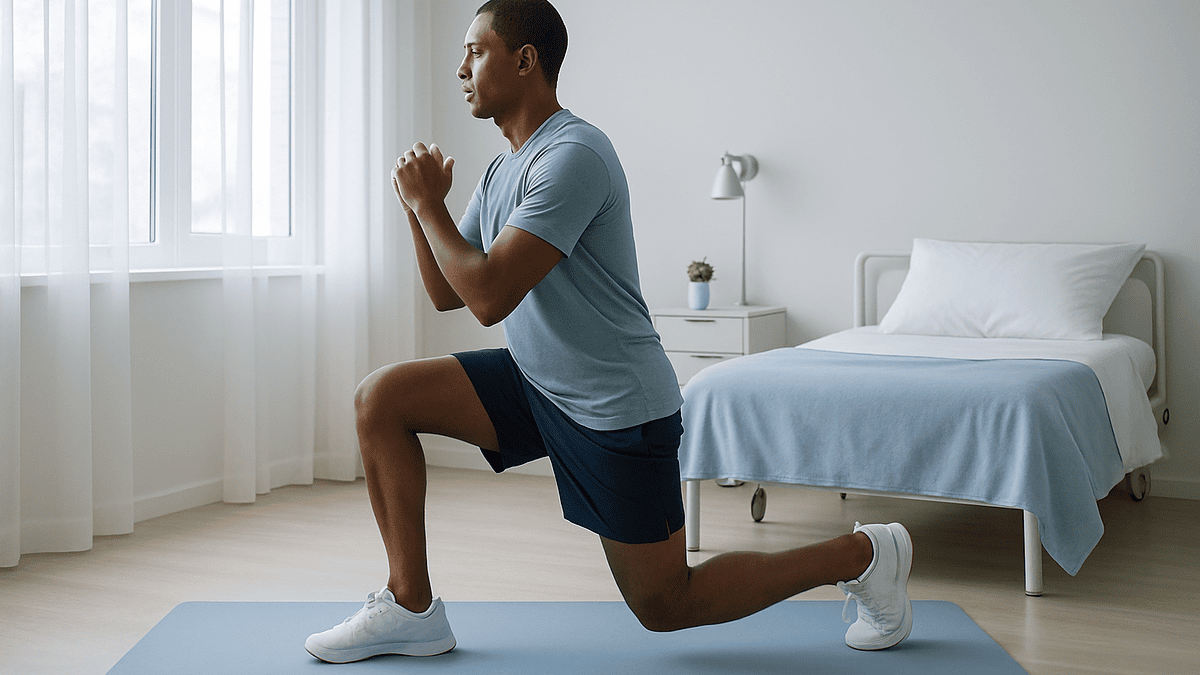
Key Takeaways
- Mayo Clinic advises avoiding strenuous exercise such as aerobics and jogging for up to five weeks after septoplasty, mainly to prevent bleeding and swelling in the healing nasal lining.
- Gentle walking is encouraged from the first day and lowers the risk of leg clots; formal bed rest is not part of modern septoplasty recovery.
- Heavy lifting is restricted longer than easy cardio because breath-holding during a lift spikes venous pressure in the nose within seconds.
- Splints are typically removed about a week after surgery, which improves breathing but does not mean the tissues have finished healing.
- Nasal cartilage is relatively stable at three to six months but can keep shifting for up to a year, which is why contact sports wait longest.
- Bright-red bleeding that starts during exercise is a signal you began too early and should be reported to the surgical team rather than waited out.
Most people can walk from the first day after septoplasty, but strenuous exercise is usually put on hold. Mayo Clinic advises avoiding vigorous activity such as aerobics and jogging for up to five weeks, because raised blood pressure and straining can trigger bleeding and swelling. Gym cardio and weights typically resume in stages after the surgeon's check, and contact sports wait longest. Your treating team sets the exact timing.
The running shoes are by the door, exactly where they were left the night before surgery. A week later they are still there, and the person who owns them is standing in the hallway with two plastic splints in their nose, breathing through their mouth, wondering whether a gentle jog would really do any harm. It feels like a small question. It is not, and it is one of the first things surgeons hear at the follow-up visit.
Timing exercise after septoplasty is a balancing act. Move too little and you feel stiff, low and impatient. Move too hard, too early, and a nose that was quietly knitting itself back together can start to bleed or swell. The good news is that the guidance is fairly consistent across major medical sources, and it is more forgiving than many people fear.
This explainer walks through what the operation does, why exertion matters in the first weeks, and what a realistic return to walking, the gym, the pool and the playing field usually looks like.
What actually happens during a septoplasty, and why it matters for exercise
The septum is the wall of cartilage and thin bone that divides the inside of the nose into two passages. When it is bent or shifted, a condition called a deviated septum, one side can be narrowed enough to make breathing, sleeping or sinus drainage difficult. Septoplasty is the operation that straightens it (Mayo Clinic).
The surgeon works entirely inside the nostrils. A small incision is made in the lining of the septum, called the mucosa, and that lining is lifted away from the cartilage like peeling a label from a jar. The crooked portions of cartilage and bone are trimmed, reshaped or repositioned, and the lining is laid back down and closed with dissolvable stitches. Soft silicone splints or packing are sometimes placed to hold everything steady while it heals (Cleveland Clinic; MedlinePlus).
Two details from that description explain nearly every exercise restriction you will be given. First, the mucosa is a rich carpet of tiny blood vessels, and it has just been cut and lifted. In the early days it seals itself with fragile clots and new tissue that can be dislodged by a surge in blood pressure. Second, the cartilage has been mechanically reshaped and is held in its new position by the lining, the splints and gradually forming scar tissue. Mayo Clinic notes that nasal tissues are relatively stable three to six months after surgery, but cartilage can continue to shift for up to a year. A hard knock during that window can undo careful work.
Most septoplasties take between 30 and 90 minutes and are done as day surgery under general anesthesia or, less often, local anesthesia with sedation (Mayo Clinic). You go home the same day, which is part of why the exercise question arrives so quickly.
How long should you wait to exercise after septoplasty? The honest answer
There is no single number, and anyone who gives you one without seeing your nose is guessing. What the mainstream sources agree on is a staged return rather than a switch that flips.
Mayo Clinic’s patient guidance is the most specific: avoid strenuous activities such as aerobics and jogging for up to five weeks after septoplasty, to reduce the chance of bleeding and swelling. Cleveland Clinic frames the early phase more broadly, advising people to skip strenuous activity while the nose heals and noting that most return to their usual routine within a couple of weeks. MedlinePlus similarly describes a return to most normal activities within about one to two weeks, with full healing of the tissues taking considerably longer.
Put those together and a sensible picture emerges. Gentle walking begins almost immediately. Everyday errands and desk work resume within one to two weeks for many people. Moderate cardio often gets the green light somewhere between the second and fifth week, depending on how the surgeon judges the healing lining at follow-up. Heavy lifting, running hard and anything that involves straining sit at the later end of that window. Contact and collision sports wait longest of all, because the risk there is not bleeding but a direct blow to cartilage that has not yet firmed up.
Why does the range vary so much between individuals? The extent of the surgery matters: a septoplasty done alongside turbinate reduction or sinus surgery involves more raw lining and more potential bleeding surfaces. Splints and their removal date matter. So do personal factors such as blood pressure control, medicines that affect clotting, smoking, and whether the first week passed without any bleeding. The surgeon weighs all of this at the follow-up visit, which is why that appointment, not a calendar, should set your start date.
Why does exertion cause bleeding after nasal surgery?
The nose is a pressure-sensitive organ. Understanding three mechanisms will make every restriction feel less arbitrary.
The first is arterial blood pressure. When you run, cycle hard or lift a heavy weight, your heart pumps faster and your systolic pressure rises. The nasal lining sits on a dense network of small arteries and veins close to the surface, and immediately after surgery those vessels are sealed by clots, dissolvable stitches and tissue that is only days old. A pressure spike pushes blood through weak points in that seal, which is why post-operative nosebleeds so often start during or shortly after exertion (Johns Hopkins Medicine).
The second is venous pressure in the head. Bending forward, lying flat, straining or holding your breath while pushing (the Valsalva maneuver, meaning exhaling against a closed airway, as many people do when lifting) all raise pressure in the veins of the face and nose. Unlike arteries, veins have thin walls, and they swell readily. This is why surgeons ask you to sleep with your head raised and to avoid bending at the waist for the first week or two (Mayo Clinic).
The third is swelling itself. Exercise increases blood flow to tissues, and inflamed nasal lining responds by becoming more congested. More swelling means slower drainage of the mucus and old blood that accumulate after surgery, a blocked feeling, and sometimes a longer road back to clear breathing.
None of this means a brisk walk is dangerous. Walking raises heart rate modestly and keeps the head upright, so venous pressure barely changes. The problems come from the combination of high intensity, breath-holding and head-down positions, which is exactly the combination found in heavy lifting, hard running, hot yoga inversions and diving into a pool.
Exercise after septoplasty: a week-by-week guide
The timeline below draws on Mayo Clinic, Cleveland Clinic and MedlinePlus guidance. Treat it as the typical shape of recovery, not a promise; your surgeon’s instructions override every row.
| Timeframe | What usually happens | Activity commonly allowed | Activity commonly on hold |
|---|---|---|---|
| Days 1–3 | Peak congestion, mild oozing, splints or packing in place, fatigue from anesthesia | Short walks around the home, sitting upright, light stretching without bending forward | Anything that raises heart rate, bending, lifting, nose-blowing |
| Days 4–7 | Oozing settles, breathing still blocked, energy improving | Longer walks outdoors, light household tasks, desk work | Gym, running, swimming, lifting more than a light bag |
| Week 2 | Splints typically removed around this point, first follow-up visit, breathing begins to open | Walking at a brisker pace; some surgeons permit stationary cycling at conversational effort | Heavy weights, high-intensity intervals, pools, contact sports |
| Weeks 3–5 | Lining healing, crusting reduces, energy near normal | Gradual return to moderate cardio and lighter resistance work if cleared | Maximal lifts, straining, sports with a risk of facial impact |
| Week 6 onward | Most tissue healing complete; cartilage still firming | Usual training for many people | Contact and collision sports until the surgeon confirms cartilage is stable |
| 3–12 months | Cartilage and tissue reach final position (Mayo Clinic) | Everything, with facial protection where sensible | Nothing, unless advised otherwise |
The five-week figure for strenuous exercise comes from Mayo Clinic. The one-to-two-week return to normal routines comes from Cleveland Clinic and MedlinePlus. The three-to-six-month tissue stabilization window, and the possibility of movement for up to a year, are Mayo Clinic’s. Where the table says “if cleared,” it means exactly that.
How many days of bed rest after septoplasty?
Fewer than most people expect, and in the strict sense, none. Bed rest as a prescription belongs to an older era of surgery. Modern guidance for day-case nasal operations asks you to rest, which is different from asking you to stay in bed.
Cleveland Clinic and MedlinePlus both describe going home the same day and taking things easy for the first few days, with the head kept elevated on pillows to limit swelling and oozing (Mayo Clinic). That is best done propped up in a bed or a reclining chair, but it does not mean lying flat and still for a week. Lying completely flat actually works against you, because it raises venous pressure in the face.
Gentle movement has a protective role. Getting up and walking around the house several times a day keeps blood moving in the legs and lowers the small risk of a deep vein thrombosis, a clot that forms in a deep leg vein when someone is immobile for long periods. That risk is low after a short nasal operation, but it is not zero, particularly for people who smoke, take estrogen-containing medicines, have had clots before or are carrying extra weight. Walking is the simplest countermeasure there is.
Rest also has a second meaning here: rest from the things that stress the nose. For the first several days, that means no bending forward to pick things up, no lifting anything heavier than a light bag of groceries, no straining on the toilet if it can be avoided, and no strenuous chores. It does not mean skipping the walk to the mailbox.
A realistic pattern for the first three to four days looks like this: upright rest for most of the day, short walks every hour or two, early nights with the head raised, and no attempt to push through fatigue. General anesthesia leaves many people tired and foggy for a day or two afterwards, and the NHS advises against driving, operating machinery or drinking alcohol for 24 to 48 hours because coordination and judgment are impaired for longer than people realize.
What is the hardest day after septoplasty?
Ask a room of people who have had the operation and most will point to somewhere in the first three days, and many will name the second. There is no published trial ranking recovery days by misery, so this is patient experience rather than measured evidence, but the reasons behind it are well understood.
On the day of surgery the anesthetic and any pain relief given in the recovery area are still working, so the evening is often quieter than feared. By the following morning those effects have worn off. Swelling inside the nose is approaching its peak, both nostrils feel completely blocked, and if splints or packing were placed they add a persistent pressure that some people describe as a heavy head cold that has settled in for good. Mouth-breathing all night leaves the throat dry, sleep is fragmented, and a small amount of blood-stained drainage onto the gauze under the nose is normal but unnerving (Cleveland Clinic; MedlinePlus).
Pain after septoplasty is generally described as mild to moderate and is managed with medicines your surgeon prescribes or recommends. What surprises people more than pain is the congestion, the fatigue and the sense of being unable to do anything useful. That is precisely when the temptation to test a light workout arrives, and precisely when it is least wise.
The turning point for many is the removal of splints, which Cleveland Clinic describes as typically happening about a week after surgery. Breathing often improves noticeably within hours of that appointment, though the lining remains swollen and crusty for weeks. Knowing that the hardest stretch is usually short, and that it ends with a concrete event, makes it easier to stay patient with the exercise question in the meantime.
When can you walk and start light activity after septoplasty?
Walking is the one form of exercise that is encouraged rather than restricted, and it starts on day one. A slow circuit of the living room a few hours after you get home is reasonable for most people, provided you feel steady on your feet; anesthesia can leave you lightheaded, so the first walks should be short and accompanied.
From the second or third day, many people manage 10 to 20 minutes outdoors at an easy pace. The rule of thumb surgeons often give is conversational effort: if you could hold a normal conversation without gasping, you are in the right zone. Keep the head upright, avoid hills that would leave you breathing hard, and choose a route that lets you turn for home if oozing begins.
Light activity means more than walking, and the definition matters because people interpret it differently. Reasonable examples in the first week include gentle stretching while standing or sitting, slow upper-body mobility work that does not involve bending forward, and household tasks done at a relaxed pace. Yoga is a mixed case: seated and standing poses are fine, but forward folds, downward-facing dog and any inversion place the head below the heart and are usually off the list for at least the first two weeks, sometimes longer, because they sharply raise venous pressure in the nose.
Two practical notes. Cold or very dry air can irritate the raw lining and increase crusting, so a scarf loosely over the mouth and nose on a cold day helps, without pressing on the nose itself. Sunglasses are fine after the first week if they do not sit heavily on the bridge, though this is more relevant when septoplasty has been combined with external nasal work.
If a gentle walk causes fresh bright-red bleeding rather than the pink or brown-tinged drainage that is expected, stop, sit upright, and follow the bleeding advice your team gave you. That is a sign the lining is not yet ready for even modest exertion.
Gym after septoplasty: when can you return to cardio and running?
The gym is where the guidance shifts from encouragement to caution. Mayo Clinic’s instruction to avoid strenuous activity such as aerobics and jogging for up to five weeks is the anchor here, and it is deliberately broad because “strenuous” is defined by your heart rate and breathing, not by the machine you are standing on.
A staged return usually looks like this. After the first follow-up visit, often around the time splints come out at roughly one week, some surgeons allow low-intensity stationary cycling or an easy treadmill walk, with the explicit condition that you stop at the first sign of bleeding. Steady-state cardio at a pace where you are breathing harder but still able to speak in short sentences typically comes next, commonly somewhere in weeks two to four depending on how the lining looks. Running after septoplasty, particularly on hard surfaces, tends to be one of the later additions, partly because of the intensity and partly because every footstrike sends a small jolt through the face that a healing nose registers as throbbing.
High-intensity interval training, spin classes at race effort, rowing sprints and anything that leaves you red-faced and breath-holding belong at the far end of the five-week range, or beyond it if your surgeon says so.
Environment matters too. Gyms are warm, and heat dilates blood vessels in the nasal lining, which can increase congestion and oozing. Shared equipment and crowded spaces also raise the chance of picking up a cold at a time when nose-blowing is forbidden and any infection in the nose is unwelcome. Wiping down equipment and washing hands are more than etiquette in these weeks.
One last point about mouth-breathing. Until the nose clears, cardio will feel harder than it should because you are breathing through your mouth alone. This is normal, it is not a sign of poor fitness, and it is another reason to keep early sessions short.
Lifting weights after septoplasty: why straining is the real problem
Weight training is often restricted longer than cardio at the same perceived effort, and the reason is the Valsalva maneuver. When you brace to lift something heavy, most people instinctively hold their breath and push against a closed throat. That maneuver spikes pressure in the chest, which backs up into the veins of the neck, face and nose within a fraction of a second. On a freshly operated nasal lining, that spike is exactly what reopens sealed vessels.
Mayo Clinic’s general advice to avoid strenuous activity for up to five weeks covers heavy lifting. In the first one to two weeks, the practical limit given by many surgical teams is roughly the weight of a light grocery bag, and nothing that requires bracing. That rules out squats, deadlifts, presses of any meaningful load and, importantly, the everyday equivalents: carrying a toddler on the hip, hauling a suitcase upstairs, moving furniture.
When resistance work resumes, the sensible order is light loads with high repetitions and continuous breathing, moving toward heavier loads only after the surgeon has confirmed the lining has healed. Exhaling steadily on the effort, rather than holding the breath, blunts the pressure spike at any load. Machines that keep you upright are gentler on the nose than anything that puts your head below your hips, such as bent-over rows or hip thrusts from the floor.
Two categories deserve extra caution. Overhead pressing with a barbell carries a small risk of the bar clipping the face on a missed lift, and inverted or head-down exercises such as decline presses combine venous pressure with position. Both are reasonable to postpone until well past the point where general lifting has been cleared.
If you train for strength and are anxious about losing progress, the honest reassurance is that five weeks of reduced load is recoverable, whereas a significant post-operative nosebleed that needs packing or a return to the operating room is a much larger setback.
Swimming after septoplasty: pools, open water and diving
Water raises two separate concerns, and it helps to keep them apart.
The first is contamination. A pool, lake or ocean contains bacteria and, in the case of chlorinated pools, chemicals that irritate raw tissue. Water that enters the nose while the lining is still healing can introduce infection into exactly the place you least want it. Most surgeons ask people to keep the head out of water until the mucosa has sealed, which broadly matches the two-to-five-week window described by Mayo Clinic and Cleveland Clinic for the return to more demanding activity. Showering is fine from the start; submerging the face is not.
The second concern is pressure. Diving, jumping in feet-first with water forced up the nose, or descending even a few feet below the surface changes the pressure inside the nasal passages abruptly. Scuba diving adds equalization maneuvers that push air through the sinuses and nose, and it is typically postponed longest of all water activities; the exact interval is a discussion for your surgeon, and if you dive regularly it is worth raising before the operation, not after.
When you do return to the pool, an easy approach is to start with lengths of a stroke that keeps the face largely out of the water, such as breaststroke with the head up, and to avoid tumble turns, which combine a head-down position with a nose full of water. Nose clips can help some people but should not press on a nose that has also had external work done.
Hot tubs and saunas raise a related issue. Heat dilates the small vessels in the nasal lining and can provoke oozing or a nosebleed. Many teams ask people to avoid very hot environments for the same period as strenuous exercise. A warm shower is not the problem; sitting in high heat for twenty minutes is.
If water does get into the nose accidentally in the early weeks, do not blow it out. Let it drain forward while leaning slightly, and mention it to your team if you notice increasing pain, fever or foul-smelling discharge afterwards.
Contact sports after septoplasty: the longest wait, and why
Everything discussed so far has been about bleeding and swelling. Contact sports introduce a different risk entirely: mechanical displacement of cartilage that has been cut, reshaped and is still settling into its new position.
Mayo Clinic notes that nasal tissues are relatively stable by three to six months after septoplasty, but that cartilage and tissue can continue to move or reshape for up to a year. A direct blow to the nose during that period can shift the straightened septum, tear the healing lining, or in the worst case cause a septal hematoma, a collection of blood between the cartilage and its lining that needs urgent drainage to protect the cartilage. That is why the bar for returning to boxing, rugby, football, hockey, wrestling, martial arts and basketball at competitive intensity is set higher than for any solo sport.
There is no single guideline figure for this interval. Surgeons commonly ask for a minimum of several weeks beyond the five-week strenuous-exercise window, and many prefer to reassess in person before clearing anyone for a sport with a realistic chance of a facial impact. For people who play at a high level, that conversation usually starts before surgery so that the operation can be scheduled around a season.
Protective facemasks are used in some sports to allow an earlier return, but they are a judgment call rather than a rule, and the fit has to be checked so that the mask itself does not press on the nose. A surgeon who knows your sport is the right person to advise on that.
Sports that are not formally “contact” still carry impact risk: a stray elbow in a pick-up game, a ball to the face in tennis or volleyball, a fall from a bike. Common sense goes a long way. In the first two to three months, choose the version of your sport where a face-first collision is least likely, and treat any blow to the nose during that period as something to report, even if it does not bleed.
Who is usually cleared sooner, and who is asked to wait longer?
Recovery advice is personalized for good reason. Several factors reliably push the exercise timeline in one direction or the other.
People who tend to be cleared toward the earlier end of the typical range include those who had a septoplasty alone, without turbinate reduction or sinus surgery; those whose first week passed without any bleeding beyond expected oozing; non-smokers; people with well-controlled blood pressure; and those who were fit before surgery and whose baseline “moderate” effort is genuinely moderate for their body.
People who are usually asked to wait longer include:
- Those who had combined procedures. Turbinate reduction, sinus surgery or rhinoplasty (reshaping of the external nose) add raw surfaces and, in the case of rhinoplasty, external bones and cartilage that need protection from any knock.
- Anyone who had a post-operative nosebleed that needed packing or a return visit. The lining has shown it is fragile, and the timeline resets.
- People taking medicines that reduce clotting, such as anticoagulants or antiplatelet drugs. These are prescribed for important reasons and should never be stopped or altered without the prescribing clinician’s instruction; instead, the exercise timeline is usually extended and the return is more gradual.
- People with bleeding disorders, uncontrolled high blood pressure, or conditions that cause frequent coughing or sneezing, each of which raises pressure in the nose.
- Smokers and people who vape. Nicotine narrows small blood vessels and slows healing of the mucosa, and smoke itself irritates the lining.
- Athletes in contact or collision sports, and divers, for the cartilage-stability reasons described above.
- Children and adolescents, whose septoplasty is less common and whose return to school sports is managed by the pediatric ENT team with their own timeline.
Age alone is not a strong predictor; healing tempo varies more with overall health and the extent of the operation than with the number on a birth certificate. What every group shares is that the decision to progress is made at a follow-up examination, where the surgeon can actually see whether the lining has sealed.
What not to do after septoplasty
The list of restrictions is short, and every item has a mechanism behind it. Mayo Clinic, Cleveland Clinic and MedlinePlus give broadly the same advice.
Do not blow your nose. The pressure can reopen healing vessels and, if splints are in place, shift them. If you must clear it, sniff gently or dab the outside. Sneeze with your mouth open, which sends the pressure out through the mouth rather than the nose; it feels undignified and it works.
Do not bend forward at the waist for the first week or two. Squat with a straight back to pick things up, or ask someone else. Head-down positions raise venous pressure in the nose, which is the same reason to sleep with your head raised on two or three pillows.
Do not lift heavy objects, strain or hold your breath while exerting. Constipation can become a genuine nasal problem for this reason; fluids, fiber and gentle walking help, and your team can advise if it becomes an issue.
Do not take medicines that affect clotting unless your surgeon has approved them. Some common over-the-counter anti-inflammatory painkillers thin the blood slightly, which is why surgical teams often ask people to avoid them around the time of nasal surgery. Follow the list you were given, and never stop a prescribed medicine on your own.
Do not smoke or vape, and limit alcohol. Nicotine slows healing of the lining; alcohol dilates blood vessels and can increase oozing, and the NHS advises avoiding it for at least 24 hours after general anesthesia.
Do not wear clothing that has to be pulled over the head while splints are in; Mayo Clinic specifically recommends front-fastening tops for this reason. Do not put anything inside the nose, including cotton swabs, unless your team has shown you how to clean or rinse it.
Do not test your progress by doing a hard workout to see what happens. The lining does not give a warning before it bleeds.
What people often get wrong about exercise after septoplasty
Some misunderstandings come up so often that they deserve direct correction.
“If it doesn’t hurt, it’s fine.” Pain after septoplasty is usually modest and is a poor guide to whether the lining has healed. Bleeding from exertion typically arrives without warning discomfort. The signal to watch is the surgeon’s examination, not how the nose feels during a set.
“Bed rest speeds healing.” Lying flat for days raises venous pressure in the face and increases the small risk of leg clots. Upright rest with regular gentle walking is what mainstream guidance actually describes (Cleveland Clinic; MedlinePlus).
“Splints out means fully healed.” Splint removal, typically around a week after surgery (Cleveland Clinic), is a milestone for comfort and breathing, not a certificate of tissue strength. The mucosa continues healing for weeks, and cartilage for months (Mayo Clinic).
“Cardio is worse than weights because your heart rate is higher.” Both matter, but the breath-holding and straining that accompany heavy lifting produce sharper pressure spikes in the nose than steady cardio at the same effort. Many people are cleared for easy cycling before they are cleared for heavy squats.
“Once I can breathe, I’m back to normal.” Breathing often opens up within a week or two, well before the tissues have reached their final state. Mayo Clinic notes that final results may not be apparent for several months, and that the nose can keep changing for up to a year.
“A small nosebleed after a workout is normal.” Pink or brown-tinged drainage is expected in the first days. Fresh bright-red bleeding brought on by exertion is a message that you started too early, and it should be reported.
“Everyone online said five weeks, so five weeks it is.” The five-week figure is Mayo Clinic’s upper range for strenuous activity, not a universal rule. Some people are cleared sooner, some are asked to wait longer, and the person who has looked inside your nose is the only one who can tell you which group you are in.
Questions to ask your care team before you restart exercise
The follow-up visit is short, and the exercise question is easy to forget once the splints are out and you can finally breathe. Writing down a few specific questions beforehand makes the conversation far more useful than a general “when can I work out?”
- Which of my usual activities count as strenuous in your view, and which are fine now? Naming your actual sports and gym habits lets the surgeon give tailored answers rather than generic ones.
- Is there a heart-rate or effort ceiling you would like me to stay under for the next few weeks, and for how long?
- When may I start lifting, and is there a load or a type of lift you would prefer I avoid for longer?
- Can I put my head below my heart yet, for yoga, stretching or floor exercises?
- When is it safe to submerge my face in a pool, and is open water or diving different?
- How long should I avoid any sport where I might take a blow to the nose, and would a facemask change that timeline?
- Did anything about my surgery, such as turbinate work or bleeding during the operation, mean I should be more cautious than the standard advice?
- I take a medicine that affects clotting; does that change the timeline, and who should I speak to if I have questions about it?
- What exactly should I do if I get a nosebleed during exercise, and at what point should I call or come in?
- When is my next check, and will you reassess the exercise plan then?
It also helps to ask what “normal” should look like over the coming weeks, so that crusting, intermittent congestion and a slightly numb front tooth or upper lip (a common, usually temporary effect of the incision) do not send you to the phone unnecessarily. And if a coach, employer or team physiotherapist needs written guidance, ask for it during the visit rather than trying to reconstruct the conversation later.
When to call your doctor after septoplasty
Most recoveries are uneventful, and knowing what is expected makes the genuinely concerning signs stand out. Expected: pink or brown-tinged drainage for a few days, blocked nostrils, crusting, mild aching, disturbed sleep, and fatigue for a week or so. Not expected: the signs below.
Call your surgical team promptly if you notice:
- Bleeding that is bright red, steady, and does not slow after you have followed the first-aid steps you were given, or bleeding that soaks through gauze repeatedly. Heavy bleeding that fills the mouth or makes you feel faint is an emergency; call emergency services or go to the nearest emergency department.
- A fever, or chills, or a feeling of being generally unwell that is getting worse rather than better.
- Pain that is increasing after the first few days instead of easing, or pain that is not controlled by what you were prescribed.
- Foul-smelling or thick discolored discharge from the nose, which can indicate infection.
- Sudden new swelling or a blocked feeling that worsens sharply, especially after a knock to the nose, since this can signal a septal hematoma that needs urgent attention.
- A splint that has shifted, fallen out early, or is causing severe pain.
- Clear, watery fluid dripping from one nostril, particularly when you lean forward, which needs prompt assessment.
- Any change in vision, severe headache, a stiff neck, or confusion.
- Signs of a leg clot or lung clot: a swollen, painful calf, sudden shortness of breath, or chest pain. These are emergencies.
- Breathing difficulty, wheeze, or a rash after taking any new medicine.
There is no such thing as calling too early about post-operative bleeding. Surgical teams would much rather hear from you about a nosebleed that stopped than see you a day later with a problem that could have been managed sooner. Keep the after-hours number somewhere you can find it, and if anyone at home is helping with your recovery, make sure they know where it is too. Every decision about how, and when, to progress your exercise belongs with the team that performed the operation and can examine the result.
Frequently asked questions
How long should you wait to work out after septoplasty?
Strenuous workouts are usually on hold for several weeks. Mayo Clinic advises avoiding vigorous activity such as aerobics and jogging for up to five weeks after septoplasty, while Cleveland Clinic and MedlinePlus describe a return to everyday routines within one to two weeks. Walking begins on day one. Your surgeon confirms the exact timing at follow-up after examining how the lining has healed, and that examination overrides any general figure.
When can I go back to the gym after septoplasty?
Gym sessions typically resume in stages after the first follow-up visit, often once splints are out at around one week. Easy stationary cycling or treadmill walking at conversational effort is commonly the first step, with moderate cardio and light resistance work added over the following weeks and heavy lifting or high-intensity intervals last, within the up-to-five-week window Mayo Clinic describes for strenuous activity.
When is running after septoplasty usually allowed?
Running tends to come later than gentle cardio because it raises blood pressure sharply and each footstrike jolts the healing nose. Mayo Clinic specifically lists jogging among the strenuous activities to avoid for up to five weeks. Many people start with brisk walking, progress to easy running on soft surfaces once cleared, and save hard efforts for after the surgeon confirms the lining has sealed.
When can I start lifting weights after septoplasty?
Heavy lifting is usually restricted for the full strenuous-activity period, up to five weeks according to Mayo Clinic, because bracing and breath-holding spike pressure in the veins of the nose. In the first one to two weeks, the practical limit is roughly a light bag of groceries. When lifting resumes, light loads, continuous breathing and upright positions are gentler on the nose than heavy, head-down or maximal efforts.
Is swimming after septoplasty safe, and when?
Submerging the face is generally postponed until the nasal lining has sealed, which broadly matches the two-to-five-week range for returning to more demanding activity. Pool chemicals and bacteria in water can irritate or infect raw tissue, and diving or descending under water changes nasal pressure abruptly. Showering is fine from the start. Scuba diving usually waits longest and needs a specific conversation with your surgeon.
What is the hardest day after septoplasty?
Most people describe the first two or three days as the toughest, with many naming day two. Congestion peaks, splints or packing add pressure, mouth-breathing disturbs sleep, and the anesthetic’s after-effects have worn off. Pain is usually mild to moderate; the blocked, tired feeling bothers people more. Splint removal around a week after surgery is often the turning point for comfort.
How many days of bed rest are needed after septoplasty?
None in the strict sense. Cleveland Clinic and MedlinePlus describe going home the same day and resting with the head elevated for the first few days, but gentle walking around the home is encouraged from day one. Lying flat raises pressure in the face and increases clot risk in the legs. Rest here means avoiding bending, lifting and exertion, not staying in bed.
What should you not do after septoplasty?
Avoid blowing your nose, bending forward at the waist, lifting heavy objects, straining, strenuous exercise, swimming, hot environments, smoking and alcohol for the periods your surgeon specifies. Sneeze with your mouth open, sleep with your head raised, and take only the medicines your team has approved, since some common painkillers affect clotting. Never stop a prescribed medicine without speaking to the clinician who prescribed it.
When can I play contact sports again after a septoplasty?
Contact and collision sports wait longest because a blow can shift reshaped cartilage or cause a septal hematoma. Mayo Clinic notes tissues are relatively stable at three to six months but can keep moving for up to a year. There is no single guideline interval; surgeons commonly ask for several weeks beyond the strenuous-exercise window and often reassess in person, sometimes discussing facial protection for an earlier return.
What if my nose bleeds during exercise after septoplasty?
Stop, sit upright, lean slightly forward and follow the first-aid steps your team gave you; do not lie flat or blow your nose. Bright-red bleeding brought on by exertion means the lining was not ready and should be reported to your surgical team even if it stops. Bleeding that will not slow, soaks gauze repeatedly or makes you feel faint is an emergency.
References
This article is for general information only and is not a substitute for professional medical advice. Please consult a qualified doctor about your individual situation.

More from the Blog

ESS vs Balloon Sinus Dilation: What Each Sinus Procedure Can and Cannot Open
Endoscopic sinus surgery removes blocked tissue, bone or polyps under camera guidance and can open every sinus, including the ethmoid cells between the eyes.…

Mastoidectomy Explained: How Surgeons Clear Infected Mastoid Air Cells Behind the Ear
A mastoidectomy is an operation that removes infected or diseased bone from the honeycomb of mastoid air cells behind the ear. Surgeons most often…
Sinusitis Treatment When You Also Have Asthma or Allergies: How the Plan Changes
Sinusitis treatment with asthma or allergies follows the same core steps as for anyone else: time, saline rinses, steroid nasal sprays, and antibiotics only…

Cochlear Implants for Adults With Later-Life Hearing Loss: Who Benefits and Why Timing Matters
A cochlear implant for adults is a surgically placed device that bypasses damaged inner-ear hair cells and stimulates the hearing nerve directly. It is…

Voice Rest After Endoscopic Pitch-Raising Surgery: The Silent First Weeks and What Comes Next
Voice rest after glottoplasty means avoiding all speaking, whispering, humming and throat clearing for a surgeon-set period, usually measured in days to a couple…
Bone Conduction Implants Explained: How Implantable Hearing Aids Send Sound Through Bone
A bone conduction hearing implant is a small surgically placed device that turns sound into vibrations and sends them through the skull bone directly…