

When Does Crohn’s Disease Need Surgery? Strictures, Fistulas and Medicines That Stop Working

Key Takeaways
- Crohn's surgery is typically triggered by mechanical complications that medicines cannot reverse: fibrotic strictures, persistent fistulas or abscesses, perforation, severe bleeding, or inflammation that persists despite adequate drug therapy.
- Mayo Clinic reports that nearly half of people with Crohn's disease will need at least one operation during their lifetime, making surgery a common chapter rather than a failure.
- Strictureplasty widens a narrowed segment without removing bowel, while resection takes out the diseased length; surgeons favor bowel-sparing options because every preserved segment protects against later malnutrition.
- Most stomas created during Crohn's surgery are temporary, placed to protect a fresh join or rest inflamed tissue, and are reversed at a later operation.
- Crohn's frequently returns near the surgical join, so guidelines pair every operation with follow-up, often preventive medicine, and a check of the anastomosis within the first year.
- Smoking is the strongest modifiable risk factor for Crohn's returning after surgery, and stopping also improves wound healing and lung recovery.
Crohn's disease usually needs surgery when a complication cannot be managed with medicines alone: a scarred narrowing (stricture) that blocks the bowel, a fistula or abscess that keeps returning, a perforation or severe bleeding, or inflammation that persists despite well-chosen drug therapy. Surgery removes or repairs the damaged segment rather than treating the whole disease, and the decision is made jointly by a gastroenterologist, a colorectal surgeon and the patient.
The clinic letter sits on the kitchen table for two days before Dana opens it a second time. One line has stuck: “colorectal surgical opinion.” She has lived with Crohn’s for nine years, learned which foods her gut tolerates, sat through the infusions, adjusted when a medicine stopped helping. Surgery always felt like the thing that happened to other people, the ones who had “failed” somehow. Now a surgeon wants to talk about a narrowed loop of small bowel that no longer widens, whatever the scans and the tablets say.
Her question is the one that brings thousands of people to search engines every month: when does Crohn’s need surgery, and does it mean the medicines were a waste? The evidence gives a clearer, and gentler, answer than most people expect. Surgery in Crohn’s is rarely a defeat. It is a specific tool for specific problems: blockages, tunnels, pockets of infection and stubborn inflammation that drugs cannot reach.
This explainer walks through each of those situations, what the operations involve, what the first weeks afterward look like, and the questions worth bringing to the room where the decision gets made.
When does Crohn's need surgery? The short version
Crohn’s disease is a long-term condition in which the immune system inflames patches of the digestive tract, most often the last part of the small intestine and the start of the colon. Medicines calm that inflammation. What they cannot do is undo scar tissue, close a tunnel that has already formed between two organs, or drain a pocket of pus. Those are mechanical problems, and mechanical problems are what surgery is for.
Guideline bodies and major clinical centers describe the same short list of reasons a treating team moves from medicines to an operation. A stricture, meaning a segment of bowel narrowed by scar or swelling, has started to block food. A fistula, an abnormal channel from the gut to skin, bladder, vagina or another loop of bowel, keeps causing infection. An abscess, a walled-off collection of infection, cannot be fully cleared by drainage and antibiotics. Bleeding is severe. The bowel has perforated, meaning a hole has opened in its wall. Or inflammation simply refuses to settle despite a well-selected sequence of drugs, and quality of life is slipping.
This is not rare territory. Mayo Clinic notes that nearly half of people with Crohn’s will have at least one operation during their lifetime, which reframes surgery as a common chapter rather than an ending. The NHS makes a similar point: surgery is offered when medicines are not controlling symptoms or when complications develop, and it is planned wherever possible rather than done in a hurry.
The one idea worth holding onto from the start is that surgery treats the segment, not the disease. Crohn’s can return elsewhere, so an operation is almost always paired with a plan for what comes after: monitoring, often a medicine to reduce the chance of recurrence, and lifestyle steps that matter more than most people realize. The rest of this article unpacks each trigger in turn.
What Crohn's surgery actually involves, in plain language
Most Crohn’s operations fall into a handful of patterns, and understanding them takes the fear out of the vocabulary.
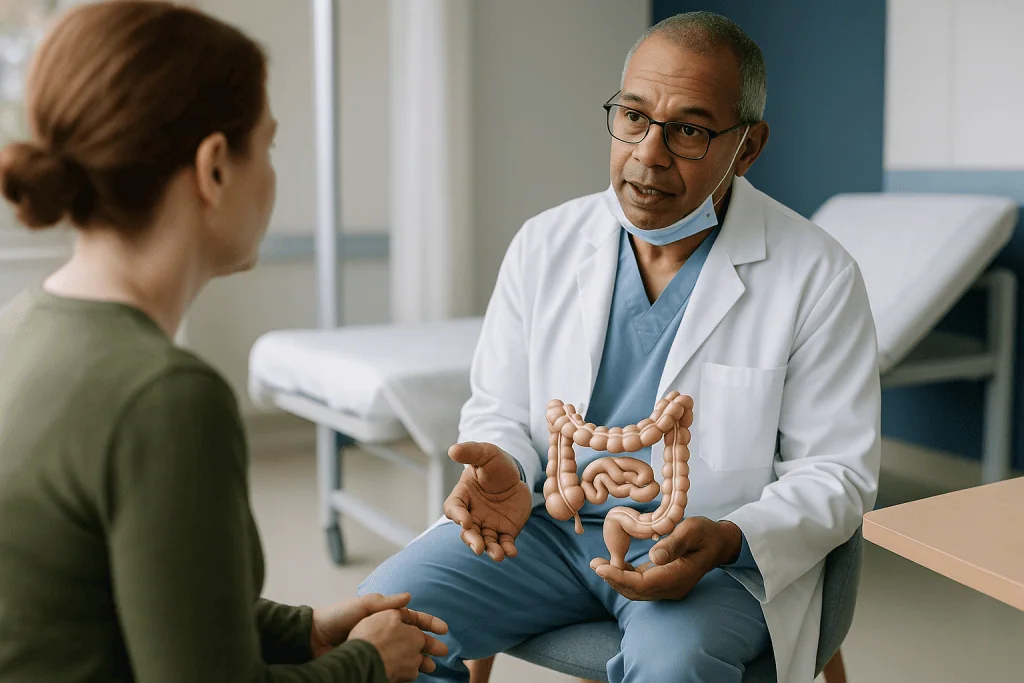
The most common is a resection: the surgeon removes the diseased length of bowel and joins the two healthy ends back together. That join is called an anastomosis. Because Crohn’s tends to attack the end of the small intestine where it meets the colon, the classic version is an ileocecal (or ileocolic) resection, taking out the last few inches of small bowel and the first part of the colon in one piece. Surgeons aim to remove only what is clearly damaged, since the small intestine absorbs nutrients and every segment kept is a segment working for you.
A strictureplasty is a repair rather than a removal. The surgeon cuts along a short narrowed segment and sews it back in a way that widens the passage, a little like letting out a seam. Nothing is taken away, which makes it attractive when someone has already lost bowel or has several short strictures in a row.
For fistulas and abscesses around the anus, the work is usually smaller and staged. Infection is drained, and a seton, a soft thread left through the fistula track, keeps the channel open so pus escapes rather than collects. Definitive closure is attempted later, once inflammation is calmer, often with medicines and surgery working together.
A stoma brings the end of the bowel to the skin of the abdomen, where waste passes into a bag. It can be temporary, allowing a raw or infected area to rest, or permanent when the rectum is too damaged to keep.
Many of these procedures are done laparoscopically, through several small cuts with a camera, which MedlinePlus and Mayo Clinic describe as generally allowing a shorter hospital stay than a large open incision when the anatomy permits. The surgeon chooses the approach based on scarring, previous operations and urgency.
Crohn's stricture surgery: when narrowing becomes a blockage
Strictures form in two ways, and the difference drives the treatment. Inflammatory strictures are swollen, boggy narrowings that can open up again when the inflammation is treated. Fibrotic strictures are stiff bands of scar laid down over years of repeated healing. Scar does not respond to anti-inflammatory drugs, and that is the kind that eventually needs a physical fix.
In practice most strictures are a mix, so the first move is often a trial of intensified medical therapy while imaging tracks whether the segment widens. Cross-sectional scans such as MR enterography (an MRI of the small bowel using a drink to outline the loops) help a team judge how much of the narrowing is active swelling versus fixed scar, though no scan separates the two perfectly.
The signals that a stricture has crossed into surgical territory are familiar to anyone who has lived with one: cramping that builds an hour or two after meals, bloating, loud gurgling, then relief when things finally pass. Episodes get closer together. Solid food becomes something to negotiate. Some people find themselves on a liquid diet without anyone having prescribed one. Repeated partial obstructions, weight loss, or a scan showing the bowel upstream of the narrowing stretched and thinned are the points at which surgeons generally recommend acting before an emergency forces the issue.
The menu of options depends on length and location. Short strictures at a previous surgical join can sometimes be stretched with a balloon passed through an endoscope, avoiding an operation for a time, though the narrowing often returns. Longer or multiple strictures are handled with strictureplasty or resection. Strictures in the colon are treated more cautiously; because long-standing colonic Crohn’s raises the risk of cancer at the narrowed site, surgeons often prefer removal over widening there, and biopsies are taken.
Timing is the art. Operating on a well-nourished person in a planned setting carries fewer risks than operating on someone admitted at midnight with a distended, painful abdomen.
Crohn's fistula treatment options: draining, healing and closing
A fistula begins as a deep ulcer that burrows all the way through the bowel wall and keeps going until it reaches something else. Where it lands defines the type. Perianal fistulas open onto the skin near the anus and are by far the most common. Enteroenteric fistulas connect two loops of bowel. Enterovesical fistulas reach the bladder, causing air or debris in the urine and repeated urinary infections. Rectovaginal fistulas cause gas or stool to pass through the vagina. Enterocutaneous fistulas drain onto the abdominal skin, often at an old scar.

Treatment almost always combines medicines and procedures, which is why fistulizing Crohn’s is one of the clearest examples of gastroenterologists and surgeons working as one team. The first job is to control infection. Any abscess is drained, either by a small operation or by a needle guided by ultrasound or CT, and a course of antibiotics is common. For perianal disease, a seton is placed to keep the track draining. Only then do anti-inflammatory drugs, especially the biologic class that blocks a signaling protein called TNF, have a fair chance to shrink the track from the inside.
When a fistula persists despite that combination, surgical closure is considered. Options include laying the track open when it is shallow, advancement flaps that cover the internal opening with healthy tissue, and plugs or glue in selected cases. Newer approaches using the person’s own cells are studied in trials, and the evidence for them is still developing; they should not be assumed to work for everyone.
Fistulas from bowel to bladder or vagina usually need the diseased bowel segment removed, since the gut side is the source. In severe, repeatedly infected perianal disease, a temporary stoma can divert stool away from the area so tissues can quieten. Some people with extensive rectal destruction ultimately choose removal of the rectum with a permanent stoma, a decision that clinical centers describe as one to be reached slowly and only after other routes have been tried.
When medicines stop working: what "treatment failure" really means
Medicines for Crohn’s work by dialing down different parts of the immune response. Corticosteroids suppress inflammation broadly and quickly, which makes them useful for flares and unsuitable for long-term control because of their side effects. Immunomodulators such as thiopurines and methotrexate blunt immune cell activity more gradually. Biologics are laboratory-made antibodies that block a single inflammatory signal, such as TNF, certain interleukins, or the adhesion molecules that let immune cells enter the gut wall. Small-molecule drugs, taken by mouth, interrupt signaling inside immune cells.
“Failure” in this context is a technical judgment, not a verdict on the person. A treating team generally asks three questions before concluding a medicine is not working. Has enough time passed? Biologics are typically assessed for response over a period of weeks to a few months, and stopping early can mislabel a drug that was about to help. Is the drug actually reaching its target? Blood tests can measure drug levels and antibodies the body sometimes makes against biologics; a low level may mean the problem is delivery rather than the medicine itself. And are the symptoms truly from inflammation? Pain from a fixed scar stricture, bile acid diarrhea, bacterial overgrowth or irritable bowel overlap will not improve with more immune suppression, and mistaking them for active disease can lead to unnecessary escalation.
Only when inflammation is confirmed on scopes, scans or stool markers, the drug level is adequate, and time has been allowed does “medically refractory disease” enter the conversation. Even then, the next step is often another class of medicine rather than the operating theater. Surgery becomes the favored option when disease is confined to a short segment, when someone is dependent on steroids they cannot stop, when side effects have become their own illness, or when a person simply prefers a definitive procedure to a further cycle of drugs. Which route to take is a decision for the prescribing clinician and surgeon together with the patient, not one to make alone.
Emergencies that cannot wait: perforation, complete obstruction and bleeding
Most Crohn’s surgery is planned. A minority is not, and knowing the difference helps people act quickly when it matters.
A perforation is a hole through the full thickness of the bowel wall. Contents leak into the abdominal cavity, and the lining that surrounds the organs becomes inflamed, a condition called peritonitis. It announces itself with sudden, severe, spreading abdominal pain, a rigid belly, fever and sometimes a racing pulse. Emergency surgery is needed to remove the damaged segment and wash out the abdomen. Because operating on a contaminated, inflamed abdomen is risky, surgeons often bring out a temporary stoma rather than joining the bowel immediately, with a plan to reverse it later.
Complete obstruction occurs when a stricture closes off entirely, or when a loop of bowel twists or becomes trapped in scar tissue. Nothing passes: no stool, no gas. Vomiting follows, and the abdomen swells. Some obstructions settle with a few days of bowel rest, fluids through a vein and a tube to decompress the stomach, especially when swelling rather than scar is the main culprit. Those that do not settle, or that show signs of the bowel losing its blood supply, go to surgery.
Severe bleeding is uncommon in Crohn’s compared with other bowel conditions, but deep ulcers can erode into a vessel. Passing large amounts of blood, feeling faint or dizzy on standing, or a rapidly falling blood count are treated as emergencies. Teams try first to find and seal the source through an endoscope or with radiology techniques that block the bleeding vessel from the inside; surgery is reserved for bleeding that cannot be stopped that way.
Toxic megacolon, a dangerously dilated and inflamed colon, is more typical of ulcerative colitis but can occur in Crohn’s colitis. It is a surgical emergency when it does not respond to intensive medical treatment within a short window judged by the team.
Each of these situations is described in the red-flag section later, because recognizing them early is one of the few things a patient can do to change the outcome.
Who is usually offered surgery, and who is usually asked to wait
Surgeons and gastroenterologists weigh a familiar set of factors when deciding whether an operation is the right next move for a particular person.
Surgery tends to be favored when disease is localized. A single short segment of small bowel, or an isolated stricture at the junction with the colon, can be removed with a good chance of a long period free of symptoms. It is favored when the problem is mechanical: fixed scar, an established fistula into the bladder, an abscess that keeps refilling. It is favored when someone has been dependent on steroids for months, since long-term steroid exposure thins bones, raises blood sugar and increases infection risk. Younger people with limited ileocecal disease are sometimes offered resection as an alternative to starting a biologic, a choice that recent European trials have made a legitimate discussion rather than a last resort.
Teams usually ask people to wait when inflammation is widespread and patchy through long stretches of bowel, because removing all of it would leave too little intestine to absorb nutrients. They wait when a stricture still looks mostly inflammatory and might respond to drug therapy. They wait when someone is malnourished, anemic or on high steroid doses, using the time to build strength; several weeks of nutritional support before an operation is a common recommendation, and the exact plan is set by the surgical and dietetic team. They wait, too, when an abscess needs draining and settling before the definitive operation, so the surgeon is not sewing bowel together in a field of infection.
Personal preference sits alongside all of this. Some people would rather take one operation than face years of injections and blood tests; others feel the opposite. A decision that respects the evidence and the person’s values is the goal, and reputable centers build in time for that conversation rather than rushing it, except when an emergency removes the choice.
Bowel resection for Crohn's, strictureplasty or stoma: how the options compare
The table below summarizes the main operations, what they address and the trade-offs a surgeon typically discusses. It is a guide to the conversation, not a substitute for it; the right choice depends on anatomy, previous surgery, nutrition and the person’s own priorities.
| Operation | Usually offered for | What is removed or changed | Main advantages | Main trade-offs |
|---|---|---|---|---|
| Ileocecal or segmental resection | Localized stricture, fistula or refractory inflammation in one segment | Diseased length of bowel removed, healthy ends joined | Removes disease completely from that area; long track record | Loss of absorptive bowel; disease often recurs near the join |
| Strictureplasty | Short or multiple small-bowel strictures, especially after previous resections | Narrowed segment opened and reshaped; nothing removed | Preserves bowel length; can treat several strictures at once | Not suitable for long, inflamed or possibly cancerous segments; disease remains in place |
| Endoscopic balloon dilation | Short strictures reachable by scope, often at a previous join | Balloon stretches the narrowing from inside | No incision; can be repeated | Narrowing frequently returns; small risk of perforation |
| Abscess drainage and seton | Perianal abscess or fistula | Infection drained; thread keeps track open | Controls infection so medicines can work | Seton may stay for months; further procedures often needed |
| Temporary stoma | Emergency surgery, severe perianal disease, poor nutrition | Bowel brought to the skin; downstream bowel rests | Avoids a risky join; allows healing | Second operation to reverse; adjustment to bag care |
| Proctectomy with permanent stoma | Rectum destroyed by fistulas or inflammation | Rectum and anus removed | Ends chronic perianal infection | Permanent lifestyle change; wound healing can be slow |
Two patterns are worth noticing. First, bowel-sparing options sit at the top because every foot of small intestine preserved protects against malnutrition later. Second, the stoma appears twice, once as a bridge and once as a destination, and most stomas created during Crohn’s surgery belong to the first kind. Surgeons generally explain before an operation how likely each is, so that waking up with a bag is never a surprise.
Will I need a stoma? What a bag really means
For many people the stoma is the scariest word in the whole conversation, so it deserves a plain explanation.
An ileostomy brings the end of the small intestine through the abdominal wall, usually low on the right side, to form a small pink opening the size of a coin. A colostomy does the same with the colon. Waste passes into a discreet, odor-proof pouch that is emptied several times a day and changed every few days. The stoma itself has no nerve endings, so it does not hurt to touch.
In Crohn’s, the most common reason for a stoma is protection rather than permanence. When a surgeon operates in an emergency, or on someone who is malnourished, on high steroid doses or fighting infection, a fresh join between two ends of bowel is at higher risk of leaking. Leaks are serious, so the safer path is to bring the bowel out temporarily, let the person recover, and reconnect at a second operation months later once the body is stronger. Severe perianal disease is another reason: diverting stool away from the area gives inflamed tissue a chance to quiet.
Permanent stomas are usually reserved for people whose rectum has been so damaged by long-standing fistulas and inflammation that keeping it would mean ongoing pain and infection. Cleveland Clinic and the NHS both describe this as a decision reached over time and typically after other treatments have been tried. People who choose it often report that the certainty of a well-functioning stoma is easier to live with than the unpredictability that preceded it, though experience varies and no outcome can be promised.
Stoma nurses are a distinct specialty for a reason. They mark the best site on the abdomen before surgery, teach pouch care, troubleshoot skin problems and help with clothing, exercise, intimacy and travel. Asking to meet one before any operation where a stoma is possible, even an unlikely one, is a reasonable request that most surgical teams welcome.
Crohn's surgery recovery time: what the days and weeks afterward usually look like
Recovery follows a recognizable arc, though the pace differs from person to person, and the figures below are typical ranges drawn from general surgical guidance rather than guarantees.
The first two days. After a bowel resection, most people wake with a drip, pain relief that they can partly control, and a sore abdomen. Modern “enhanced recovery” pathways encourage sitting out of bed the same day or the next, sipping fluids early and walking short distances, because movement helps the bowel restart and lowers clot risk. The gut usually stays sluggish for a day or two; passing gas is the milestone everyone quietly celebrates.
Days three to seven. Diet progresses from liquids to soft foods as the bowel wakes up. MedlinePlus describes a hospital stay of roughly five to seven days after small bowel resection, shorter for keyhole surgery and longer if complications arise or a stoma needs teaching. Discharge generally waits until pain is controlled by mouth, food is tolerated and the bowel is working.
Weeks two to six. Fatigue is the dominant complaint, and it surprises people who expected pain to be the issue. Energy returns in steps. Lifting and strenuous exercise are usually restricted for several weeks to protect the incision; driving resumes when an emergency stop would not cause pain and any sedating medicines have stopped. Loose or frequent stools are common after ileocecal resection because the valve between small and large bowel has gone; this often settles, and dietitians can help.
Weeks six to twelve. Most people are back to ordinary life, with a follow-up appointment to review healing and, crucially, to plan how the Crohn’s itself will be monitored. Many teams schedule a colonoscopy within the first year after surgery to inspect the join, since early inflammation there predicts later trouble and can be treated before symptoms return.
Perianal procedures are lighter: often a day case, with warm baths and dressings at home, though setons can stay in place for months.
Does surgery make Crohn's go away? Recurrence and life after the operation
The honest answer is no, and understanding why shapes everything that happens after discharge. Crohn’s is a disease of the immune system that happens to show up in the bowel. Removing the inflamed segment removes the current battlefield, not the tendency to inflame. Mayo Clinic puts it directly: the benefits of surgery are usually temporary, and the disease often recurs, frequently near the reconnected tissue.
That said, “often recurs” is not the same as “always recurs soon.” Many people enjoy years of good health after a well-timed resection, and the risk of the disease returning can be lowered. The factors that raise it are well described across guidelines: smoking is the strongest modifiable one, and continuing to smoke after Crohn’s surgery roughly doubles the chance of needing another operation according to major reviews summarized by the NHS and clinical centers. Previous resections, penetrating (fistulizing) disease and a short interval between diagnosis and first surgery also predict recurrence.
Prevention after surgery is now standard practice, not an afterthought. Depending on risk, a team may recommend restarting or beginning a medicine soon after recovery, most commonly an immunomodulator or a biologic, to keep inflammation from re-establishing at the join. The choice, and whether to wait and watch instead in low-risk cases, is made by the gastroenterologist with the patient. Endoscopic checks at the join, typically within the first year, allow treatment to be stepped up at the first sign of trouble.
Life after resection also brings a few practical issues that are easy to miss. Removing the end of the small intestine can reduce absorption of vitamin B12 and impair recycling of bile acids, which can cause watery diarrhea; both are treatable once recognized. People with larger amounts of bowel removed are followed for weight, iron, vitamin D and other nutrients. Stopping smoking, keeping up with vaccinations advised for people on immune-suppressing drugs, and staying connected to a specialist team are the three habits most consistently linked with staying well.
Getting ready: nutrition, steroids, smoking and the value of a planned operation
The weeks before a planned Crohn’s operation are not dead time. They are when the odds of a smooth recovery are quietly improved.
Nutrition first. Active Crohn’s burns calories and blocks absorption, so many people arrive at the surgical clinic underweight, anemic or low in protein without realizing it. Surgeons often ask for a dietitian assessment and, when needed, a period of nutritional support. That may mean high-calorie supplements, a liquid diet that rests the bowel while feeding the body, or in some cases feeding through a vein. Correcting anemia with iron given by infusion is common, since a healthy blood count makes surgery safer. The exact plan and duration sit with the treating team.
Steroids and other medicines. Corticosteroids slow wound healing and raise infection risk, so teams try to reduce them before surgery where the disease allows. Biologics and immunomodulators are handled case by case; evidence has become more reassuring that many can be continued close to surgery, but the timing of the last dose before an operation is a decision for the prescribing clinician and surgeon, never something to change independently.
Smoking. Stopping before surgery improves wound healing and lung recovery, and, as the previous section explained, protects against the disease coming back. Support to quit is worth asking for at the same appointment where surgery is discussed.
Infection control. Any abscess is drained and settled first. Sewing bowel together in an infected field is what pushes surgeons toward a temporary stoma, so clearing infection can literally change the operation.
Practical preparation. Meeting the stoma nurse if a stoma is even a possibility, arranging help at home for the first fortnight, and understanding the enhanced recovery plan all reduce the fear that comes from the unknown. People who know what the first morning after surgery will look like tend to find it less alarming when it arrives.
Emergencies remove this preparation window, which is one more reason teams prefer to act on a worsening stricture or recurring abscess before it forces their hand.
What people often get wrong about Crohn's surgery
“Surgery means the medicines failed, and I failed.” Medicines calm inflammation; they cannot dissolve scar or close an established fistula. Needing an operation for a fibrotic stricture after years of otherwise well-controlled disease is a sign the medicines did their job and the anatomy changed anyway. Nearly half of people with Crohn’s have surgery at some point, according to Mayo Clinic. It is a common chapter, not a personal shortfall.
“If they cut it out, the disease is gone.” Resection removes the affected segment. The immune tendency remains, and recurrence near the join is common enough that guidelines build monitoring and often preventive medicine into every post-surgical plan.
“Surgery always means a bag for life.” Most stomas in Crohn’s surgery are temporary, created to protect a fresh join or rest inflamed tissue, and are reversed months later. Permanent stomas are chosen, usually slowly, when the rectum cannot be saved.
“It’s better to put surgery off as long as possible.” Delay has costs. A stricture that finally obstructs, or an abscess that ruptures, turns a planned keyhole operation on a well-fed person into an emergency open operation on a depleted one, with a higher chance of a stoma. Timing matters more than avoidance.
“Diet caused this, so diet can fix it.” No diet is proven to reverse a fibrotic stricture or heal a fistula. Nutrition is a powerful preparation tool and a genuine part of recovery, but presenting it as an alternative to a needed operation is not supported by the evidence.
“Keyhole surgery is minor surgery.” The incisions are smaller; the operation inside is the same. Fatigue for several weeks is normal after laparoscopic resection too.
“Once I’ve had one operation, more are inevitable.” Some people need further surgery; many do not. Stopping smoking, taking recommended preventive therapy and attending follow-up scopes are the levers that shift the odds, and they are largely in the patient’s and the team’s hands.
Questions to ask your care team before Crohn's surgery
A good surgical consultation is a two-way conversation. Arriving with questions written down helps, especially since anxiety tends to erase them at the door. These are the ones surgeons and IBD nurses most often wish people would ask.
- What exactly is the problem you are proposing to fix: scar, active inflammation, a fistula, an abscess, or a mix? How confident are you about that from the scans and scopes?
- What happens if we wait, and how long is reasonable to wait? What would make you want to operate sooner?
- Are there non-surgical options still on the table, such as a different class of medicine or endoscopic balloon dilation, and why are they less suitable for me?
- Which operation are you recommending, and why that one rather than the alternatives? How much bowel would be removed, and how much have I already lost?
- Will this be keyhole or open surgery, and what would make you convert from one to the other during the operation?
- How likely is a stoma, temporary or permanent, and can I meet a stoma nurse beforehand?
- What are the specific risks for someone in my situation: leak at the join, infection, bleeding, blood clots, wound problems?
- Should any of my medicines be adjusted before surgery, and who will make that call and tell me the timing?
- Do I need nutritional support, iron or other preparation first, and for roughly how long?
- What will the first week look like, and roughly how long until I can work, drive, exercise and travel?
- What is the plan after surgery to reduce the chance the Crohn’s comes back, and when will the first check of the join be?
- Who do I call if something goes wrong at home, at any hour?
It is entirely reasonable to ask for a second opinion, to bring someone with you, or to request a follow-up call once the information has settled. The decision belongs to you and the team together, and teams that take the condition seriously expect and welcome this level of scrutiny.
When to call your doctor: red flags before and after Crohn's surgery
Crohn’s teaches people to tolerate a great deal, which is a strength most days and a hazard in the ones that matter. Certain symptoms should never be watched and waited on, whether surgery is being considered, has just happened, or is years in the past.
Seek emergency care immediately for sudden severe abdominal pain, especially if the belly is hard or too tender to touch; vomiting with a swollen abdomen and no stool or gas passing; a fever with shaking chills; passing large amounts of blood or black, tarry stool; feeling faint, confused or unusually breathless; or chest pain and a swollen, painful calf, which can signal a blood clot that people with active Crohn’s and recent surgery are at higher risk of developing.
Contact your IBD team the same day if a known stricture is causing cramping after most meals or you have started avoiding solid food; if a perianal area becomes hot, swollen and throbbing, which suggests an abscess; if you notice gas or stool passing from the vagina, or air, cloudiness or repeated infections in the urine; if you are losing weight without trying; or if symptoms are returning while you are on a medicine that had been working.
After an operation, call the surgical team for worsening rather than improving pain, a wound that is red, hot, leaking pus or opening, a temperature that keeps climbing, persistent vomiting, a stoma that turns dark or dusky, a stoma bag that has produced nothing for many hours alongside a bloated abdomen, or very high stoma output that leaves you thirsty, dizzy and passing little urine.
None of these lists is a tool for self-diagnosis, and none replaces the specific advice your own team gives you at discharge. When in doubt, the right move is a phone call, and the people who answer it would far rather hear from you early than meet you in an emergency room later.
Frequently asked questions
When does Crohn's need surgery instead of more medicine?
Surgery is considered when a complication cannot be fixed by medicines: a scarred stricture that blocks the bowel, a fistula or abscess that keeps returning, perforation, severe bleeding, or inflammation that persists despite adequate drug therapy. Teams also consider it when someone cannot come off steroids or prefers a definitive procedure for disease confined to a short segment. The decision is made jointly by gastroenterologist, surgeon and patient.
Is Crohn's stricture surgery always a resection?
No. Short strictures, or several strictures in a row, can often be treated with strictureplasty, which widens the narrowed segment without removing bowel. Strictures at a previous surgical join may be stretched with an endoscopic balloon. Resection is favored for long, severely inflamed or colonic strictures, or where cancer cannot be excluded. The choice depends on length, location and how much bowel has already been removed.
What are the main Crohn's fistula treatment options?
Treatment usually combines procedures and medicines. Infection is drained first, often with a seton thread left in a perianal fistula to keep it open. Anti-inflammatory drugs, particularly TNF-blocking biologics, then help the track shrink. Persistent fistulas may be closed surgically with flaps, plugs or laying open. Fistulas into the bladder or vagina generally require removal of the diseased bowel segment feeding them.
How long is Crohn's surgery recovery time?
MedlinePlus describes a hospital stay of roughly five to seven days after small bowel resection, shorter with keyhole surgery. Fatigue typically dominates the following two to six weeks, with lifting restricted to protect the incision. Most people are back to ordinary activity within six to twelve weeks. Perianal procedures are often day cases. Individual timelines vary and are set by the surgical team.
Does bowel resection for Crohn's stop the disease coming back?
Resection removes the affected segment but not the immune tendency behind Crohn’s, so the disease often recurs, frequently near the reconnected bowel. Risk is lowered by stopping smoking, taking preventive medicine when recommended, and having the join checked by colonoscopy within the first year so early inflammation can be treated before symptoms return.
Will I definitely need a stoma after Crohn's surgery?
Most planned resections join the bowel directly with no stoma. A temporary stoma is more likely in emergencies, in people who are malnourished or on high steroid doses, or when severe perianal disease needs rest. Permanent stomas are reserved for a badly damaged rectum. Surgeons usually explain the likelihood before the operation, and meeting a stoma nurse beforehand is reasonable.
How do doctors know a Crohn's medicine has really stopped working?
They confirm active inflammation with scopes, scans or stool markers, check that enough time has passed for the drug to act, and often measure drug levels and antibodies in the blood. Symptoms from scar, bile acid diarrhea or irritable bowel overlap will not respond to more immune suppression, so ruling those out comes first. Only then is the disease labeled refractory.
Can diet or supplements avoid Crohn's surgery?
No diet has been shown to reverse a fibrotic stricture or close an established fistula. Nutrition matters enormously before and after surgery, because correcting weight loss, anemia and low protein makes operations safer and recovery smoother. Dietitians are part of most IBD teams for that reason, but nutritional therapy is a partner to surgery when it is needed, not a replacement.
What are the risks of Crohn's surgery?
General risks include bleeding, infection, blood clots and wound problems. Specific to bowel surgery is leakage at the join, which is why surgeons sometimes create a temporary stoma when nutrition or infection makes a join risky. Loss of bowel can reduce absorption of vitamin B12 and bile acids, causing diarrhea that is treatable once recognized. Your surgeon will discuss the risks relevant to your situation.
Should I stop my Crohn's medicines before surgery?
Never change or stop a prescribed medicine on your own. Steroids are often reduced before planned surgery because they slow healing, while many biologics and immunomodulators can be continued close to an operation. The timing of each is decided by the prescribing clinician and surgeon together, based on your disease activity and the type of operation planned.
References
- NHS: Crohn's disease, treatment
- MedlinePlus: Crohn's disease
- MedlinePlus Medical Encyclopedia: Small bowel resection
- Cleveland Clinic: Crohn's disease
This article is for general information only and is not a substitute for professional medical advice. Please consult a qualified doctor about your individual situation.

More from the Blog
Leaky Gut: What Intestinal Permeability Really Is and What Is Marketing
Leaky gut describes increased intestinal permeability, a measurable loosening of the gut lining that lets more molecules pass into the bloodstream. Researchers see it…

How Liver Disease Is Treated: From Fatty Liver to Cirrhosis, Care Planned Stage by Stage
Liver disease is treated according to its cause and stage. Early fatty liver is managed mainly with gradual weight loss, alcohol avoidance and control…

How Soon After ERCP Can You Eat and Drive? Rest, First Meals and Normal Activity
Most people can begin sipping water within an hour or two of an ERCP, once sedation has worn off and swallowing feels normal, then…

Polyphenols: The Plant Compounds Your Microbiome Loves
Polyphenols are natural plant compounds found in coffee, tea, berries, cocoa, olive oil, herbs, nuts and legumes. Most of them are not absorbed in…

Which Tests Come Before a GERD Treatment Plan? Endoscopy, pH Monitoring and Manometry
GERD testing before treatment usually starts with a history and physical exam; many people begin acid-suppressing therapy without any test. Doctors typically order an…

Lactose Intolerance Over the Years: What Improves, What Persists and How Care Adjusts
Lactose intolerance is usually long term when it comes from the normal, genetically programmed decline in the lactase enzyme after early childhood; that form…