

Wisdom Teeth Removal Myths: Age Limits, Face Shape and Other Claims Worth Correcting
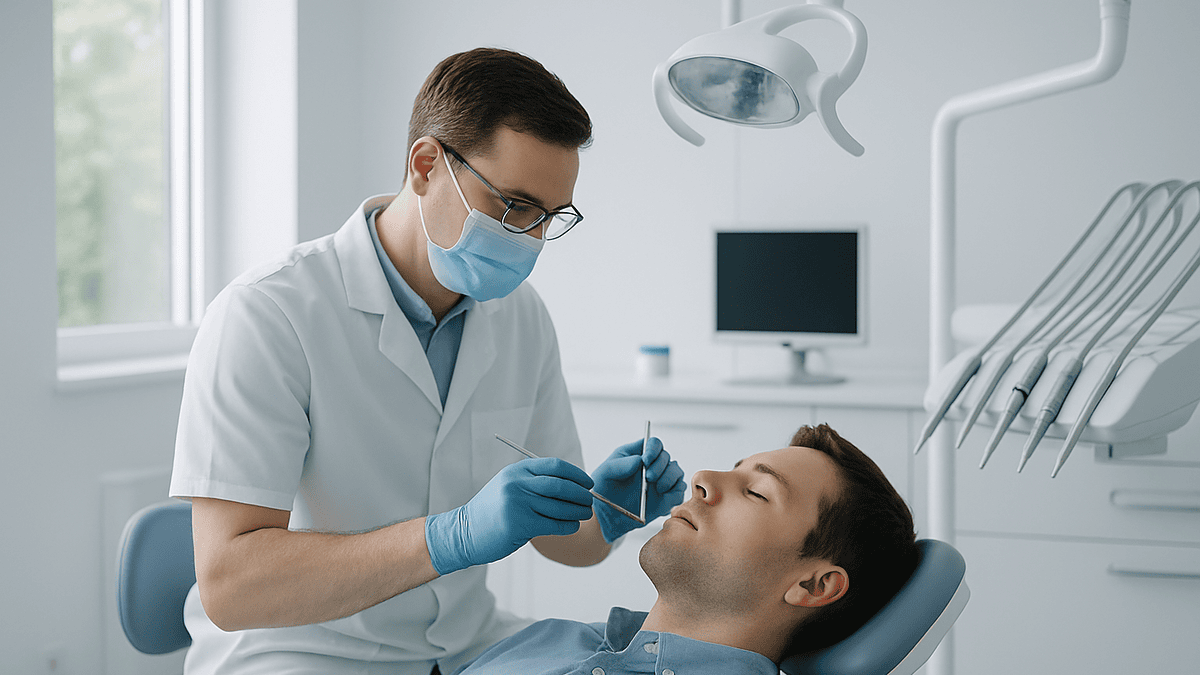
Key Takeaways
- Wisdom teeth usually emerge between ages 17 and 25, after the other 28 adult teeth are in place, which is why they so often run out of room.
- NHS guidance based on NICE recommendations supports removal only when a wisdom tooth is causing problems or is likely to, not as a routine precaution.
- There is no upper age limit for extraction, but denser bone and fully formed roots in later adulthood tend to make the surgery more complex and recovery slower.
- Facial swelling after surgery is worst in the first few days and resolves; no lasting change in face shape is documented from routine wisdom tooth removal.
- Lower front teeth drift and crowd through adulthood even in people born without wisdom teeth, so third molars are not a proven cause of post-braces crowding.
- Pain that eases and then suddenly worsens two to four days after surgery is the classic sign of dry socket and should prompt a call to your care team.
Most wisdom teeth removal myths do not hold up to the evidence. There is no upper age limit for extraction, although healing tends to be slower in later adulthood. Removal does not change face shape once swelling settles, wisdom teeth are not proven to crowd front teeth, and guidelines advise removal only when a tooth is causing or likely to cause problems.
A twenty-two-year-old sits in a dental chair holding her phone, scrolling. Her dentist has just pointed at a panoramic X-ray and said the word “impacted”. By the time she reaches the parking lot she has read that she is too old to have the teeth out safely, that her jawline will narrow afterward, and that the whole thing is a scheme to keep oral surgeons busy. None of those three claims is supported by mainstream evidence, yet all three come up in nearly every conversation about wisdom teeth removal myths.
Third molars sit at an awkward crossroads: they arrive late, they are hard to clean, and the decision to remove them is sometimes genuinely uncertain. Uncertainty is fertile ground for folklore.
This explainer walks through what the evidence actually shows on age, face shape, crowding, jaw joints, pain and recovery, so the conversation with your dentist or oral surgeon starts from facts rather than rumor. The decision itself stays with the clinician who has seen your X-ray.
What are wisdom teeth, and why do they cause so much trouble?
Wisdom teeth are the third molars, the last four teeth to come through at the very back of the mouth. According to the NHS, they usually appear in the late teens or early twenties, by which point the other 28 adult teeth are already in place. Mayo Clinic puts the typical window at ages 17 to 25. That timing is the root of the problem: the jaw has finished most of its growth, the row is full, and the newcomer has nowhere comfortable to go.
A tooth that cannot emerge properly is called impacted, meaning it is partly or fully trapped beneath the gum or against the neighboring molar. Mayo Clinic describes several patterns: a tooth angled toward the second molar, angled toward the back of the mouth, lying almost horizontally, or upright but stuck below the gum line. Each creates its own set of risks.
Those risks are mechanical and bacterial rather than mysterious. A partly erupted tooth leaves a flap of gum that traps food and plaque. The resulting infection of the gum around the crown is called pericoronitis, and the NHS lists it among the most common reasons removal is recommended. Decay in the wisdom tooth or the molar in front of it, gum disease around the site, and cysts forming around an unerupted tooth round out the list.
Not everyone is affected. Some people have all four wisdom teeth erupt cleanly and keep them for life. Others are born with fewer than four, or none at all. The variation is wide, which is one reason a blanket rule for everyone makes little sense and why so many wisdom teeth removal myths exist in the first place.
How wisdom teeth removal actually works, step by step
The procedure is more predictable than its reputation. Your dentist or oral surgeon first reviews an X-ray to see how the tooth sits, how close its roots lie to the nerve that runs through the lower jaw, and whether the upper teeth are near the sinus. That map decides the approach.

Before anything is removed, the area is numbed. The NHS explains that a local anesthetic, an injection that blocks pain signals in one region while you stay awake, is used for most extractions. Mayo Clinic notes that sedation (medicine that relaxes you and dulls awareness) or, less often, general anesthesia (being fully asleep) may be offered for more complex cases or for people who are very anxious. Which option you receive is a decision for the treating team, weighed against your health history.
If the tooth has already come through, the dentist loosens it in its socket with gentle rocking motions and lifts it out. If it is impacted, a small cut is made in the gum, a little bone covering the tooth may be removed, and the tooth is sometimes divided into pieces so each can come out through a smaller opening. The NHS reports that simple procedures can take a few minutes, while complicated ones can take longer than 20 minutes.
You will feel pressure during this stage, and you may hear sounds, but you should not feel sharp pain. Tell the clinician immediately if you do, because more anesthetic can be given. Afterward the site may be closed with dissolvable stitches and packed with gauze so a blood clot can form. That clot is the foundation of healing, and much of the aftercare advice exists to protect it.
Who is usually advised to have wisdom teeth removed, and who is asked to wait?
Here the evidence pushes back against the idea that every third molar must come out. The NHS states that guidance from the National Institute for Health and Care Excellence (NICE) recommends removing wisdom teeth only when they are causing problems, or are likely to, rather than as a routine precaution. Reasons that typically prompt removal include repeated episodes of pericoronitis, untreatable decay, abscesses, cysts, and damage to the neighboring tooth or the surrounding bone.
Mayo Clinic frames the question slightly differently, acknowledging that some dentists recommend removing symptom-free impacted teeth to prevent future problems, while others prefer to monitor. The honest summary is that for a symptom-free tooth sitting peacefully under the gum, professional opinion is divided and the long-term evidence is not strong in either direction.
Monitoring, sometimes called watchful waiting, means keeping the tooth, cleaning carefully around it, and reviewing it at check-ups with periodic X-rays. A tooth that is fully erupted, correctly positioned, cleanable and free of decay is usually a candidate for this approach.
Removal is more often advised when:
- the tooth is partly through and the gum around it keeps becoming infected
- decay has reached the wisdom tooth or the back of the second molar
- a cyst or bone loss is visible on X-ray
- the tooth is painful and the cause has been confirmed
People with certain medical conditions, those on medicines that affect bleeding or bone healing, and anyone with an active infection may be asked to wait or to prepare first. The ordering of those steps is for the treating team, not a rule you can apply from the outside.
Is there really a wisdom teeth removal age limit?
This is one of the most persistent wisdom teeth removal myths, and it has two versions. One says you must have them out before 25 or it becomes dangerous. The other says that after 40 nobody will touch them. Neither matches what clinical sources describe.

There is no upper age limit for wisdom tooth extraction. People in their fifties, sixties and beyond have impacted or decayed third molars removed when the tooth causes a problem. What changes with age is not whether surgery is possible but how the body responds to it. Mayo Clinic notes that roots continue to develop as a person matures and bone becomes denser, which can make a tooth harder to remove and recovery longer compared with the late teens, when roots are often not fully formed.
That is the kernel of truth behind the myth. Oral surgeons do sometimes prefer to remove a tooth that clearly needs to go while a patient is young, because the procedure tends to be simpler and healing faster. That preference is about ease and recovery, not about a cliff after which the operation becomes unsafe.
The flip side matters too. Being young is not, on its own, a reason to remove a tooth. The NHS guidance quoted above applies at any age: the tooth should be causing trouble or clearly on course to.
Later in life, the questions shift toward the rest of your health. Blood-thinning medicines, bone-strengthening medicines, diabetes and heart conditions all shape how a surgeon plans the procedure and aftercare. None of these automatically rules out removal; they simply mean more planning, and that planning belongs to your dentist, surgeon and physician working together.
Does removing wisdom teeth change your face shape?
Search for “wisdom teeth face shape” and you will find confident claims in both directions: that removal slims the jaw, that it hollows the cheeks, even that it ages the face. Mainstream clinical sources do not support any lasting change in facial appearance from routine wisdom tooth removal.
The confusion comes from two real but temporary effects. First, swelling. The NHS notes that the mouth and cheeks are typically swollen after surgery, worse in the first few days and gradually improving. Someone who photographs their face a week after surgery and again a month later will see a difference, but it is the swelling resolving, not the bone remodeling into a new outline.
Second, timing. Most people have wisdom teeth removed between their late teens and mid-twenties, exactly when the face is losing childhood fullness on its own. Cheekbones become more defined, the jawline sharpens, and the person naturally credits the surgery that happened to coincide with it.
What about the bone? When any tooth is removed, the socket fills in and the surrounding bone remodels. For a third molar tucked at the back of the jaw, that change is small and sits behind the muscles of the cheek and jaw. It does not translate into a visible change in width or contour the way losing several front teeth over decades might.
If facial appearance is a concern for you, raise it directly with the surgeon before the procedure. A clinician who has seen your X-ray can tell you how the tooth sits relative to the bone, which is far more useful than before-and-after photos posted online by people who were also simply getting older.
Do wisdom teeth push your front teeth and cause crowding?
For decades the standard explanation for crowded lower front teeth in adulthood was simple: the wisdom teeth came in, pushed everything forward, and undid the orthodontist’s work. It is a satisfying story. The evidence, however, has not been kind to it.
Mayo Clinic lists crowding of nearby teeth as a possible problem associated with impacted wisdom teeth, so the idea is not baseless. Yet orthodontic research over many years has consistently found that lower front teeth tend to drift and crowd through adulthood whether or not wisdom teeth are present, including in people who were born without third molars. Jaw growth patterns, changes in the shape of the dental arch, the tendency of teeth to move slightly forward over a lifetime, and the simple absence of a retainer all contribute. A tooth at the back of the mouth produces far less force than these slow, systemic changes.
Why does the myth persist? Partly because of timing again. Wisdom teeth arrive in the late teens, which is also when many people stop wearing retainers and when adult crowding first becomes noticeable. Correlation reads like cause.
The practical consequence is important. Removing wisdom teeth purely to protect straight front teeth is not supported by strong evidence, and that is one reason guidelines focus on infection, decay and damage rather than on cosmetic prevention. If your front teeth are shifting after braces, the first conversation is usually about retainers, not extractions.
There are exceptions. An orthodontist planning to move the back teeth may want an impacted third molar out of the way for mechanical reasons. That is a treatment-planning decision specific to one patient, not evidence that wisdom teeth are secretly shoving the whole arch.
Can TMJ be caused by wisdom teeth?
The temporomandibular joint, usually shortened to TMJ, is the hinge on each side of the face that connects the lower jaw to the skull. Pain, clicking or stiffness in this joint is described as a TMJ disorder. People often ask whether their wisdom teeth are to blame, especially when jaw pain and a troublesome third molar show up at the same time.
The link is weaker than it feels. Mayo Clinic attributes TMJ disorders to a mix of causes: arthritis in the joint, injury, long-term teeth clenching or grinding, and displacement of the small disc that cushions the joint. In many cases the exact cause is never pinned down. Wisdom teeth do not appear on that list as a recognized trigger.
That said, two things can muddy the picture. An infected or impacted wisdom tooth can produce pain that radiates along the jaw and feels like it comes from the joint, and limited mouth opening from pericoronitis can mimic a stiff TMJ. In those cases the wisdom tooth is a source of referred pain, not a cause of joint disease, and treating the tooth often settles it.
The other direction is more relevant. Wisdom tooth surgery itself requires the mouth to stay open, sometimes for a prolonged stretch, and that can leave the joint and jaw muscles sore for a few days. Mayo Clinic describes jaw stiffness and difficulty opening wide as expected short-term effects. For someone with an existing TMJ disorder, that temporary strain is worth flagging to the surgeon in advance so the team can plan positioning and breaks.
If jaw joint pain continues long after the socket has healed, it deserves its own assessment rather than being filed under wisdom teeth.
What is the wisdom teeth conspiracy people talk about?
The wisdom teeth conspiracy, as it circulates online, holds that third molars are harmless and that dentists remove them unnecessarily for profit. Like many durable rumors, it sits next to a legitimate scientific debate and borrows its credibility.
Here is the genuine part. For years, routine removal of symptom-free impacted wisdom teeth was common practice in many places. Over time, reviewers asked whether that approach had solid evidence behind it and found the long-term data thin. In response, guidance in some health systems shifted. The NHS now states plainly that NICE recommends removal only for wisdom teeth that are causing problems or are likely to, which is a meaningful change from “take them all out at eighteen”. Mayo Clinic, in turn, acknowledges that dentists disagree about prophylactic removal of impacted teeth that are not causing symptoms.
So the honest version is: there is an open question about removing quiet, symptom-free teeth, and clinical guidance has become more conservative. That is how evidence-based medicine is supposed to work.
Where the conspiracy framing goes wrong is in its leap from “not always necessary” to “never necessary”. Pericoronitis, decay in a tooth that cannot be cleaned, cysts, and damage to the neighboring molar are real and documented. For those situations, removal is standard care because leaving the tooth carries its own risks of infection and bone loss.
The useful takeaway is a question, not a suspicion: ask what specific problem the tooth is causing or is expected to cause. A good clinician will point to it on the X-ray. If the answer is only “everyone has them out”, it is reasonable to ask whether monitoring is an option. Either way, the decision belongs with you and the treating team, informed by your own imaging.
How painful is wisdom tooth removal on a scale of 1 to 10?
Pain cannot be promised at a number, because people, teeth and surgeries differ. What the evidence does support is a clear shape to the experience, and that shape is reassuring for most people.
During the procedure, with local anesthetic working, the expectation is pressure rather than pain. If sharp pain breaks through, the clinician can add more anesthetic. The NHS and Mayo Clinic both describe the surgery itself as something you should not feel beyond pushing and movement, and sedation can reduce awareness further for people who want it.
The hours after are a different matter. As the anesthetic wears off, the site becomes sore. Most people describe this as aching rather than stabbing, and both sources note that discomfort is usually greatest in the first two to three days before easing. Swelling tends to peak over the same window. By the end of the first week many people have moved from pain relief to mild tenderness when chewing near the site.
Several factors influence where someone lands on that scale: how deeply the tooth was impacted, whether bone was removed, how many teeth were taken out in one session, individual pain tolerance, and how carefully aftercare instructions are followed. A simple upper extraction and a horizontally impacted lower molar are not the same procedure, even though both are called wisdom tooth removal.
Your surgeon will discuss pain management before you leave. This may include medicines from the anti-inflammatory class or other analgesics, chosen for your health history. Follow the prescribing clinician’s instructions rather than online advice, and never combine products on your own. One warning sign stands apart from ordinary soreness: pain that eases over two or three days and then suddenly worsens. That pattern points to dry socket, covered below, and warrants a call.
What people often get wrong about wisdom teeth removal myths and recovery
Aftercare is where folklore does the most damage, because small misunderstandings can undo the clot that protects a healing socket. The table below separates the common claims from what clinical sources actually say.
| Common claim | What the evidence shows |
|---|---|
| “Rinse hard right away to keep it clean” | The NHS advises avoiding rinsing, spitting and anything that could dislodge the clot for the first 24 hours; gentle salt-water rinsing starts afterward. |
| “A straw is the safest way to drink” | Suction can pull the clot out. Mayo Clinic advises against straws in the early days. |
| “Smoking a little won’t matter” | Smoking is a known risk factor for dry socket and slower healing; the NHS advises avoiding it during recovery. |
| “Pain that gets worse means infection” | Worsening pain two to four days after surgery most often signals dry socket, a lost clot exposing bone, rather than infection. |
| “Everyone needs a week off work” | Recovery varies; the NHS notes it can take up to two weeks to recover fully, but many people resume light activities within days. |
Dry socket deserves its own definition because it is the complication people fear most. It occurs when the blood clot fails to form or is lost before the socket heals, leaving bone and nerve endings exposed. Mayo Clinic describes the hallmark as intense pain that begins a few days after extraction, sometimes radiating to the ear, with a bad taste or odor. It is painful but treatable; the clinician cleans the socket and places a soothing dressing, and the pain typically eases quickly once treated.
Two other misunderstandings are worth naming. First, numbness of the lip, chin or tongue after a lower extraction is a recognized risk, described by the NHS as usually temporary though occasionally lasting. It should be reported, not ignored. Second, stitches that dissolve on their own do not need to be removed, so loose threads a week later are normal rather than a sign something came apart.
What the first days and weeks after wisdom teeth removal usually look like
Recovery runs on a rough timetable, and knowing it in advance turns each stage into something expected rather than alarming. These are typical ranges drawn from NHS and Mayo Clinic guidance, not promises; your own course depends on the complexity of the surgery.
The first day is about the clot. You bite on gauze until oozing stops, rest with your head slightly raised, avoid hot drinks and vigorous activity, and do not rinse or spit. Some blood-tinged saliva is normal. Mayo Clinic suggests a cold pack on the cheek in short intervals to limit swelling.
Days two and three are usually the peak. The NHS notes that swelling of the mouth and cheeks is worst in the first few days, and this is when discomfort tends to be strongest. Bruising on the cheek or neck can appear, particularly after lower extractions. Jaw stiffness makes opening wide difficult. Gentle warm salt-water rinses can begin after the first 24 hours, several times a day, especially after eating.
By the end of the first week, most people find pain has become tenderness and swelling has visibly receded. Chewing on the other side of the mouth becomes comfortable, and many return to work or study well before this point if their job is not physically demanding. Any non-dissolving stitches are removed around this time.
The NHS states that full recovery can take up to two weeks, with the socket continuing to fill in beneath the surface for considerably longer. A small indentation at the site is normal for several weeks and gradually smooths out as bone fills the space.
Follow-up is arranged by the team that performed the surgery. If you are traveling home after treatment, plan the journey so that follow-up and any emergency contact are clearly sorted before you leave.
What to eat after wisdom teeth removal, and what to skip for a while
Food choices in the first week protect the clot, limit pain and keep energy up at a time when chewing is uncomfortable. The guiding principles from the NHS and Mayo Clinic are simple: soft, cool to lukewarm, and nothing that requires suction, crunching or digging into the back of the mouth.
In the first 24 hours, think of foods you could eat with a spoon and little effort: yogurt, smooth soups allowed to cool, mashed potato, applesauce, blended fruit eaten from a bowl rather than through a straw, and smooth puddings. Hot liquids are best avoided early on because heat can increase bleeding at the site.
Over the next few days, textures can progress as comfort allows. Scrambled eggs, soft pasta, well-cooked rice, flaky fish, oatmeal, soft cheese and mashed beans give more protein and bulk without heavy chewing. Chew on the side away from the extraction where possible, and rinse gently with salt water afterward to clear debris.
Foods worth holding off on until the socket has clearly settled include:
- anything crunchy or sharp, such as chips, nuts, popcorn and crusty bread, which can lodge in the socket
- very hot foods and drinks in the first day
- spicy or acidic foods that sting a fresh wound
- alcohol, which the NHS advises avoiding during recovery and which may interact with prescribed medicines
- seeds and small grains that are easy to trap in the healing site
Hydration matters more than variety. Drink plenty of water from a glass, not a straw, and do not skip meals because chewing is awkward; soft calories support healing. If you have diabetes or another condition where diet and medicines are tightly linked, raise this with your care team before surgery so meals and medicines can be planned together. Appetite usually returns to normal within the first week as swelling eases.
Questions to ask your care team before wisdom teeth removal
A short, focused conversation before the appointment does more to prevent anxiety than any amount of online reading. These questions are phrased so the answers come from your own imaging and history rather than general statistics.
- What specific problem is this tooth causing now, or what is it likely to cause? Ask to see it on the X-ray.
- Is monitoring a reasonable alternative in my case, and what would we be watching for at check-ups?
- How close are the roots to the nerve in my lower jaw, or to the sinus above, and how does that affect the plan?
- Which type of anesthesia do you recommend for me, and why? Who will be monitoring me if sedation is used?
- Will the tooth likely need to be sectioned, and does that change expected recovery time?
- How many teeth do you suggest removing in one session?
- Which of my current medicines, including supplements and blood thinners, need to be discussed before surgery, and who decides whether anything is paused?
- What will pain management look like, and whom do I contact if it is not working?
- What signs would mean I should call urgently rather than wait for my follow-up?
- When can I return to work, exercise and normal eating in your experience with cases like mine?
If you have a known TMJ disorder, a bleeding disorder, a heart condition that has previously required antibiotic cover, or a history of difficult anesthesia, say so at the start. These are not reasons for alarm, but they change how the team prepares.
Write the answers down or bring someone with you. People retain less than they expect from pre-surgery conversations, and a second set of ears is helpful on the day of surgery too, particularly if sedation means you cannot drive home.
When to call your doctor after wisdom teeth removal
Most recoveries are uneventful, and distinguishing ordinary soreness from a genuine problem is mostly a matter of pattern. Pain and swelling that peak in the first few days and then steadily improve are expected. Anything that bucks that trend deserves a call to the dentist or oral surgeon who performed the procedure, or to an urgent care or emergency service if you cannot reach them.
Contact your care team promptly if you notice:
- bleeding that does not stop with firm pressure on gauze for 20 to 30 minutes, or that restarts heavily after the first day
- pain that improves and then worsens sharply around day two to four, especially with a bad taste or odor, which suggests dry socket
- swelling that keeps increasing after the third day, or spreads toward the eye or down the neck
- fever, chills, or pus from the socket
- difficulty swallowing or breathing, which needs emergency care without delay
- numbness or tingling of the lip, chin or tongue that persists beyond the time the anesthetic should have worn off
- an allergic-type reaction to any prescribed medicine, such as rash, facial swelling or wheezing
Mayo Clinic specifically lists difficulty swallowing or breathing, excessive bleeding, fever, severe pain not controlled by prescribed medicines, worsening swelling, numbness, a bad taste that rinsing does not clear, and pus as reasons to seek care. The NHS likewise advises contacting the dentist for severe pain, bleeding that persists, or signs of infection.
Do not try to manage these at home with leftover medicines or remedies found online. Treatment for dry socket, for infection, or for prolonged bleeding is straightforward in clinical hands and far less so without them. The team that removed the tooth knows exactly what was done and is best placed to judge what the symptom means. When in doubt, call; a reassurance call costs you nothing, and a missed infection can cost a great deal.
Frequently asked questions
Is there a wisdom teeth removal age limit?
No. Wisdom teeth can be removed at any age when a tooth is causing problems. What changes with age is the difficulty of the surgery and the speed of healing, because roots finish forming and bone becomes denser over time. Surgeons sometimes prefer to act while a patient is young for that reason, but older adults have extractions routinely with appropriate planning.
Do wisdom teeth affect face shape after removal?
Clinical sources do not describe any lasting change in face shape from routine wisdom tooth removal. The swelling that follows surgery is temporary and settles within days to a couple of weeks. Because most people have the surgery in their late teens or twenties, the natural loss of youthful facial fullness that happens then is often mistaken for an effect of the extraction.
What is the wisdom teeth conspiracy?
It is the claim that dentists remove harmless wisdom teeth purely for profit. The grain of truth is that routine removal of symptom-free teeth has been questioned and guidance has become more conservative. But infected, decayed or cyst-forming wisdom teeth are well documented, and removing those is standard care. Ask what specific problem your tooth is causing and request to see it on the X-ray.
How painful is wisdom tooth removal on a scale of 1 to 10?
There is no reliable number because pain varies with the tooth, the surgery and the person. During the procedure, local anesthetic means you should feel pressure rather than pain. Afterward, discomfort is usually greatest in the first two to three days and then eases. A deeply impacted lower tooth typically hurts more than a simple upper extraction.
Can TMJ be caused by wisdom teeth?
Wisdom teeth are not a recognized cause of TMJ disorders, which Mayo Clinic links to arthritis, injury, clenching or grinding, and disc displacement. An infected wisdom tooth can produce pain that feels like it comes from the joint, and surgery can leave the jaw temporarily stiff, but neither is the same as joint disease. Persistent joint pain after healing needs its own assessment.
What can you eat after wisdom tooth removal?
Soft, cool foods eaten with a spoon are best in the first day: yogurt, cooled smooth soup, mashed potato, applesauce and smooth puddings. Over the next few days, scrambled eggs, soft pasta, fish and oatmeal can be added as comfort allows. Avoid straws, crunchy or sharp foods, very hot drinks and alcohol until the socket has clearly settled.
Do wisdom teeth cause crowding of front teeth?
The evidence does not support this long-standing belief. Lower front teeth tend to drift and crowd through adulthood regardless of whether wisdom teeth are present, including in people born without them. Jaw changes, natural forward drift and stopping retainer wear are the main contributors. Removing wisdom teeth purely to keep front teeth straight is not a guideline-supported reason.
How long does it take to recover from wisdom teeth removal?
The NHS notes that full recovery can take up to two weeks, with swelling and discomfort typically worst in the first few days and then steadily improving. Many people return to light work or study within a few days. The socket continues to fill with bone beneath the surface for longer, so a small dip at the site is normal for several weeks.
What is dry socket and how do I know if I have it?
Dry socket happens when the protective blood clot is lost or fails to form, exposing bone and nerve endings. The hallmark is pain that eases after surgery and then worsens sharply around day two to four, sometimes radiating to the ear, often with a bad taste or odor. It is treatable in clinical hands with cleaning and a soothing dressing, so call your care team rather than waiting it out.
Does everyone need their wisdom teeth removed?
No. Some people have wisdom teeth that erupt fully, sit correctly and can be cleaned, and these can be kept and monitored at check-ups. Others are born with fewer than four or none at all. NHS guidance supports removal when a tooth is causing or likely to cause problems such as repeated infection, decay or cysts. The decision depends on your own X-ray and symptoms.
References
This article is for general information only and is not a substitute for professional medical advice. Please consult a qualified doctor about your individual situation.

More from the Blog

What Happens in Orofacial Myology Sessions: Posture Checks, Exercises and Progress Reviews
Myofunctional therapy sessions are short, structured appointments with a trained therapist who checks how your tongue, lips and jaw rest and move, teaches targeted…
How a Dental Anatomy Evaluation Guides Your Plan: Tooth Charts, Bite Checks and Imaging
A dental anatomy evaluation is a structured, tooth-by-tooth assessment in which a dentist records each tooth on a numbered chart, checks how your upper…

Tooth Decay Myths: Sugar-Free Means Safe, Brushing Harder Helps and Other Errors
Most tooth decay myths fall apart under evidence. Sugar-free does not mean safe, because acidic drinks and starchy snacks still feed decay or erode…

Chipped or Loose Porcelain Veneer: Repair, Rebonding or Replacement Explained
A chipped or loose porcelain veneer can often be managed without replacing it. Small edge chips may be smoothed or patched with tooth-colored composite…
What Does a Dental Spa Visit Include? Cleaning, Polishing and Gum Care in a Calmer Setting
A dental spa visit usually includes the same core clinical steps as a standard hygiene appointment: an examination of the teeth and gums, removal…

Anesthesia for Impacted Tooth Removal: Local, Sedation or General and What You Feel
Impacted tooth removal is usually done with one of three anesthesia approaches: a local anesthetic that numbs the jaw while you stay awake, sedation…