

Contents
About this program
The children’s eye health check-up at Acibadem is a short specialist visit for ages 5 to 17 built around ocular biometry, the axial-length measurement that tracks myopia, at a JCI-accredited hospital in Istanbul.
The Children’s Eye Health Check-Up Program is a short, specialist visit built around one modern measurement: ocular biometry, which records the axial length of the eye. Axial length is the most reliable way to track whether a child’s eye is growing faster than expected, the mechanism behind progressive myopia, and it allows the ophthalmologist to identify children who would benefit from myopia control before their prescription climbs.
The program combines a full paediatric ophthalmology examination, vision, refraction, eye alignment, eye pressure where appropriate and the retina, with the biometry measurement, and is recommended for all children aged 17 and under for the early detection and monitoring of myopia.
What the children’s eye health check-up looks for
Every item has a purpose. This is what each part of the day is looking for, in the words we would use to explain it to you at the final review.
Specialist examinations
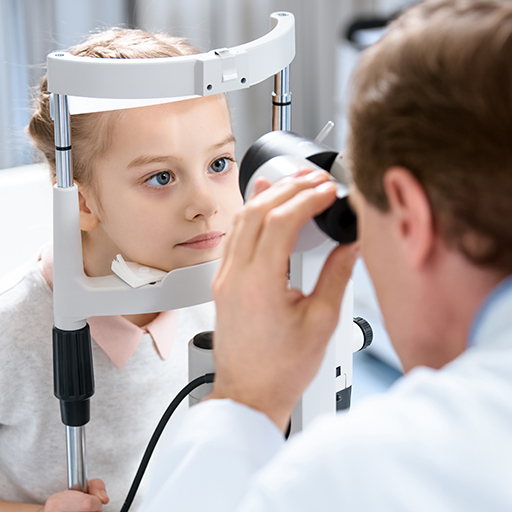
The ophthalmology examination covers vision, eye pressure and the retina; ocular biometry measures the axial length of the eye, the key parameter for tracking myopia in children.
Who should consider the children’s eye health check-up
- Children who squint, sit close to screens or complain of blurred distance vision.
- Children with one or two short-sighted parents, who have a higher risk of developing myopia.
- Children already wearing glasses whose prescription changes every year, biometry shows whether the eye is still lengthening.
Paediatric check-ups are usually repeated yearly; the team recommends the interval that suits your child’s age and results.
How it compares with the other programs
A general eye examination is also part of My Child’s Health Check-Up Program; this program adds the biometry measurement that makes myopia monitoring precise.
Related programs: My Child’s Health Check-Up Program, Eye Health Adult Check-Up Programor browse all check-up packages and the Check-Up unit.
How long it takes
Plan for one to three hours. A coordinator plans the sequence, laboratory first while you are fasting, then imaging and examinations, so that you move through the hospital without waiting, and stays reachable throughout the visit.
How to prepare
- Eye examination. Bring your glasses and any lens prescription. Leave soft contact lenses out for a few days before corneal measurements (rigid lenses longer), as the team advises. Dilating drops may be used, so arrange transport.
- For your child. Bring the vaccination record and any growth or school health records. A parent or guardian stays with the child throughout; a favourite snack for after the blood test helps.
- Records and medicines. Bring previous reports, imaging and a complete list of your medicines. Take your usual medication unless the team tells you otherwise when confirming the appointment.
Results, report and follow-up
The large majority of laboratory results are ready the same day and are reviewed with you by the paediatric team before you leave; a written report in English follows, together with digital copies of your images and reports.
If a result needs a closer look, the relevant specialist is in the same hospital: additional imaging, a biopsy or a consultation can usually be arranged within days, and you decide how to proceed with the full picture in hand. Nothing in a check-up replaces care for existing symptoms, if you have a specific complaint, tell the team so the right specialist sees you first.
Price and what is included
Pricing for the Children’s Eye Health Check-Up Program is confirmed as a written quote before you commit, in your preferred currency. The quote covers every examination, test and imaging study listed on this page, the physician review, the written report in English, hospital coordination and interpreter support.
Not included are travel and accommodation, tests the physician recommends in addition to the program, and any treatment that follows from a finding, each is quoted separately before it is performed.
Why have the children’s eye health check-up at Acibadem
Acibadem Healthcare Group runs JCI-accredited hospitals in Istanbul with their own laboratories, imaging centres and specialist departments under one roof, which is what makes a complete program possible in a single visit, and what makes follow-up simple when a finding needs one. International patients are supported by a dedicated team in 25 languages, from the written quote before travel to the report after it.
More questions about the children’s eye health check-up
Does the examination need eye drops?
Refraction in children is usually measured after dilating drops, which blur near vision for a few hours. The ophthalmologist decides whether drops are needed on the day.
What is ocular biometry?
A non-contact optical measurement of the length of the eye from front to back. It takes a few seconds per eye and is painless.
How often should it be repeated?
For children with myopia or a strong family history, the ophthalmologist usually recommends a follow-up measurement every six to twelve months to track progression.
This page describes the content of a preventive program and is not medical advice. Screening tests have limits: a normal result lowers, but does not remove, the possibility of disease, and some findings need further tests to clarify. Discuss your individual situation with a physician.