

Contents
About this program
The eye health check-up at Acibadem is a three-step specialist visit for adults aged 18 and over: an ophthalmology examination plus retinal OCT and corneal topography, at a JCI-accredited hospital in Istanbul.
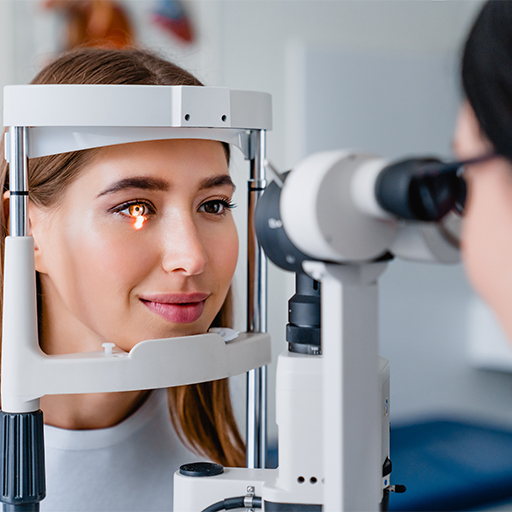
The Eye Health Adult Check-Up Program is a specialist ophthalmology visit for adults aged 18 and over that adds two imaging measurements to the standard examination: retinal OCT, which images the layers of the retina and the optic nerve for glaucoma and macular disease, and corneal topography, which maps the surface of the cornea to detect keratoconus and to plan refractive procedures.
The examination itself covers vision, refraction, eye pressure, the front of the eye and the retina. Together, the three components detect the conditions that quietly take sight, glaucoma, macular degeneration, diabetic retinal change and corneal thinning, at a stage where treatment preserves vision.
What the eye health check-up looks for
Every item has a purpose. This is what each part of the day is looking for, in the words we would use to explain it to you at the final review.
Specialist examinations
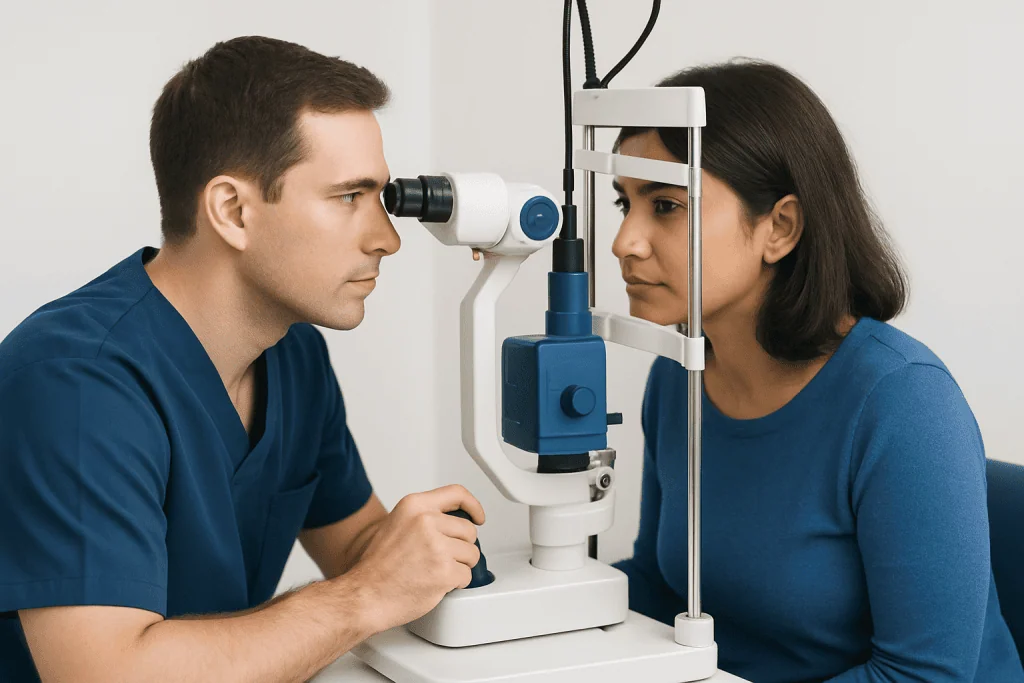
The ophthalmology examination covers vision, eye pressure and the retina; retinal OCT images the retinal layers and the optic nerve for glaucoma and macular disease, and corneal topography maps the corneal surface (keratoconus, refractive planning).
Who should consider the eye health check-up
- Adults over 40, when glaucoma and macular disease become more common, particularly with a family history.
- People with diabetes or high blood pressure, whose retina should be checked regularly.
- Anyone considering laser vision correction or lens surgery, for whom corneal topography is essential.
Adults over 40, and anyone with diabetes or high blood pressure, benefit from a yearly eye examination; otherwise every two years is usual.
How it compares with the other programs
An ophthalmology examination is also part of the Gold (as an option), Premium and Executive programs; this stand-alone program adds OCT and topography for a focused eye assessment.
Related programs: Children’s Eye Health Check-Up Program, Gold Women’s Check-Up Programor browse all check-up packages and the Check-Up unit.
How long it takes
Plan for one to three hours. A coordinator plans the sequence, laboratory first while you are fasting, then imaging and examinations, so that you move through the hospital without waiting, and stays reachable throughout the visit.
How to prepare
- Eye examination. Bring your glasses and any lens prescription. Leave soft contact lenses out for a few days before corneal measurements (rigid lenses longer), as the team advises. Dilating drops may be used, so arrange transport.
- Records and medicines. Bring previous reports, imaging and a complete list of your medicines. Take your usual medication unless the team tells you otherwise when confirming the appointment.
Results, report and follow-up
The large majority of laboratory results are ready the same day and are reviewed with you by the check-up physician before you leave; a written report in English follows, together with digital copies of your images and reports.
If a result needs a closer look, the relevant specialist is in the same hospital: additional imaging, a biopsy or a consultation can usually be arranged within days, and you decide how to proceed with the full picture in hand. Nothing in a check-up replaces care for existing symptoms, if you have a specific complaint, tell the team so the right specialist sees you first.
Price and what is included
Pricing for the Eye Health Adult Check-Up Program is confirmed as a written quote before you commit, in your preferred currency. The quote covers every examination, test and imaging study listed on this page, the physician review, the written report in English, hospital coordination and interpreter support.
Not included are travel and accommodation, tests the physician recommends in addition to the program, and any treatment that follows from a finding, each is quoted separately before it is performed.
Why have the eye health check-up at Acibadem
Acibadem Healthcare Group runs JCI-accredited hospitals in Istanbul with their own laboratories, imaging centres and specialist departments under one roof, which is what makes a complete program possible in a single visit, and what makes follow-up simple when a finding needs one. International patients are supported by a dedicated team in 25 languages, from the written quote before travel to the report after it.
More questions about the eye health check-up
Will my pupils be dilated?
Usually yes, for a full view of the retina. Dilating drops blur near vision for a few hours, so arrange transport and bring sunglasses.
Should I remove contact lenses?
Yes, leave soft lenses out for a few days and rigid lenses for longer before corneal topography, as the team advises, so the cornea returns to its natural shape. Bring your glasses instead.
How long does the visit take?
About an hour, including the imaging measurements and the discussion of results.
This page describes the content of a preventive program and is not medical advice. Screening tests have limits: a normal result lowers, but does not remove, the possibility of disease, and some findings need further tests to clarify. Discuss your individual situation with a physician.