Quick answer
A chalazion is a painless lump on the eyelid caused by blockage and inflammation of an oil gland. It may improve with warm compresses and eyelid hygiene, while persistent or bothersome cases can be treated with minor drainage procedures or medication after ophthalmic evaluation at Acibadem in Turkey.
What is chalazion?
A chalazion (pronounced kuh-LAY-zee-on) is a slow-growing lump or swelling in the eyelid. It develops when one of the small oil glands inside the eyelid, called a meibomian gland, becomes blocked. These glands normally produce an oily substance that helps keep the surface of the eye moist and prevents tears from evaporating too quickly. When a gland’s opening becomes clogged, the oil backs up inside the gland and leaks into the surrounding eyelid tissue. The body reacts to this trapped oil with inflammation, which is the immune system’s natural response to irritation, and over time a firm, usually painless bump forms.
Many people searching for “what is chalazion” want to know how it differs from a stye. A stye (also called a hordeolum) is an acute infection of an eyelid gland, and it is typically painful, red, and tender. A chalazion, by contrast, is usually not an active infection. It often begins with some mild redness or tenderness, but as it matures it becomes a firm, painless nodule. In some cases, a stye that does not fully resolve can turn into a chalazion.
Chalazia (the plural of chalazion) can affect people of any age, including children, although they are more common in adults between roughly 30 and 50 years of age. They can occur on the upper or lower eyelid, and the upper eyelid is affected more often because it contains more oil glands. A chalazion may appear on one eye or, less commonly, on both eyes at the same time. Some people develop a single chalazion once in their life, while others experience repeated episodes, especially if they have an underlying eyelid or skin condition.
The medical classification code for chalazion is ICD-10 H00.1. The condition is generally benign, meaning it is not cancerous, and in many cases it resolves on its own. However, persistent or recurrent chalazia deserve medical evaluation.
Symptoms of a chalazion
Chalazion symptoms vary depending on how long the lump has been present and how much inflammation there is. In the early stage, the eyelid may look and feel much like it does with a stye. As the chalazion matures, the picture changes and the lump becomes more distinct and less tender.
Common chalazion symptoms include:
- A firm lump or bump in the eyelid, usually painless once it has fully formed, often described as feeling like a small pea under the skin.
- Mild swelling of the eyelid, which may be more noticeable in the first days or weeks.
- Redness or tenderness in the early stage, before the inflammation settles and the lump becomes painless.
- A feeling of heaviness in the eyelid, particularly with larger lumps on the upper lid.
- Blurred vision, which can occur if a large chalazion presses on the front surface of the eye (the cornea) and temporarily changes its shape.
- Watery eyes or mild irritation in some cases.
- A visible bump under the inner surface of the eyelid, which may be seen when the lid is gently turned outward by a clinician.
Symptoms often differ by stage. In the acute (early) stage, there may be diffuse swelling, warmth, and some discomfort, and it can be difficult to tell a developing chalazion apart from a stye. In the chronic (later) stage, the redness usually fades and what remains is a discrete, painless, rubbery nodule. Small chalazia may cause no symptoms at all beyond the visible or palpable lump, while larger ones can be cosmetically bothersome or, less often, interfere with vision by weighing down the eyelid or pressing on the eye.
Pain is an important distinguishing feature. A chalazion is typically not painful once established. If a lump in the eyelid is significantly painful, warm, and red, it is more likely to be a stye or another form of eyelid infection, and it may need a different approach.
Causes and risk factors
The direct cause of a chalazion is blockage of a meibomian gland. When the gland’s opening at the edge of the eyelid becomes plugged, the oily secretion cannot drain, and the retained oil provokes a localized inflammatory reaction in the eyelid tissue. Understanding chalazion causes largely means understanding what makes these glands more likely to become blocked.
Conditions and factors that increase the risk of developing a chalazion include:
- Blepharitischronic inflammation of the eyelid margins, often associated with crusting or flaking at the base of the eyelashes. Blepharitis makes gland blockage more likely and is one of the most common risk factors.
- Meibomian gland dysfunctiona condition in which the oil glands produce thickened or abnormal oil that does not flow well, making blockages more frequent.
- Rosaceaa chronic skin condition causing facial redness that can also affect the eyelids and their glands (sometimes called ocular rosacea).
- Seborrheic dermatitisa common skin condition causing flaky, oily patches that can involve the eyelid area.
- A previous stye or chalazionpeople who have had one eyelid lump are more likely to develop another.
- Incomplete eyelid hygienefor example, not fully removing eye makeup, which may contribute to gland blockage in some individuals.
- Dry eye disease, which frequently coexists with meibomian gland problems.
Some evidence suggests that certain general health conditions, such as diabetes, may be associated with eyelid gland problems, although a chalazion can develop in perfectly healthy people with no identifiable risk factor. Chalazia are not contagious, and you cannot catch one from another person. Rubbing the eyes with unwashed hands does not directly cause a chalazion in the way it can contribute to infections, but good hand and eyelid hygiene is still sensible, particularly for people prone to eyelid problems.
Diagnosis
Chalazion diagnosis is usually straightforward and clinical, meaning it is based on the doctor’s examination rather than laboratory tests or imaging. An ophthalmologist (a physician specializing in eye and eyelid conditions) or another trained clinician will typically:
- Take a medical historyasking how long the lump has been present, whether it is painful, whether it has changed in size, and whether you have had similar lumps before or have conditions such as blepharitis or rosacea.
- Examine the eyelid and eyeinspecting the lump, gently feeling it to assess its size and firmness, and often turning the eyelid outward to look at its inner surface.
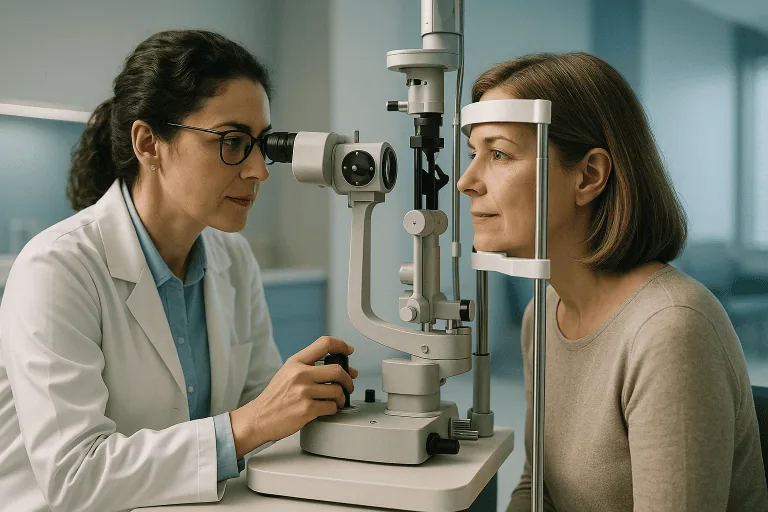
- Use a slit lampa specialized microscope with a bright light that allows a magnified view of the eyelid margins, the gland openings, the surface of the eye, and the lump itself.
- Check vision if a large chalazion may be pressing on the eye and affecting how the reader sees.
Blood tests, X-rays, and scans are not normally needed to diagnose a typical chalazion. The doctor’s main tasks are to confirm that the lump has the characteristic features of a chalazion and to rule out other conditions that can look similar. These include a stye, an eyelid cyst of another type, and, rarely, an eyelid tumor. In particular, a rare cancer called sebaceous gland carcinoma can occasionally mimic a chalazion.
For this reason, if a chalazion keeps coming back in the same location, does not respond to treatment as expected, or has unusual features such as loss of eyelashes, distortion of the eyelid margin, or ulceration of the skin, the doctor may recommend a biopsy. A biopsy means removing a small sample of tissue (often at the time of surgical drainage) so it can be examined under a microscope to exclude anything more serious. This is a precaution rather than a sign that anything is necessarily wrong, and most chalazia are entirely benign.
Treatment options
Chalazion treatment depends on the size of the lump, how long it has been present, how much it bothers the affected person, and whether it is affecting vision. Many chalazia resolve without any medical procedure, so treatment often begins conservatively and escalates only if needed. Detailed information about how this condition is managed is also available on the dedicated chalazion treatment page.
Watchful waiting and home care
In many cases, the first recommendation is simple home care combined with patience. A significant proportion of chalazia shrink and disappear on their own over weeks to a few months. Home measures commonly advised include:
- Warm compressesholding a clean, warm (not hot) compress against the closed eyelid for about 10 to 15 minutes, several times a day. The warmth helps soften the blocked oil so the gland can drain.
- Gentle eyelid massageafter the warm compress, lightly massaging the lump toward the eyelid margin may encourage drainage. Your doctor can show you the correct technique.
- Eyelid hygienegently cleaning the eyelid margins, especially in people with blepharitis, using methods your clinician recommends.
- Avoiding squeezing or popping the lumpattempting to burst a chalazion at home can spread inflammation, introduce infection, and damage the eyelid.
- Avoiding eye makeup and contact lenses while the eyelid is inflamed, if advised by your clinician.
Medications
Because a chalazion is usually an inflammatory rather than infectious problem, antibiotics are often not helpful for a typical, established chalazion. However, your doctor may prescribe antibiotic drops or ointment if there are signs of associated infection, or oral antibiotics in selected situations, for example when chronic blepharitis or rosacea is contributing to repeated eyelid problems. In some persistent cases, a doctor may inject a small amount of corticosteroid (an anti-inflammatory medication) directly into or around the chalazion to reduce inflammation and help the lump shrink. Steroid injections carry their own considerations, including a small risk of skin color changes at the injection site, which the doctor will discuss beforehand.
Procedures and surgery
If a chalazion does not improve after several weeks of conservative treatment, or if it is large, affecting vision, or cosmetically troubling, a minor surgical procedure called incision and curettage may be recommended. This is usually performed under local anesthesia, meaning the eyelid is numbed with an injection while the patient remains awake. The surgeon typically approaches the chalazion from the inner surface of the eyelid, makes a small incision, and gently scoops out the trapped material with a small instrument called a curette. Because the incision is usually on the inside of the lid, there is often no visible skin scar, and stitches are frequently not required.
The procedure is generally brief and performed as an outpatient treatment, meaning you go home the same day. Afterward, there may be some bruising, swelling, and mild discomfort for a few days, and an eye ointment or a short course of drops may be prescribed. If there is any concern about the nature of the lump, the removed tissue can be sent for microscopic examination. Chalazion care, including surgical management when needed, is typically handled by an eye specialist; at Acibadem, for example, this condition falls under the ophthalmology department.
No single treatment works for everyone, and even after successful drainage a new chalazion can form in the same or a different gland. Managing any underlying condition, such as blepharitis or rosacea, is often an important part of reducing recurrences.
Living with chalazion and outlook
The outlook for a chalazion is generally good. Most chalazia are harmless, do not damage the eye, and either resolve on their own or respond to simple treatment. Even large or persistent lumps can usually be dealt with effectively through a minor procedure. Permanent vision problems from a chalazion are rare, although in young children a large, long-standing chalazion that distorts the cornea can occasionally contribute to blurred vision or, in theory, affect visual development, which is one reason persistent lumps in children should be assessed by a doctor.
Living with a tendency to develop chalazia often means paying ongoing attention to eyelid health. People with blepharitis, meibomian gland dysfunction, or rosacea may benefit from a long-term routine of warm compresses and lid hygiene, even when no lump is present, to keep the oil glands flowing. Your doctor can suggest a routine suited to your situation. Removing eye makeup thoroughly, replacing old eye cosmetics, and following contact lens hygiene guidance are sensible general measures.
It is honest to say that recurrence is possible. Some people never have another chalazion after the first; others experience them repeatedly over the years. Recurrence does not usually indicate a serious problem, but a chalazion that keeps returning in exactly the same spot should be re-examined, and a biopsy may be considered to rule out rarer conditions.
Frequently asked questions
What is a chalazion and how is it different from a stye?
A chalazion is a firm, usually painless lump in the eyelid caused by a blocked oil gland, while a stye is an acute infection of an eyelid gland that tends to be red, tender, and painful. The two can look similar in the early stages, and a stye that does not fully clear can sometimes develop into a chalazion. A clinician can usually tell them apart on examination, and the distinction matters because their treatment can differ.
Can a chalazion heal on its own?
Yes, in many cases a chalazion resolves without any procedure, particularly when warm compresses and gentle massage are used consistently. This process can take several weeks and sometimes a few months. If a chalazion has not improved after a reasonable period of home care, or if it grows, becomes painful, or affects vision, it is worth having it evaluated by a doctor, who may suggest an injection or minor surgery.
How serious is a chalazion?
A chalazion is generally not serious. It is a benign, inflammatory lump rather than a cancer or a sight-threatening disease, and permanent harm to the eye is rare. That said, a large chalazion can temporarily blur vision by pressing on the eye, and, very rarely, other conditions can mimic a chalazion. A lump that is unusual, persistent, or recurrent in the same location should be examined by an eye specialist.
What causes a chalazion to keep coming back?
Recurrent chalazia are often linked to an underlying eyelid or skin condition, such as blepharitis, meibomian gland dysfunction, or rosacea, that makes the oil glands prone to blockage. Treating and managing these conditions, along with regular eyelid hygiene and warm compresses, may reduce recurrences, although no routine can guarantee that another chalazion will never form. Repeated lumps in exactly the same spot should be re-checked by a doctor.
Is chalazion surgery painful, and how long is recovery?
Chalazion surgery (incision and curettage) is performed under local anesthesia, so the eyelid is numbed and the procedure itself is usually not painful, although the numbing injection can sting briefly. Afterward, mild soreness, swelling, and bruising of the eyelid are common for a few days. Most people can return to normal activities quickly, following their doctor’s advice on drops or ointment, eye rubbing, makeup, and contact lens use during healing.
Should I try to pop or squeeze a chalazion at home?
No. Squeezing or attempting to lance a chalazion at home can push inflammatory material deeper into the eyelid, introduce infection, and injure the delicate tissues around the eye. Safe drainage should only be performed by a trained clinician in sterile conditions. At home, the recommended approach is warm compresses, gentle massage as shown by a professional, and good eyelid hygiene.
Can children get chalazia?
Yes, chalazia occur in children as well as adults. The general approach is similar, starting with warm compresses and lid hygiene, though procedures in young children may require different anesthesia arrangements. Because a large, persistent chalazion in a child can press on the eye and blur vision, and because children’s visual development is ongoing, a lump that does not settle should be assessed by an eye doctor rather than simply watched indefinitely.
When to see a doctor
Many chalazia can be safely managed at home at first, but some situations call for prompt medical attention. Arrange to see a doctor, or seek urgent care where appropriate, if you notice any of the following red flags:
- The lump has not improved after several weeks of warm compresses and home care, or it keeps growing.
- Your vision becomes blurred, double, or otherwise changed, or the lump seems to be pressing on your eye.
- The entire eyelid becomes very red, swollen, hot, and painful, or the redness and swelling spread beyond the eyelid to the surrounding face: this can signal a spreading infection (cellulitis) that needs urgent treatment.
- You develop fever or feel generally unwell alongside eyelid swelling.
- Moving the eye is painful or difficult, or the eye appears pushed forward: these are urgent warning signs.
- The lump bleeds, ulcerates, causes loss of eyelashes, or distorts the eyelid marginfeatures that warrant careful evaluation to rule out rarer conditions.
- A chalazion keeps returning in the same location despite treatment.
- The affected person is a young child with a persistent or enlarging eyelid lump.
If you are ever unsure whether an eyelid lump is a simple chalazion or something that needs attention, an examination by an eye specialist is the safest way to get a clear answer. This article is for general information and does not replace an individual assessment by a qualified clinician.
Medically reviewed by the Acıbadem International Medical Board September 2, 2026
See our medical review board →
Update history
- PublishedJune 14, 2026
- Medical review approvedSeptember 2, 2026
- Last content updateSeptember 2, 2026