Diabetes Mellitus
Learn what diabetes mellitus is, its common symptoms and causes, how doctors diagnose it, and the treatment options that may help manage blood sugar.
Quick answer
Diabetes mellitus is a chronic condition in which blood sugar (glucose) stays too high because the body does not make enough insulin or cannot use it properly. Type 1 is autoimmune and requires insulin; type 2, the most common form, is linked to insulin resistance. It is diagnosed with blood glucose tests and managed with lifestyle changes, medication and regular monitoring.
What is diabetes mellitus?
Diabetes mellitus, usually just called diabetes, is a long-term (chronic) condition in which the level of sugar (glucose) in the blood stays too high. Glucose comes from the food you eat and is the body’s main source of energy. To move glucose from the blood into the cells, the body needs a hormone called insulin, which is made by the pancreas, an organ that sits behind the stomach. In diabetes mellitus, the body either does not make enough insulin, cannot use the insulin it makes properly, or both. As a result, glucose builds up in the bloodstream instead of being used for energy.
Over time, persistently high blood glucose can damage blood vessels and nerves throughout the body. This is why untreated or poorly controlled diabetes mellitus is linked to problems with the heart, kidneys, eyes, feet and nerves. With good care, however, many people with diabetes live full and active lives.
There are several main types of diabetes mellitus:
- Type 1 diabetes is an autoimmune condition, meaning the body’s own immune system attacks and destroys the insulin-producing cells of the pancreas. People with type 1 diabetes need insulin to survive. It often starts in childhood or young adulthood but can appear at any age.
- Type 2 diabetes is the most common form. It develops when the body becomes resistant to insulin (insulin resistance) and, over time, the pancreas cannot keep up with the increased demand. It is most often diagnosed in adults, but it is increasingly seen in younger people, including adolescents.
- Gestational diabetes develops during pregnancy in women who did not have diabetes before. It usually goes away after the baby is born, but it raises the mother’s risk of developing type 2 diabetes later in life.
- Other, less common types include diabetes caused by certain genetic conditions, diseases of the pancreas, or some medications such as long-term steroid use.
Diabetes mellitus affects people of every age, sex and ethnic background around the world, and the number of people living with type 2 diabetes has been rising for decades, largely in line with changes in diet, physical activity and body weight. In many hospital systems, including Acibadem, diabetes is managed mainly by endocrinology departments, often working together with dietitians, diabetes educators, eye specialists and other teams.
Diabetes mellitus symptoms
Diabetes mellitus symptoms are caused by high blood glucose and by the body’s attempts to get rid of the extra sugar. The kidneys filter glucose into the urine, pulling water with it, which explains several of the classic signs. Common symptoms include:
- Passing urine more often than usual, especially at night
- Feeling very thirsty and drinking more than usual
- Feeling unusually tired or lacking energy
- Unexplained weight loss, even when eating normally or more than normal
- Increased hunger
- Blurred vision
- Cuts, sores or infections that heal slowly
- Repeated infections, such as thrush (a yeast infection) or urinary tract infections
- Tingling, numbness or pain in the hands or feet
- Dry, itchy skin
How these symptoms appear often differs by type. In type 1 diabetes, symptoms tend to develop quickly, over days or a few weeks, and can be severe. Some people are first diagnosed when they become acutely unwell with a dangerous condition called diabetic ketoacidosis (DKA), in which the body breaks down fat for fuel and produces acids called ketones. Signs of DKA include nausea, vomiting, stomach pain, rapid breathing, a fruity smell on the breath, confusion and drowsiness.
In type 2 diabetes, symptoms usually develop slowly over months or years and may be mild or absent at first. Many people have no obvious symptoms and only learn they have diabetes during a routine blood test or when a complication, such as a foot ulcer or vision problem, is found. Because of this, screening is an important part of preventive health care for people at risk.
Gestational diabetes often causes no noticeable symptoms, which is why blood glucose testing during pregnancy is a standard part of prenatal care in many countries.
Causes and risk factors
Diabetes mellitus causes vary by type, but in every form the underlying problem is that the body cannot keep blood glucose within a healthy range.
Type 1 diabetes is caused by an autoimmune reaction that destroys the beta cells in the pancreas, the cells that make insulin. Why this reaction happens is not fully understood. Genes play a part, and researchers believe that environmental triggers, possibly including certain viral infections, may set off the process in people who are genetically susceptible. Type 1 diabetes is not caused by diet or lifestyle and cannot be prevented with current knowledge.
Type 2 diabetes develops from a combination of insulin resistance and a gradual decline in insulin production. Several factors raise the risk:
- Being overweight or obese, particularly carrying extra weight around the waist
- Physical inactivity
- Family history of type 2 diabetes in a parent or sibling
- Age, with risk increasing after midlife, although younger people are also affected
- A history of gestational diabetes or giving birth to a large baby
- Prediabetes, meaning blood glucose that is higher than normal but not yet in the diabetes range
- High blood pressure or abnormal cholesterol levels
- Polycystic ovary syndrome (PCOS), a hormonal condition affecting the ovaries
- Certain ethnic backgrounds, which are associated with a higher risk at a lower body weight
- Smoking
Gestational diabetes occurs because hormones produced by the placenta make the mother’s body less responsive to insulin. Risk factors include being overweight before pregnancy, a family history of diabetes, previous gestational diabetes and older maternal age.
Less commonly, diabetes results from damage to the pancreas (for example, from chronic pancreatitis or surgery), from some hormonal disorders, or from medications such as corticosteroids or certain antipsychotic drugs. Your doctor will consider these possibilities when working out the cause.
Diabetes mellitus diagnosis
Diabetes mellitus diagnosis is based on blood tests that measure glucose. Imaging tests such as scans are not used to diagnose diabetes itself, although they may be used later to check for complications. Doctors commonly use one or more of the following tests:
- Fasting plasma glucose test: measures blood glucose after you have not eaten for at least eight hours, usually overnight.
- HbA1c test (glycated hemoglobin): shows your average blood glucose over roughly the past two to three months by measuring how much glucose is attached to red blood cells. It does not require fasting.
- Oral glucose tolerance test (OGTT): measures blood glucose before and two hours after you drink a sugary liquid. It is the standard test for gestational diabetes and is sometimes used when other results are unclear.
- Random plasma glucose test: a blood glucose measurement taken at any time, used mainly when someone has clear symptoms.
Widely accepted diagnostic thresholds include a fasting glucose of 126 mg/dL (7.0 mmol/L) or higher, an HbA1c of 6.5 percent or higher, a two-hour OGTT glucose of 200 mg/dL (11.1 mmol/L) or higher, or a random glucose of 200 mg/dL or higher together with typical symptoms. In people without symptoms, doctors usually repeat an abnormal test on a different day before confirming the diagnosis, because a single result can be affected by illness, stress or laboratory variation. Results that fall between normal and diabetic ranges are described as prediabetes.
Once diabetes is confirmed, additional tests help identify the type and check for complications. These may include blood tests for antibodies linked to type 1 diabetes, a C-peptide test to estimate how much insulin the pancreas is producing, urine tests for ketones and protein, kidney function tests, cholesterol levels, blood pressure measurement, a dilated eye examination and a foot examination. Because type 2 diabetes can be silent for years, routine blood glucose testing is commonly included in a general health check-up for adults with risk factors.
Diabetes mellitus treatment options
Diabetes mellitus treatment options aim to keep blood glucose as close to a healthy range as is safely possible, to manage related risks such as high blood pressure and cholesterol, and to prevent or delay complications. There is no single treatment that suits everyone; your care plan will depend on the type of diabetes, your age, other health conditions and your personal circumstances, and it may change over time.
Lifestyle measures
Healthy eating, regular physical activity, maintaining a healthy weight and not smoking are the foundation of treatment for all types of diabetes. For many people with type 2 diabetes, especially soon after diagnosis, these changes alone can bring blood glucose down considerably, and in some cases weight loss can lead to remission, meaning blood glucose returns to a non-diabetic range without medication. Remission is not guaranteed and requires ongoing monitoring. A dietitian or diabetes educator can help you plan meals, understand carbohydrate counting and adjust activity safely.
Blood glucose monitoring
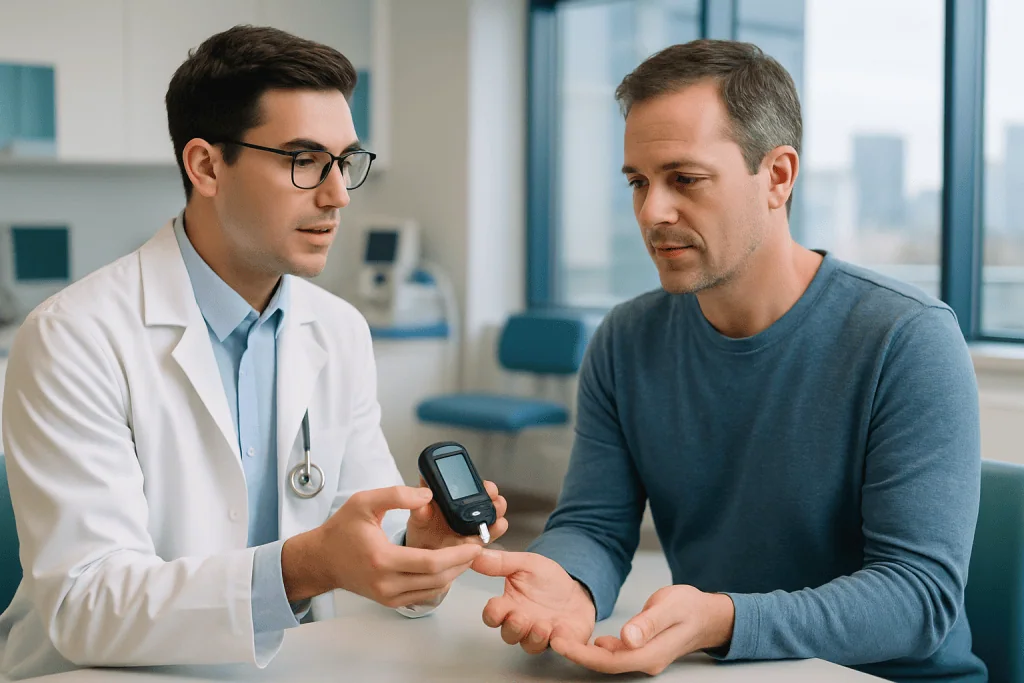
Checking blood glucose helps you and your care team see how food, activity, stress, illness and medication affect your levels. This may involve finger-prick tests with a glucose meter or a continuous glucose monitor (CGM), a small sensor worn on the skin that measures glucose every few minutes. How often you need to check depends on your treatment.
Insulin
Everyone with type 1 diabetes needs insulin, because the body no longer makes it. Insulin is given by injection or through an insulin pump, a small device that delivers insulin continuously under the skin. Different insulin types act at different speeds and durations, and most people use a combination. Some people with type 2 diabetes also need insulin, particularly when other treatments no longer keep glucose in range or when the pancreas produces very little insulin. Needing insulin is a normal stage of treatment for many people and does not mean that they have failed.
Non-insulin medications
Several classes of medication are used for type 2 diabetes. Metformin is usually the first medication offered; it reduces the amount of glucose released by the liver and improves the body’s response to insulin. Other options include medications that help the kidneys remove glucose in the urine (SGLT2 inhibitors), medications that mimic gut hormones to increase insulin release and reduce appetite (GLP-1 receptor agonists), DPP-4 inhibitors, sulfonylureas and others. Some newer medications also have benefits for the heart and kidneys, which may influence your doctor’s choice. Each has possible side effects, and your doctor may combine medications over time.
Managing related conditions
Because diabetes raises the risk of heart attack and stroke, treatment often includes medication for blood pressure and cholesterol, even when these are only mildly raised. Regular eye, kidney and foot checks are part of routine care.
Procedures and surgery
For some people with type 2 diabetes and significant obesity, weight-loss (bariatric) surgery may be considered after lifestyle and medical treatment. It can improve or, in some cases, put diabetes into remission, but it carries surgical risks and requires lifelong follow-up. Pancreas or islet cell transplantation is an option only for a small number of people with type 1 diabetes, usually those who also need a kidney transplant or who have severe, frequent low blood glucose episodes, because it requires lifelong medication to suppress the immune system. Procedures may also be needed to treat complications, such as laser treatment or injections for diabetic eye disease, or surgery for serious foot infections.
Education and rehabilitation
Structured diabetes education programs teach practical skills such as adjusting insulin, recognizing and treating low blood glucose (hypoglycemia), managing sick days and caring for the feet. People who have had complications, such as a stroke or amputation, may need physical and occupational rehabilitation as part of their care.
Living with diabetes mellitus and outlook
Diabetes mellitus is a lifelong condition for most people, but it is one that can be managed. The outlook depends largely on how well blood glucose, blood pressure and cholesterol are controlled over the years, and on regular screening so that complications can be found and treated early. Many people with well-managed diabetes live long lives with few or no serious complications, while poorly controlled diabetes increases the risk of heart disease, stroke, kidney failure, vision loss, nerve damage and foot problems that can lead to amputation.
Day-to-day life with diabetes involves routine: taking medication as prescribed, monitoring glucose, planning meals, staying active and attending regular check-ups, typically including an HbA1c test several times a year, an annual eye exam, kidney tests and foot checks. Illness, travel, exercise and stress can all affect glucose levels, so learning how to adjust is an important skill.
Living with a long-term condition can also affect mental health. Feelings of frustration, worry or burnout are common, and depression is more frequent in people with diabetes. Talking with your care team about these feelings is part of good diabetes care, not a sign of weakness. Support from family, friends and other people with diabetes often helps.
With treatment that is adjusted over time and honest communication with your care team, in many cases the risks associated with diabetes mellitus can be substantially reduced, although no treatment can remove them entirely.
Frequently asked questions
What is diabetes mellitus in simple terms?
Diabetes mellitus is a condition in which the body cannot keep the sugar in the blood at a normal level, either because it does not make enough insulin or cannot use insulin properly. Insulin is the hormone that lets sugar move from the blood into the cells for energy. Without enough working insulin, sugar builds up in the blood and can slowly damage organs and blood vessels.
What are the early diabetes mellitus symptoms?
Early symptoms often include passing urine more frequently, feeling very thirsty, tiredness, blurred vision and unexplained weight loss. In type 2 diabetes these signs may be mild or absent for years, so many people are diagnosed through a blood test rather than because of symptoms. If you notice these changes, a doctor can arrange a simple blood test to check your glucose.
What are the main diabetes mellitus causes?
Type 1 diabetes is caused by the immune system destroying the insulin-producing cells of the pancreas, for reasons that are not fully understood and are not related to lifestyle. Type 2 diabetes results from insulin resistance combined with reduced insulin production, and it is strongly linked to excess weight, inactivity, family history and age. Gestational diabetes is caused by pregnancy hormones reducing the body’s response to insulin.
How is diabetes mellitus diagnosis confirmed?
Diagnosis is confirmed with blood tests that measure glucose, most commonly a fasting glucose test, an HbA1c test or an oral glucose tolerance test. If you have no symptoms, your doctor will usually repeat an abnormal result on another day before confirming the diagnosis. Further tests may then be used to work out the type of diabetes and to check for early complications.
What are the diabetes mellitus treatment options for type 2?
Treatment usually starts with changes to diet, physical activity and weight, often alongside metformin. If glucose remains high, your doctor may add other tablets or injectable medications, and some people eventually need insulin. Treatment also includes managing blood pressure and cholesterol and attending regular screening for eye, kidney and foot problems. For some people with obesity, weight-loss surgery may be discussed.
Can diabetes mellitus be cured?
There is currently no cure for type 1 diabetes, which requires lifelong insulin. Type 2 diabetes can sometimes go into remission, meaning blood glucose returns to a non-diabetic range without medication, most often after substantial weight loss or bariatric surgery. Remission is not guaranteed, may not be permanent, and people in remission still need regular monitoring because diabetes can return.
Is diabetes mellitus hereditary?
Genes influence the risk of both type 1 and type 2 diabetes, so having a close relative with diabetes increases your own risk. However, genes alone do not determine whether you develop the condition. For type 2 diabetes in particular, lifestyle factors such as weight and physical activity play a major role, and people with a family history may reduce their risk through healthy habits and regular screening.
When to see a doctor
You should arrange to see a doctor if you notice typical symptoms of diabetes mellitus, such as increased thirst, frequent urination, unexplained weight loss, persistent tiredness or blurred vision, or if you have risk factors and have not had your blood glucose checked recently. If you already have diabetes, contact your care team if your glucose readings are consistently outside your target range, if you develop a new foot wound that is not healing, or if you have new vision changes, swelling or numbness.
Seek emergency medical care immediately if you or someone with diabetes has any of the following red-flag signs:
- Vomiting, stomach pain, rapid or deep breathing, a fruity smell on the breath, or confusion, which may indicate diabetic ketoacidosis
- Extreme drowsiness, difficulty staying awake or loss of consciousness
- Severe low blood glucose with confusion, seizures or inability to swallow, especially if the person cannot take sugar by mouth
- Very high blood glucose readings together with severe dehydration, weakness or confusion
- Chest pain, sudden shortness of breath, or signs of a stroke such as facial drooping, arm weakness or slurred speech
- A foot or leg that is red, hot, swollen, black or foul-smelling, or a wound with spreading redness and fever
- Sudden loss of vision in one or both eyes
Diabetes emergencies can develop quickly, particularly in children, older adults and people who are unwell with another illness. Acting promptly on these warning signs can prevent serious harm.
Patient Guides for This Condition
Medically reviewed by the Acıbadem International Medical Board September 9, 2026
See our medical review board →
Update history
- PublishedSeptember 9, 2026
- Medical review approvedSeptember 9, 2026
- Last content updateSeptember 9, 2026