Temporomandibular Joint Disorder
Quick answer
Temporomandibular joint disorder is a group of conditions affecting the jaw joint and surrounding muscles, often causing jaw pain, clicking, stiffness, and difficulty chewing or opening the mouth. Treatment depends on the cause and severity and may include evaluation by maxillofacial and dental specialists, imaging, medication, bite adjustment devices, physical therapy, or surgery when needed.
What is temporomandibular joint disorder?
Temporomandibular joint disorder is a group of conditions that affect the temporomandibular joint: the hinge-like joint that connects your lower jaw (mandible) to your skull, just in front of each ear, along with the muscles and ligaments that move the jaw. You have one of these joints on each side of your face, and you use them constantly: every time you chew, speak, swallow, or yawn. When something disturbs the way the joint, the cushioning disc inside it, or the surrounding muscles work together, pain and restricted jaw movement can result. Doctors often use the abbreviations TMD (temporomandibular disorder) or TMJ disorder to describe this problem, and in medical coding it is classified under ICD-10 code K07.60.
Temporomandibular joint disorder is common. It can affect people of any age, but it is most frequently diagnosed in adults between roughly 20 and 40 years of age, and it appears to be more common in women than in men. For many people the condition is mild and temporary, improving on its own or with simple self-care. For others, symptoms can persist for months or longer and may need structured treatment. Understanding what is temporomandular joint disorder, and what it is not, helps patients avoid unnecessary worry: in most cases it is not a sign of serious disease, and it very rarely requires surgery.
Clinicians generally group temporomandibular joint disorder into three broad types, which can overlap:
- Muscle-related (myofascial) disorders: pain that comes mainly from the chewing muscles rather than the joint itself. This is the most common type.
- Internal derangement of the joint: problems inside the joint, such as a displaced cushioning disc, a jaw injury, or a dislocated jaw.
- Degenerative joint disease: arthritis affecting the temporomandibular joint, including osteoarthritis (wear-and-tear arthritis) and, less often, inflammatory arthritis such as rheumatoid arthritis.
Symptoms of temporomandibular joint disorder
Temporomandibular joint disorder symptoms vary from person to person, and they may affect one side of the face or both. Some people notice only occasional clicking, while others experience daily pain that interferes with eating and sleeping. Common symptoms include:
- Pain or tenderness in the jaw, especially in the area just in front of the ear
- Aching pain in and around the ear, sometimes mistaken for an ear infection
- Pain or difficulty while chewing, or discomfort when opening the mouth wide
- Clicking, popping, or grating sounds in the jaw joint when opening or closing the mouth
- Locking of the joint, making it hard to fully open or close the mouth
- Aching facial pain, and pain that spreads to the temple, cheek, neck, or shoulders
- Frequent headaches, particularly in the temples, often worse in the morning
- A change in the way the upper and lower teeth fit together (the bite)
- Ringing in the ears (tinnitus), a feeling of ear fullness, or occasional dizziness in some people
How symptoms feel often depends on the type of problem. When the chewing muscles are the main source, people typically describe a dull, aching pain in the cheeks and temples that worsens with chewing, stress, or tooth clenching, and is often most noticeable on waking. When the disc inside the joint is displaced, clicking or popping sounds are common; if the disc blocks movement, the jaw may intermittently catch or lock. In degenerative joint disease, symptoms tend to develop gradually and may include a grinding or gravel-like sensation (crepitus), stiffness after rest, and a slowly changing bite.
It is worth knowing that jaw clicking on its own, without pain or limitation, is very common in the general population and usually does not need treatment. Symptoms become clinically significant when they cause pain, interfere with eating or speaking, or limit how far the mouth can open.
Causes and risk factors
In many cases, temporomandibular joint disorder causes cannot be traced to a single event. The condition usually results from a combination of factors that place stress on the joint and its muscles, or that make the tissues more sensitive to pain. Recognized causes and contributing factors include:
- Jaw injury: a blow to the jaw or face, whiplash-type injuries, or prolonged wide mouth opening (for example, during a long dental procedure) can strain or damage the joint.
- Teeth grinding and clenching (bruxism): grinding or clenching the teeth, especially during sleep, overloads the joint and fatigues the chewing muscles. Not everyone who grinds their teeth develops TMD, but it is a well-recognized risk factor.
- Disc displacement: the small, cushioning disc of cartilage inside the joint can slip out of its normal position, causing clicking, catching, or locking.
- Arthritis: osteoarthritis and inflammatory joint diseases such as rheumatoid arthritis can damage the cartilage of the temporomandibular joint.
- Stress and muscle tension: emotional stress often leads to unconscious clenching and tightening of the facial and jaw muscles, which can trigger or worsen symptoms.
- Connective tissue conditions and joint hypermobility: people whose joints are naturally very flexible may be more prone to disc problems in the jaw.
- Habits that overwork the jaw: frequent gum chewing, nail biting, chewing on pens, or habitually resting the chin on the hand may contribute in some people.
Risk factors include female sex, age between the twenties and forties, a history of jaw trauma, long-standing bruxism, high stress levels, and coexisting chronic pain conditions such as fibromyalgia (a condition causing widespread muscle pain) or frequent tension headaches and migraines. The role of bite problems and orthodontic treatment is debated; current evidence does not support the idea that minor bite irregularities alone cause temporomandibular joint disorder in most people.
Diagnosis
There is no single laboratory test for temporomandibular joint disorder. Temporomandibular joint disorder diagnosis is made mainly through a careful conversation about your symptoms and a physical examination, with imaging reserved for specific situations. Diagnosis and treatment are usually managed by dentists, oral and maxillofacial specialists, or ear, nose, and throat doctors; at Acibadem, this condition is typically evaluated within the Dental & Oral Health department.
During the examination, your doctor or dentist will usually:
- Ask about your pain, jaw sounds, locking episodes, headaches, grinding habits, stress levels, and any history of injury
- Listen to and feel the jaw joints while you open and close your mouth
- Measure how far you can open your mouth and whether the jaw moves in a straight line
- Press gently on the joints and the chewing muscles of the face, temples, and neck to find tender areas
- Examine your teeth and bite for signs of grinding, wear, or recent changes
Many clinicians use standardized criteria, known as the Diagnostic Criteria for Temporomandibular Disorders (DC/TMD), which combine symptom questions with examination findings to classify the disorder as muscle-related, joint-related, or both.
Imaging is not needed for every patient, but your doctor may order tests when the diagnosis is unclear, symptoms are severe or persistent, or a structural problem is suspected:
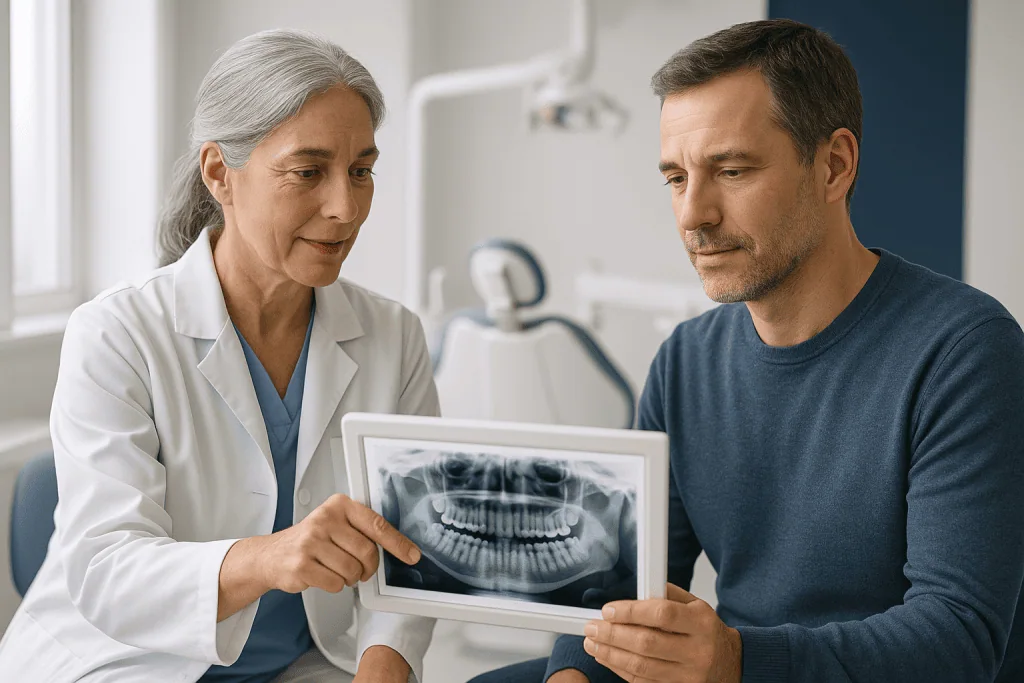
- Dental X-rays or panoramic X-ray: to view the teeth, jawbone, and the bony parts of the joint.
- CT scan (computed tomography): detailed images of the bone, useful when arthritis or bony changes are suspected.
- MRI (magnetic resonance imaging): the best test for viewing the soft cushioning disc and detecting disc displacement or inflammation.
Because jaw and facial pain can have other causes, including dental infections, sinus problems, nerve pain such as trigeminal neuralgia, ear conditions, and headache disorders, part of the diagnostic process is ruling these out. Blood tests may occasionally be used if an inflammatory arthritis is suspected.
Treatment options
Temporomandibular joint disorder treatment follows a stepwise approach, starting with the simplest, most reversible measures and moving to more involved options only if needed. This is because symptoms improve over time with conservative care in the majority of patients, and irreversible treatments carry risks without guaranteed benefit.
Self-care and watchful waiting
For mild or recent symptoms, doctors often recommend a period of self-care before any other treatment:
- Eating soft foods and cutting food into small pieces to rest the joint
- Avoiding gum chewing, wide yawning, nail biting, and very chewy or hard foods
- Applying moist heat or ice packs to the painful area
- Practicing gentle jaw stretching and relaxation exercises as instructed by a clinician
- Being aware of daytime clenching and keeping the teeth slightly apart when the mouth is at rest
- Managing stress with relaxation techniques, since stress commonly drives clenching
Medications
Your doctor may suggest medications to relieve pain and inflammation for a limited time. Options can include over-the-counter pain relievers and nonsteroidal anti-inflammatory drugs (NSAIDs, such as ibuprofen), short courses of muscle relaxants for muscle spasm, or, in some chronic cases, low doses of certain antidepressant medicines that are used for pain control rather than mood. All medications have potential side effects, so they should be used under medical guidance.
Oral appliances (splints and night guards)
A custom-made oral appliance, a firm or soft plastic device worn over the teeth, usually at night, can reduce the effects of grinding and clenching and help relax the jaw muscles. These devices are reversible and commonly used, although how well they work varies from person to person.
Physical therapy and behavioral approaches
Physical therapy may include jaw exercises to improve strength and mobility, posture training, manual therapy, and treatments such as ultrasound. Cognitive behavioral therapy (a structured talking therapy) and biofeedback can help people who clench in response to stress or who have long-standing pain. These approaches are safe and often helpful, particularly for muscle-related TMD.
Injections and minimally invasive procedures
If conservative care does not bring enough relief, your doctor may consider procedures such as corticosteroid injections into the joint to reduce inflammation, or arthrocentesis: a minimally invasive procedure in which the joint is washed out with sterile fluid through fine needles to remove inflammatory debris and improve movement. In selected patients with muscle-dominant pain, botulinum toxin injections into the chewing muscles are sometimes used, although evidence for this is still developing.
Surgery
Surgery is reserved for the small minority of patients with clear structural joint problems, such as severe degeneration, persistent locking, or damage after injury, who have not improved with other treatments. Options range from arthroscopy (keyhole surgery using a small camera) to open joint surgery and, rarely, joint replacement. Because surgery is irreversible and carries risks, specialists generally recommend it only after conservative options have been fully explored. Multidisciplinary evaluation, often coordinated through a dental and oral health department, helps ensure the right treatment is matched to the specific type of disorder.
Living with temporomandibular joint disorder and outlook
The outlook for most people with temporomandibular joint disorder is reassuring. In many cases, symptoms are episodic: they flare up, often during stressful periods, and then settle down with self-care. Studies of patients followed over time suggest that the majority improve with conservative treatment, and only a small proportion go on to have persistent, disabling symptoms.
That said, some people do experience chronic symptoms, meaning pain or dysfunction lasting more than a few months. Chronic TMD can affect eating, sleep, concentration, and mood, and it often overlaps with other pain conditions such as headaches or neck pain. For these patients, a combination of approaches, appliance therapy, physical therapy, stress management, and appropriate medication, usually offers the best chance of meaningful relief, even if symptoms are not eliminated entirely. It is honest to say that no treatment works for everyone, and finding the right combination can take time and patience.
Day to day, many people manage the condition well by keeping to a softer diet during flare-ups, staying aware of clenching habits, using a night guard if prescribed, keeping up with jaw exercises, and addressing stress. Jaw noises such as painless clicking may persist even after pain improves; this is common and usually not a sign of worsening disease. Regular dental checkups help monitor tooth wear from grinding and catch changes early.
Frequently asked questions
What is temporomandibular joint disorder in simple terms?
It is a problem with the jaw joint in front of your ear, or with the muscles that move your jaw, causing pain, clicking sounds, or difficulty opening and closing the mouth. It can involve the muscles, the joint itself (including its cushioning disc), or arthritis of the joint. It is common and, in most people, not a sign of serious disease.
Can temporomandibular joint disorder heal on its own?
Often, yes. Many episodes are temporary and improve within weeks to a few months with simple measures such as eating soft foods, avoiding gum chewing, applying heat or ice, and managing stress. However, if symptoms persist, worsen, or include locking of the jaw, it is sensible to have the problem evaluated rather than waiting indefinitely.
How serious is temporomandibular joint disorder?
For most people it is a painful but not dangerous condition. It does not typically lead to serious complications, and the majority of cases are managed without surgery. In a minority of patients, symptoms become chronic and can significantly affect quality of life, which is why persistent symptoms deserve proper diagnosis and a structured treatment plan.
What triggers temporomandibular joint disorder symptoms?
Common triggers include teeth grinding or clenching (especially during sleep), emotional stress, jaw injury, chewing hard or very chewy foods, prolonged wide mouth opening, and arthritis in the joint. Often several factors act together, and identifying your personal triggers, for example, daytime clenching during stressful work, is an important part of treatment.
What does temporomandibular joint disorder treatment usually involve?
Treatment usually starts with reversible, conservative steps: self-care and jaw rest, short-term pain-relieving medication, a custom night guard or splint, physical therapy, and stress management. If these do not help enough, your doctor may consider joint injections or a minimally invasive joint washout (arthrocentesis). Surgery is considered only for a small minority of patients with clear structural joint damage that has not responded to other care.
How long does recovery from temporomandibular joint disorder take?
There is no fixed timeline, because it depends on the cause and type of the disorder. Mild, muscle-related episodes often improve within a few weeks of self-care. Disc problems or arthritis may take longer to settle and can require ongoing management. Some people have recurring flare-ups over the years, with comfortable periods in between, rather than a single episode followed by permanent cure.
Which doctor should I see for temporomandibular joint disorder?
A dentist is usually a good starting point, since dentists routinely assess the jaw joint, bite, and signs of grinding. Depending on the findings, you may be referred to an oral and maxillofacial specialist, a physical therapist, or another clinician. In hospital settings such as Acibadem, evaluation is generally coordinated through the dental and oral health department, with other specialties involved as needed.
When to see a doctor
Make an appointment with a doctor or dentist if jaw pain, clicking with pain, headaches, or difficulty chewing persists for more than a couple of weeks despite self-care, or if your symptoms keep returning or are getting worse. Persistent symptoms benefit from a proper diagnosis, both to guide treatment and to rule out other causes of facial pain.
Seek medical attention promptly if you notice any of the following warning signs:
- Your jaw locks open or closed and you cannot move it back to its normal position
- Sudden inability to open your mouth more than a small amount
- Severe, worsening jaw or facial pain that is not relieved by simple measures
- Jaw pain following a significant injury to the face or head
- Swelling, redness, warmth over the joint, or fever alongside jaw pain, which could suggest an infection
- A sudden, marked change in how your teeth fit together
- Numbness or weakness of the face, difficulty swallowing, or unexplained weight loss accompanying jaw symptoms
These features do not necessarily mean something serious is wrong, but they warrant timely evaluation so that the cause can be identified and treated appropriately.
Medically reviewed by the Acıbadem International Medical Board September 3, 2026
See our medical review board →
Update history
- PublishedJune 14, 2026
- Medical review approvedSeptember 3, 2026
- Last content updateSeptember 3, 2026