

ALIF Procedure: An Evidence-Based Patient Guide

ALIF stabilizes one or more lower-back spinal levels by removing a damaged disc and placing a supportive implant between vertebrae. The front-of-body approach can provide direct access to discs at L4-L5 and L5-S1 while avoiding disruption of some back muscles.
Key Takeaways
- ALIF stabilizes one or more lower-back spinal levels by removing a damaged disc and placing a supportive implant between vertebrae.
- The front-of-body approach can provide direct access to discs at L4-L5 and L5-S1 while avoiding disruption of some back muscles.
- Suitability depends on the spinal diagnosis, imaging findings, symptoms, general health, abdominal and vascular anatomy, and treatment goals.
- Recovery is gradual; walking starts early for many patients, while bone fusion itself commonly takes several months.
- Risks include infection, blood clots, bleeding, nerve injury, failure of the bones to fuse, and approach-specific risks involving abdominal blood vessels or reproductive function.
An ALIF procedure (anterior lumbar interbody fusion) is a type of lumbar spinal fusion in which a surgeon reaches the spine through the front of the abdomen. It may help selected people with painful disc-related instability, deformity, or nerve symptoms after appropriate nonsurgical treatment has not provided enough relief.
Overview: What Is an ALIF Procedure?
An ALIF procedure, or anterior lumbar interbody fusion, is surgery that joins two or more bones in the lower spine to create a stable segment. The surgeon approaches the lumbar spine from the front, usually through an incision in the lower abdomen, removes the affected disc, and inserts an implant called an interbody cage. Bone graft material in and around the implant supports the body’s natural process of forming a solid fusion.
ALIF is most often considered for the lowest lumbar levels, especially L4-L5 and L5-S1. These levels can be affected by degenerative disc disease, recurrent disc collapse, spondylolisthesis (forward movement of one vertebra), some spinal deformities, or instability after prior surgery. The goal is not simply to improve an X-ray or MRI result; it is to reduce symptoms linked to a specific painful or unstable spinal level and improve function.
Spinal fusion is not the right treatment for every type of low-back pain. A careful assessment is important because back pain can arise from muscles, joints, discs, nerves, the hip, or non-spinal conditions. When appropriate, anterior lumbar interbody fusion surgery may be part of an individualized plan after conservative options have been explored.
How ALIF Works and Who May Be a Candidate
The intervertebral disc normally acts as a cushion between spinal bones. When a disc loses height or is associated with instability, it can contribute to mechanical back pain, narrowed spaces for nerves, altered spinal alignment, or leg symptoms. During ALIF, restoring disc height with a cage can help improve alignment and may indirectly create more room around exiting nerves. In many cases, screws, rods, or other fixation placed from the back are added to improve stability while fusion develops.
A spine team may consider ALIF when symptoms are persistent and significantly affect daily life despite a suitable course of nonsurgical care. This may include guided exercise or physiotherapy, activity modification, appropriate pain management, and sometimes injections. Imaging findings must match the person’s symptoms and examination; a disc abnormality on a scan alone does not prove that fusion will help.
Factors influencing candidacy include the affected spinal level, degree of slippage or deformity, prior abdominal operations, blood-vessel anatomy, bone quality, smoking or nicotine exposure, weight, diabetes control, and overall fitness for anesthesia. Some people are better suited to a posterior or lateral fusion approach, decompression without fusion, or continued nonsurgical treatment. Consultation commonly involves a spine surgeon and, for the anterior approach, an access surgeon with vascular or general surgical expertise.
- Common indications include selected cases of disc degeneration with loss of height, spondylolisthesis, instability, or deformity.
- ALIF may be combined with nerve decompression or posterior instrumentation when needed.
- Stopping nicotine use and optimizing nutrition, diabetes, and bone health can support safer surgery and fusion healing.
ALIF Procedure Steps: What Happens on the Day of Surgery
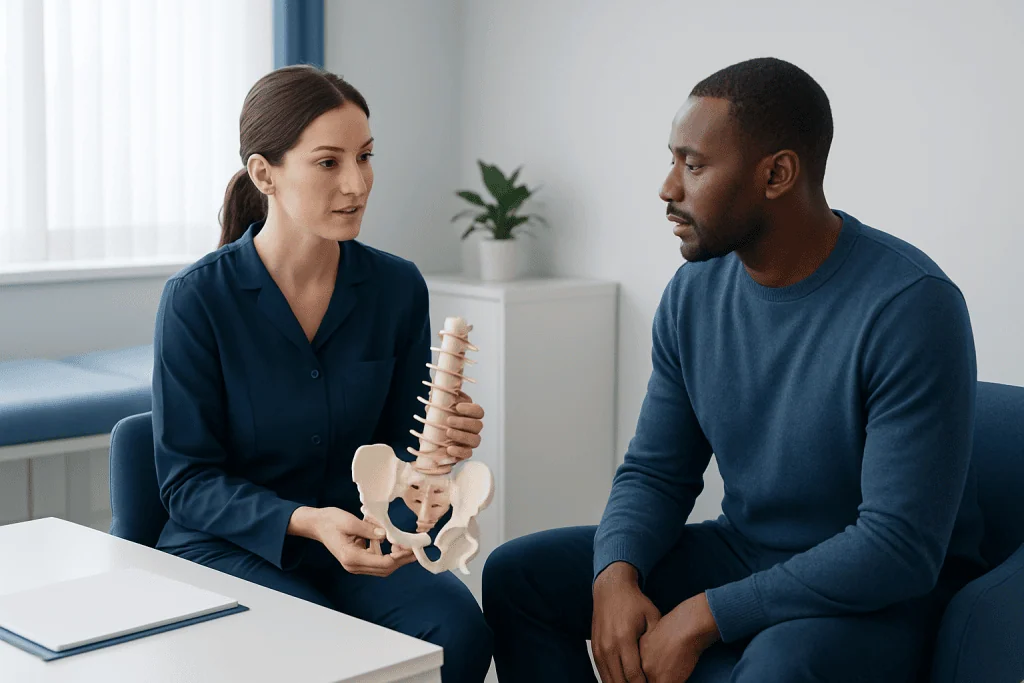
Before surgery, the team reviews medical history, medicines, imaging, anesthesia risks, and the planned levels of fusion. Blood tests and other preoperative assessments may be arranged. Patients receive individual instructions about eating and drinking before anesthesia, medicines to pause or continue, and plans for walking, pain relief, and discharge. A personalized alif protocol may also include measures to reduce infection and blood-clot risk.
Under general anesthesia, the patient is positioned on the back. An access surgeon and spine surgeon typically work together. The surgeon makes an incision in the lower abdomen, gently moves tissues and blood vessels aside to reach the front of the spine, and confirms the correct level using imaging. The damaged disc is removed, and the disc space is prepared for the interbody cage and bone graft material.
The cage is selected to help restore appropriate disc height and alignment. Depending on the diagnosis and stability needed, the surgeon may use a plate or may complete additional fixation from the back during the same operation or at another planned stage. The tissues are returned to position and the incision is closed. The precise alif procedure steps vary with the number of levels treated, previous surgery, anatomy, and whether other procedures are performed.
Administrative terms such as an “ALIF procedure ICD-10,” “ALIF procedure CPT code,” or “ALIF procedure code” are used for medical documentation and billing. The relevant code can differ according to the diagnosis, spinal level, surgical approach, implants, and additional procedures. A hospital coding department or insurer is the appropriate source for case-specific coding information.
Potential Benefits and Risks of ALIF Surgery
Potential benefits of ALIF include direct access to the disc space, the ability to place a relatively large interbody implant, restoration of disc height, and support for lower-spine alignment. Approaching from the front can avoid cutting through some of the muscles at the back of the spine. For carefully selected patients, this may help address pain and disability caused by a confirmed structural problem.
However, all spinal fusion surgery has limits and risks. Symptoms may improve gradually rather than immediately, and fusion cannot guarantee complete relief of back or leg pain. Possible complications include infection, bleeding, blood clots, wound problems, reactions to anesthesia, persistent pain, nerve injury, implant problems, spinal fluid leak in procedures involving posterior work, and nonunion, meaning the bones do not fuse fully. Adjacent spinal levels can also develop degenerative changes over time.
The anterior approach has additional considerations because large blood vessels and abdominal structures lie in front of the spine. Injury to blood vessels, bowel, ureter, or nearby nerves is uncommon but potentially serious. In men, a rare complication called retrograde ejaculation can occur when nerves involved in ejaculation are affected; this is important to discuss before surgery, particularly for those concerned about fertility. Individual risk depends on anatomy, health conditions, smoking status, surgical history, and the complexity of the planned operation.
Informed consent should include a discussion of expected benefits, alternatives, uncertainties, and the specific risks relevant to the individual. A second opinion can be reasonable when major spinal surgery is being considered.
Recovery Timeline After ALIF, Including L5-S1 Surgery
Recovery begins soon after surgery. Many patients are encouraged to stand and take short walks with assistance on the day of surgery or the following day, depending on their condition and the extent of surgery. Hospital stay varies, particularly when ALIF is combined with posterior fixation or multiple levels are treated. Pain control, wound care, bowel function, mobility, and safe movement are assessed before discharge.
How long does it take to recover from ALIF surgery on the L5-S1? Early recovery commonly takes several weeks, with gradual improvement in walking, self-care, and comfort. Return to desk-based work may be possible within several weeks for some people, while physically demanding work generally requires a longer, individualized period. The fusion process itself usually continues for months, often around 6 to 12 months, and follow-up imaging may be used to assess healing.
Recovery is not identical for everyone. A single-level L5-S1 fusion may have a different course than multilevel surgery or a procedure combined with decompression and posterior instrumentation. Age, bone health, nicotine exposure, activity demands, complications, and adherence to rehabilitation advice all influence progress. The surgeon may recommend a brace for selected patients, but its use is not universal.
Why no BLT after back surgery? “BLT” means bending, lifting, and twisting. These movements can place extra force across a healing surgical area, especially when combined or performed with a load. Temporary restrictions are intended to protect the repair, reduce pain, and allow early fusion healing; the specific limits and duration should come from the operating surgeon rather than a general rule online.
Rehabilitation, Self-Care, and Protecting the Fusion
Walking is often one of the first and most useful activities after fusion, beginning with short, frequent walks and increasing gradually as advised. A rehabilitation plan may later include guided exercises to restore safe mobility, core control, endurance, and confidence in daily movement. Patients should avoid starting strenuous exercise, running, heavy lifting, or twisting activities until the surgical team confirms that progression is appropriate.
Good recovery habits include taking medicines only as directed, keeping follow-up appointments, following wound-care guidance, and reporting concerns promptly. Adequate protein and a balanced diet support healing. Avoiding cigarettes, vaping, and other nicotine products is particularly important because nicotine can interfere with bone healing and raise the risk of nonunion.
Patients should ask their team about driving, work duties, sexual activity, travel, sleeping positions, and the use of anti-inflammatory medicines, as recommendations differ by person and operation. The goal is a gradual return to meaningful activity rather than rushing through milestones. Acibadem International’s multidisciplinary spine specialists and JCI-accredited hospitals evaluate and treat spinal conditions for international patients, with care plans tailored to the individual diagnosis and recovery needs.
When to Seek Medical Care
When do I need to seriously consider ALIF surgery for my back? It may be time to discuss ALIF with a spine specialist when pain or leg symptoms remain disabling despite appropriate nonsurgical care, imaging and examination identify a treatable problem at one or more lower-lumbar levels, and the expected benefits of surgery outweigh its risks. A discussion is especially useful when daily function, sleep, walking, or work remains substantially limited, but the decision should be based on the full clinical picture rather than pain severity alone.
Urgent medical evaluation is needed for new or worsening weakness in a leg, loss of bladder or bowel control, numbness in the saddle area around the groin and buttocks, fever with severe back pain, or severe pain after significant trauma. These symptoms may indicate a condition requiring prompt assessment and are not reasons to wait for a routine surgical appointment.
After ALIF, patients should contact their surgical team promptly for increasing wound redness, drainage, fever, uncontrolled pain, new weakness or numbness, calf swelling, chest pain, shortness of breath, persistent vomiting, or other concerning symptoms. Follow the emergency instructions provided by the treating hospital if symptoms are severe or sudden.
Did Tiger Woods Have ALIF Surgery?
Did Tiger Woods have ALIF surgery? Yes. Tiger Woods publicly stated that he underwent an anterior lumbar interbody fusion at the L5-S1 level in 2017. His experience increased public awareness of the operation, but an athlete’s diagnosis, surgical details, rehabilitation resources, and outcome should not be used to predict what surgery will mean for another person.
ALIF outcomes depend on the underlying spinal condition, the accuracy of patient selection, surgical technique, overall health, rehabilitation, and individual healing. Public accounts of well-known patients can be informative in a general sense, but a treating spine specialist is best placed to explain whether an ALIF approach is suitable in a particular case.
Frequently asked questions
What does ALIF stand for?
ALIF stands for anterior lumbar interbody fusion. “Anterior” means the spine is reached from the front of the body, “lumbar” refers to the lower back, and “fusion” means two or more spinal bones are encouraged to heal together as one stable segment.
Is ALIF a major surgery?
Yes. ALIF is major spinal surgery performed under general anesthesia and involves both the spine and structures at the front of the abdomen. The recovery period and risks should be discussed in detail with the surgical team before a decision is made.
Is ALIF better than posterior lumbar fusion?
Neither approach is automatically better for every person. ALIF can offer advantages for selected lower-lumbar levels and alignment needs, while posterior approaches may be more suitable for other diagnoses, anatomy, or decompression requirements. The best approach depends on the individual clinical situation.
How painful is recovery after ALIF?
Pain is expected after surgery, especially in the early days, but it is managed with an individualized plan that may include medicines, movement guidance, and other supportive measures. Discomfort usually changes over time as the incision and deeper tissues heal. New severe pain or pain with weakness, fever, or breathing symptoms should be reported promptly.
Can someone walk after ALIF surgery?
Many patients begin assisted standing and short walks soon after surgery, often on the same day or the next day if medically appropriate. Walking progression is gradual and should follow the team’s instructions. Early mobility can support circulation, lung function, and confidence with daily activities.
What happens if an ALIF fusion does not heal?
If the bones do not fuse fully, this is called nonunion or pseudarthrosis. Some people may have ongoing pain or implant-related problems, while others have few symptoms. The surgeon may monitor the area, address contributing factors such as nicotine use or bone health, and discuss further treatment only if it is clinically necessary.
References
- American Academy of Orthopaedic Surgeons
- American Association of Neurological Surgeons
- North American Spine Society
- National Institute of Neurological Disorders and Stroke
This article is for general information only and is not a substitute for professional medical advice. Please consult a qualified doctor about your individual situation.
Joint and spine care in Turkey — expert assessment & treatment
JCI-accredited · board-certified surgeons · reply within 24h

More from the Health Library



Related Specialists

Asst. Prof. Dr. Zeynep Güral
Radiation Oncology
Dr. Bilge Özgür Yüksel
Pulmonary Medicine
Dr. Harika Bodur Öztürk
Gynecology & Obstetrics
Assoc. Prof. Dr. Saygın Abalı
Pediatric Endocrinology