Baby Bones: What Patients Need to Know

Baby bones are not weak by default; they are designed to be softer and more flexible during growth. Open skull areas called fontanelles and a higher amount of cartilage are normal parts of infant development.
Key Takeaways
- Baby bones are not weak by default; they are designed to be softer and more flexible during growth.
- Open skull areas called fontanelles and a higher amount of cartilage are normal parts of infant development.
- Nutrition, vitamin D, movement, and regular pediatric care all support healthy bone growth.
- Some concerns, such as persistent pain, swelling, limited limb movement, or delayed growth, should be checked by a doctor.
- Bone problems in babies can have many causes, including nutritional issues, injury, congenital conditions, or rare metabolic disorders.
Baby bones are naturally softer, more flexible, and still developing after birth, so many features that worry parents are actually normal. Understanding how infant bones grow can help families recognize healthy development, support bone health, and know when a medical assessment is needed.
Overview: what “baby bones” means
Baby bones are different from adult bones because they are still forming, remodeling, and hardening. At birth, an infant’s skeleton contains more cartilage and more flexible bone tissue than an adult skeleton. This flexibility helps during birth and supports rapid growth in the first months and years of life.
For many families, the term “baby bones” raises questions about whether an infant’s bones are fragile, unusually soft, or at risk of damage. In most cases, softness and flexibility are normal features of healthy development. A baby’s skull bones are not fully fused, the long bones continue to lengthen from growth plates, and mineral content gradually increases over time.
It is also important to separate normal development from medical concerns. A baby may have typical features such as bowed legs in early infancy, a soft spot on the head, or joints that seem very flexible. These findings often improve naturally as growth continues. However, certain signs can suggest a problem with bone strength, mineralization, growth, or injury and should be assessed by a qualified clinician.
How infant bones develop and why they feel different
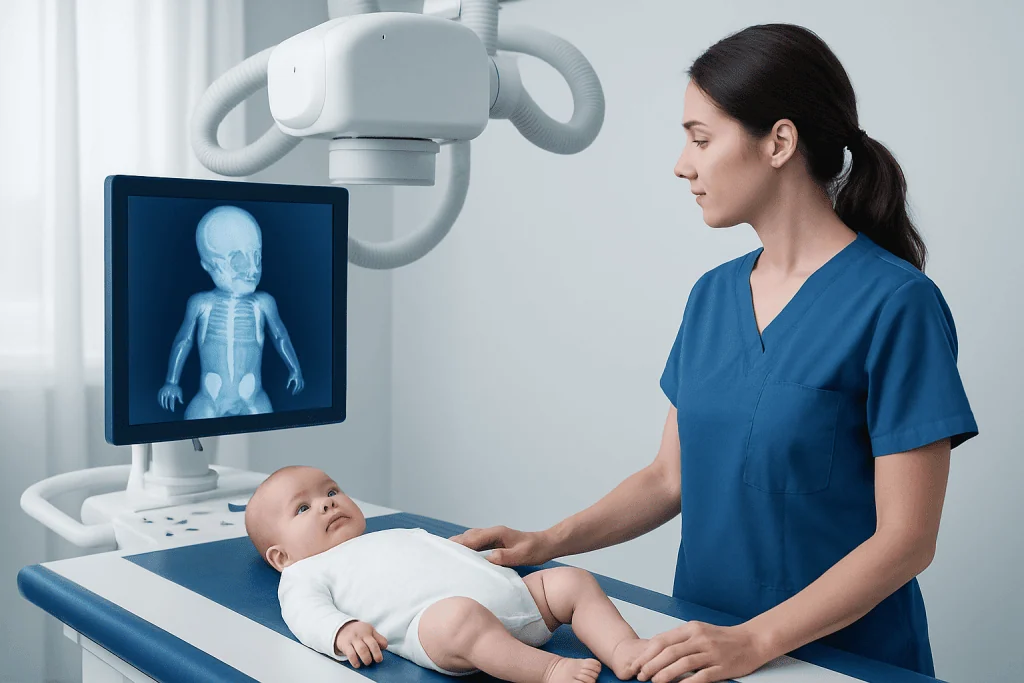
Bone development starts before birth and continues throughout childhood. In babies, many parts of the skeleton begin as cartilage, a firm but flexible tissue that later turns into bone through a normal process called ossification. Because this process is ongoing, infant bones may feel or appear different from adult bones on physical examination and imaging.
The skull is a common example. The spaces between skull bones, known as fontanelles or “soft spots,” are expected in infants. These areas allow the head to adapt during delivery and create room for the brain to grow. Fontanelles gradually close over time, and the timing can vary from one child to another.
Growth plates, located near the ends of long bones, are another key feature of baby bones. These are areas where new bone is produced, allowing bones to lengthen. Because growth plates are active tissues, they are also more vulnerable to some types of injury. In children with ongoing orthopedic concerns, families may be referred for orthopedic evaluation and care to assess bone growth and alignment.
Healthy bone development depends on several factors working together, including nutrition, hormone balance, genetics, physical activity, and overall health. Pediatricians monitor these elements during routine visits to make sure development follows an expected pattern.
What is normal in baby bones
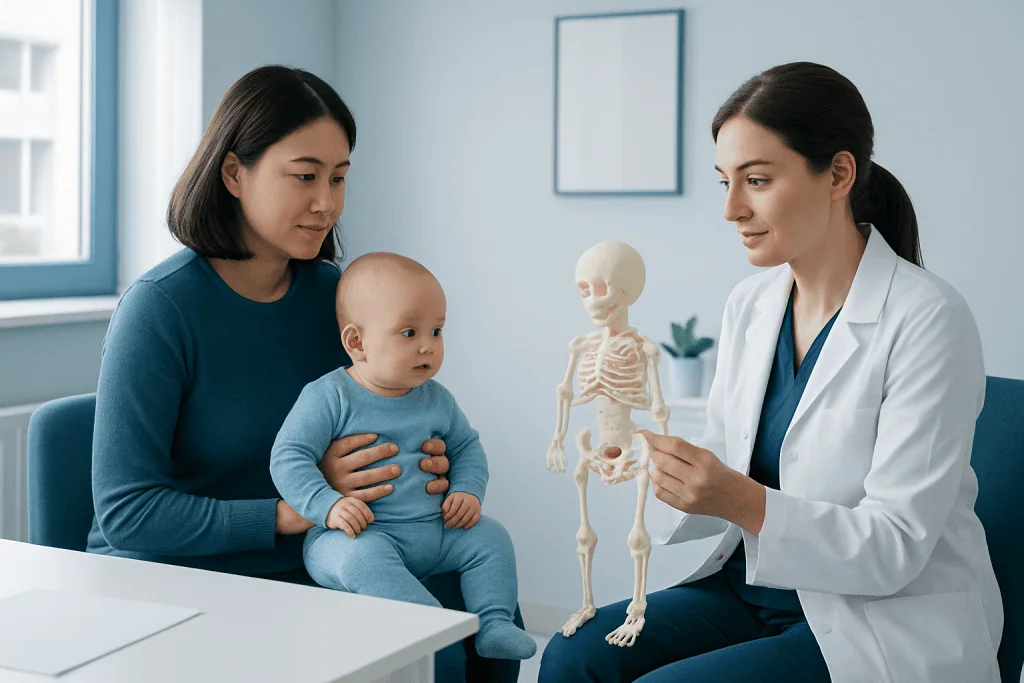
Many findings that seem unusual to parents are actually normal in infancy. A baby’s head may look slightly molded after birth, the legs may appear somewhat bowed, and the rib cage can seem soft and flexible. Babies also move in less coordinated ways than older children, so their posture and limb position may appear uneven at times.
Normal baby bones and joints often have more flexibility than those of adults. This is partly due to connective tissues and partly because the skeleton is still maturing. Mild flat feet, temporarily inward-turning feet, and variations in leg position are frequently developmental and may improve without treatment as the child grows and begins standing and walking.
Still, “normal” does not mean every concern should be ignored. The overall pattern matters. Pediatricians look at feeding, growth, muscle tone, symmetry of movement, head shape, and whether the child is meeting developmental milestones. If there is concern about shape or structure, imaging such as MRI or other diagnostic studies may be used when clinically appropriate.
- Soft spots on the head that are open in infancy
- Flexible limbs and joints
- Some temporary bowing of the legs in early infancy
- Rapid changes in body proportions during the first year
Possible bone problems in babies
Although most infant bone development is normal, some babies do have bone-related conditions that need medical follow-up. These may involve low mineralization, poor bone strength, growth abnormalities, congenital differences, or injury. Bone concerns may be isolated or linked with broader medical conditions that affect nutrition, hormones, or metabolism.
One well-known cause of soft or poorly mineralized bones is rickets, usually related to problems with vitamin D, calcium, or phosphate balance. Babies with rickets may develop delayed growth, bone pain, widening at the wrists, or changes in leg shape over time. Doctors evaluate these symptoms carefully because treatment depends on the underlying cause.
Other possible issues include fractures, especially after significant trauma, birth-related injury in some situations, or uncommon inherited conditions affecting bone formation. Rarely, a baby may have a metabolic or endocrine disorder that affects the skeleton. If structural problems involve the spine or limb alignment, further review through pediatric orthopedics may be helpful.
Head shape is another area parents often notice. A flattened area can result from positioning, while early fusion of skull sutures is a different condition that may need specialist review. A doctor will examine the pattern and decide whether monitoring, imaging, or referral is needed.
Signs and symptoms that deserve attention
A baby cannot describe pain, so bone or joint problems may show up through behavior or movement. Families may notice unusual crying when a limb is touched, reluctance to move one arm or leg, swelling, bruising, or an obvious change in limb shape. Persistent tenderness, repeated discomfort during diaper changes, or reduced use of one side of the body should not be ignored.
Growth-related signs can also matter. Delayed sitting or standing, poor weight gain, delayed tooth eruption, or increasing bowing of the legs may lead a doctor to consider nutritional or skeletal causes. Changes in head shape, an unusually large or very small head circumference trend, or a bulging fontanelle also warrant assessment in the right clinical context.
Other warning signs include:
- Swelling or redness over a bone or joint
- A limb that appears shorter, twisted, or less mobile
- Frequent fractures or fractures after minimal trauma
- Persistent pain, irritability, or poor feeding without a clear reason
- Fever together with limb pain or refusal to move, which may suggest infection or inflammation
These symptoms do not always mean a serious problem, but they do justify medical evaluation. Early assessment can help identify whether the cause is developmental, nutritional, traumatic, infectious, or structural.
How doctors evaluate baby bones
Assessment usually begins with a detailed history and physical examination. The doctor asks about pregnancy and birth history, feeding, vitamin supplementation, growth pattern, developmental milestones, family history of bone disorders, and any recent falls or injuries. Examination includes looking at head shape, limb alignment, swelling, range of motion, and tenderness.
If needed, the next step may include imaging or laboratory tests. X-rays are often useful for evaluating fractures, bone shape, and signs of poor mineralization. In selected cases, ultrasound, CT scanning, or MRI may be considered, depending on the body area and the clinical question. Blood tests may check calcium, phosphate, alkaline phosphatase, vitamin D, and other markers related to bone metabolism.
The goal is not only to identify a diagnosis, but also to understand whether the issue is urgent, temporary, or likely to need ongoing follow-up. Many babies simply need monitoring over time, while others benefit from coordinated care involving pediatrics, radiology, orthopedics, endocrinology, or neurology depending on the findings.
Near the end of the diagnostic process, families may also need practical guidance on safe handling, feeding, supplementation, and follow-up timing. Clear communication is especially important because normal infant anatomy can easily be mistaken for a problem, and true problems are best managed early and calmly.
Treatment and supporting healthy bone growth
Treatment depends entirely on the cause. Normal developmental variations often need reassurance and routine observation only. Nutritional bone problems may improve with correction of vitamin D, calcium, or other deficiencies under medical guidance. Fractures may require immobilization, pain management, and follow-up to make sure healing occurs correctly.
When a baby has an underlying condition affecting bone strength or growth, care may involve several specialists. This can include pediatricians, orthopedic surgeons, endocrinologists, rehabilitation experts, and radiologists. In children with congenital or structural issues, treatment plans are individualized and may range from observation to bracing or surgery in selected cases.
Parents can support healthy baby bones through consistent feeding guidance, routine well-child visits, and safe movement opportunities such as supervised floor time. Vitamin D supplementation may be recommended for many infants depending on feeding method and local guidance, but this should be discussed with the child’s doctor rather than started without advice.
For families seeking coordinated care, Acibadem International’s multidisciplinary specialists and JCI-accredited hospitals evaluate and treat pediatric bone and growth concerns for international patients. The most appropriate treatment plan is based on the child’s age, symptoms, examination, and test results.
When to seek medical care
Medical review is appropriate if a baby seems to be in pain, stops moving a limb normally, develops visible swelling, or has a sudden change in bone or joint shape. Parents should also seek care for concerns about repeated fractures, delayed growth, worsening bowing of the legs, or a head shape change that seems pronounced or progressive.
Urgent evaluation is important if a baby has fever with refusal to move an arm or leg, difficulty breathing after an injury, a seizure, lethargy, or a bulging soft spot together with illness symptoms. After any significant fall or trauma, a clinician should decide whether examination or imaging is needed.
Even when symptoms are mild, parents do not need to wait until they become severe. If something about the baby’s bones, movement, or growth pattern seems persistently unusual, a pediatrician can help determine whether it is a normal variation or a condition that needs further assessment. Early advice is often reassuring and can prevent delays in treatment when a problem is present.
Frequently asked questions
Are baby bones supposed to be soft?
Yes. Baby bones are naturally softer and more flexible than adult bones because they contain more cartilage and are still mineralizing. This is a normal part of growth and helps with both birth and early development.
What are the soft spots on a baby’s head?
Soft spots, called fontanelles, are normal openings between the skull bones in infancy. They allow the skull to adapt during birth and give the brain room to grow. They usually close gradually over time.
Can vitamin D affect baby bones?
Yes. Vitamin D helps the body absorb calcium, which is important for healthy bone mineralization. Too little vitamin D can contribute to weak or soft bones, so parents should follow their pediatrician’s advice about infant supplementation and feeding.
How can parents tell if a bone problem is serious?
Warning signs include swelling, tenderness, reduced movement of a limb, obvious deformity, repeated fractures, or delayed growth. A baby who cries when touched or resists moving one arm or leg should be assessed by a doctor.
Do bowed legs in babies always mean a bone disease?
No. Mild bowing can be a normal developmental finding in infants and young toddlers. A doctor may look more closely if bowing is severe, worsening, one-sided, or associated with delayed growth or other symptoms.
When should a baby with a head shape concern see a doctor?
A doctor should assess head shape if flattening is pronounced, the shape seems uneven in an unusual way, or the head growth pattern is concerning. Medical review is also important if the baby has other symptoms such as feeding problems, vomiting, or a tense or bulging soft spot.
References
- American Academy of Pediatrics
- National Institute of Arthritis and Musculoskeletal and Skin Diseases
- MedlinePlus
- Centers for Disease Control and Prevention
- World Health Organization
This article is for general information only and is not a substitute for professional medical advice. Please consult a qualified doctor about your individual situation.
Explore treatments in Turkey — costs, top hospitals & a free quote
JCI-accredited · board-certified surgeons · reply within 24h