

Back Brace and: What Patients Need to Know

A back brace may help with short-term support, pain control, or recovery in selected situations. Not all back pain improves with a brace, and wearing one for too long can weaken supporting muscles.
Key Takeaways
- A back brace may help with short-term support, pain control, or recovery in selected situations.
- Not all back pain improves with a brace, and wearing one for too long can weaken supporting muscles.
- The best brace depends on the area of the spine involved, the diagnosis, and daily activity needs.
- Proper fit and guided use matter as much as the brace itself.
- New numbness, weakness, fever, injury, or bladder or bowel changes need prompt medical attention.
A back brace can sometimes reduce strain, improve posture, or support healing, but it works best when chosen for the right reason and used for the right length of time. Patients should think of a brace as one part of a broader care plan that may also include exercise, activity changes, and medical evaluation.
Overview: what a back brace can and cannot do
A back brace is an external support worn around part of the spine to limit certain movements, reduce strain on tissues, or encourage better posture. For some patients, it can make daily activities more comfortable during recovery from an injury, flare of back pain, surgery, or a spinal condition. However, a brace is not a cure for the cause of pain, and it is not necessary for every person with back symptoms.
Patients often ask whether a brace will “fix” the back. In most cases, the answer is no. A brace may help manage symptoms or protect healing structures, but long-term back health usually also depends on movement, muscle strength, flexibility, and treatment of the underlying problem. That is why doctors usually recommend a brace as part of a wider plan rather than as a stand-alone solution.
Different braces are designed for different purposes. Some are soft and flexible, offering light compression and reminders to maintain posture. Others are more rigid and are used to restrict movement more strongly after surgery, fracture, or significant instability. Choosing the right type depends on the diagnosis, symptoms, and the goals of care.
Common reasons a doctor may recommend a back brace
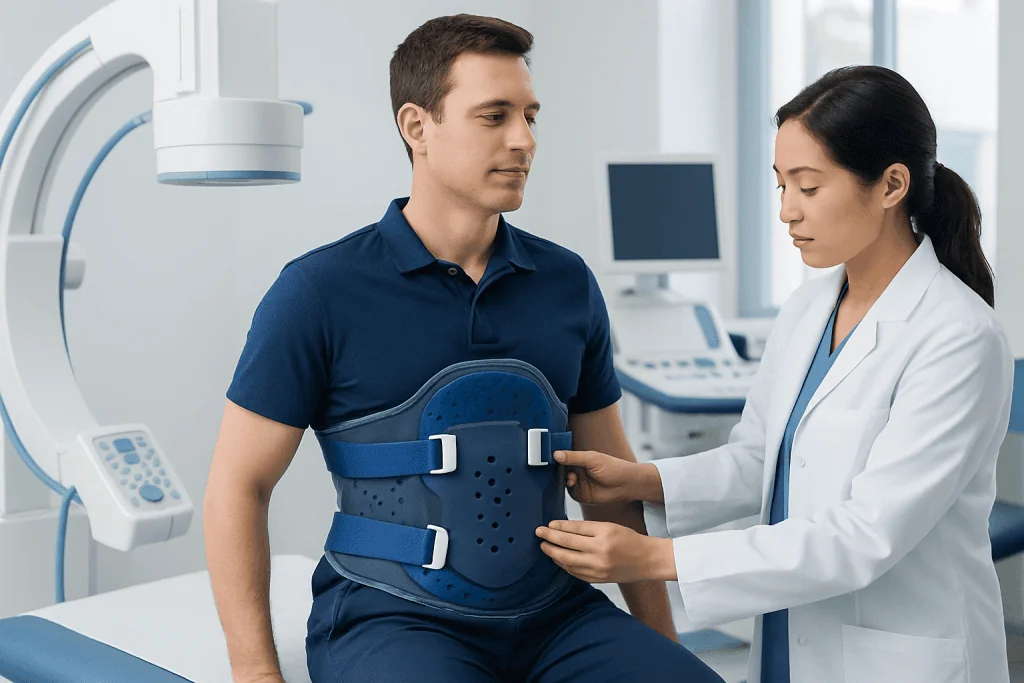
Back braces are used in a range of situations, but only when there is a clear reason for support. A doctor may suggest a brace for short-term relief during episodes of mechanical low back pain, after some spine procedures, or when pain increases with certain movements. Bracing may also be considered in selected cases of spinal curvature, vertebral compression fracture, or inflammatory conditions affecting posture and stability.
In some patients, a brace is used to help with function rather than pain alone. For example, it may make walking, sitting, or light daily tasks easier while tissues heal. A brace may also help reduce fear of movement in the early recovery phase, allowing patients to stay safely active instead of avoiding all motion.
Examples of situations where a clinician may consider bracing include:
- Acute low back strain with movement-related pain
- Recovery after some spinal surgeries
- Vertebral compression fractures
- Support for certain posture-related problems
- Selected cases of scoliosis in growing children or adolescents
- Temporary support during flare-ups of a herniated disc or other spine disorders, when appropriate
Even in these situations, bracing is individualized. Two people with similar symptoms may need different approaches depending on age, activity level, bone health, muscle strength, and imaging findings.
Types of back braces and how they differ
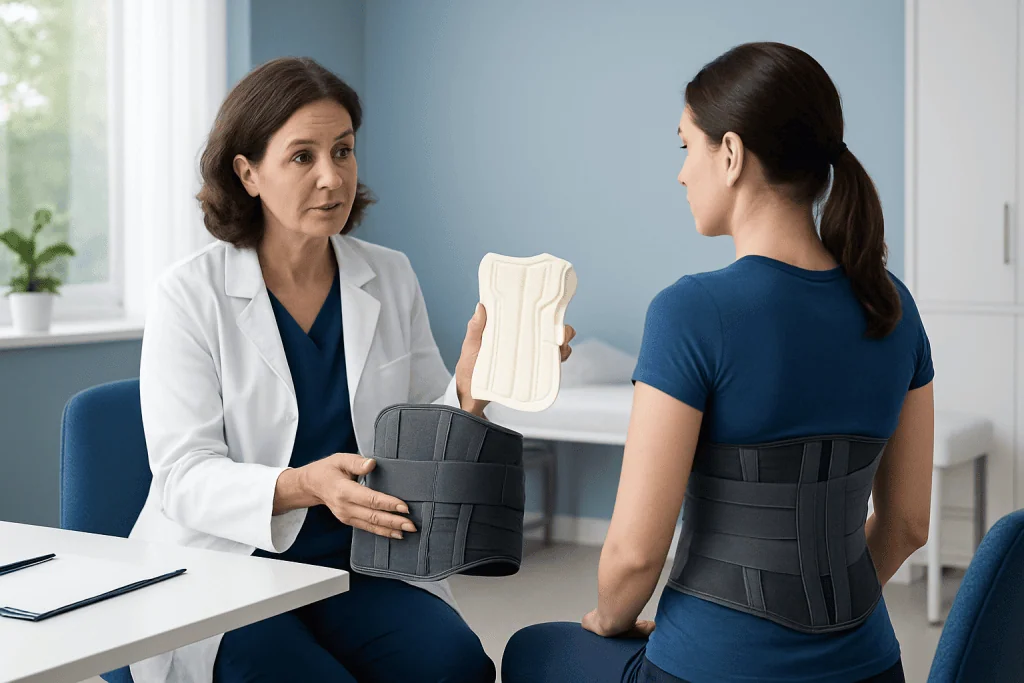
Back braces vary in design, stiffness, and the part of the spine they support. Soft braces are usually made of elastic or fabric materials and provide compression and a sense of support. They may be used for mild symptoms or short periods during daily activity. Semi-rigid and rigid braces include firmer panels, stays, or molded components that limit bending, twisting, or extension more clearly.
Some braces are made mainly for the lower back, while others support the thoracic spine or the full torso. A posture brace is usually lighter and aims to reduce slouching rather than stabilize the spine after injury. A lumbosacral orthosis supports the lower back and pelvic region, while a thoracolumbosacral brace covers a larger area and is often used when stronger control is needed.
The “best” brace is not the one with the most structure. It is the one matched to the medical problem and the patient’s body, comfort, and routine. A brace that is too restrictive can be uncomfortable and may discourage movement, while one that is too loose may offer little benefit. For that reason, clinical fitting and follow-up are often helpful.
Potential benefits, limitations, and risks
The main potential benefit of a back brace is symptom relief. By reducing stress on painful tissues or limiting motions that trigger pain, a brace may help a person move more comfortably, especially in the short term. This can support walking, gentle activity, and recovery after injury or surgery. In some cases, it may also improve confidence during movement.
Still, braces have limits. They do not reverse degenerative changes, replace rehabilitation, or treat nerve compression on their own. If pain is caused by infection, tumor, severe instability, or significant nerve involvement, a brace alone will not address the underlying issue. That is why proper diagnosis matters before prolonged use.
There are also downsides to consider. Wearing a brace for too long may lead to reliance on external support and reduced use of core and back muscles. Some people develop skin irritation, heat, discomfort when sitting, or difficulty breathing deeply if a rigid brace is too tight. These concerns usually improve with better fitting, shorter wear periods, or a different device.
Patients should tell a clinician if the brace increases pain, causes numbness, leaves skin sores, or feels impossible to wear during normal daily activities. Those signs suggest that the brace type, fit, or overall treatment plan needs review.
How doctors decide whether a brace is appropriate
A decision about bracing usually begins with a clinical assessment rather than with the brace itself. Doctors look at where the pain is, what triggers it, how long it has been present, and whether there are warning signs such as weakness, fever, trauma, or bowel and bladder symptoms. The physical examination may assess posture, range of motion, areas of tenderness, strength, reflexes, and sensation.
Imaging is not needed for every case of back pain, but it may be recommended when symptoms are persistent, severe, follow an injury, or suggest a structural problem. X-rays, MRI, or CT can help identify fractures, disc problems, instability, or spinal curvature. In patients with ongoing or complex symptoms, the evaluation may overlap with care for spinal stenosis or other specific spinal diagnoses.
If a brace is recommended, the doctor usually explains the goal clearly: pain control, movement restriction, posture support, or post-operative protection. This is important because bracing works best when the patient knows when to wear it, how tightly to fasten it, what activities it is for, and when it should be reduced or stopped.
Treatment plan: brace use, exercise, and other options
For many patients, the most effective approach combines a brace with activity guidance and rehabilitation. A doctor or physiotherapist may recommend gentle walking, stretching, posture training, and progressive strengthening of the core and back muscles. This helps reduce dependence on the brace over time and supports more durable recovery.
Other treatments depend on the diagnosis. They may include heat or cold therapy, short-term medication advised by a physician, supervised physical therapy, or image-guided pain procedures in selected cases. When there is significant nerve compression, severe structural disease, or failure of conservative care, more advanced evaluation may be needed, including spine surgery for carefully selected patients.
Some patients benefit from specialist input in physical therapy and rehabilitation, especially when pain has affected movement patterns, balance, or confidence. If symptoms appear related to a disc problem, the plan may also involve assessment through neurosurgical care or orthopedic spine care, depending on the cause and severity.
The aim is not simply to keep the spine still. It is to protect healing while helping the patient return to safe movement, function, and daily life.
Practical tips for wearing a back brace safely
Patients often get the best results when they use a brace exactly as instructed. In general, the brace should fit snugly but should not pinch, restrict normal breathing, or cause numbness. It is usually worn over a thin layer of clothing or as advised, and the skin should be checked regularly for redness or irritation.
A brace is commonly most helpful during activities that increase symptoms, such as standing, walking, lifting, or transitions from sitting to standing. Many people do not need to wear it all day. Some should remove it when resting or sleeping unless their clinician has given different instructions. The specific schedule depends on the type of brace and the reason it was prescribed.
Helpful habits while using a brace include:
- Follow the wearing schedule given by the doctor or therapist
- Avoid heavy lifting unless cleared medically
- Keep moving within safe limits rather than staying in bed for long periods
- Practice exercises recommended for posture and core strength
- Report worsening pain, skin problems, or new nerve symptoms promptly
Near the end of treatment, brace use is often reduced gradually rather than stopped suddenly. This gives the muscles and movement patterns time to readjust.
When to seek medical care
Many episodes of back pain improve with time, activity modification, and supportive care. Still, some symptoms suggest that a brace should not be used without medical assessment, or that a current treatment plan needs urgent review. Prompt evaluation helps identify conditions that need more than simple support.
Medical care is especially important if back pain follows a fall or other injury, wakes the patient at night, or is accompanied by fever, unexplained weight loss, or a history of cancer. Patients should also seek care if pain travels down the leg with worsening numbness, if there is new muscle weakness, or if walking becomes increasingly difficult.
Emergency attention is needed for loss of bladder or bowel control, numbness around the groin or inner thighs, severe weakness, or sudden intense pain after trauma. These may signal a serious spinal problem that needs immediate treatment. For international patients who need specialist evaluation, Acibadem International’s multidisciplinary teams in JCI-accredited hospitals diagnose and treat spinal conditions with coordinated care.
Frequently asked questions
Can a back brace help lower back pain?
A back brace can help some people with lower back pain by reducing strain and limiting painful movements. It is usually most useful when matched to a specific problem and used for a limited period as part of a broader care plan.
Is it safe to wear a back brace every day?
Daily use may be safe for some patients, but it depends on why the brace was recommended and how long it is meant to be worn. Long-term or unnecessary use can reduce muscle engagement, so patients should follow medical guidance rather than wear one continuously on their own.
How tight should a back brace be?
A back brace should feel supportive and secure without causing pain, numbness, or trouble breathing. If it digs into the skin, shifts constantly, or feels ineffective, it may need adjustment or replacement.
Can a back brace weaken the muscles?
It can contribute to reduced muscle use if worn too often or for too long without exercise. That is why doctors commonly pair bracing with movement, strengthening, and a plan to reduce reliance on the brace over time.
Should a patient sleep in a back brace?
Most people do not need to sleep in a back brace unless a doctor has specifically advised it. Whether it should be worn at night depends on the type of brace and the condition being treated.
Do over-the-counter back braces work?
Some over-the-counter braces may provide mild support or compression for short-term discomfort. However, they are not appropriate for every back condition, and persistent or severe symptoms should be evaluated by a qualified doctor.
References
- National Institute of Arthritis and Musculoskeletal and Skin Diseases
- American Academy of Orthopaedic Surgeons
- National Institute of Neurological Disorders and Stroke
- MedlinePlus
- National Health Service
This article is for general information only and is not a substitute for professional medical advice. Please consult a qualified doctor about your individual situation.
Joint and spine care in Turkey — expert assessment & treatment
JCI-accredited · board-certified surgeons · reply within 24h

More from the Health Library



Related Specialists

Prof. Dr. Işık Aslay
Radiation Oncology
Dr. Deniz Bülent Kalay
Emergency Service
Pdg. İrem Bektaş
Podiatry & Foot Health
Dr. Tural Khalilov
Orthopedic Surgery & Traumatology