Benefits of Incline Walking: Evidence-Based Benefits, Risks, and Practical Guidance

Incline walking increases exercise intensity compared with flat walking, often with less impact than running. It can help improve cardiorespiratory fitness and engage the gluteal, calf, and thigh muscles more strongly.
Key Takeaways
- Incline walking increases exercise intensity compared with flat walking, often with less impact than running.
- It can help improve cardiorespiratory fitness and engage the gluteal, calf, and thigh muscles more strongly.
- Potential drawbacks include greater strain on the knees, ankles, calves, Achilles tendon, and lower back, especially if the incline is too steep or sudden.
- People with heart disease, arthritis, balance problems, neuropathy, or recent injury should ask a clinician how to start safely.
- A gradual approach, supportive footwear, and attention to symptoms are important for safe incline walking.
The benefits of incline walking can include a greater cardiovascular and muscular challenge than level walking, which may support fitness, energy expenditure, and walking efficiency. However, the degree of benefit depends on pace, incline, duration, and a person's health status, and steeper is not always better.
Overview: What Incline Walking Is and What It Can Do
The benefits of incline walking mainly come from making the body work harder than it does on level ground. Walking uphill outdoors or increasing the grade on a treadmill raises the demand on the heart, lungs, and leg muscles without necessarily requiring the higher impact forces that come with jogging or running.
For many adults, this makes incline walking a practical way to increase exercise intensity while keeping the movement pattern familiar. It may be useful for people who want a more challenging walking routine, need variety in a fitness program, or prefer a lower-impact option than running.
At the same time, incline walking is not a cure-all and is not appropriate in the same way for everyone. Current evidence supports its role as a form of aerobic physical activity that can increase energy expenditure and muscle activation, but claims that it dramatically reshapes the body, targets fat loss from one area, or is universally safer than level walking are not well supported.
Evidence-Based Benefits of Incline Walking
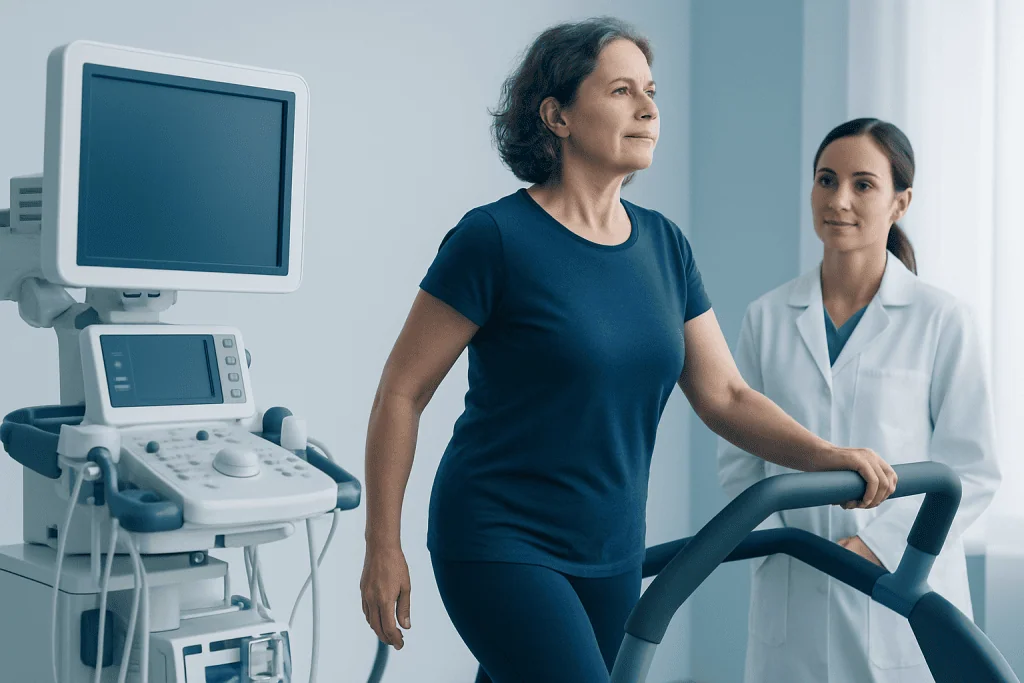
One of the most consistent benefits of incline walking is that it raises exercise intensity at a given speed. This means a person may reach a moderate or vigorous workout level without needing to walk much faster. For individuals who find brisk flat walking uncomfortable or difficult to sustain, adding a mild to moderate incline can be another way to improve cardiorespiratory fitness.
Incline walking also changes which muscles work hardest. Compared with level walking, uphill walking typically increases demand on the gluteal muscles, calves, hamstrings, and muscles around the hip. Many people describe this as feeling more effort in the back of the legs and buttocks, while still being gentler on the joints than high-impact exercise.
It may also increase total energy expenditure. This can support a weight-management plan when combined with nutrition, sleep, and a sustainable overall activity routine. However, no single walking style causes selective fat loss in one body area, and long-term weight change depends on many factors beyond exercise alone.
Some people may find that treadmill incline walking helps build exercise tolerance after periods of inactivity when introduced gradually. In supervised rehabilitation or medical exercise settings, walking intensity can be adjusted carefully to match a person’s health needs. For patients recovering from musculoskeletal or metabolic concerns, clinicians may also recommend broader evaluation or physical therapy and rehabilitation to guide safe progression.
What Incline Walking Does Not Clearly Prove

Popular fitness advice can sometimes overstate what incline walking can achieve. Although it can be an effective aerobic exercise, evidence does not support the idea that it alone will “tone” specific body parts in a unique way or produce major body-composition changes without attention to overall activity, nutrition, and health conditions.
It is also not automatically safer than all other exercise. For some people, especially those with limited ankle mobility, knee pain, calf tightness, balance concerns, or foot problems, incline walking may create more discomfort than level walking. Whether it is a good choice depends on the person, the incline used, and the way the exercise is performed.
Another common misunderstanding is that a steeper incline always means a better workout. In reality, very steep grades can shorten stride, strain the calves and Achilles tendon, encourage leaning or holding the treadmill rails, and reduce walking quality. A moderate incline that can be sustained with good posture is often more useful than an extreme one that causes poor form or pain.
Risks, Side Effects, and Who Should Be Careful
Incline walking is generally well tolerated, but it can increase mechanical load on certain parts of the body. Common short-term effects include calf soreness, fatigue in the gluteal muscles, shortness of breath at higher effort levels, and temporary stiffness in the ankles or lower back. These may be expected when someone is new to the activity, but significant pain is not considered a normal training effect.
The exercise may aggravate existing musculoskeletal conditions. People with osteoarthritis, patellofemoral knee pain, plantar fasciitis, Achilles tendinopathy, hip problems, spinal stenosis, or recent lower-limb injury may find uphill walking uncomfortable or unsuitable without modification. For those already living with arthritis, the best walking approach often depends on which joints are affected and how active symptoms are.
Balance and nerve-related conditions also matter. Neuropathy, inner ear disorders, weakness after illness, or certain neurologic conditions can increase the risk of falls, especially outdoors on uneven hills. People with diabetes who have reduced foot sensation should be especially careful about footwear, skin checks, and training intensity.
Cardiovascular symptoms deserve special attention. Because incline walking raises workload, people with known heart disease, unexplained chest symptoms, severe shortness of breath, or uncontrolled blood pressure should seek individualized advice before starting. Some may benefit from medical assessment in cardiology or supervised cardiac rehabilitation before increasing exertion.
How to Start Incline Walking Safely
A gradual approach is usually the safest and most sustainable. Many people do well by first establishing comfortable flat walking, then adding small inclines for short periods rather than beginning with long uphill sessions. On a treadmill, this often means using a low grade and increasing either time or incline, but not both at once.
Posture affects both comfort and efficiency. The body should stay upright with a slight forward lean coming from the ankles rather than bending at the waist. Shorter, controlled steps are often easier than overstriding, and using the handrails only briefly for balance is generally preferable to relying on them throughout the workout, since constant rail holding changes body mechanics and reduces training value.
Footwear should provide appropriate support and traction. A warm-up on level ground can help prepare the calves and ankles, and a cool-down may make recovery easier. If outdoor hills are used, stable surfaces and visibility are important, especially for older adults or anyone with balance concerns.
People with obesity, deconditioning, recent surgery, or chronic pain may benefit from a structured plan rather than trial and error. In some cases, clinicians may also advise assessment through check-up and screening to identify medical issues that affect exercise safety.
Practical Guidance for Different Goals
For general health, incline walking can be one way to help meet weekly physical activity goals. The most useful routine is usually one that a person can repeat consistently without excessive soreness or interruption. A moderate incline combined with a comfortable pace may offer a good balance between challenge and sustainability.
For fitness improvement, variety is often helpful. Some people respond well to intervals, alternating flat and incline periods, while others prefer a steady climb at a lower grade. Recovery matters, especially when sessions are long or frequent. Persistent calf tightness or worsening joint pain may signal that the program is advancing too quickly.
For weight management, incline walking can contribute to daily energy expenditure, but it works best as part of a broader plan that includes eating patterns, sleep, stress management, and regular movement. If excess weight is accompanied by joint pain, sleep apnea, diabetes, or other health problems, medical guidance can help tailor activity safely and realistically.
For rehabilitation or symptom-limited exercise, the correct program depends on the diagnosis. Someone with obesity, prior injury, or chronic metabolic disease may need a different walking prescription than a healthy younger adult. An individualized plan can help avoid flare-ups while preserving the benefits of regular movement.
When to Seek Medical Care
Medical advice is appropriate if incline walking causes chest pain, pressure, dizziness, fainting, severe breathlessness, or palpitations. These symptoms are not expected from ordinary exercise adaptation and should be assessed promptly, especially in people with known cardiovascular disease or risk factors.
A doctor should also evaluate persistent or worsening pain in the knee, hip, ankle, heel, calf, or lower back. Sudden swelling, inability to bear weight, marked limping, or pain that continues after several days of rest may suggest an injury that needs formal assessment.
People should seek care before starting incline walking if they have uncontrolled blood pressure, recent surgery, severe balance impairment, significant diabetic foot problems, or an unstable medical condition. Professional guidance can help identify a safer exercise type, pace, and progression.
At the diagnostic and treatment stage, multidisciplinary evaluation may be helpful for people with complex medical or orthopedic concerns. Acibadem International’s multidisciplinary specialists and JCI-accredited hospitals diagnose and treat conditions that may affect exercise tolerance in international patients.
Frequently asked questions
Is incline walking better than flat walking?
Incline walking is not automatically better for every person, but it usually makes walking more intense at the same speed. That can help improve cardiovascular fitness and increase muscular effort. Flat walking may still be the better choice for people with joint pain, balance issues, or those just starting exercise.
Can incline walking help with weight loss?
It can support weight loss by increasing energy expenditure compared with level walking. However, weight loss depends on overall lifestyle, including food intake, sleep, health conditions, and consistency over time. Incline walking works best as one part of a broader plan.
Does incline walking build muscle?
Incline walking increases activation of the gluteal muscles, calves, and parts of the thighs more than level walking does. It can improve muscular endurance and make those muscles work harder, but it is not the same as progressive resistance training for building large gains in muscle size or strength.
Who should avoid incline walking?
People with certain conditions may need to avoid it temporarily or modify it, especially those with acute injuries, severe arthritis flares, Achilles tendon pain, major balance problems, or unstable heart symptoms. A clinician can advise whether level walking, cycling, water exercise, or supervised rehabilitation would be safer.
What incline is safest for beginners?
A low incline is usually the safest starting point, especially for people who are not used to regular exercise. The exact number varies by fitness level and health status, so comfort, posture, and symptom response are more important than chasing a steep grade. The aim is steady effort without pain or loss of form.
Is incline walking hard on the knees?
It can be for some people. Uphill walking changes joint loading and muscle demands, and while some people tolerate it well, others notice more knee discomfort, especially if the incline is steep or the duration is too long. Pain that persists should be discussed with a healthcare professional.
References
- World Health Organization
- American College of Sports Medicine
- Centers for Disease Control and Prevention
- National Institute of Arthritis and Musculoskeletal and Skin Diseases
- American Heart Association
This article is for general information only and is not a substitute for professional medical advice. Please consult a qualified doctor about your individual situation.
Heart care in Turkey — expert evaluation and treatment
JCI-accredited · board-certified surgeons · reply within 24h

More from the Health Library



Related Specialists

Assoc. Prof. Dr. Mehmet Barburoğlu
Interventional Neuroradiology
Prof. Dr. Rüştü Serter
Endocrinology
Prof. Dr. Kenan Çekem
Internal Medicine
Assoc. Prof. Dr. Fatih Aygün
Pediatric Intensive Care Unit