Best Treatment for Prostate Cancer in Early Stages: How It Works, Results and What to Expect

Many low-risk early prostate cancers can be monitored safely with active surveillance rather than treated immediately. For cancer that needs curative treatment, radical prostatectomy and radiation therapy are established options with similar long-term cancer control for many patients.
Key Takeaways
- Many low-risk early prostate cancers can be monitored safely with active surveillance rather than treated immediately.
- For cancer that needs curative treatment, radical prostatectomy and radiation therapy are established options with similar long-term cancer control for many patients.
- Treatment selection is guided by PSA level, biopsy Grade Group, MRI findings, clinical stage and the person’s health and preferences.
- Potential effects on urinary, sexual and bowel function should be discussed before choosing treatment.
- Early prostate cancer usually allows time for careful decision-making, although evaluation should not be unnecessarily delayed.
The best treatment for prostate cancer in early stages is individualized rather than one single option. Active surveillance, surgery and radiation therapy can all be appropriate, depending on the cancer’s risk features, overall health, life expectancy and personal priorities.
Overview: choosing the best treatment for prostate cancer in early stages
The best treatment for prostate cancer in early stages depends on how likely the individual cancer is to grow or spread. For very low-risk and many low-risk cancers, active surveillance is often the preferred approach because it avoids or postpones treatment side effects while monitoring the cancer closely. For cancers with less favorable features, surgery or radiation therapy may offer effective treatment intended to cure the disease.
Early-stage prostate cancer is generally confined to the prostate gland and commonly causes no symptoms. Decisions are based on prostate-specific antigen (PSA) results, digital rectal examination findings, MRI, biopsy results and the cancer’s Grade Group. A urologist, radiation oncologist and, when needed, medical oncologist can help a person understand the expected benefits and possible trade-offs of each approach.
No treatment is automatically best for every person. A treatment plan should also consider age, other health conditions, estimated life expectancy, urinary and sexual function before treatment, family history and personal preferences. The goal is to treat clinically significant cancer effectively while avoiding unnecessary harm from overtreatment.
How early prostate cancer is assessed before treatment
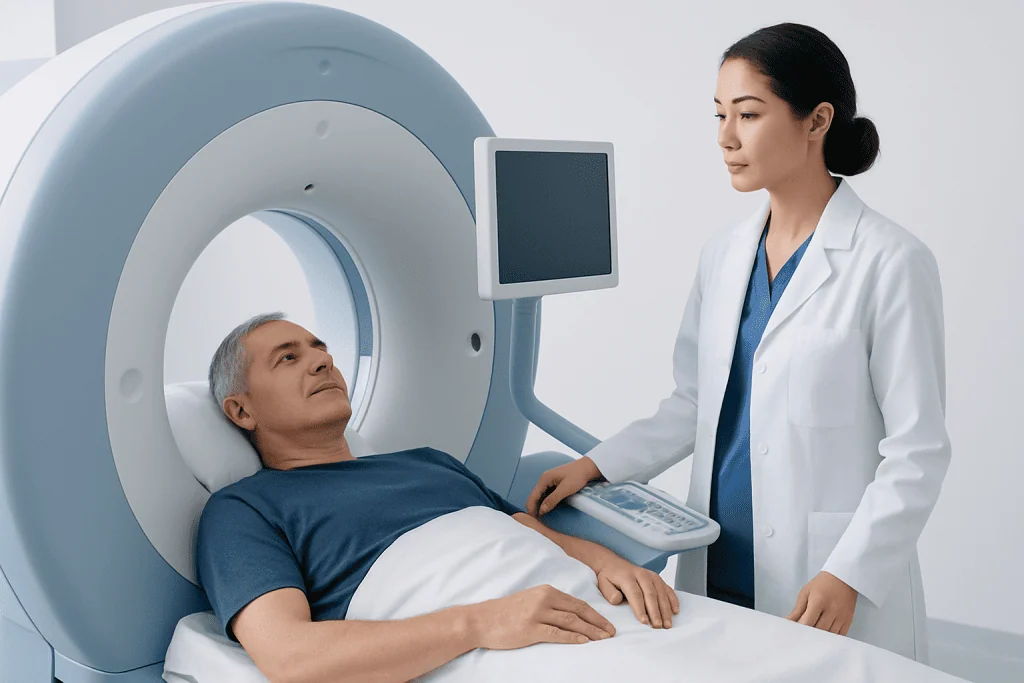
Before recommending treatment, the clinical team confirms the diagnosis and determines the cancer’s risk category. PSA is a blood test that can suggest prostate activity but does not diagnose cancer on its own. A prostate biopsy confirms cancer and shows its Grade Group, which reflects how abnormal the cancer cells appear and helps estimate how the cancer may behave.
Multiparametric MRI can identify suspicious areas within the prostate, support targeted biopsy planning and help assess whether cancer may extend beyond the gland. Depending on the risk level, additional imaging may be considered to look for spread outside the prostate. Many people with low-risk localized cancer do not require extensive staging scans.
Risk categories are commonly described as very low, low, favorable intermediate, unfavorable intermediate and high risk. The distinction is important: a small, low-grade cancer may be suitable for surveillance, while a higher-grade or more extensive cancer may be better managed with definitive treatment. People can learn more about the diagnosis and outlook through prostate cancer information.
What is the typical treatment for stage 1 prostate cancer?

Stage 1 prostate cancer is usually small, confined to the prostate and not detectable on examination or only minimally detectable. When it also has low-risk biopsy and PSA features, active surveillance is commonly the typical initial management. This means the cancer is monitored with scheduled PSA tests, examinations, MRI when appropriate and repeat biopsy or other reassessment over time.
Active surveillance is not the same as ignoring cancer. Its purpose is to identify signs that a cancer is becoming more active while it is still curable. If monitoring shows progression, treatment with surgery or radiation can be considered. This approach can help many people avoid or delay urinary, sexual and bowel side effects that may accompany immediate treatment.
Some people with stage 1 disease may reasonably choose treatment from the outset because of higher-volume low-risk cancer, concerning test features, family history, anxiety about surveillance or personal preference. Radical prostatectomy and radiation therapy are both standard options. Decisions should be made after a balanced discussion of cancer control, quality of life and follow-up requirements.
How surgery and radiation work for localized prostate cancer
Radical prostatectomy is an operation to remove the prostate gland and seminal vesicles, usually with reconnection of the bladder to the urethra. In selected cases, nearby lymph nodes are also removed for staging. The procedure may be performed through open, laparoscopic or robot-assisted techniques. Nerve-sparing methods may be possible when the cancer’s location and extent allow, with the aim of preserving erectile function.
Radiation therapy treats the prostate with carefully planned high-energy radiation. External beam radiation is delivered from outside the body over a treatment course that may vary in length according to the regimen. Brachytherapy, in which radioactive sources are placed in or near the prostate, may be an option for selected patients. For some intermediate- or high-risk cancers, radiation may be combined with a period of hormone therapy.
Both surgery and radiation are intended to eliminate localized cancer. Their suitability is influenced by tumor characteristics, prostate size, prior urinary symptoms, bowel health, previous pelvic treatment and individual priorities. Prostate cancer treatment options should be reviewed with specialists who can explain which approaches are appropriate for the individual situation.
After surgery, PSA should become very low or undetectable and is checked regularly. After radiation, PSA typically falls gradually over months or longer, and small temporary changes may occur. Long-term follow-up is important after any management approach.
Candidacy, treatment steps and recovery timeline
Active surveillance may be appropriate for people with very low-risk or low-risk cancer and selected favorable intermediate-risk cancers. A person must be willing and able to attend regular follow-up. Surgery may be considered for those fit enough for anesthesia and an operation, particularly when removal and precise surgical pathology are preferred. Radiation can be a valuable alternative for people who do not wish to have surgery or for whom surgery carries greater risk.
For surgery, pre-treatment planning may include blood tests, imaging review, anesthesia assessment and discussion of continence and sexual-function rehabilitation. The operation is followed by a brief hospital stay in many cases and temporary use of a urinary catheter. Daily activities are resumed gradually over several weeks, while urinary control and erections may continue improving for months to longer. Recovery differs substantially between individuals.
For external beam radiation, planning scans and sometimes small skin marks or implanted markers help guide precise treatment. Sessions themselves are painless and usually outpatient. Tiredness, urinary frequency or urgency, and bowel irritation may develop during treatment or shortly afterward, often improving in the following weeks. The team monitors symptoms and provides supportive care throughout.
People should ask how each option may affect their current urinary symptoms, erections, fertility, bowel function and ability to work or travel. Sperm banking can be discussed before treatment for those who may wish to preserve the possibility of biological parenthood, although prostate cancer treatment can affect ejaculation and fertility.
Benefits, risks and how to make a balanced decision
The main benefit of active surveillance is avoiding or delaying treatment-related side effects while maintaining close oversight. Its limitations include the need for repeated testing and the emotional burden some people experience from living with an untreated cancer. There is also a small possibility that follow-up testing may identify progression after a period of observation, although carefully designed surveillance aims to detect meaningful change promptly.
Surgery provides removal of the prostate and detailed examination of the tissue. Risks include bleeding, infection, blood clots, urinary leakage, narrowing at the surgical connection and erectile dysfunction. Urinary control often improves after surgery, but the degree and pace of recovery vary. Erectile recovery may take time and depends on age, baseline function, nerve preservation and other health factors.
Radiation avoids an operation but can cause urinary irritation, bowel changes, fatigue and erectile dysfunction that may develop gradually. Less commonly, persistent bladder or bowel complications can occur. Because each option has distinct effects, it is useful to receive counseling from both a urologic surgeon and a radiation oncologist before making a definitive decision.
- Ask which risk category applies and why.
- Discuss whether active surveillance is medically suitable.
- Compare the likelihood and timing of urinary, sexual and bowel effects.
- Ask what follow-up will involve after each option.
- Consider a second pathology review or second opinion if the diagnosis or recommendation is unclear.
What is the 2 week rule for prostate cancer?
The “2 week rule” is not a universal medical rule requiring prostate cancer treatment within two weeks. In some health systems, it refers to an urgent referral pathway intended to help people with concerning symptoms or test results see a specialist promptly. It does not mean that every person diagnosed with prostate cancer needs immediate surgery or radiation.
Most early prostate cancers grow slowly enough to allow time for accurate staging, pathology review and careful discussion of options. Taking several weeks to gather information, consider a second opinion and select an appropriate team is often reasonable. However, appointments, recommended tests and follow-up should not be postponed without discussing this with the treating clinician.
A doctor may advise a faster pathway when tests suggest aggressive cancer, there are signs of cancer outside the prostate, or symptoms indicate an urgent problem. The appropriate timing is based on the individual cancer rather than a fixed number of days.
How quickly does prostate cancer need to be treated?
How quickly prostate cancer needs treatment depends primarily on its risk category. Very low-risk and low-risk localized cancers often do not require immediate treatment and may be managed with active surveillance for years. This can be a safe, planned strategy when follow-up is reliable and the cancer meets appropriate criteria.
Intermediate-risk, high-risk or rapidly changing cancer generally needs more timely assessment and a discussion of definitive treatment. Even then, the process typically includes confirmation of biopsy findings, staging, consultation with relevant specialists and treatment planning. A person should follow the recommended schedule and tell the clinical team if new symptoms or barriers to care arise.
Acibadem International’s multidisciplinary specialists and JCI-accredited hospitals assess and treat prostate cancer for international patients, coordinating urology, radiation oncology, imaging and supportive care when appropriate.
When to seek medical care
A person should arrange medical evaluation for a persistently elevated PSA, an abnormal rectal examination, blood in urine or semen, new unexplained bone pain, unintentional weight loss, or worsening urinary symptoms. These symptoms do not necessarily mean prostate cancer, and benign prostate enlargement is common, but assessment is important. Anyone already diagnosed with prostate cancer should contact their treating team promptly about new severe pain, inability to pass urine, fever or rapidly worsening symptoms.
Frequently asked questions
What is the most successful way to get rid of prostate cancer?
For localized prostate cancer that requires treatment, radical prostatectomy and radiation therapy are both established treatments intended to cure the cancer. Neither is universally more successful for every person, because outcomes depend on the cancer’s grade, stage, PSA level and other individual factors. For low-risk cancer, active surveillance may be the most appropriate first approach because immediate treatment may not improve outcomes while it can cause side effects.
Can early prostate cancer be cured?
Many early, localized prostate cancers can be treated successfully with curative intent. Surgery and radiation therapy are the main definitive treatment options, while active surveillance is appropriate for selected lower-risk cancers. Regular follow-up remains important regardless of the initial management plan.
Is active surveillance the same as watchful waiting?
No. Active surveillance is a structured monitoring program for localized cancer, using tests such as PSA measurement, MRI and repeat biopsy or other reassessment to identify progression early. Watchful waiting is generally a less intensive approach focused on managing symptoms if they develop, often for people whose other health conditions or life expectancy make curative treatment less suitable.
Which has fewer side effects: prostate surgery or radiation?
The side-effect patterns differ rather than one option always having fewer effects. Surgery more commonly causes urinary leakage soon after treatment, while radiation can cause bladder and bowel irritation and may lead to sexual changes gradually. Individual risks depend on baseline health, urinary and bowel function, treatment technique and cancer characteristics.
Can prostate cancer return after early-stage treatment?
Yes, cancer can recur after surgery or radiation, although many people remain free of recurrence long term. PSA testing is used to monitor for possible recurrence after treatment. If PSA changes suggest recurrence, the care team may recommend imaging, further testing or additional treatment options.
Should a person get a second opinion before prostate cancer treatment?
A second opinion can be helpful, especially when choosing between active surveillance, surgery and radiation therapy. It may confirm the pathology and risk assessment, clarify available options and help the person feel confident about the plan. Seeking another opinion should be coordinated without delaying recommended evaluation or care.
References
- National Cancer Institute
- American Cancer Society
- European Association of Urology
- National Comprehensive Cancer Network
- American Urological Association
This article is for general information only and is not a substitute for professional medical advice. Please consult a qualified doctor about your individual situation.
Prostate Cancer in Turkey — costs, top hospitals & a free quote
JCI-accredited · board-certified surgeons · reply within 24h
Add us as a Preferred Source to see more of our trusted health content across Google Search, AI Overviews and Discover.