Blue Ring Around Eye: An Evidence-Based Guide for Patients

The term blue ring around eye can describe changes in the eyelid skin, veins, or the cornea and iris area, so the exact location matters. Common explanations include bruising, thin skin with visible vessels, allergies, irritation, aging changes, and some eye conditions.
Key Takeaways
- The term blue ring around eye can describe changes in the eyelid skin, veins, or the cornea and iris area, so the exact location matters.
- Common explanations include bruising, thin skin with visible vessels, allergies, irritation, aging changes, and some eye conditions.
- A doctor may use a physical exam and an eye exam to determine whether the change involves the skin around the eye or the eye itself.
- Urgent care is important if the ring appears after injury or comes with pain, vision changes, double vision, swelling, or one-sided bulging.
- Treatment depends on the cause and may range from self-care to specialist eye or medical treatment.
A blue ring around eye may refer to bluish skin around the eyelids, a visible blue vein pattern, or a ring seen on the eye itself. In many cases it is harmless, but a new, one-sided, painful, or persistent change should be assessed by a qualified clinician to identify the cause.
What a Blue Ring Around the Eye Usually Means
A blue ring around eye is not a single diagnosis. Patients often use this phrase to describe different findings, including bluish discoloration of the skin around the eyelids, a faint blue circle caused by visible veins under thin skin, or a ring seen on the surface of the eye near the iris. Because these possibilities involve different tissues, the first step is to clarify exactly where the color change appears.
In everyday practice, the most common explanations are not dangerous. The delicate skin around the eyes can show underlying blood vessels more easily than other areas of the face. Minor trauma, rubbing, allergies, sinus congestion, lack of sleep, and age-related thinning of the skin can all make the area look blue or purple. Lighting and skin tone can also affect how obvious the color appears.
Less commonly, the ring may be related to an eye surface problem or a cholesterol-related deposit at the edge of the cornea, sometimes described as a pale gray, white, or bluish ring. Some people also notice a colored border after an injury or contact lens irritation. If the appearance is new, one-sided, associated with pain, or hard to describe, an eye examination is the safest way to identify what is happening.
How to Tell Where the Ring Is Located
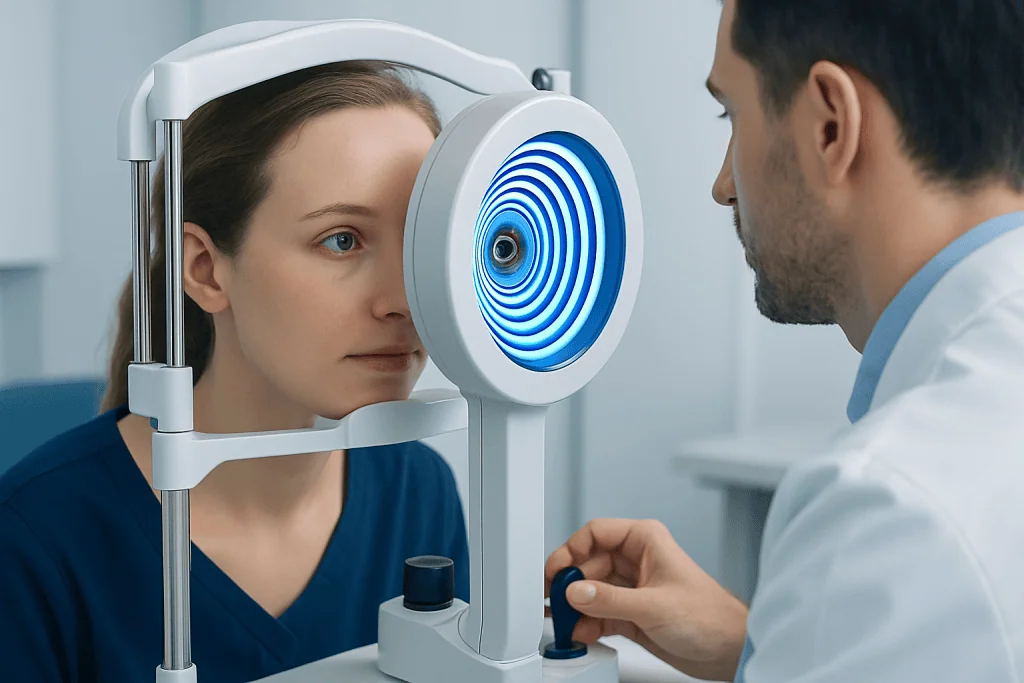
Patients can often help narrow down the cause by noting whether the color is in the skin around the eye or in the eye itself. If the blue ring seems to move slightly when the skin is stretched, fades in bright light, or looks like shading around the lower lid, it is more likely to involve the eyelid skin or the small blood vessels beneath it. This is common in people with thin, fair, or delicate skin and can become more noticeable with fatigue or irritation.
If the ring appears fixed on the clear front window of the eye, near the colored iris, it may involve the cornea or tear film. A healthcare professional may then consider issues such as corneal deposits, contact lens complications, inflammation, or changes that are sometimes seen with aging. A visible ring on the eye itself should not be self-diagnosed from photos alone because different conditions can look similar.
It can also help to ask whether the change is on one side or both. Bilateral, long-standing, mild bluish shading around the eyes is often related to anatomy or lifestyle factors. A sudden or one-sided ring is more likely to need medical evaluation, especially if it follows injury, infection, or a new eye symptom.
Possible Causes of a Blue Ring Around Eye

There are several possible causes, and many are benign. The skin around the eyes is among the thinnest on the body, so veins and pooled blood can show through easily. Common causes include minor bruising, eye rubbing, allergies, eczema, irritation from cosmetics, crying, poor sleep, and age-related loss of skin thickness or facial volume. Sinus congestion may also contribute to darker or bluish under-eye discoloration in some people.
Injuries can create a more obvious blue or purple ring. Even a mild bump, recent cosmetic procedure, or rubbing after contact lens discomfort can produce bruising around the eye. Rarely, a blue-gray discoloration may relate to certain medications, pigment changes, or skin conditions. When discoloration affects the white part or the front of the eye rather than the skin, an ophthalmologist may consider inflammation, degeneration, or other eye disorders that need direct examination.
A ring near the outer edge of the cornea may sometimes reflect arcus, a deposit of fats in the cornea. In older adults, this can be a common age-related finding. In younger adults, however, a ring like this may prompt a review of cholesterol and overall cardiovascular risk. If there are signs of inflammation, pain, light sensitivity, or vision change, conditions involving the cornea or deeper eye structures may need assessment, including glaucoma when pressure-related symptoms or optic nerve concerns are part of the picture.
- Thin eyelid skin with visible veins
- Bruising after minor injury or rubbing
- Allergies, eczema, or skin irritation
- Fatigue, dehydration, or sinus congestion
- Corneal arcus or other corneal changes
- Contact lens-related irritation or inflammation
Symptoms That Can Help Identify the Cause
The color alone is only part of the picture. Doctors also ask whether the area is painful, itchy, swollen, tender, warm, or changing quickly. Itching and rubbing suggest allergies or eczema. Tenderness after a bump points more toward bruising. Dryness, burning, watering, or the feeling that something is in the eye may indicate irritation of the eye surface.
Vision symptoms are especially important. Blurred vision, halos around lights, double vision, eye pain, or light sensitivity suggest that the problem may involve the eye rather than just the skin around it. A bluish ring that is accompanied by redness, discharge, or worsening contact lens discomfort should not be ignored, because the cornea can become inflamed or scratched.
Other clues come from timing and associated health changes. A longstanding, stable appearance that is present on both sides is often less concerning than a sudden new ring on one side. If the discoloration appears along with facial swelling, severe headache, bulging of one eye, fever, or symptoms after trauma, urgent evaluation is appropriate.
How Doctors Diagnose It
Diagnosis begins with history and examination. A clinician will ask when the blue ring first appeared, whether it is changing, and whether there was any injury, infection, allergy flare, cosmetic treatment, or contact lens use. They may also ask about medications, cholesterol, skin conditions, and family history of eye or vascular disease.
The physical exam focuses on location. If the discoloration is in the eyelid skin, the doctor checks for bruising, swelling, eczema, visible veins, infection, and signs of trauma. If the ring appears to be on the eye itself, a slit-lamp eye examination may be needed. This allows the ophthalmologist to look closely at the cornea, iris, tear film, and the front structures of the eye.
Additional testing depends on what the exam shows. Some patients may need a general eye assessment such as an eye examination or measurements used during glaucoma diagnosis if there are pressure-related concerns. Blood tests are not needed for everyone, but a younger person with a corneal ring may be advised to have cholesterol checked. Imaging is usually reserved for trauma, suspected fractures, orbital disease, or unexplained one-sided eye changes.
Treatment Options and Self-Care
Treatment depends entirely on the cause. For harmless visible veins, thin skin, or mild under-eye discoloration, medical treatment may not be necessary. Supportive steps such as managing allergies, avoiding eye rubbing, improving sleep, using sun protection, and treating dry or irritated skin can help reduce the appearance. Cold compresses may ease swelling after mild irritation or minor bruising.
If an underlying condition is found, treatment is targeted. Allergies may improve with avoidance strategies and clinician-guided therapy. Eczema around the eyes needs gentle skin care and appropriate medical advice because the eyelid area is sensitive. Bruising after injury generally improves with time, but significant trauma should always be evaluated to rule out damage around the eye socket or the eye itself.
When the ring is due to a corneal or other eye problem, management may involve lubricating drops, temporary changes in contact lens use, treatment of inflammation, or specialist care. Patients with vision changes or findings involving the lens, retina, or cornea may need a more detailed assessment such as retinal examination or other ophthalmology-led testing. Near the end of the care pathway, multidisciplinary specialists at Acibadem International and its JCI-accredited hospitals evaluate and treat eye and related medical conditions for international patients when specialist input is needed.
When to Seek Medical Care
Medical review is advisable if a blue ring around eye is new, persistent, unexplained, or clearly located on the eye rather than the skin. A doctor should also assess it if it is only on one side, appears to be getting worse, or does not improve after a short period of simple self-care. Even when the cause is likely harmless, confirmation can be reassuring and can prevent missed eye disease.
Urgent care is needed if the change follows trauma, especially if there is swelling, severe bruising, eye pain, bleeding, or trouble moving the eye. The same applies if there is sudden blurred vision, light sensitivity, severe redness, double vision, a severe headache, nausea with eye pain, or a bulging appearance of one eye. These symptoms can signal a more serious eye or orbital problem that should not wait.
Children, contact lens wearers, and people with known eye disease should be assessed sooner if new eye discoloration appears. Contact lens users in particular should seek prompt care for pain, redness, or reduced vision because corneal problems can worsen quickly without treatment.
Can It Be Prevented?
Not every blue ring around eye can be prevented, because some causes are linked to natural anatomy, skin thickness, or age-related changes. Still, there are practical ways to lower the chance of irritation and noticeable discoloration. Gentle skin care, good sleep habits, hydration, allergy control, and avoiding frequent rubbing can all help protect the delicate eye area.
Eye safety matters as well. Protective eyewear can reduce trauma during sports, home repairs, and certain jobs. Contact lens users should follow hygiene instructions closely and avoid overwearing lenses. People with recurring eye irritation should ask whether dry eye, allergy, or another condition is contributing, rather than repeatedly self-treating without guidance.
General health supports eye health too. If a corneal ring is suspected in a younger adult, a clinician may recommend checking cholesterol and discussing lifestyle measures that support cardiovascular wellness. Regular eye checkups become more important with age and for anyone who has vision symptoms, a family history of eye disease, or chronic medical conditions that may affect the eyes.
Frequently asked questions
Is a blue ring around eye always serious?
No. Many cases are due to harmless causes such as thin skin, visible veins, fatigue, minor bruising, or irritation around the eyelids. However, a new, one-sided, painful, or persistent change should be examined to make sure the eye itself is not involved.
What is the difference between a blue ring around the eye and a ring around the iris?
A blue ring around the eye usually refers to the skin or tissues around the eyelids. A ring around the iris or at the edge of the cornea is on the eye itself and may have different causes, including corneal changes that need an eye exam.
Can allergies cause blue discoloration around the eyes?
Yes. Allergies can lead to rubbing, swelling, and congestion that make the under-eye area look darker, bluish, or purplish. Treating the allergy and avoiding rubbing may help, but persistent symptoms should still be reviewed.
Should a younger adult worry about a ring on the cornea?
A corneal ring in an older adult may be an age-related finding, but in a younger adult it can sometimes prompt a cholesterol check. It does not always mean there is a serious problem, but it is worth discussing with a doctor or ophthalmologist.
When should someone go to urgent care for a blue ring around eye?
Urgent care is appropriate after eye or facial trauma, or if the ring comes with eye pain, reduced vision, double vision, severe redness, bulging, or trouble moving the eye. These symptoms can point to problems that need same-day assessment.
Can lack of sleep cause a blue ring around the eyes?
Poor sleep can make under-eye discoloration more noticeable, especially in people with thin skin or visible blood vessels in that area. Sleep alone is not the only cause, so a persistent or unusual change should not automatically be blamed on tiredness.
References
- American Academy of Ophthalmology
- National Eye Institute
- Mayo Clinic
- Merck Manual Consumer Version
This article is for general information only and is not a substitute for professional medical advice. Please consult a qualified doctor about your individual situation.
Explore treatments in Turkey — costs, top hospitals & a free quote
JCI-accredited · board-certified surgeons · reply within 24h
Check your numbers in seconds
BMI, calories, due date, blood pressure and 30+ more clinical calculators — free, instant, doctor-reviewed ranges.