Broken Leg Recovery: A Week-by-Week Timeline
A femur fracture is a serious injury that needs urgent medical assessment and ongoing orthopedic follow-up. Many femur fractures are treated with surgery, often using an internal rod, plate or screws to stabilize the bone.
Key Takeaways
- A femur fracture is a serious injury that needs urgent medical assessment and ongoing orthopedic follow-up.
- Many femur fractures are treated with surgery, often using an internal rod, plate or screws to stabilize the bone.
- Early recovery focuses on pain control, wound care, circulation and safe mobility; strength and walking usually improve gradually over months.
- Following weight-bearing instructions and attending physiotherapy can protect healing and support return of function.
- New severe pain, breathing difficulty, fever, wound drainage or changes in leg color or sensation require prompt medical review.
Broken leg recovery time for a femur fracture is commonly measured in months rather than weeks. Bone healing may begin within weeks, but safe weight-bearing, normal walking and full function depend on the fracture pattern, treatment used, complications and rehabilitation.
Broken Leg Recovery Time for a Femur Fracture: What to Expect
A femur fracture is a break in the thigh bone, the longest and one of the strongest bones in the body. Because the femur carries substantial weight and is surrounded by large muscles and blood vessels, recovery requires careful treatment and follow-up. The term “broken leg” can also describe fractures below the knee, but a broken femur generally has a longer and more closely supervised recovery.
For many adults, the bone takes several months to heal sufficiently for a gradual return to normal daily activities. Some uncomplicated fractures improve steadily over approximately 3 to 6 months, while complex, open, multiple-fragment or slow-healing fractures may take longer. Age, smoking, diabetes, nutrition, infection risk, associated injuries and adherence to rehabilitation all influence the timeline.
Recovery is not a fixed calendar. Orthopedic teams use symptoms, examination findings and follow-up X-rays to decide when the bone is stable enough for more activity or weight-bearing. A person should follow the individual plan given by their surgeon and physiotherapist rather than comparing progress with another patient.
How Femur Fracture Treatment Works
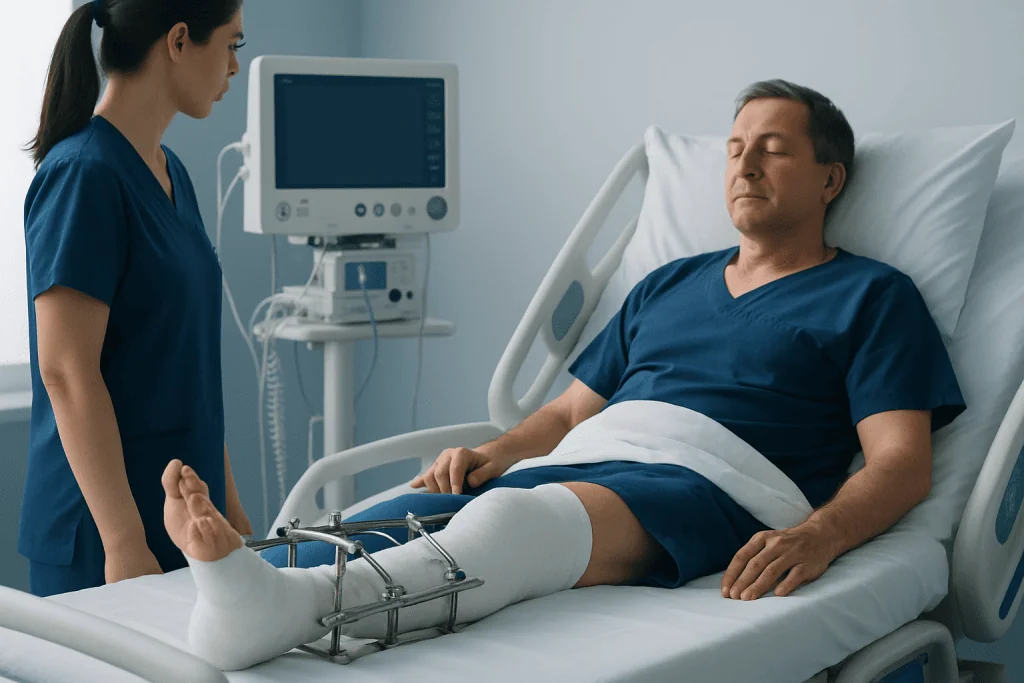
The main goals of treatment are to align the broken bone, keep it stable while it heals, relieve pain and restore safe movement. A displaced femur fracture often requires an operation because the powerful thigh muscles can pull bone fragments out of position. Before definitive treatment, clinicians assess circulation, nerve function, skin injury and any other trauma.
In many cases, surgeons use internal fixation. This may involve an intramedullary nail, which is a metal rod placed inside the hollow center of the femur, or a plate and screws positioned along the bone. These devices hold the bone in alignment so healing can occur and, when appropriate, allow earlier movement. Orthopedic surgery planning is individualized according to the location and pattern of the fracture.
Not every femur fracture needs the same approach. Some fractures near the hip or knee, stress fractures, childhood fractures and fractures in people with major medical risks may be managed differently. The orthopedic surgeon discusses the expected benefits, alternatives, possible risks and rehabilitation requirements before treatment whenever circumstances allow.
Procedure: Candidacy, Steps, Benefits and Risks

Surgery is commonly considered when a femur fracture is unstable, displaced, open, caused by high-energy trauma or unlikely to remain aligned without fixation. It may also be recommended when stability is needed to support earlier movement and reduce complications related to prolonged immobility. A clinician reviews imaging, overall health, medicines, anesthesia considerations and any injuries affecting the pelvis, knee, spine or other areas.
During surgery, the patient receives anesthesia. The surgeon positions the bone fragments as accurately as possible, often using X-ray guidance in the operating room. An intramedullary nail or another fixation device is then inserted and secured. The incisions are closed, and the patient is monitored for pain, bleeding, circulation and anesthesia recovery. The specific technique and hospital stay vary by injury and general health.
Potential benefits include restoring alignment, improving stability and supporting earlier rehabilitation. Risks can include bleeding, infection, blood clots, nerve or blood vessel injury, delayed union, nonunion, malunion, hardware irritation or the need for further surgery. These complications are not expected in every case, but patients should understand warning signs and keep all scheduled reviews.
Femur Fracture Recovery Timeline: Week by Week
Days 1 to 7: Early care centers on stabilizing the fracture, managing pain, protecting the surgical wound if present and preventing complications from reduced movement. Hospital staff may encourage breathing exercises, ankle movements and carefully supervised transfers. Weight-bearing may be restricted, partial or allowed as tolerated depending on the fixation and fracture pattern.
Weeks 2 to 6: Swelling and bruising gradually settle, though discomfort with movement can remain. Follow-up appointments assess the wound, stitches or staples where relevant, and early bone alignment. Physiotherapy commonly focuses on maintaining knee and hip movement, gently activating muscles, using crutches or a walker safely, and following precise weight-bearing limits.
Weeks 6 to 12: X-rays may begin to show signs of bridging bone, although healing differs considerably between individuals. If the fracture is progressing well, the clinician may advance activity and resistance exercises. Limping, weakness, stiffness and fatigue are common at this stage, especially after a prolonged period of limited mobility.
Months 3 to 6 and beyond: Many people continue rebuilding thigh, hip and core strength while improving balance and walking endurance. Return to work, driving, sport and heavy physical activity should be guided by the orthopedic team. Even after the bone appears healed, full confidence and muscle function may take additional time.
How long does it take to walk normally after a broken leg?
Walking normally after a broken femur can take several months, and some people need longer. The ability to put weight on the leg may begin earlier or later depending on the type of fracture, the stability of surgical fixation, pain levels and X-ray evidence of healing. A person should not increase weight-bearing simply because the leg feels better.
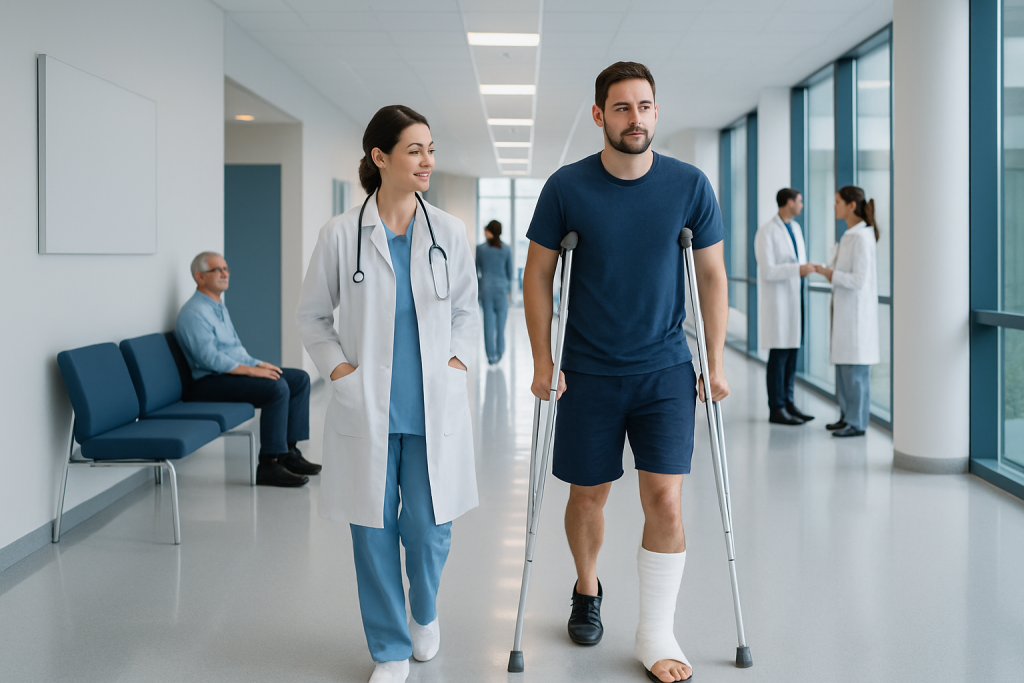
Normal walking involves more than the bone joining. The hip and knee must move well, the thigh muscles must regain strength, and balance must return. It is common to use crutches, a walker or a cane temporarily, then gradually reduce support under professional guidance. A limp can persist while muscles recover and may improve with targeted physiotherapy.
People whose work involves standing, climbing, carrying or operating machinery may need a more gradual return than those with sedentary work. Driving should only resume when the person can safely control the vehicle, is no longer affected by sedating pain medicines and has been cleared by the treating clinician.
What is the most painful stage of bone healing?
The most painful period is often the first days after the injury and, if surgery is needed, the early postoperative period. Acute pain comes from the fracture itself, injury to surrounding soft tissues, swelling and muscle spasm. With appropriate treatment, pain should generally become more manageable rather than steadily worsening.
Some discomfort can recur during rehabilitation as the muscles and joints begin moving more. This does not always mean the bone has been damaged, but sharp pain, a sudden loss of function, new deformity or pain that is distinctly worsening should be assessed. The care team can advise on appropriate pain relief and safe activity progression.
Bone healing occurs in overlapping phases: inflammation, new soft callus formation, hardening and remodeling. These biological stages do not always match a person’s pain level exactly. Pain alone cannot confirm that a fracture is healed; clinical review and imaging remain important.
What not to do after a leg fracture?
A person should not put more weight through the injured leg than their orthopedic team permits. They should also avoid removing braces or splints, changing wound dressings against instructions, driving before clearance, or returning to running, jumping, contact sport or heavy lifting too soon. These actions can disrupt healing or increase the risk of falls.
Smoking and nicotine products should be avoided because nicotine can impair blood flow and is associated with slower bone healing. Excess alcohol, recreational drug use and unapproved supplements can also interfere with safe recovery or prescribed medicines. Patients should tell their clinician about all regular medicines and supplements.
It is also important not to ignore emotional effects. Reduced independence, sleep disruption and concern about recovery are understandable after a major injury. Speaking with the care team, family, friends or a mental health professional can be helpful if low mood, anxiety or difficulty coping persists.
What helps a broken leg heal faster?
No method can safely force a femur fracture to heal before the body is ready. The most reliable way to support recovery is to follow the treatment plan: attend follow-up imaging, use mobility aids as instructed, take prescribed medicines appropriately and complete progressive physiotherapy. This reduces avoidable setbacks while the bone heals at its own biological pace.
A balanced diet with adequate calories and protein supports tissue repair. Calcium and vitamin D are important for bone health, but supplements should be used only when a clinician recommends them, particularly for people with kidney disease or other medical conditions. Staying hydrated, getting adequate sleep and avoiding nicotine are also practical parts of recovery.
Rehabilitation may include range-of-motion work, progressive strengthening, gait training and balance exercises. Physical therapy and rehabilitation helps rebuild function safely after immobilization or surgery. Exercises should be tailored to the individual; copying a more advanced exercise program can place too much stress on a healing fracture.
When to seek medical care
A suspected broken femur requires urgent emergency assessment, particularly after a fall, road traffic incident or other significant injury. Severe thigh pain, inability to stand, an obvious change in leg shape, a shortened or rotated leg, major swelling, numbness or a cold, pale foot should not be managed at home.
During recovery, prompt medical advice is needed for increasing redness, warmth, swelling, drainage or fever around a surgical wound; worsening pain not relieved by the prescribed plan; new calf swelling; chest pain; sudden shortness of breath; or coughing blood. These symptoms can have different causes, but they need timely evaluation.
Acibadem International’s multidisciplinary specialists and JCI-accredited hospitals assess and treat orthopedic injuries for international patients. Ongoing follow-up with an orthopedic specialist remains important to monitor healing, adjust mobility plans and address concerns early.
Frequently asked questions
How long does a femur fracture take to heal?
Many femur fractures require several months for substantial healing, often around 3 to 6 months, but the timeline can be longer. Healing depends on the fracture type, treatment, age, overall health, smoking status and whether complications develop. Follow-up X-rays and clinical assessments guide activity progression.
Can a person walk with a broken femur?
A person should not try to walk on a suspected broken femur. The fracture may be unstable and walking can worsen displacement, pain or injury to nearby tissues. Emergency assessment is needed, and later weight-bearing should only follow orthopedic instructions.
Why is physiotherapy important after a broken femur?
Physiotherapy helps restore joint movement, muscle strength, balance and a safe walking pattern after injury or surgery. It also helps a person progress from mobility aids at an appropriate pace. The program is adjusted according to bone healing and weight-bearing restrictions.
Will metal rods or screws need to be removed after femur fracture surgery?
In many cases, rods, plates and screws can remain in place permanently without causing problems. Removal may be considered if hardware causes persistent pain, irritation, infection or another complication. The decision is individual and should be discussed with the orthopedic surgeon.
What are signs that a femur fracture may not be healing properly?
Persistent or worsening pain, failure to improve function, new instability or delayed progress on X-rays can suggest delayed healing, but only a clinician can diagnose the cause. Infection, smoking, poor blood supply and fracture complexity can affect union. Keeping follow-up appointments allows concerns to be identified early.
Can a broken femur heal without surgery?
Some femur fractures can be managed without surgery, depending on their location, stability, the patient’s age and medical circumstances. However, many adult shaft fractures need surgical stabilization to restore alignment and support recovery. An orthopedic specialist determines the safest option after imaging and examination.
References
- American Academy of Orthopaedic Surgeons
- National Institute for Health and Care Excellence
- OrthoInfo
- Mayo Clinic
- MedlinePlus
This article is for general information only and is not a substitute for professional medical advice. Please consult a qualified doctor about your individual situation.
Joint and spine care in Turkey — expert assessment & treatment
JCI-accredited · board-certified surgeons · reply within 24h