Can Red Light Therapy Cause Cancer: How It Works, Results and What to Expect

Red light therapy uses non-ionizing visible red or near-infrared light and does not damage DNA in the way ultraviolet radiation and X-rays can. There is no good clinical evidence that red light therapy causes cancer in people.
Key Takeaways
- Red light therapy uses non-ionizing visible red or near-infrared light and does not damage DNA in the way ultraviolet radiation and X-rays can.
- There is no good clinical evidence that red light therapy causes cancer in people.
- Laboratory findings about light effects on cancer cells do not prove that red light therapy is safe or effective for every person with cancer.
- Red light therapy should not replace cancer screening, diagnosis, surgery, radiotherapy, systemic treatment, or follow-up care.
- Professional guidance is especially important for people with active cancer, photosensitivity, unexplained lesions, or medicines that increase light sensitivity.
Current evidence does not show that properly used red light therapy causes cancer. However, because red and near-infrared light can influence cell activity, people with active cancer, a history of cancer, or an unexplained skin change should discuss its use with their healthcare team first.
Can red light therapy cause cancer?
Current evidence does not show that red light therapy causes cancer. Red light therapy, also called photobiomodulation or low-level light therapy, uses visible red and near-infrared wavelengths that are non-ionizing. Unlike ultraviolet radiation from sunlight or tanning devices, these wavelengths are not known to directly damage DNA in a way that initiates cancer.
That said, absence of evidence of cancer causation does not mean the therapy is appropriate in every situation. Light can affect cellular signaling, inflammation, circulation, and tissue repair. A person with active cancer, a new or changing skin lesion, or a previous cancer diagnosis should ask their oncologist, dermatologist, or treating physician before using a home device or booking treatment.
Red light therapy is sometimes used for selected skin concerns, wound support, hair loss, or symptom relief. It is not a proven stand-alone cancer treatment and should never delay evaluation of a lump, bleeding, non-healing sore, changing mole, or other concerning symptom.
How red light therapy works and what it is used for
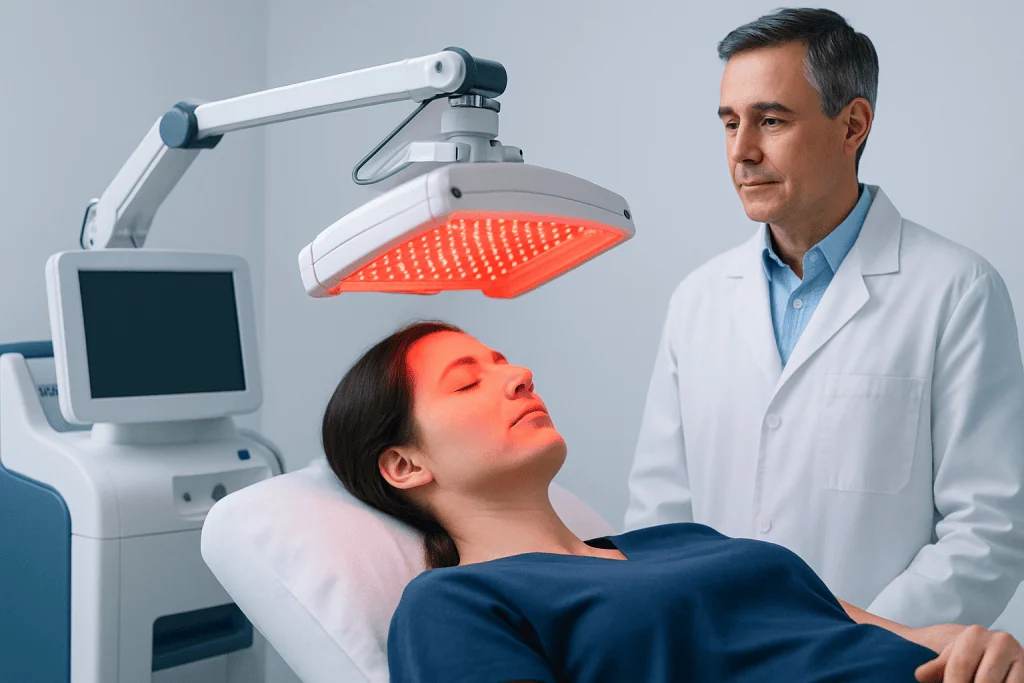
Red light therapy exposes skin or underlying tissues to low-intensity red light, often in the visible range, or near-infrared light, which is invisible and can reach somewhat deeper tissues. The proposed biological process is called photobiomodulation. Cells absorb light energy through molecules within their mitochondria, potentially influencing energy production and signaling pathways.
Research suggests that this may affect local inflammation, blood flow, pain signaling, collagen-related processes, and healing responses. The clinical usefulness depends on the condition, device, wavelength, energy delivered, treatment schedule, and quality of the evidence. Results from one device or medical setting cannot automatically be applied to consumer products.
Importantly, red light therapy is different from ultraviolet phototherapy, tanning beds, X-rays, and radiotherapy. Ultraviolet exposure can damage DNA and increase skin cancer risk. Radiation therapy uses high-energy ionizing radiation to damage cancer-cell DNA. Red light therapy does neither of these things.
- Red and near-infrared light are non-ionizing forms of light.
- Benefits reported for some uses may be modest and are not equally established for all conditions.
- Device marketing claims should be considered carefully, particularly claims about curing cancer or replacing medical care.
Who may be a candidate and what a session involves

A suitable candidate depends on the reason for treatment and their medical history. Before using red light therapy, a clinician should assess the symptom being treated, examine any relevant skin area, and consider conditions or medicines that may increase sensitivity to light. It is particularly important to obtain medical advice when there is active cancer, an unresolved diagnosis, a history of skin cancer, or treatment with cancer medicines.
In a supervised setting, the procedure usually begins with a review of the treatment goal and safety checks. The treatment area is cleaned and uncovered. Protective eyewear may be provided, especially when the face is treated or a bright device is used. The person sits or lies at a prescribed distance from the light panel, lamp, or handheld device for a set period.
The treatment itself is generally painless. The skin may feel mildly warm, though significant heat is not expected with properly used low-level devices. Afterward, normal activities can usually resume immediately. Sessions may be repeated over several weeks, but the schedule should be based on clinical advice and the device instructions rather than assumptions that more light will produce better results.
People seeking evaluation for a suspicious mole, lesion, or other possible skin cancer concern should first have a medical assessment, including appropriate skin cancer evaluation, rather than using light therapy on the area.
Benefits, limits and recovery timeline
Potential benefits of red light therapy vary by purpose. Some people report temporary improvement in localized discomfort, skin appearance, inflammation, or recovery after certain procedures. Evidence is stronger for some carefully defined clinical uses than for broad wellness claims. A clinician can help determine whether it is reasonable as an adjunct to standard care.
There is usually no recovery period. A person can commonly return to work, exercise, and routine skin care after a session unless their clinician gives different instructions. If mild redness or warmth occurs, it often settles quickly. Improvement, when it occurs, is usually gradual rather than immediate and may take a series of treatments.
It is helpful to set realistic expectations. Red light therapy cannot diagnose the cause of pain, reverse every skin concern, or substitute for established treatment of a medical condition. In cancer care, symptom management and rehabilitation may involve a wider plan that can include surgery, medicines, radiotherapy, nutrition support, physical rehabilitation, and psychological support.
For people undergoing cancer treatment, any complementary therapy should be reviewed with the oncology team. This helps avoid applying a device over a tumor site, surgical area, radiation field, or sensitized skin when it may not be appropriate.
Does red light therapy speed up cancer cells?
This question does not have a simple yes-or-no answer. Red light therapy can influence processes such as cellular energy production, blood flow, and growth signaling. In laboratory and animal experiments, these effects have raised reasonable questions about whether photobiomodulation could affect tumor behavior under particular conditions.
However, laboratory results cannot reliably predict what happens in a person. Cells studied in a dish receive highly controlled light exposures and do not reflect the immune system, blood supply, treatments, tumor type, or surrounding tissues present in the body. Human evidence has not established that appropriately used red light therapy speeds up cancer growth.
Because uncertainty remains, experts generally advise caution around known or suspected tumors unless a cancer specialist recommends a specific use. A person should not shine a red or near-infrared device directly over a cancer site, unexplained mass, or suspicious lesion without clinical guidance. This precaution is especially important because delaying diagnosis or proven treatment can be harmful.
Why don't doctors recommend red light therapy?
Doctors may not routinely recommend red light therapy because its benefits are condition-specific and evidence quality is uneven. Consumer devices differ substantially in wavelength, output, treatment area, and safety features. This makes it difficult to know whether results from a clinical study apply to a particular device used at home.
Clinicians also prioritize treatments with well-established effectiveness, clear dosing standards, and long-term safety data. For cancer, these include treatments chosen according to the cancer type and stage, such as surgery, systemic therapies, radiotherapy, and supportive care. Red light therapy does not replace any of these approaches.
Some healthcare professionals do use photobiomodulation in selected medical circumstances, including management of certain treatment-related symptoms, when supported by protocols and specialist oversight. The decision should be individualized. It depends on the person’s diagnosis, treatment plan, skin condition, medication list, and the area that would be exposed.
Acibadem International’s multidisciplinary specialists and JCI-accredited hospitals can assess cancer-related symptoms and coordinate evidence-based care for international patients.
What does Mayo Clinic say about red light therapy?
Mayo Clinic information on red light therapy generally describes it as a treatment area with ongoing research and variable evidence depending on the intended use. It emphasizes that red light therapy is different from ultraviolet light exposure and that people should discuss expected benefits, risks, and alternatives with a qualified clinician.
It is important to interpret healthcare information in context. A medical center’s educational material may discuss possible applications, but it should not be read as an endorsement of every device, commercial service, or cancer-related claim. Recommendations can also change as new studies and guidelines become available.
For a person with cancer or a prior cancer diagnosis, the most relevant advice comes from the clinician who knows the tumor type, location, stage, treatment history, and current medicines. They can advise whether light-based treatment has any role in supportive care and whether the proposed treatment area should be avoided.
Can cancer be killed with infrared light? When to seek medical care
Infrared light used in standard red light therapy devices is not an established treatment that kills cancer. Near-infrared approaches are being studied in research settings, sometimes alongside light-sensitive medicines, nanoparticles, heat-based methods, or other technologies. These experimental approaches are very different from consumer red light panels and should not be attempted as self-treatment.
Established cancer treatment is selected after a proper diagnosis and may include cancer treatment tailored to the cancer type and stage. Anyone who has been told they have cancer should discuss all supplements, devices, and complementary treatments with their oncology team before use.
Medical care should be sought promptly for a new or growing lump, a mole that changes in color, size, shape, or sensation, unexplained bleeding, a sore that does not heal, persistent unexplained pain, or a symptom that continues or worsens. Urgent assessment is also appropriate for severe skin burning, blistering, eye pain, or vision changes after use of a light device.
For non-urgent questions about red light therapy, a dermatologist, primary care clinician, or oncology specialist can help assess candidacy and recommend safer evidence-based options where needed.
Frequently asked questions
Can red light therapy cause skin cancer?
Red light therapy uses non-ionizing red or near-infrared wavelengths, and current evidence does not show that it causes skin cancer. This differs from ultraviolet radiation from sunlight and tanning beds, which can damage DNA and raise skin cancer risk. A changing mole or suspicious lesion should be assessed by a clinician rather than treated with a light device.
Is red light therapy safe for someone with cancer?
Safety depends on the cancer type, treatment plan, device, and area being exposed. A person with active cancer should speak with their oncology team before using red light therapy, particularly over or near a tumor, surgical site, or radiation-treated skin. It should not replace prescribed cancer treatment or follow-up.
Can red light therapy be used during chemotherapy or radiotherapy?
It may be considered in selected situations under specialist supervision, but it is not appropriate for everyone. Chemotherapy, radiotherapy, and targeted medicines can make skin more sensitive or create other treatment-specific concerns. The oncology team should approve any device use and advise on timing and treatment areas.
Are red light therapy devices the same as tanning beds?
No. Tanning beds primarily expose the skin to ultraviolet radiation, which can damage DNA and increase skin cancer risk. Red light therapy devices use visible red and/or near-infrared light, which are non-ionizing. Even so, devices should be used according to safety instructions and not over unexplained skin changes.
What are the side effects of red light therapy?
Most people do not experience significant side effects when an appropriate device is used correctly. Possible effects include temporary warmth, redness, dryness, headache, eye discomfort, or skin irritation. Excessive exposure, incorrect use, or use with photosensitizing medicines may increase the risk of adverse effects.
Should red light therapy be avoided over a tumor?
Yes, it is prudent to avoid using red or near-infrared light directly over a known or suspected tumor unless an oncology specialist specifically recommends it. Research on photobiomodulation and cancer biology is still developing, and care should be individualized. Prompt diagnosis and proven treatment remain the priority.
References
- World Health Organization
- National Cancer Institute
- American Cancer Society
- U.S. Food and Drug Administration
- Multinational Association of Supportive Care in Cancer
This article is for general information only and is not a substitute for professional medical advice. Please consult a qualified doctor about your individual situation.
Oncology care in Turkey — second opinion and treatment plan
JCI-accredited · board-certified surgeons · reply within 24h