Carcinoma of Larynx Treatment: How It Works, Results and What to Expect

Early laryngeal cancers can often be treated with one main approach, commonly surgery or radiation therapy. More advanced disease may need combined treatment, such as chemotherapy with radiation or surgery followed by additional therapy.
Key Takeaways
- Early laryngeal cancers can often be treated with one main approach, commonly surgery or radiation therapy.
- More advanced disease may need combined treatment, such as chemotherapy with radiation or surgery followed by additional therapy.
- Treatment planning focuses on cancer control as well as voice, swallowing, airway safety and quality of life.
- Speech and swallowing rehabilitation are important parts of care before, during and after treatment.
- Prognosis varies widely, with stage, tumor site, response to treatment and smoking status all influencing outcomes.
Carcinoma of larynx treatment is individualized and may use surgery, radiation therapy, systemic treatment, or a combination of approaches to control cancer while preserving breathing, swallowing and voice whenever possible. The best plan depends on the tumor’s location and stage, lymph node involvement, overall health and the person’s priorities.
Overview: How carcinoma of larynx treatment works
Carcinoma of larynx treatment aims to remove or destroy cancer cells in the voice box while protecting essential functions such as breathing, swallowing and communication. The larynx contains the vocal cords and helps keep food and liquid out of the airway. Because its structures are closely involved in speech and swallowing, treatment is planned carefully by a multidisciplinary head and neck cancer team.
Options may include endoscopic or open surgery, radiation therapy, chemotherapy, targeted therapy, immunotherapy and supportive rehabilitation. A person may receive one treatment or a combination. For small, early tumors, treatment may be designed to preserve the larynx. For more extensive tumors, the priority may be complete cancer control alongside reconstruction and rehabilitation that support long-term function.
The first decision is not simply which treatment is available, but which approach best fits the cancer and the individual. Specialists consider whether the tumor is in the glottis (vocal cords), supraglottis (above the vocal cords) or subglottis (below them), as well as its size, depth, lymph nodes and spread elsewhere in the body.
Who may need treatment and how candidacy is assessed
Anyone with a confirmed malignant tumor of the larynx should be assessed by specialists experienced in head and neck cancers. Most laryngeal cancers are squamous cell carcinomas. Tobacco exposure and heavy alcohol use are important risk factors, and some cancers in the upper throat may be associated with human papillomavirus (HPV), although HPV has a less central role in laryngeal cancer than in some other head and neck cancers.
Assessment usually starts with a medical history, examination of the mouth, throat and neck, and visualization of the larynx using a flexible camera. A biopsy confirms the diagnosis. Imaging such as CT, MRI or PET/CT may help show the tumor’s extent and whether lymph nodes or other organs are involved. Chest imaging and blood tests may also be appropriate.
Before treatment begins, the team evaluates airway safety, nutrition, hearing, dental health, swallowing and voice. These assessments help anticipate side effects and guide supportive care. People who smoke are strongly encouraged to stop, as this can improve treatment tolerance, healing and long-term health.
- Early-stage tumors are often confined to a limited part of the larynx.
- Locally advanced tumors may involve larger areas, cartilage or neck lymph nodes.
- Metastatic cancer has spread to distant parts of the body and usually requires systemic treatment focused on control and quality of life.
Treatment pathway: what happens step by step

After staging, the care team reviews the findings in a multidisciplinary meeting. This may include an ear, nose and throat surgeon, head and neck surgeon, medical oncologist, radiation oncologist, radiologist, pathologist, speech-language therapist, dietitian, dentist and specialist nurses. Together, they discuss treatment choices and explain the likely effects on voice, swallowing and daily life.
Surgery may be performed through the mouth using an endoscope and laser for selected early cancers, or through an incision in the neck for larger tumors. Procedures range from removing a small portion of the vocal cord to partial laryngectomy. In some advanced cases, total laryngectomy removes the entire larynx and creates a permanent opening in the neck, called a stoma, for breathing. Reconstruction may be used when tissue needs to be restored after tumor removal.
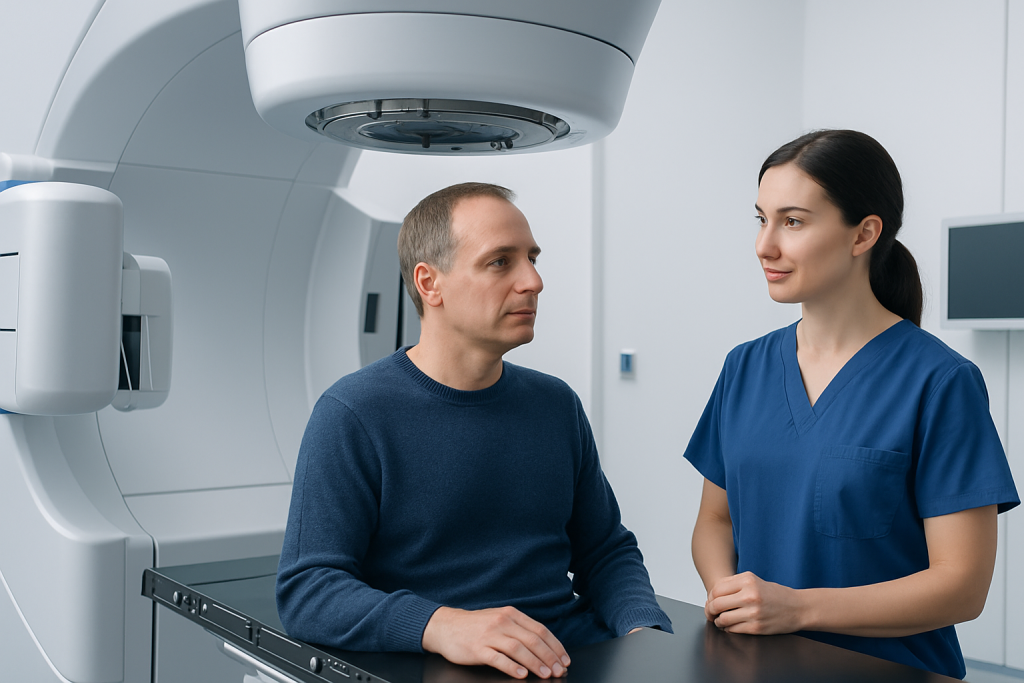
Radiation therapy uses carefully planned high-energy beams to damage cancer cells. It may be used alone for selected early cancers, combined with chemotherapy for some locally advanced cancers, or given after surgery when there is a higher risk that microscopic cancer cells remain. External beam radiation is typically delivered over several weeks in scheduled outpatient sessions.
Systemic treatment travels through the bloodstream. Chemotherapy can make cancer cells more sensitive to radiation or help control cancer that has returned or spread. Depending on the clinical situation and tumor characteristics, targeted therapy or immunotherapy may also be considered. The treatment plan is regularly reviewed, and supportive care is adjusted throughout treatment.
Benefits, risks and recovery expectations
The central benefit of treatment is the opportunity to control or cure localized laryngeal cancer. Larynx-preserving approaches can sometimes avoid total removal of the voice box, but preserving the organ does not always mean that voice and swallowing function will remain unchanged. The team balances expected cancer control with the possibility of maintaining a safe airway, understandable speech and adequate swallowing.
Side effects depend on the chosen treatment. Surgery may cause temporary or lasting changes in voice, swallowing, breathing or shoulder movement, particularly if neck lymph nodes are treated. Radiation can cause throat soreness, dry mouth, taste changes, skin irritation, fatigue, dental problems and difficulty swallowing. Chemotherapy and other systemic treatments can cause fatigue, nausea, lowered blood counts, infections, nerve symptoms, hearing changes or immune-related effects, depending on the medicine used.
Recovery varies substantially. After endoscopic surgery, some people return home quickly but may need a period of voice rest and follow-up. Radiation-related effects often build during treatment and may continue for weeks afterward before gradually improving. Recovery after larger surgery can take longer and may include wound healing, nutrition support, swallowing therapy and training in new communication methods if the larynx has been removed.
Speech-language therapists play a key role. After total laryngectomy, communication may be supported by a voice prosthesis, an electrolarynx or esophageal speech. Dietitians can help maintain weight and hydration, while dental teams help reduce oral complications from radiation. Regular follow-up checks response to treatment and identifies recurrence or late effects early.
How successful is treatment for throat cancer?
Treatment for throat cancer can be highly effective, particularly when cancer is found at an early stage. However, “throat cancer” is a broad term that may refer to cancers in different areas, including the larynx, pharynx and tonsils. Outcomes therefore cannot be described by one success rate for every person.
For carcinoma of the larynx, success depends on the exact tumor location, stage, lymph node involvement, biological features, general health and whether treatment can be completed as planned. Early vocal-cord cancers often have favorable treatment outcomes because voice changes can lead to earlier assessment. More advanced cancers can still be treated effectively, but they are more likely to require combined therapies and more extensive rehabilitation.
Follow-up matters because recurrence is often most likely in the first years after treatment, and people with a history of laryngeal cancer can also be at risk of developing another tobacco-related cancer. Stopping tobacco and limiting alcohol are meaningful steps that support recovery and lower future health risks.
How serious is laryngeal cancer? What is the prognosis and life expectancy?
Laryngeal cancer is a serious condition because it can affect breathing, swallowing and voice, and because untreated cancer may grow into nearby tissues or spread to lymph nodes and distant organs. At the same time, it is a treatable cancer, and many people receive treatment with the aim of cure. Prompt assessment of persistent symptoms supports earlier diagnosis and may broaden the available treatment choices.
The prognosis for malignant tumors of the larynx varies from person to person. It is generally influenced by the stage at diagnosis, whether the cancer is confined to the larynx, the site within the larynx, the presence of lymph node or distant spread, the completeness of surgery where relevant, treatment response and overall health. A clinician can discuss prognosis using the individual pathology and imaging results rather than relying on broad averages.
Life expectancy for someone with laryngeal cancer also cannot be predicted precisely for an individual. Population survival data describe large groups treated in previous years and cannot account for a particular person’s stage, treatment advances, response or other medical conditions. The treating team is best placed to explain what the diagnosis means in practical terms and revisit this discussion as treatment progresses.
For international patients, Acibadem International’s multidisciplinary specialists and JCI-accredited hospitals provide assessment and treatment planning for laryngeal cancer, with coordinated surgical, radiation, medical oncology and rehabilitation care.
When to seek medical care
Medical assessment is important for hoarseness or a changed voice that lasts longer than two to three weeks, especially in a person who smokes or has smoked in the past. Other symptoms that should be checked include persistent throat pain, pain when swallowing, difficulty swallowing, a neck lump, unexplained weight loss, ear pain without an ear infection, coughing blood or ongoing shortness of breath.
Urgent medical care is needed for severe breathing difficulty, noisy breathing that is new or worsening, inability to swallow liquids, significant bleeding or rapidly increasing neck swelling. These symptoms do not always mean cancer, but they require prompt evaluation to protect the airway and identify the cause.
After treatment, people should attend all scheduled follow-up visits and report new or worsening symptoms without waiting for the next appointment. Early support for pain, nutrition, swallowing difficulties, anxiety and smoking cessation can make treatment and recovery more manageable.
Frequently asked questions
What is the main treatment for carcinoma of the larynx?
There is no single main treatment for every case. Early cancers may be treated with surgery or radiation therapy, while more advanced cancers may need a combination of surgery, radiation and systemic treatment. The choice depends on stage, tumor location, expected function after treatment and the person’s overall health.
Can laryngeal cancer be cured?
Many localized laryngeal cancers can be treated with the aim of cure. The likelihood depends on factors such as the stage, lymph node involvement, tumor site and response to treatment. A treating specialist can explain the goals of care based on the individual diagnosis.
Will treatment affect the voice?
Voice changes are common because the larynx contains the vocal cords. The degree of change depends on the tumor and treatment, ranging from temporary hoarseness to more substantial changes after extensive surgery or radiation. Speech-language therapy can help people protect, improve or restore communication.
Does everyone with laryngeal cancer need a total laryngectomy?
No. Many people do not need removal of the entire larynx, particularly when cancer is diagnosed early or can be managed with organ-preserving treatment. Total laryngectomy may be recommended when it offers the safest or most effective cancer control, or when the larynx can no longer function safely.
How long does recovery from laryngeal cancer treatment take?
Recovery can range from weeks to months and depends on the treatment received. Side effects from radiation may peak near the end of treatment and improve gradually afterward, while recovery after major surgery often includes a longer period of healing and rehabilitation. Ongoing swallowing, speech and nutrition support may be helpful.
Can laryngeal cancer come back after treatment?
Yes, recurrence is possible, which is why follow-up appointments are essential. The care team monitors for recurrence, treatment side effects and new cancers that can occur in the head and neck or lungs. Reporting persistent new symptoms between appointments is important.
References
- National Cancer Institute
- American Cancer Society
- National Comprehensive Cancer Network
- European Society for Medical Oncology
- World Health Organization
This article is for general information only and is not a substitute for professional medical advice. Please consult a qualified doctor about your individual situation.
Oncology care in Turkey — second opinion and treatment plan
JCI-accredited · board-certified surgeons · reply within 24h
Add us as a Preferred Source to see more of our trusted health content across Google Search, AI Overviews and Discover.

More from the Health Library



Related Specialists

Seda Toprak Aydın
Podiatry & Foot Health
Prof. Dr. Ersin Özaslan
Medical Oncology
Prof. Dr. Kenan Çekem
Internal Medicine
Dr. Yusuf Emre Uzun
Internal Medicine