Cold Compress for Eye Redness — Explained by Medical Evidence, Not Myths

A cold compress may ease mild eye redness, itching, swelling, and burning for short periods. It works best for irritation from allergies, tired eyes, or minor surface inflammation, but it does not treat infections or injuries.
Key Takeaways
- A cold compress may ease mild eye redness, itching, swelling, and burning for short periods.
- It works best for irritation from allergies, tired eyes, or minor surface inflammation, but it does not treat infections or injuries.
- The compress should be cool, clean, and applied gently with eyes closed for brief sessions.
- Redness with pain, light sensitivity, vision changes, discharge, or injury needs prompt medical assessment.
- Contact lens wearers should be especially cautious because redness can sometimes signal a more serious corneal problem.
A cold compress for eye redness can reduce discomfort, puffiness, and mild irritation by cooling the tissues around the eye. It is a supportive home measure, not a cure, so the cause of redness still matters when deciding whether self-care is enough or medical evaluation is needed.
What a cold compress can and cannot do
A cold compress for eye redness can help calm the eye area when redness is linked to mild irritation, allergies, puffiness, or temporary inflammation. Cooling causes small blood vessels near the surface to narrow and can reduce the sensation of heat, itching, and swelling. For many people, this brings short-term relief and may make the eyes feel less tired and less irritated.
However, a cold compress does not diagnose the problem or remove the underlying cause. Eye redness may come from dry eye, allergy, viral or bacterial infection, a scratched cornea, contact lens irritation, or deeper inflammation inside the eye. In those situations, cooling may help symptoms briefly, but proper treatment may still be needed.
This is why medical evidence supports cold compresses as a supportive measure rather than a stand-alone treatment. If symptoms are mild and clearly related to irritation or allergy, home care may be reasonable. If redness is intense, one-sided, painful, or accompanied by blurred vision, discharge, or sensitivity to light, the safest step is to seek professional care.
How cooling affects the eye area
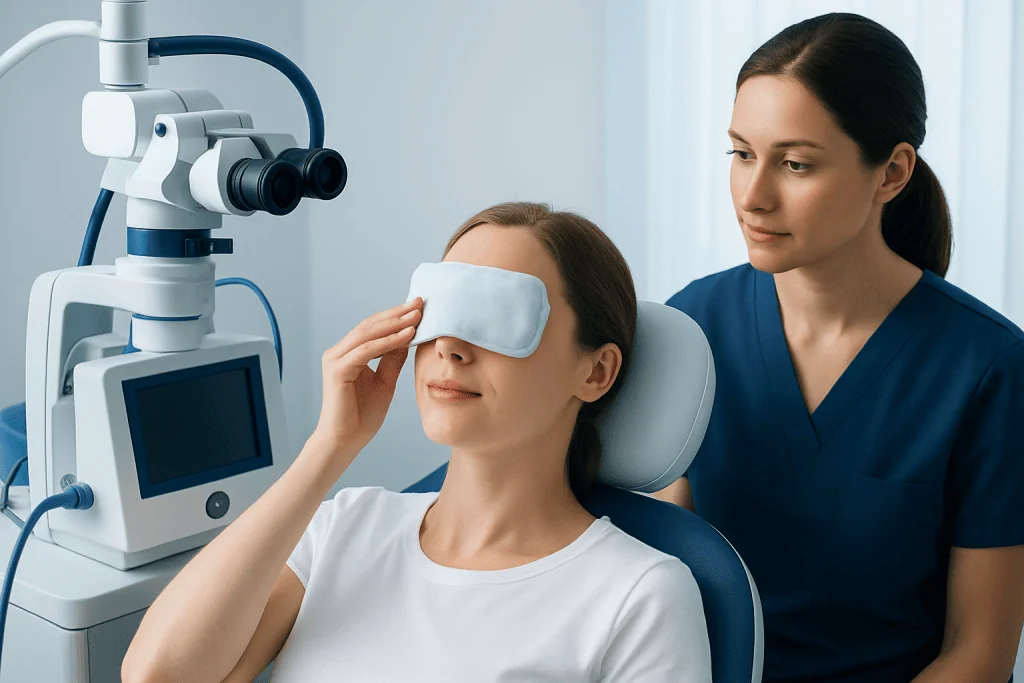
The surface of the eye and the eyelids contain many tiny blood vessels and sensory nerves. When the eye becomes irritated, these vessels can widen, making the white part of the eye look pink or red. A cool compress may temporarily reduce this blood flow at the surface and can lower swelling in the eyelids and nearby tissues.
Cooling can also reduce the perception of itching and burning. This is especially relevant in allergic eye irritation, where the eye feels itchy and watery, and in eyelid puffiness after crying, poor sleep, or minor irritation. In these cases, a compress often helps because the main goal is comfort and control of swelling.
Still, cooling has limits. It does not replace lubricating drops for dry eye, does not kill germs in infectious conjunctivitis, and does not repair a scratch on the cornea. For conditions involving blockage of oil glands in the eyelids, warmth rather than cold may be recommended. This is one reason it helps to think about the likely cause before choosing a home remedy.
When a cold compress is most likely to help

Cold compresses are most useful when eye redness comes with itching, mild swelling, or a feeling of surface irritation rather than deep pain. Common examples include seasonal allergies, exposure to smoke or wind, crying, tired eyes, and mild puffiness around the lids. Some people also find brief cooling soothing after spending a long time in front of screens, especially when decreased blinking has made the eyes feel irritated.
In allergy-related redness, cooling can be particularly helpful because it may reduce itch and the urge to rub the eyes. Avoiding rubbing is important, since rubbing can worsen redness and irritation. In dry environments, a compress may provide comfort, although many people also need lubricating eye drops and changes in screen or air exposure.
A cold compress may also help after minor non-injurious irritation, such as dust exposure, once the eye has been gently rinsed if needed. But if the eye was exposed to chemicals, if there is a suspected scratch, or if symptoms began after contact lens use and feel significant, home care alone is not enough. In those cases, a medical eye exam is safer.
How to use a cold compress safely
The safest approach is simple: use a clean, soft cloth dampened with cool water, or a commercially prepared cold pack wrapped in fabric. The compress should feel cool, not painfully cold. It should never be placed directly on the skin or eyelids if it has been in the freezer, because very cold temperatures can irritate delicate tissues.
With the eyes closed, the compress can be placed gently over the eyelids for short sessions, usually a few minutes at a time. It can then be removed and repeated later if needed. Gentle pressure is enough; pressing hard on the eye should be avoided. Each person should use their own clean cloth to reduce the chance of spreading infection.
Hygiene matters. Hands should be washed before and after touching the eye area, and the cloth should be freshly cleaned. Contact lenses should generally be removed first unless an eye doctor has said otherwise. If dryness is part of the problem, using dry eye treatment such as preservative-free lubricating drops may be helpful alongside cooling, depending on a clinician’s advice.
- Use cool, not ice-cold, temperatures.
- Apply with eyes closed only.
- Do not share cloths or eye products.
- Stop if pain, worsening redness, or visual symptoms develop.
When a cold compress is not the right answer
Not every red eye should be cooled at home. Some causes need different care, and a few require urgent treatment. For example, if redness is caused by bacterial infection, severe allergy, inflammation inside the eye, a corneal ulcer, glaucoma, or trauma, a compress may delay needed diagnosis if it becomes the main response instead of medical evaluation.
Warm compresses are sometimes preferred for eyelid conditions such as blepharitis or meibomian gland dysfunction, where the goal is to soften oil secretions rather than reduce swelling. In that setting, cold may feel soothing but may not address the main problem. This is another reason the same symptom, eye redness, should not always be treated in the same way.
Care should also be taken with contact lens users. Redness after lens wear can signal anything from simple irritation to a more serious corneal infection. If the eye is painful, sensitive to light, or the vision seems reduced, the lenses should be removed and medical attention sought promptly. If specialist assessment is needed, doctors may recommend tests and, in some cases, a comprehensive eye examination to identify the exact cause.
Other evidence-based ways to relieve red eyes
Because redness has many causes, treatment should match the reason. Artificial tears may help when dryness, screen use, wind, or air conditioning contribute to symptoms. Allergen avoidance and antihistamine or mast cell stabilizing eye drops may be recommended when itching and watery eyes suggest allergies. If infection is suspected, a clinician may advise specific treatment rather than home remedies alone.
Simple lifestyle steps can also matter. Taking regular breaks from screens, blinking more often, staying hydrated, and reducing smoke or dust exposure may decrease repeated irritation. People who use makeup around the eyes should replace old products and avoid use during active irritation. Contact lenses should be cleaned and replaced according to instructions, and lens wear should be paused when the eye is red unless a clinician says it is safe.
If redness keeps returning, the issue may be recurrent allergy, dry eye, eyelid inflammation, or another eye condition that benefits from proper evaluation. In some cases, people may need assessment for eye laser surgery only if symptoms relate to vision correction history or other specific concerns, but most red eyes do not require procedures. The main goal is to identify the cause and use the least invasive effective treatment.
When to seek medical care
A short trial of a cold compress is reasonable for mild redness that follows allergies, crying, fatigue, or minor irritation and improves quickly. Medical care is more important when symptoms are new, strong, persistent, or not clearly explained. The eye is a sensitive organ, and a red eye with warning signs should not be treated as a routine problem.
Prompt medical attention is recommended if redness comes with moderate to severe pain, blurred or reduced vision, light sensitivity, thick discharge, fever, eyelid swelling that is worsening, or a feeling that something is stuck in the eye. It is also important to seek care after an eye injury, chemical exposure, or if redness develops while wearing contact lenses.
People with recent eye surgery, weakened immunity, or known eye disease should be especially cautious. Near the end of the care pathway, patients seeking specialist support may be evaluated by multidisciplinary teams; Acibadem International’s JCI-accredited hospitals care for international patients with eye conditions and related diagnostic needs, including glaucoma and other causes of red eye when appropriate.
Frequently asked questions
Does a cold compress really help eye redness?
Yes, it can help with symptom relief when redness is caused by mild irritation, allergies, puffiness, or tired eyes. It may reduce swelling and make the eyes feel less itchy or hot, but it does not treat every cause of redness.
How long should a cold compress be used on the eyes?
It is usually best used in short sessions for a few minutes at a time with the eyes closed. The goal is gentle cooling, not prolonged exposure, and the compress should be removed if it feels uncomfortable or symptoms worsen.
Can ice be placed directly on the eyelids?
No. Ice or very cold packs should not be placed directly on the delicate skin of the eyelids or the eye area. A clean cloth barrier should always be used, and a cool compress is safer than an intensely cold one.
Is a cold or warm compress better for red eyes?
It depends on the cause. Cold is usually more soothing for allergies, puffiness, and surface irritation, while warm compresses may be preferred for some eyelid conditions such as blocked oil glands or blepharitis. If the cause is unclear, a clinician can advise which is more appropriate.
Should contact lenses be worn if the eye is red?
In general, contact lenses should be removed when the eye is red or irritated unless a qualified eye professional advises otherwise. Redness in a contact lens wearer can sometimes point to a corneal problem that needs prompt evaluation.
When is eye redness an emergency?
Eye redness needs urgent assessment if it is associated with pain, light sensitivity, vision changes, injury, chemical exposure, or significant discharge. These symptoms can suggest a condition that needs medical treatment rather than home care.
References
- American Academy of Ophthalmology
- National Eye Institute
- Centers for Disease Control and Prevention
- Mayo Clinic
- MedlinePlus
This article is for general information only and is not a substitute for professional medical advice. Please consult a qualified doctor about your individual situation.
Explore treatments in Turkey — costs, top hospitals & a free quote
JCI-accredited · board-certified surgeons · reply within 24h