Common Myths About Neurophysiology Testing: Pain, Radiation, and Accuracy

Most neurophysiology tests do not use radiation. Many tests are painless, while others may cause only brief, mild discomfort.
Key Takeaways
- Most neurophysiology tests do not use radiation.
- Many tests are painless, while others may cause only brief, mild discomfort.
- Accuracy depends on the right test, skilled interpretation, and the patient’s symptoms and history.
- Neurophysiology testing often complements imaging and blood tests rather than replacing them.
- Preparation is usually simple, and patients can often return to normal activities soon after testing.
Neurophysiology testing helps doctors evaluate how the brain, nerves, muscles, and spinal pathways are working. Many common concerns about pain, radiation, and reliability come from misunderstandings, and most tests are safe, well tolerated, and clinically useful when interpreted by trained specialists.
Overview: What Neurophysiology Testing Actually Means
Neurophysiology testing is a group of medical tests that measure how the nervous system works in real time. Instead of showing body structures like a scan, these tests focus on function. They can help doctors understand how electrical signals travel through the brain, spinal cord, peripheral nerves, muscles, and sensory pathways.
Common examples include electroencephalography (EEG), electromyography (EMG), nerve conduction studies (NCS), evoked potentials, and sleep-related neurophysiological tests. Each test answers a different question. For example, EEG helps assess brain wave activity, while EMG and nerve conduction studies examine muscles and nerves.
Because the names can sound technical, patients may worry that these tests are invasive, dangerous, or unreliable. In reality, most are standard diagnostic tools used worldwide. They are usually performed by trained neurophysiology teams and are chosen based on a person’s symptoms, medical history, and examination findings.
These tests are often used when evaluating symptoms such as numbness, tingling, weakness, muscle cramps, seizures, blackout episodes, unexplained movements, sleep-related concerns, or suspected nerve injury. In some cases, they support the diagnosis of conditions such as epilepsy or other disorders affecting nerve and muscle function.
Myth 1: Neurophysiology Testing Is Always Painful
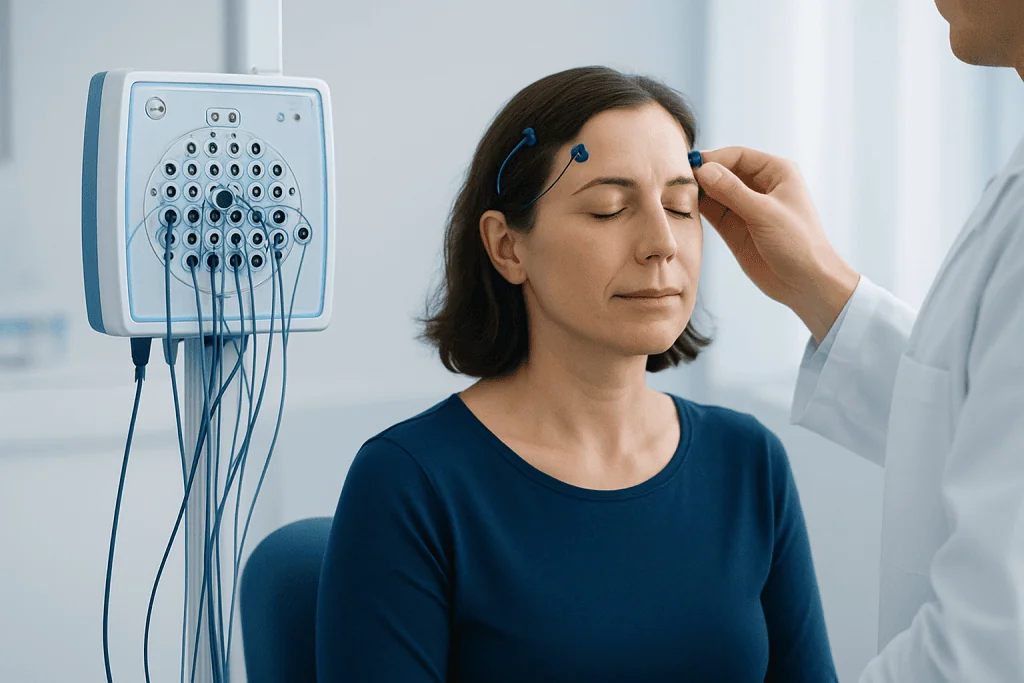
One of the most common myths is that all neurophysiology tests are painful. This is not true. Many tests are completely painless. For example, an EEG uses small electrodes placed on the scalp to record brain activity. The electrodes do not send electricity into the body, and the test itself usually feels like having stickers or paste applied to the skin.
Some neurophysiology tests can cause temporary discomfort rather than true pain. Nerve conduction studies involve small electrical impulses delivered to a nerve to see how well signals travel. Patients often describe this as a quick tapping, buzzing, or brief shock-like sensation. It may feel unusual, but it is typically short-lived and closely controlled by the examiner.
EMG can also cause concern because it uses a very fine needle electrode to record muscle activity. This may lead to mild discomfort during insertion and when specific muscles are tested. However, the needle is not the same as a hollow injection needle, and the discomfort usually passes quickly once the muscle recording is complete.
For most people, the experience is manageable and brief. If a patient is especially anxious, has a low pain threshold, or has a condition that makes movement painful, it is helpful to tell the medical team beforehand. They can explain each step, adjust positioning, and make the test as comfortable as possible.
Myth 2: These Tests Use Harmful Radiation
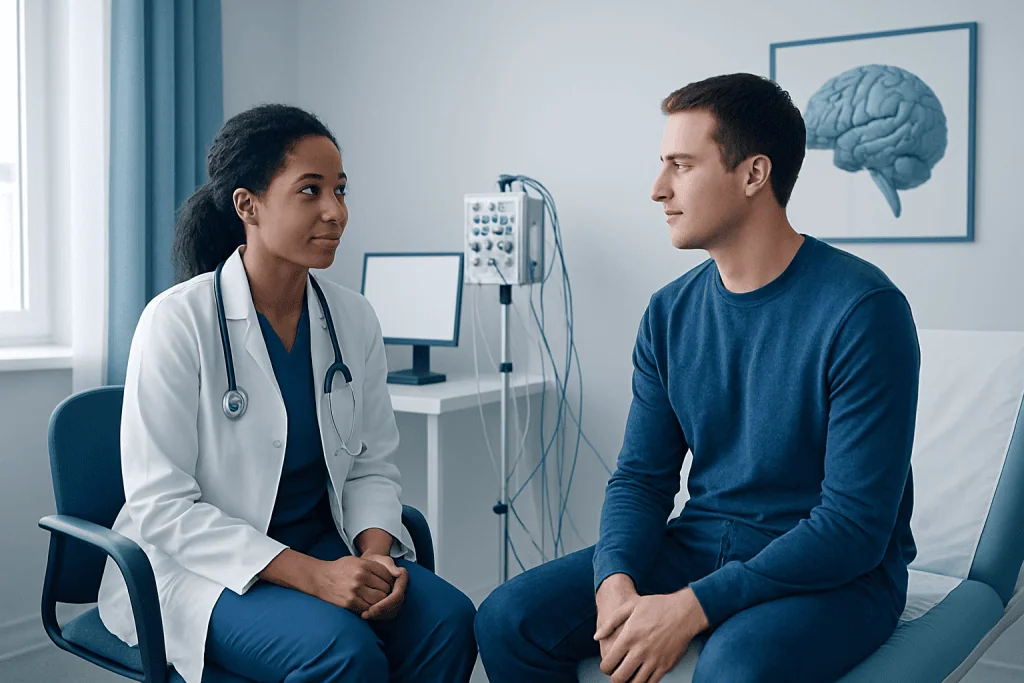
Another widespread misunderstanding is that neurophysiology testing exposes patients to radiation. In fact, most neurophysiology tests do not use radiation at all. EEG, EMG, nerve conduction studies, and evoked potentials measure the body’s own electrical activity or responses to small controlled stimuli. They are not X-rays, and they do not involve ionizing radiation.
This can be reassuring for people who need repeat testing or who are concerned about cumulative exposure. Neurophysiology tests are often performed more than once to monitor changes over time, compare findings before and after treatment, or clarify a diagnosis. Since these tests generally do not rely on radiation, they are different from imaging studies such as CT scans.
Sometimes patients confuse neurophysiology tests with imaging because both can be part of a neurological workup. For example, a doctor might recommend an EEG together with a brain scan, or EMG together with spinal imaging, depending on the symptoms. These tools answer different questions: one looks at function, while the other looks at structure.
If a patient is unsure whether a planned test uses radiation, it is reasonable to ask before the appointment. Clear information can reduce anxiety and help people understand why several different tests may be needed to reach a diagnosis safely and accurately.
Myth 3: Neurophysiology Tests Are Not Accurate
Some people believe neurophysiology testing is too subjective or inconsistent to be trusted. In reality, these tests can provide highly valuable clinical information when they are used for the right reason and interpreted by experienced professionals. They are not guesswork. They record measurable electrical patterns and response times that can reveal abnormal nerve, muscle, or brain function.
That said, no medical test is perfect on its own. Accuracy depends on several factors, including the type of test, the patient’s symptoms, timing, test quality, and the specialist’s interpretation. A normal result does not always rule out disease, and an abnormal result must be understood in the context of the full clinical picture.
For example, an EEG may support the evaluation of seizure-like episodes, but it is interpreted together with symptom history and examination findings. EMG and nerve conduction studies can help identify whether symptoms are more likely related to nerve compression, peripheral neuropathy, muscle disease, or another neuromuscular problem. In some situations, these tests may guide further assessment with MRI scanning or other diagnostic tools.
The key point is that neurophysiology testing is most accurate when it is targeted and clinically appropriate. Rather than replacing the doctor’s judgment, it strengthens decision-making by adding objective functional data.
How Doctors Use Different Neurophysiology Tests
Different tests are selected to answer different diagnostic questions. EEG records brain electrical activity and is commonly used for seizures, episodes of altered awareness, and some sleep-related or encephalopathy-related concerns. In selected cases, longer monitoring may be recommended if symptoms happen intermittently or if routine testing does not provide enough information.
EMG and nerve conduction studies are commonly used when a person has weakness, numbness, tingling, muscle twitching, pain radiating into a limb, or suspected nerve injury. These tests can help localize whether a problem arises in the nerve root, peripheral nerve, neuromuscular junction, or muscle itself. When symptoms suggest pressure on a nerve, the findings may be considered alongside evaluations for carpal tunnel syndrome or other entrapment neuropathies.
Evoked potential tests measure how the nervous system responds to visual, auditory, or sensory stimulation. They can help assess how signals travel along specific pathways. Sleep neurophysiology studies may also be used when symptoms suggest events during sleep, unusual nighttime movements, or disorders affecting sleep architecture and brain activity.
Doctors often combine neurophysiology with other medical assessments rather than relying on a single result. Depending on the case, the next step may include blood tests, neurological rehabilitation, medication review, or specialist follow-up. This combined approach improves diagnostic precision and supports a more individualized care plan.
What to Expect Before, During, and After Testing
Preparation for neurophysiology testing is usually simple. Patients may be asked to wash their hair before an EEG and avoid heavy styling products so the electrodes can attach properly. For EMG and nerve conduction studies, it is often best to avoid lotions or oils on the skin on the day of the test. The clinic will usually provide specific instructions in advance.
During the test, the team explains what is happening step by step. An EEG often takes place while the patient rests quietly, sometimes with tasks such as deep breathing or looking at flashing lights if appropriate. Nerve conduction studies involve brief electrical stimuli, and EMG requires recordings from selected muscles. The duration depends on the type of test and the body areas being examined.
Afterward, most patients can return to normal activities quickly. An EEG may leave some electrode paste in the hair, and EMG can occasionally cause minor temporary muscle soreness or small areas of bruising. Serious complications are uncommon. Patients who take blood thinners, have a pacemaker or implanted device, or have skin infections near the test area should mention this beforehand so the team can plan safely.
Results may be available immediately in some settings, while in others they are reviewed and formally reported later. If more than one test is being considered, a doctor may explain how neurophysiology findings fit with additional evaluations such as diagnostic services or specialist imaging.
Limitations, Safety, and When Testing Is Most Helpful
Although neurophysiology testing is useful, it does have limitations. Some conditions produce symptoms intermittently, which means a short recording may not capture the event. In other situations, changes take time to develop, so testing done very early after symptom onset may not yet show the full picture. This does not mean the test failed; it may simply mean that timing matters.
Safety is generally good when these tests are performed by qualified teams using standard protocols. EEG is noninvasive and widely considered very safe. EMG and nerve conduction studies are also routinely performed, with only minor and temporary discomfort for most people. Patients with complex medical conditions should always share their full history so that precautions can be taken where needed.
Testing is most helpful when the symptoms and the test are well matched. For example, a person with seizure-like events may benefit from electroencephalography to assess brain activity, while someone with numbness or weakness may benefit more from peripheral nerve and muscle studies. Choosing the right test is an important part of accuracy.
Near the end of the diagnostic process, some patients may seek care in centers with coordinated neurological services. Acibadem International’s multidisciplinary specialists and JCI-accredited hospitals diagnose and treat neurological conditions for international patients, using neurophysiology testing as part of a broader clinical evaluation when appropriate.
When to See a Doctor About Symptoms That May Need Testing
A doctor should evaluate symptoms that are new, persistent, recurring, or affecting daily life. These can include unexplained fainting or blackout episodes, possible seizures, persistent numbness, tingling, weakness, muscle wasting, balance problems, involuntary movements, or severe sleep-related events. Neurophysiology testing may be considered if the history and examination suggest a problem involving the nervous system.
Urgent medical attention is especially important for sudden weakness, new facial drooping, difficulty speaking, severe sudden headache, major changes in consciousness, or rapidly worsening symptoms. These signs can point to emergencies that require immediate care rather than routine outpatient testing.
Patients do not need to decide on the correct test by themselves. A neurologist or another qualified clinician will determine whether neurophysiology testing is needed, which type is most appropriate, and whether it should be combined with imaging or laboratory studies. This tailored approach helps avoid unnecessary testing while improving the chances of a clear answer.
For many people, understanding the purpose of the test reduces fear. Neurophysiology studies are generally designed to answer specific medical questions, not to create alarm. With good communication and the right clinical context, they can be an important and reassuring part of diagnosis and treatment planning.
Frequently asked questions
Does neurophysiology testing hurt?
Many neurophysiology tests, such as EEG, are painless. Others, like nerve conduction studies and EMG, may cause brief mild discomfort, but most people tolerate them well and the sensation stops quickly.
Do EEG, EMG, and nerve conduction studies use radiation?
No, these tests generally do not use ionizing radiation. They measure electrical activity or responses in the nervous system, which makes them different from imaging tests such as CT scans.
How accurate is neurophysiology testing?
Neurophysiology testing can be very helpful and clinically accurate when the right test is chosen for the right symptoms. Results are most meaningful when interpreted by experienced specialists alongside the patient’s history, examination, and any other needed tests.
Why might a doctor order neurophysiology testing in addition to MRI or other scans?
MRI and other scans show structure, while neurophysiology tests assess function. A doctor may need both types of information to understand whether symptoms are caused by a problem in the brain, nerves, muscles, or spinal pathways.
How should a patient prepare for a neurophysiology test?
Preparation depends on the test, but it is often simple. Patients may be asked to arrive with clean hair for EEG or avoid skin lotions before EMG and nerve conduction studies, and they should tell the clinic about medications, implants, or bleeding risks.
Can neurophysiology test results ever be normal even if symptoms are real?
Yes, this can happen in some situations. Symptoms may be intermittent, very early in development, or caused by a condition that is not captured by that particular test, which is why doctors interpret results in the full clinical context.
References
- World Health Organization
- National Institute of Neurological Disorders and Stroke
- American Clinical Neurophysiology Society
- International Federation of Clinical Neurophysiology
- National Institute for Health and Care Excellence
This article is for general information only and is not a substitute for professional medical advice. Please consult a qualified doctor about your individual situation.
Neurophysiology in Turkey — costs, top hospitals & a free quote
JCI-accredited · board-certified surgeons · reply within 24h
Add us as a Preferred Source to see more of our trusted health content across Google Search, AI Overviews and Discover.