DHT and Hair Loss: What Dihydrotestosterone Does and How to Manage It

DHT is a normal hormone, but some hair follicles are genetically more sensitive to it. DHT-related hair loss usually causes gradual thinning rather than sudden patchy shedding.
Key Takeaways
- DHT is a normal hormone, but some hair follicles are genetically more sensitive to it.
- DHT-related hair loss usually causes gradual thinning rather than sudden patchy shedding.
- Early evaluation helps confirm the cause and may improve treatment results.
- Treatment may include medications, supportive scalp care, and in selected cases hair transplantation.
- Men and women can both experience pattern hair loss linked to DHT.
DHT hair loss refers to gradual hair thinning linked to the hormone dihydrotestosterone acting on genetically sensitive hair follicles. In many people, it can be managed with an accurate diagnosis, early treatment, and a long-term scalp care plan.
Overview: What DHT Hair Loss Means
DHT hair loss means hair thinning that develops when dihydrotestosterone affects hair follicles that are genetically sensitive to it. DHT is a hormone made from testosterone, and in susceptible people it can gradually shrink certain follicles over time. As follicles become smaller, hairs often grow back finer, shorter, and less visible until the affected area looks thinner.
This process is most closely linked to pattern hair loss, including male pattern hair loss and female pattern hair loss. It does not usually cause scarring, and it often develops gradually over months or years rather than all at once. The common pattern in men is recession at the temples and thinning at the crown, while women more often notice widening of the part or reduced volume over the top of the scalp.
DHT itself is not “bad.” It has normal roles in the body, especially during development. The key issue is how individual hair follicles respond to it. Because genetics strongly influence this sensitivity, some people develop noticeable thinning early in adulthood while others never do, even with similar hormone levels.
Understanding this distinction is important because not every type of hair shedding is caused by DHT. Conditions such as stress-related shedding, nutritional deficiencies, thyroid disease, or inflammatory scalp disorders can also lead to hair loss. A proper assessment helps identify whether DHT is the main factor and guides the most suitable treatment approach.
How DHT Affects Hair Growth
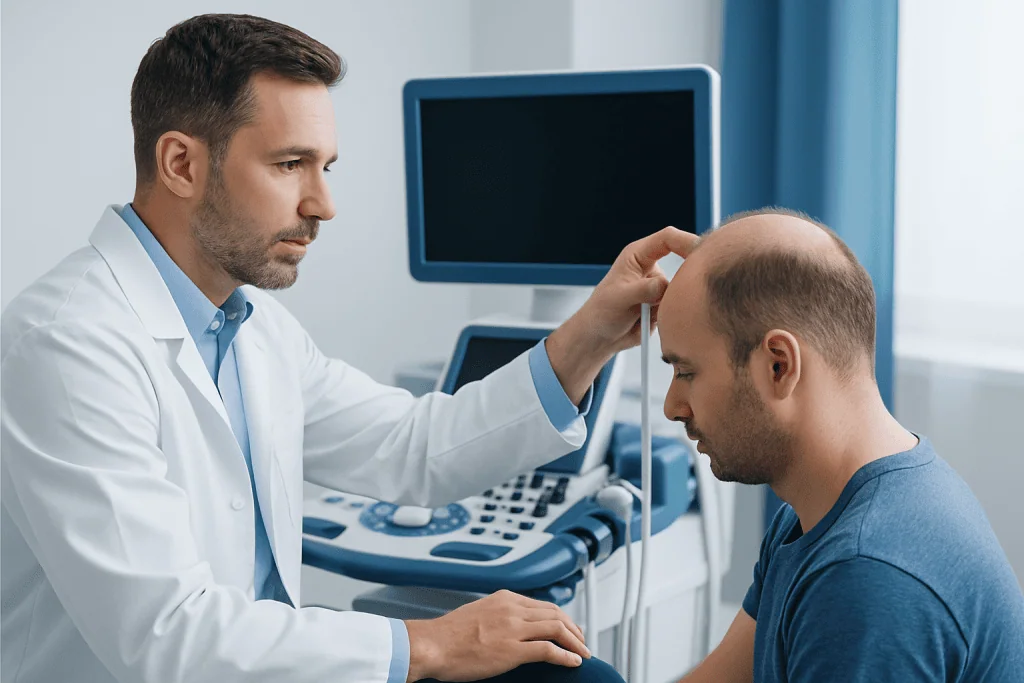
Hair normally grows in a repeating cycle with active growth, a transition phase, and a resting phase before shedding. In DHT-related hair loss, susceptible follicles undergo a process called miniaturization. This means each new growth cycle may produce a thinner and shorter hair than the one before it.
Over time, the active growth phase becomes shorter and the resting phase may become relatively more prominent. This can make the scalp look less dense even before there is dramatic visible balding. People often first notice more scalp show-through in bright light, less volume during styling, or a ponytail that feels smaller than before.
DHT-related thinning usually follows a recognizable pattern rather than causing random loss all over the scalp. In men, the frontal hairline and crown are commonly affected. In women, the frontal hairline may stay relatively preserved while the central scalp gradually becomes thinner. Articles on related pattern changes, such as Norwood stages of hair loss, can help explain how this progression is described clinically.
Because miniaturized follicles may still be alive for a long time, treatment often aims to preserve and strengthen remaining hairs rather than simply replacing hair that is already gone. This is one reason early evaluation matters: once follicles have been inactive for a prolonged period, regrowth may be more limited.
Symptoms and Typical Patterns
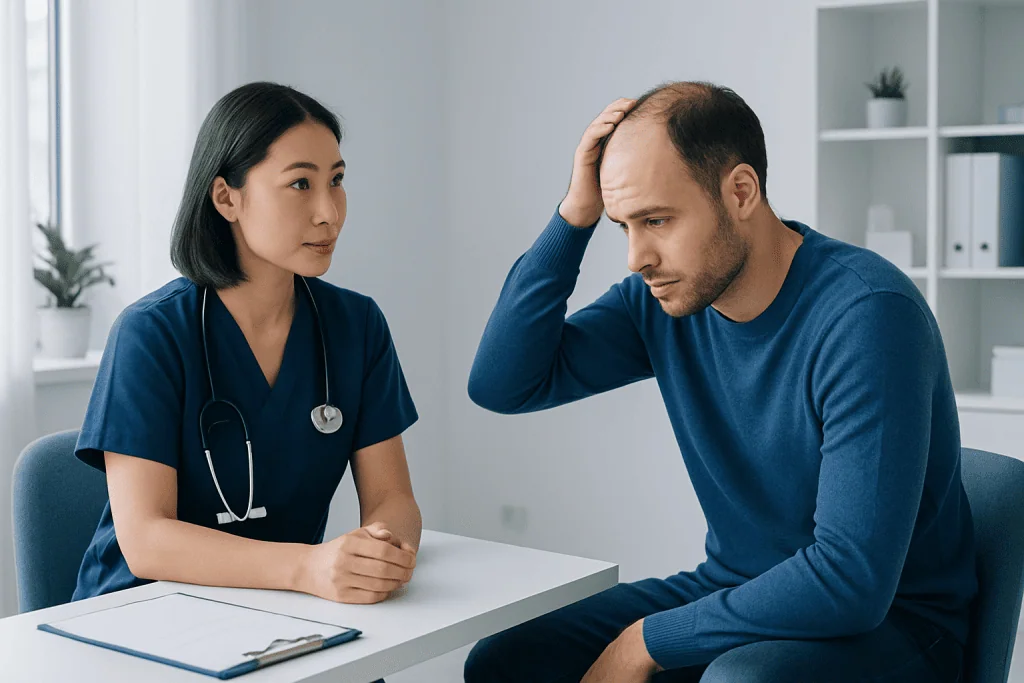
The main symptom of DHT hair loss is gradual thinning in a typical distribution. It usually does not begin with pain or severe itching, and it often progresses slowly enough that a person notices it only by comparing photographs or changes in hairstyling. The scalp skin itself usually appears normal.
Common signs include a receding hairline, thinning at the crown, a wider part line, reduced density over the top of the scalp, and finer hairs around affected areas. Some people also notice increased shedding when washing or brushing, but shedding alone does not confirm DHT as the cause. The more telling feature is the progressive change in hair caliber and density in a recognizable pattern.
Pattern hair loss can affect confidence and quality of life even when the medical condition is not dangerous. This emotional impact is valid, and discussing concerns with a doctor can be helpful. Hair loss assessment is not only about appearance; it is also about identifying the cause and setting realistic options for treatment.
In contrast, sudden bald patches, broken hairs, scalp redness, scaling, burning, or painful lesions suggest that another condition may be present. These findings may point toward disorders such as alopecia areata or inflammatory scalp disease, which need a different evaluation and management plan.
Causes and Risk Factors
The most important risk factor for DHT hair loss is genetics. A family history of pattern hair loss on either side of the family can increase the likelihood, although inheritance is complex and does not follow a simple rule. A person may develop thinning even if relatives are only mildly affected, and the age of onset can vary widely.
Hormones also play a role, but higher hormone levels are not always the reason. Many people with DHT-related hair loss have hormone levels within a typical range; their follicles are simply more sensitive to DHT. This is why the condition can progress despite otherwise normal health.
Age increases the chance of noticing hair thinning because miniaturization usually accumulates over time. In women, hormonal shifts around menopause may make underlying pattern thinning more noticeable. Certain medical conditions can also coexist with DHT-related hair loss and make overall hair density appear worse, including iron deficiency, thyroid disorders, or chronic illness.
Other factors may influence how noticeable the problem becomes, even if they do not directly cause follicle sensitivity. These include heavy styling practices, smoking, poor nutrition, and ongoing stress. However, DHT-related pattern hair loss should not be blamed solely on lifestyle habits. It is a biologic condition shaped mainly by genetic predisposition.
How Doctors Diagnose DHT-Related Hair Loss
Diagnosis usually begins with a medical history and scalp examination. A doctor asks when the thinning began, whether shedding is sudden or gradual, whether there is a family history, and whether symptoms such as itching, scaling, or pain are present. Medication use, recent illness, major stress, nutritional issues, and hormonal symptoms may also be reviewed.
During the examination, the doctor looks for the pattern of thinning, hair shaft variation, scalp health, and signs of inflammation or scarring. In many cases, the pattern itself strongly suggests androgenetic alopecia, the medical term for pattern hair loss. Dermoscopy or trichoscopy, which uses magnification to inspect the scalp, may help show miniaturized hairs and support the diagnosis.
Blood tests are sometimes recommended, especially if hair loss is diffuse, sudden, or accompanied by other symptoms. These tests may check for anemia, iron deficiency, thyroid problems, or hormonal factors when clinically appropriate. Women with irregular periods, acne, or unwanted facial hair may need assessment for endocrine conditions that can contribute to hair thinning.
A biopsy is not usually needed for straightforward pattern hair loss, but it can be helpful if the diagnosis is uncertain. The goal is to distinguish DHT-related thinning from other causes and to identify any overlapping issue that may also need treatment. This personalized approach is important because successful care depends on treating the right problem.
Treatment Options and Long-Term Management
Treatment for dht hair loss usually focuses on slowing follicle miniaturization, maintaining existing hair, and improving visible density where possible. The best plan depends on age, sex, pattern of loss, medical history, and how advanced the thinning is. Because results take time, treatment is often viewed as a long-term process rather than a quick fix.
Doctors may recommend medications that help reduce the effect of DHT on sensitive follicles or support the growth cycle. Some treatments are used more commonly in men, while others may be considered for women depending on the clinical picture. A qualified doctor can explain possible benefits, limitations, side effects, and the need for ongoing use to maintain results.
When hair loss has become more advanced or stable, procedural options may also be discussed. For selected patients, hair transplant surgery can redistribute permanent hair follicles from donor areas to regions of thinning. Planning often takes into account hairline design, donor supply, and realistic expectations about density. Some people also find it helpful to learn how graft planning works in guides related to hair graft counts and expected coverage.
Supportive care matters as well. Gentle hair handling, management of scalp conditions, and treatment of any nutritional or medical contributors can improve the overall outcome. Near the end of the care pathway, some international patients choose assessment at centers such as Acibadem International, where multidisciplinary specialists in JCI-accredited hospitals evaluate hair loss and offer medical and surgical treatment when appropriate.
Prevention, Self-Care, and Expectations
There is no guaranteed way to prevent genetically driven DHT sensitivity, but early recognition can reduce the extent of visible thinning over time. Seeking advice when the first signs appear may allow treatment to begin while more follicles are still active. This can be especially useful for people with a strong family history of pattern hair loss.
At home, gentle scalp and hair care supports the condition without replacing medical treatment. Helpful steps include avoiding frequent tight hairstyles, reducing harsh chemical processing when possible, limiting unnecessary heat damage, and using products that do not irritate the scalp. These measures do not block DHT, but they can reduce breakage and make hair look healthier and fuller.
General health also matters. A balanced diet with adequate protein and key nutrients supports normal hair production, while treatment of iron deficiency, thyroid disease, or other medical issues may improve overall hair quality. Stress management can help reduce added shedding from other causes, even though it does not directly reverse DHT sensitivity.
It is also important to keep expectations realistic. Most treatments aim to slow progression and preserve hair, and some people also achieve partial regrowth. Visible improvement usually takes several months because hair grows slowly. If a procedure is planned, understanding the expected hair transplant recovery timeline can help people prepare for the gradual nature of results.
When to Seek Medical Care
Medical evaluation is a good idea for anyone with ongoing thinning, especially if the pattern is becoming more noticeable or causing distress. A doctor can confirm whether DHT is the likely cause and check for other treatable contributors. Early assessment is particularly helpful when there is a family history of pattern hair loss or when thinning starts at a young age.
Prompt care is more important if hair loss is sudden, patchy, painful, or associated with redness, scaling, or scarring. These features are less typical of DHT-related thinning and may suggest another scalp or medical condition. New hair loss together with fatigue, weight changes, menstrual irregularity, or other hormonal symptoms should also be discussed with a healthcare professional.
People considering medication or procedural treatment should seek advice before starting over-the-counter products or supplements, especially if they are pregnant, planning pregnancy, or have chronic health conditions. A doctor can help balance safety, likely benefit, and realistic goals.
If the diagnosis is unclear or the emotional impact is significant, specialist review by a dermatologist or hair restoration team may be worthwhile. Hair loss is common, but it is not something a person has to navigate alone, and a tailored plan can make management more clear and practical.
Frequently asked questions
Can DHT hair loss grow back?
Some hair may improve if miniaturized follicles are still active and treatment begins early enough. In more advanced cases, treatment may mainly slow further loss rather than fully restore density. A doctor can help estimate what degree of regrowth is realistic.
Is DHT hair loss permanent?
DHT-related pattern hair loss can be progressive and long-lasting if it is not treated. However, the process can often be slowed, and some people regain thickness with medical treatment. Long-term maintenance is usually important because the underlying follicle sensitivity remains.
Do women get DHT hair loss too?
Yes. Women can develop pattern hair loss linked to DHT sensitivity, although the pattern usually differs from that seen in men. Women more often notice diffuse thinning over the top of the scalp or a widening part rather than a marked receding hairline.
How is DHT hair loss different from normal shedding?
Normal shedding involves losing hairs as part of the natural growth cycle, with new hairs growing back in their place. DHT-related loss causes hairs to return progressively finer and shorter, which reduces density over time. The pattern and gradual miniaturization are what distinguish it.
Can shampoo block DHT?
Shampoos may support scalp health, reduce buildup, or improve the look and feel of hair, but they do not usually replace evidence-based medical treatment for DHT-related hair loss. Some products are marketed for DHT, yet their effects are often limited compared with treatments prescribed or recommended by a doctor.
When should someone consider a hair transplant?
A hair transplant may be considered when pattern hair loss is stable enough for planning, medical treatment alone is not giving the desired cosmetic improvement, and there is a suitable donor area. It is best discussed after a full assessment so the long-term pattern of loss and expectations can be reviewed.
References
- American Academy of Dermatology
- British Association of Dermatologists
- National Health Service
- Mayo Clinic
- MedlinePlus
This article is for general information only and is not a substitute for professional medical advice. Please consult a qualified doctor about your individual situation.
Hair transplant in Turkey — costs, graft counts & a free assessment
JCI-accredited · board-certified surgeons · reply within 24h