Does Apple Cider Vinegar Lower Blood Pressure? Here Is What the Evidence Says

Current research does not prove that apple cider vinegar reliably lowers blood pressure in people. Apple cider vinegar should not replace prescribed blood pressure treatment or medical follow-up.
Key Takeaways
- Current research does not prove that apple cider vinegar reliably lowers blood pressure in people.
- Apple cider vinegar should not replace prescribed blood pressure treatment or medical follow-up.
- Persistently high blood pressure often causes no symptoms, so home monitoring and proper diagnosis matter.
- Lifestyle measures such as reducing salt, staying active, and maintaining a healthy weight have much stronger evidence.
- Medical review is important for very high readings, chest pain, shortness of breath, severe headache, or neurological symptoms.
Apple cider vinegar is often harmless in small food amounts, but current evidence does not show that it reliably lowers blood pressure. People with repeated high readings, symptoms, or known heart or kidney risks should seek medical advice rather than relying on home remedies alone.
Overview: what the evidence says
For most people, using apple cider vinegar in small amounts as part of meals is harmless. However, the best answer to the question does apple cider vinegar lower blood pressure is: there is not enough good-quality evidence to say that it does, and it should not be relied on as a treatment for high blood pressure.
Some small studies and laboratory findings have suggested that vinegar may have modest effects on blood sugar, appetite, or weight in certain situations. Because weight, diet, and metabolic health can influence blood pressure over time, people sometimes assume apple cider vinegar directly lowers blood pressure. That link has not been clearly proven in clinical practice.
This matters because high blood pressure often has no warning signs. A person may feel well while blood pressure remains elevated and quietly increases the risk of heart disease, stroke, kidney disease, and eye damage. That is why a proven plan based on accurate diagnosis is more important than a popular home remedy.
If someone is worried about blood pressure, the safest next step is not to guess from symptoms alone. It is to measure blood pressure correctly, review overall risk factors, and discuss results with a qualified doctor if readings are repeatedly high.
Why people think apple cider vinegar might help
Apple cider vinegar is promoted for many health goals, including weight control, digestion, and blood sugar support. These claims can make it seem like a natural way to improve blood pressure as well. The reasoning is indirect: if a person loses weight, improves eating habits, or reduces calorie intake, blood pressure may improve too.
There are also animal studies and limited human data suggesting that acetic acid, the main acid in vinegar, may affect metabolism in ways that could theoretically influence cardiovascular health. But theory is not the same as proof. Findings from animals, very small studies, or short-term experiments do not automatically translate into a reliable treatment for hypertension.
Another reason this idea spreads is that apple cider vinegar is easy to buy and widely discussed online. Natural remedies can feel simpler or gentler than medication. Still, “natural” does not always mean effective, and it does not always mean risk-free, especially for people with digestive problems, tooth enamel concerns, kidney disease, or those taking medicines that affect potassium or blood sugar.
In short, apple cider vinegar may be part of a person’s diet, but it should be viewed as a food ingredient rather than a proven blood pressure therapy. People with confirmed high blood pressure need a care plan based on evidence, not assumptions.
What research can and cannot tell us

Research on apple cider vinegar and blood pressure is limited. There are no large, high-quality clinical trials showing that it consistently lowers blood pressure enough to prevent complications or replace standard treatment. A few studies on vinegar products have looked at related issues such as weight, insulin sensitivity, or post-meal blood sugar, but these do not answer the blood pressure question directly.
Even when a small study shows a possible benefit, it may have important limits. It may include too few people, follow them for only a short time, use different types or amounts of vinegar, or combine vinegar with other lifestyle changes. This makes the results hard to apply to the general public.
Doctors usually look for evidence that a treatment is safe, repeatable, and meaningfully effective. For blood pressure, this means showing a clear reduction in readings over time and ideally demonstrating better health outcomes. Apple cider vinegar has not met that standard. By contrast, well-established approaches such as the DASH eating pattern, regular exercise, weight management, and prescribed medicines have much stronger evidence.
That does not mean apple cider vinegar is always harmful or useless as a food. It simply means the available evidence does not support using it as a dependable way to lower blood pressure. Anyone considering supplements or home remedies should discuss them with a clinician, especially if they already take medicines or have chronic medical conditions.
Possible risks, side effects, and interactions
Although small culinary amounts are usually well tolerated, apple cider vinegar can cause problems when taken frequently, in concentrated form, or in large amounts. It may irritate the throat or stomach, worsen acid reflux in some people, and damage tooth enamel over time. It can also be unpleasant for people with sensitive digestion.
There may be extra concerns for people with certain health conditions. Those with kidney disease, low potassium, diabetes, or digestive disorders should be especially cautious. Vinegar products may also interact indirectly with medicines by affecting blood sugar or potassium balance in some situations.
It is also important not to delay treatment for high blood pressure while trying home remedies. Uncontrolled hypertension can raise the risk of heart attack, stroke, heart failure, and kidney damage, even when a person feels normal. Someone who is considering a supplement-based approach should first make sure they have an accurate diagnosis and understand whether medication is needed.
Safer self-care starts with proven measures. These include limiting sodium, eating more vegetables and fruits, being physically active, moderating alcohol, not smoking, managing stress, and keeping follow-up appointments. If treatment is needed, a doctor may discuss options that can include lifestyle support and cardiology care for cardiovascular risk assessment.
How doctors evaluate high blood pressure
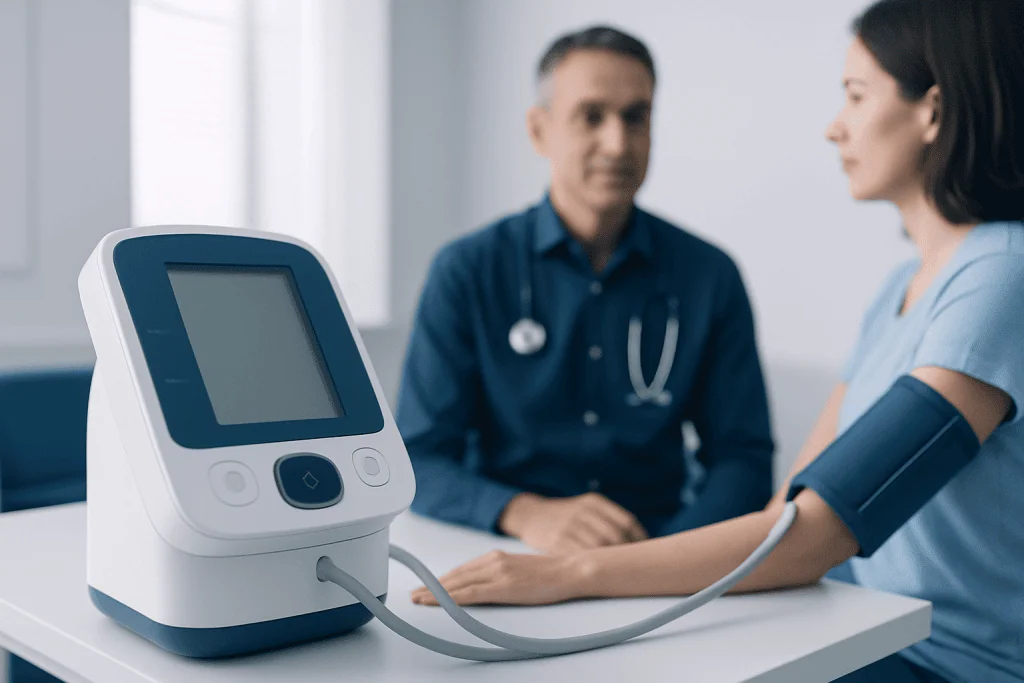
Because high blood pressure often causes no symptoms, diagnosis usually begins with proper measurement rather than how a person feels. A doctor or nurse will check blood pressure using the correct cuff size and repeat readings over time. Home blood pressure monitoring or ambulatory monitoring may be recommended to confirm whether readings are consistently high.
The medical review usually includes questions about family history, diet, salt intake, activity level, alcohol use, sleep quality, stress, and current medications. A clinician may also ask about conditions that can contribute to high blood pressure, such as kidney disease, thyroid problems, diabetes, obstructive sleep apnea, or pregnancy-related issues.
Depending on the situation, testing may include blood tests, urine tests, kidney function checks, cholesterol and glucose assessment, and sometimes an electrocardiogram. The goal is not just to label a number, but to understand overall cardiovascular risk and whether there is a secondary cause that needs treatment.
If a person has headaches, dizziness, or fatigue, these symptoms are not enough on their own to diagnose hypertension, since they can have many causes. When needed, doctors may coordinate further evaluation with services such as preventive health check-up programs or nephrology care if kidney disease is a concern.
What works better than apple cider vinegar
For people who want to lower blood pressure safely, evidence-based measures are much more reliable than apple cider vinegar. A heart-healthy eating pattern, especially one rich in vegetables, fruits, legumes, whole grains, and low-fat dairy, can help. Reducing processed foods and excess salt is particularly important.
Regular physical activity can improve blood pressure and overall heart health. So can reaching and maintaining a healthy weight, sleeping well, and limiting alcohol. If a person smokes, stopping smoking is one of the most important steps for cardiovascular protection, even though it does not act as a direct blood pressure medicine.
When lifestyle change is not enough, medication may be necessary. Blood pressure medicines are chosen based on a person’s age, medical history, kidney function, and other risk factors. Taking medication as prescribed is important because stopping or replacing it with unproven remedies can allow blood pressure to rise again.
For some people, high blood pressure occurs alongside other metabolic concerns such as obesity, prediabetes, or diabetes. In that setting, a broader plan may help reduce long-term risk. Related conditions such as metabolic syndrome may need attention alongside blood pressure control.
When to seek medical care
Many brief blood pressure changes are not dangerous, and most people who wonder about apple cider vinegar do not have a medical emergency. Still, medical review is important if blood pressure readings are repeatedly high at home, if a person already has heart, kidney, or vascular disease, or if they are pregnant. A doctor can confirm whether treatment is needed and help prevent long-term complications.
Urgent care is needed if very high blood pressure is accompanied by chest pain, severe shortness of breath, fainting, severe headache, confusion, weakness, trouble speaking, vision changes, or seizures. These symptoms may signal a serious complication and should not be treated with home remedies.
A person should also seek advice if they plan to use apple cider vinegar regularly and have reflux, ulcers, kidney problems, diabetes, or take prescription medicines. A clinician can help weigh possible risks and discuss safer alternatives if needed.
Near the end of evaluation and treatment planning, some patients may benefit from specialist input. Acibadem International’s multidisciplinary specialists and JCI-accredited hospitals diagnose and treat cardiovascular and metabolic conditions for international patients when more comprehensive assessment is needed.
Frequently asked questions
Can apple cider vinegar replace blood pressure medicine?
No. Current evidence does not support apple cider vinegar as a substitute for prescribed blood pressure medication. Anyone taking treatment for hypertension should speak with a doctor before making changes.
Is apple cider vinegar safe for everyone?
Not always. Small amounts in food are usually fine for many people, but regular or concentrated use can irritate the stomach and throat, worsen reflux, and affect tooth enamel. People with kidney disease, diabetes, or medication-related concerns should ask a clinician first.
If blood pressure improves while using apple cider vinegar, what might explain it?
The change may be related to other factors such as weight loss, reduced calorie intake, healthier eating, less salt, or normal day-to-day variation in blood pressure. That is why repeated, accurate blood pressure measurements matter more than a single reading.
What natural approaches actually have better evidence for blood pressure control?
Lifestyle measures with stronger evidence include reducing sodium, eating a balanced diet rich in fruits and vegetables, staying physically active, maintaining a healthy weight, limiting alcohol, and getting enough sleep. These steps can support blood pressure control and overall heart health.
How can someone tell if they have high blood pressure?
Often, they cannot tell from symptoms alone because hypertension may cause no symptoms at all. The most reliable way is to have blood pressure measured properly, either in a clinic, at home with a validated monitor, or with ambulatory monitoring.
When should someone worry about a high blood pressure reading?
A single mildly high reading is not always an emergency, but repeated high readings should be discussed with a doctor. Urgent care is needed if a very high reading happens along with chest pain, severe headache, shortness of breath, neurological symptoms, or confusion.
References
- American Heart Association
- Centers for Disease Control and Prevention
- National Heart, Lung, and Blood Institute
- World Health Organization
- National Institute of Diabetes and Digestive and Kidney Diseases
This article is for general information only and is not a substitute for professional medical advice. Please consult a qualified doctor about your individual situation.
Explore treatments in Turkey — costs, top hospitals & a free quote
JCI-accredited · board-certified surgeons · reply within 24h
Check your numbers in seconds
BMI, calories, due date, blood pressure and 30+ more clinical calculators — free, instant, doctor-reviewed ranges.