Emergency Treatment for Kidney Failure: How It Works, Results and What to Expect

Kidney failure can develop suddenly as acute kidney injury or progress from chronic kidney disease; emergency care depends on the cause and severity. Urgent dialysis is used when complications cannot be controlled safely with medicines and supportive treatment alone.
Key Takeaways
- Kidney failure can develop suddenly as acute kidney injury or progress from chronic kidney disease; emergency care depends on the cause and severity.
- Urgent dialysis is used when complications cannot be controlled safely with medicines and supportive treatment alone.
- Many people with acute kidney injury recover some or all kidney function when the cause is treated promptly, although recovery time varies.
- Treatment includes monitoring blood tests, urine output, blood pressure, fluid balance, heart rhythm and symptoms.
- Sudden reduced urine, breathlessness, confusion, chest discomfort or severe weakness require urgent medical assessment.
Emergency treatment for kidney failure focuses on quickly correcting life-threatening problems such as dangerously high potassium, severe fluid overload, acid buildup or toxin accumulation. Care usually takes place in hospital and may include intravenous fluids or medicines, close monitoring and temporary dialysis while clinicians identify and treat the underlying cause.
Emergency treatment for kidney failure: the immediate priorities
Emergency treatment for kidney failure aims to protect the heart, lungs and brain while supporting the kidneys and addressing the reason they are not working properly. It may be needed in acute kidney injury, a sudden decline in kidney function that can occur over hours to days, or in advanced chronic kidney disease when serious complications develop.
In hospital, clinicians rapidly check kidney blood tests, potassium and other electrolytes, acid-base balance, urine output, blood pressure, fluid status and heart rhythm. Treatment may include careful intravenous fluids for dehydration, medicines to lower potassium or remove excess fluid, treatment for infection, stopping kidney-harming medicines when appropriate, and relieving a urinary blockage.
If complications are severe or do not respond sufficiently to other measures, urgent dialysis may be necessary. Dialysis is a treatment that filters wastes and excess fluid from the blood when the kidneys cannot do this adequately. It can be temporary in acute kidney injury or ongoing in established kidney failure.
How emergency dialysis works and who may need it
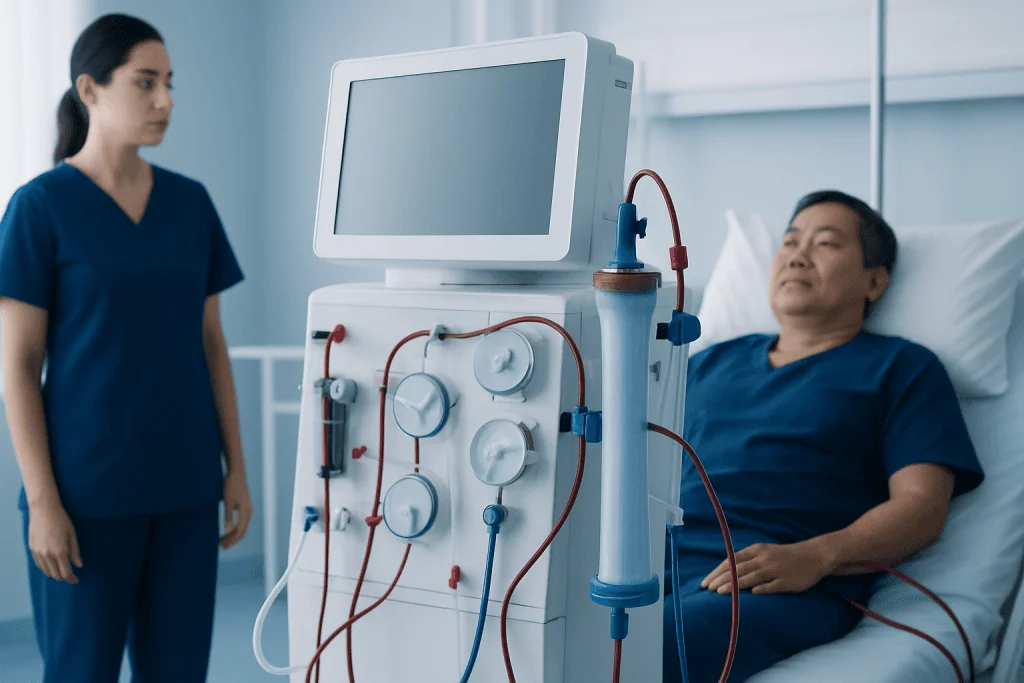
Dialysis does not heal damaged kidneys directly. Instead, it temporarily takes over part of their filtering role by removing certain wastes, excess water and electrolytes from the bloodstream. In an emergency, haemodialysis is most commonly used: blood travels through tubing to a dialysis machine and filter, then returns to the body.
A doctor may recommend urgent dialysis for severe high potassium that threatens the heart, fluid overload causing significant breathing difficulty, severe metabolic acidosis, symptoms related to toxin buildup such as confusion or inflammation around the heart, or certain poisonings. The decision is based on the whole clinical picture rather than one laboratory result alone.
Not everyone with acute kidney injury needs dialysis. If blood tests, breathing, fluid balance and symptoms can be managed safely with treatment of the cause and close observation, the kidneys may recover without it. People with severe or persistent kidney dysfunction may be assessed for longer-term kidney transplant options when appropriate.
What happens during emergency hospital care

Emergency kidney care begins with stabilization and investigation. The team reviews symptoms, recent illness, fluid losses, medications, medical conditions and possible exposure to substances that can affect the kidneys. Blood and urine tests are performed, and ultrasound or other imaging may be used to look for obstruction, such as an enlarged prostate or a kidney stone blocking urine flow.
For haemodialysis, a specialist may place a temporary catheter into a large vein, often in the neck, chest or groin, using sterile technique and local anaesthetic. This provides immediate access when a permanent dialysis fistula is not available. The dialysis team then sets the treatment duration and fluid-removal goals individually, taking blood pressure and overall stability into account.
During dialysis, nurses monitor blood pressure, pulse, symptoms and the access site. Some people feel tired, cold, light-headed or develop muscle cramps, particularly if fluid needs to be removed. The medical team can adjust treatment to improve comfort and safety. In critically ill patients, a slower continuous form of dialysis may be used in intensive care.
- Correcting dehydration or carefully removing excess fluid
- Managing high potassium and acid buildup
- Treating infection, bleeding, heart problems or other triggers
- Relieving urinary obstruction when present
- Reviewing medicines that may need to be paused or adjusted
Benefits, risks and recovery after emergency treatment
The main benefit of emergency treatment is that it can rapidly control complications that may otherwise affect breathing, heart rhythm, consciousness and circulation. Treating the underlying cause may allow kidney function to improve, particularly in acute kidney injury related to dehydration, infection, obstruction or a medication-related problem.
Dialysis is generally well established, but it has possible risks. These include low blood pressure, cramps, fatigue, bleeding or infection around the catheter, and changes in electrolytes. Catheter-related infection and blood clotting are important reasons why temporary access is carefully monitored and removed when it is no longer needed.
Recovery varies considerably. Some people begin producing more urine and show improving blood tests over days to weeks, while others recover more gradually over months. A proportion of people, especially those with previous chronic kidney disease or severe illness, may have lasting loss of kidney function and require ongoing kidney care.
Before discharge, the care team usually reviews follow-up blood testing, blood pressure management, medication changes, nutrition guidance and warning symptoms. Nephrology follow-up is important because apparent recovery after acute kidney injury does not always mean the kidneys have returned fully to their previous level of function.
How can I improve my kidney function?
Improving kidney function depends on what has caused it to decline. In acute kidney injury, the most effective step is prompt medical treatment of the underlying problem, such as dehydration, infection, urinary obstruction, uncontrolled blood pressure or a medication-related effect. There is no single food, supplement or cleanse that can reliably restore kidney function.
For people with chronic kidney disease, protecting remaining function may include controlling blood pressure and diabetes, avoiding tobacco, maintaining a healthy weight, keeping follow-up appointments and taking prescribed medicines as directed. A clinician may also advise individual targets for salt, protein, potassium, phosphorus and fluids based on kidney stage and blood test results.
It is important not to stop prescribed medicines or start over-the-counter pain relievers, herbal products or supplements without medical advice. Non-steroidal anti-inflammatory drugs, including some common anti-inflammatory pain medicines, can worsen kidney function in susceptible people. A nephrologist can provide a plan tailored to the person’s cause of kidney disease and overall health.
How long is a hospital stay for kidney failure?
The length of hospital stay for kidney failure varies widely. Someone with mild acute kidney injury due to dehydration may improve after a short admission, while a person with severe infection, heart failure, multiple organ problems or a need for intensive care may need to stay much longer. The need for dialysis does not by itself determine the length of stay.
Discharge is considered when the person is medically stable, the cause is being treated or controlled, breathing and fluid balance are safe, blood tests are improving or manageable, and there is a clear follow-up plan. Some people leave hospital while still needing outpatient dialysis, particularly if recovery is incomplete or they have long-standing kidney failure.
Hospital teams also assess whether a person can manage medicines, diet and transport to appointments safely after discharge. Family support, rehabilitation needs and other health conditions may influence timing. Patients and families can ask the care team what clinical milestones need to be reached before discharge is appropriate.
Does kidney disease cause anger issues?
Kidney disease does not directly cause anger in every person, but it can affect mood and emotional wellbeing. Fatigue, sleep disruption, pain, itching, dietary restrictions, uncertainty about health, repeated treatments and loss of independence can all contribute to irritability, frustration, anxiety or low mood.
In severe kidney failure, major chemical imbalances or toxin buildup can occasionally affect thinking and behavior, particularly when accompanied by confusion, drowsiness or reduced alertness. These symptoms need urgent medical assessment rather than being treated as a personality change. Sudden agitation or confusion may also have causes unrelated to the kidneys, including infection or medication effects.
People experiencing persistent anger, distress, depression, anxiety or difficulty coping should tell their kidney team or primary care clinician. Emotional support, counselling, social work support and treatment of sleep or physical symptoms can be helpful parts of comprehensive kidney care.
What are some home remedies for kidney health?
There are no proven home remedies that can treat kidney failure or replace emergency medical care. Drinking large amounts of water, taking herbal products or using “detox” preparations can be unsafe for people with impaired kidney function, fluid overload, heart disease or electrolyte problems. Home approaches should support, not replace, a clinician-directed treatment plan.
Helpful everyday measures may include following an individualized eating plan, limiting salt when advised, taking medicines as prescribed, avoiding smoking, monitoring blood pressure if recommended and staying appropriately hydrated. The right fluid intake differs between people: someone who is dehydrated may need fluids, while someone retaining fluid may need restriction.
Herbal remedies and supplements should be discussed with a pharmacist or doctor before use because ingredients and doses may be uncertain, interact with medicines or place additional strain on the kidneys. Patients should seek professional guidance before making major dietary changes, especially if they have been told to limit potassium, phosphorus, protein or fluids.
When to seek medical care
Urgent medical assessment is needed for very little or no urine, new or worsening shortness of breath, swelling with rapid weight gain, persistent vomiting, severe weakness, palpitations, fainting, chest pain, confusion, seizures or unusual drowsiness. These symptoms can occur when kidney function is seriously impaired or when fluid and electrolyte levels are unsafe.
People should also contact a clinician promptly if they have kidney disease and develop fever, diarrhea, vomiting, a suspected urinary infection, difficulty passing urine or a significant reduction in urine output. Early care may prevent complications, particularly for older adults and people with diabetes, heart disease or known chronic kidney disease.
For international patients, Acibadem International’s multidisciplinary specialists and JCI-accredited hospitals provide assessment and treatment for kidney conditions, including urgent dialysis support and longer-term care planning. A qualified medical team can explain the likely cause, treatment choices and follow-up needs for each individual.
Frequently asked questions
What is the first emergency treatment for kidney failure?
The first steps are usually rapid assessment, monitoring and treatment of immediate problems such as high potassium, dehydration, fluid overload or infection. The team also looks for the cause of kidney dysfunction. Dialysis may be started urgently when complications are severe or cannot be controlled safely with other treatments.
Can acute kidney failure be reversed?
Acute kidney injury can often improve when its cause is identified and treated promptly. Recovery depends on the severity of injury, previous kidney health and other illnesses. Some people recover fully, while others have persistent kidney damage or need ongoing dialysis.
When is dialysis considered an emergency?
Dialysis may be an emergency when kidney failure leads to dangerous high potassium, severe fluid buildup affecting breathing, severe acid buildup, certain toxin-related symptoms or specific poisonings. The decision is made by clinicians using symptoms, examination findings and laboratory results together.
Can someone go home after emergency dialysis?
Some people can go home after stabilization if the underlying problem is controlled and a safe follow-up plan is in place. Others need continued hospital monitoring, further dialysis or treatment for the condition that caused kidney failure. The decision is individualized.
Should a person with kidney failure drink more water?
Not always. Fluid needs depend on the cause of kidney dysfunction, urine output, blood pressure, heart health and whether the body is retaining fluid. A clinician should advise on the appropriate amount, because excess fluid can worsen swelling and breathlessness in some people.
What medicines should be avoided in kidney failure?
The safest medicines depend on the person’s kidney function and other conditions. Some pain medicines, certain supplements, contrast agents and drugs cleared through the kidneys may need to be avoided, paused or dose-adjusted. Patients should ask a doctor or pharmacist before taking new prescription, over-the-counter or herbal products.
References
- National Institute of Diabetes and Digestive and Kidney Diseases
- National Kidney Foundation
- Kidney Disease: Improving Global Outcomes
- Mayo Clinic
- NHS
This article is for general information only and is not a substitute for professional medical advice. Please consult a qualified doctor about your individual situation.
Explore treatments in Turkey — costs, top hospitals & a free quote
JCI-accredited · board-certified surgeons · reply within 24h
Add us as a Preferred Source to see more of our trusted health content across Google Search, AI Overviews and Discover.
Check your numbers in seconds
BMI, calories, due date, blood pressure and 30+ more clinical calculators — free, instant, doctor-reviewed ranges.