Foraminotomy: An Evidence-Based Guide for Patients

Foraminotomy is used to relieve pressure on a spinal nerve by widening a narrowed nerve passage. It may help reduce arm or leg pain, tingling, numbness, and weakness caused by nerve compression.
Key Takeaways
- Foraminotomy is used to relieve pressure on a spinal nerve by widening a narrowed nerve passage.
- It may help reduce arm or leg pain, tingling, numbness, and weakness caused by nerve compression.
- Doctors usually recommend it after imaging, an exam, and a trial of non-surgical care when appropriate.
- Recovery varies by the area of the spine treated, the surgical approach, and a person's overall health.
- The goal is symptom relief and improved function, but results depend on the exact cause and severity of nerve compression.
Foraminotomy is a spinal surgery that enlarges the opening where a nerve leaves the spine, aiming to relieve pressure caused by narrowing around that nerve. It is usually considered when symptoms such as radiating pain, numbness, or weakness do not improve enough with non-surgical treatment.
Overview: what foraminotomy is and why it is done
Foraminotomy is a type of spine surgery that widens the foramen, the small opening where a spinal nerve exits the spinal canal. When this opening becomes too narrow, the nerve can be compressed. This may cause pain that travels into the arm or leg, along with numbness, tingling, or weakness. The purpose of foraminotomy is to create more space around the affected nerve and reduce that pressure.
The procedure can be performed in the neck, mid-back, or lower back, although it is most commonly discussed in the cervical and lumbar spine. Narrowing may happen because of age-related wear, bone spurs, thickened ligaments, disc changes, or nearby joint enlargement. In some cases, foraminotomy is done alone; in others, it may be combined with another operation if there are multiple causes of compression or if stability is a concern.
For many patients, surgery is not the first step. Doctors usually begin with non-surgical options such as activity modification, physical therapy, pain-relief medicines, or targeted injections. Foraminotomy is generally considered when symptoms remain troublesome, when daily function is limited, or when there are signs of progressing nerve problems. If symptoms are related to spinal stenosis or another narrowing disorder, treatment is tailored to the specific pattern of compression seen on imaging and examination.
Symptoms and conditions a foraminotomy may help treat
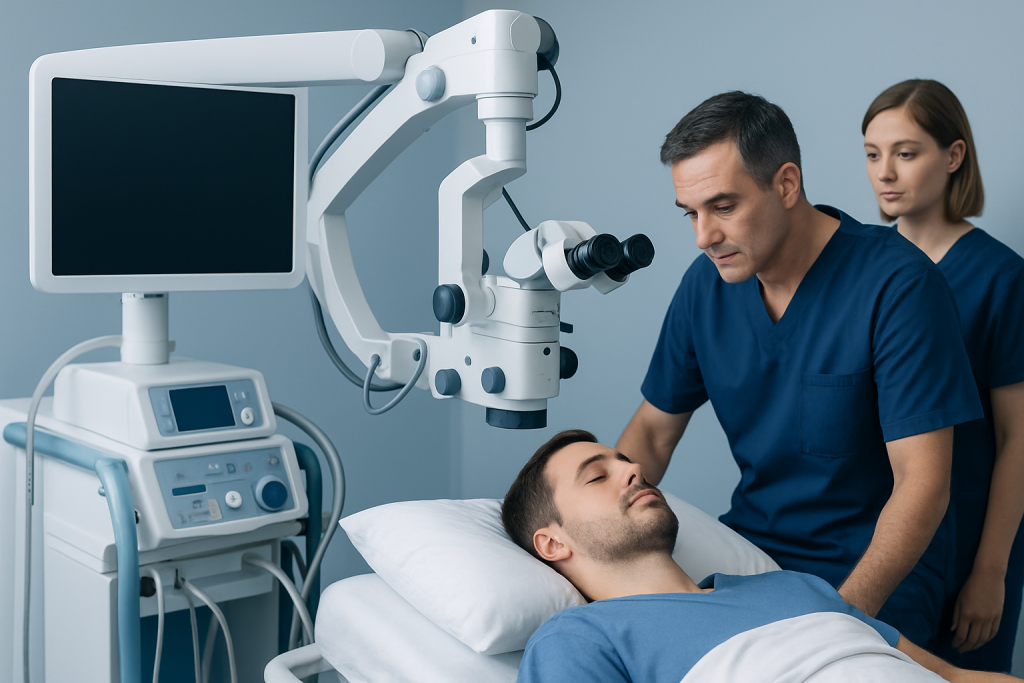
Foraminotomy is most often used when a narrowed nerve opening causes radicular symptoms, meaning symptoms that travel along the path of a nerve. In the neck, this can lead to pain spreading into the shoulder, arm, or hand. In the lower back, symptoms may radiate into the buttock, thigh, calf, or foot. Some people describe burning, electric-shock pain, pins and needles, or a deep ache that worsens with certain movements.
Other symptoms can include numbness, reduced sensation, muscle weakness, or reduced reflexes. In some people, arm or leg symptoms are more prominent than back or neck pain. The pattern can help doctors identify which spinal nerve may be affected, although symptoms and scans do not always match perfectly, which is why a careful clinical evaluation is important.
Conditions that may lead to the need for a foraminotomy include:
- Foraminal stenosis, or narrowing of the nerve opening
- Bone spur formation from arthritis or degeneration
- Disc bulging or disc herniation pressing near the foramen
- Enlargement of nearby facet joints
- Recurrent nerve compression after earlier spine problems in selected cases
Because symptoms can overlap with other causes of nerve irritation, some patients are also assessed for related spinal disorders such as herniated disc. The aim is not simply to name a diagnosis, but to confirm that the compressed nerve is truly responsible for the symptoms before surgery is considered.
Causes, risk factors, and who may be a candidate

The most common reason the foramen narrows is age-related degeneration of the spine. Over time, discs can lose height, joints can enlarge from arthritis, and bone spurs can form. These changes may gradually reduce the available space for spinal nerves. Less commonly, congenital anatomy, prior surgery, injury, or spinal alignment problems can contribute to narrowing.
Risk factors for symptomatic nerve compression include advancing age, physically demanding work, repetitive spinal loading, smoking, and a history of spinal degeneration. Excess body weight can also increase mechanical strain on the lower back, while poor posture and low muscle conditioning may contribute to ongoing symptoms in some people. Still, many people with imaging changes do not need surgery; treatment decisions depend more on symptoms and function than on scan findings alone.
A person may be considered a candidate for foraminotomy if there is a clear match between symptoms, physical examination findings, and imaging that shows narrowing around a specific spinal nerve. Candidates often have persistent pain, numbness, or weakness despite a reasonable trial of non-surgical treatment. Surgery may also be considered sooner if there is progressive weakness or significant loss of function. In some situations, specialists may discuss broader spine surgery options if more than one structure is compressing the nerve or if spinal stability needs to be addressed.
How doctors diagnose the problem before surgery
Diagnosis begins with a detailed medical history and physical examination. Doctors ask where the pain starts, where it travels, what makes it worse or better, and whether numbness or weakness is present. The examination may include strength testing, reflexes, sensation, walking pattern, and movements that reproduce nerve irritation.
Imaging is then used to clarify the cause and location of compression. Magnetic resonance imaging, or MRI, is often the main test because it shows nerves, discs, and soft tissues in detail. Computed tomography may be useful when bony narrowing is suspected or when MRI is not suitable. Plain X-rays can help assess alignment and degenerative changes, but they usually cannot show the nerve itself.
In selected cases, nerve studies or diagnostic injections may help when the diagnosis is uncertain or when symptoms are complex. For example, a targeted injection around a suspected nerve root may help confirm whether that nerve is the source of pain. The goal of this work-up is to identify the exact level and cause of compression so that treatment is directed and as limited as safely possible.
Treatment options: from conservative care to foraminotomy
Before surgery is chosen, many patients try conservative treatment. This may include rest from aggravating activities, structured physical therapy, anti-inflammatory or pain-relief medicines when appropriate, and sometimes spinal injections. These measures can reduce inflammation around a nerve and improve movement, even if they do not remove the underlying narrowing.
Foraminotomy is considered when symptoms persist, return frequently, or interfere substantially with daily life despite these steps. During the operation, the surgeon removes a small amount of bone or other tissue narrowing the foramen. Depending on the problem, this may also involve trimming disc material or nearby joint overgrowth. The operation may be performed through open or minimally invasive techniques, depending on anatomy, surgeon judgment, and available technology.
Sometimes foraminotomy is performed alone as a focused nerve-decompression procedure. In other cases, it may be combined with related procedures, such as microdiscectomy if disc material is a major source of compression. If narrowing is central and more extensive, doctors may discuss laminectomy or another decompression strategy. The best approach depends on where the nerve is pinched, whether one or multiple levels are involved, and whether the spine is stable.
No surgery is without risk, and patients should review expected benefits and possible complications with their surgeon. Potential concerns include infection, bleeding, ongoing pain, recurrence of symptoms, spinal fluid leak, or injury to nearby structures. Many patients do well, but the main goal is realistic: reducing nerve-related symptoms and improving function rather than promising a perfect spine.
Recovery, rehabilitation, and self-care after foraminotomy
Recovery after foraminotomy varies. It depends on the region of the spine treated, whether the surgery was minimally invasive or open, whether other procedures were done at the same time, and the patient’s overall health. Some people notice relief of radiating pain relatively soon, while numbness or weakness may improve more gradually as the nerve heals.
After surgery, patients are usually encouraged to walk and move within the limits advised by their care team. Instructions often cover wound care, safe lifting, sitting and driving restrictions, and how to return to work or exercise. Physical therapy may be recommended to rebuild flexibility, posture, and muscle support. Following the recovery plan carefully can support healing and reduce setbacks.
Self-care during recovery often includes pacing activities, avoiding smoking, staying active within the advised range, and taking medicines only as directed. It is also helpful to watch for signs of complications, such as fever, worsening weakness, severe swelling at the incision, or loss of bladder or bowel control. Near the end of the treatment journey, some patients seek care in specialized centers; Acibadem International’s multidisciplinary specialists and JCI-accredited hospitals diagnose and treat spinal nerve compression and related conditions for international patients.
When to seek medical care
Medical evaluation is important if neck or back symptoms spread into an arm or leg, especially when pain is accompanied by numbness, tingling, or weakness. A doctor should also assess symptoms that persist for several weeks, recur often, interrupt sleep, or limit normal walking, working, or self-care. Early assessment may help identify whether the issue is nerve irritation, muscular strain, or another condition.
Urgent medical attention is needed if there is rapidly worsening weakness, new trouble walking, loss of coordination, numbness in the groin or saddle area, or loss of bladder or bowel control. These symptoms can signal a more serious compression problem that needs prompt evaluation. Severe pain after an injury, fever with back pain, or unexplained weight loss should also be reviewed by a clinician.
Even when symptoms are not urgent, people considering surgery benefit from seeing a qualified spine specialist who can explain the diagnosis, discuss alternatives, and outline expected recovery. Shared decision-making matters because the choice for foraminotomy depends on symptom severity, examination findings, imaging results, and personal goals.
Frequently asked questions
What does a foraminotomy do?
A foraminotomy enlarges the opening where a spinal nerve leaves the spine. By creating more space around the nerve, the procedure aims to reduce pressure that causes radiating pain, numbness, tingling, or weakness.
Is foraminotomy a major surgery?
It is a surgical procedure on the spine, so it is important and should be planned carefully. However, the extent of surgery varies, and in many cases it is a focused decompression rather than a large reconstruction. The overall impact depends on the spinal level treated, the approach used, and whether additional procedures are needed.
How long does it take to recover from foraminotomy?
Recovery time varies from person to person. Some patients improve quickly in terms of radiating pain, while numbness and weakness can take longer to settle because nerves heal gradually. A surgeon can give a more realistic timeline based on the exact procedure and the patient's health.
Will foraminotomy cure back or neck pain?
Foraminotomy is mainly intended to relieve symptoms caused by nerve compression, especially arm or leg pain, tingling, numbness, or weakness. It may not fully eliminate all back or neck pain, particularly if pain also comes from arthritis, muscle strain, or other spinal changes.
What is the difference between foraminotomy and laminectomy?
Foraminotomy targets the foramen, the side opening where a nerve exits the spine. Laminectomy removes part of the lamina to create more room in the spinal canal itself. Both are decompression procedures, but they address different areas of narrowing.
When is surgery considered instead of physical therapy or injections?
Surgery is generally considered when symptoms do not improve enough with conservative care or when weakness is progressing. The decision is based on how much symptoms affect daily life, whether imaging confirms nerve compression, and whether the expected benefits of surgery outweigh the risks.
References
- National Institute of Neurological Disorders and Stroke
- National Institute of Arthritis and Musculoskeletal and Skin Diseases
- American Association of Neurological Surgeons
- North American Spine Society
- American Academy of Orthopaedic Surgeons
This article is for general information only and is not a substitute for professional medical advice. Please consult a qualified doctor about your individual situation.
Joint and spine care in Turkey — expert assessment & treatment
JCI-accredited · board-certified surgeons · reply within 24h