Anorectal Manometry — Explained by Medical Evidence, Not Myths

Anorectal manometry checks pressure, sensation, reflexes, and coordination in the rectum and anal canal. The test is usually brief, does not require surgery, and is generally well tolerated.
Key Takeaways
- Anorectal manometry checks pressure, sensation, reflexes, and coordination in the rectum and anal canal.
- The test is usually brief, does not require surgery, and is generally well tolerated.
- It can help explain chronic constipation, fecal incontinence, and suspected pelvic floor dysfunction.
- Results guide treatment such as bowel habit changes, medication review, and pelvic floor therapy or biofeedback.
- A normal or abnormal result is interpreted together with symptoms, examination, and other digestive tests.
Anorectal manometry is a diagnostic test that measures how the muscles and nerves of the rectum and anus work during rest, squeezing, and pushing. It is commonly used to investigate chronic constipation, fecal incontinence, and problems with bowel movement coordination, helping doctors choose treatment based on function rather than guesswork.
Overview: what anorectal manometry actually shows
Anorectal manometry is a functional test, which means it evaluates how well the rectum, anus, and pelvic floor muscles work together rather than looking mainly for structural changes. It measures pressure inside the anal canal and rectum, checks sensation in the rectum, and assesses reflexes that are important for normal bowel control and bowel movements.
In practical terms, the test helps answer questions such as whether the anal sphincter muscles are too weak, too tight, or not coordinating properly when a person tries to pass stool. This is why it is often requested for people with long-standing constipation, difficulty emptying the bowels, accidental stool leakage, or suspected pelvic floor dysfunction.
The value of anorectal manometry is that it can separate common myths from measurable physiology. Symptoms like straining, incomplete emptying, or urgency can have different causes, and the same symptom does not always mean the same problem. By measuring function directly, the test helps doctors tailor treatment more precisely.
Why a doctor may recommend this test
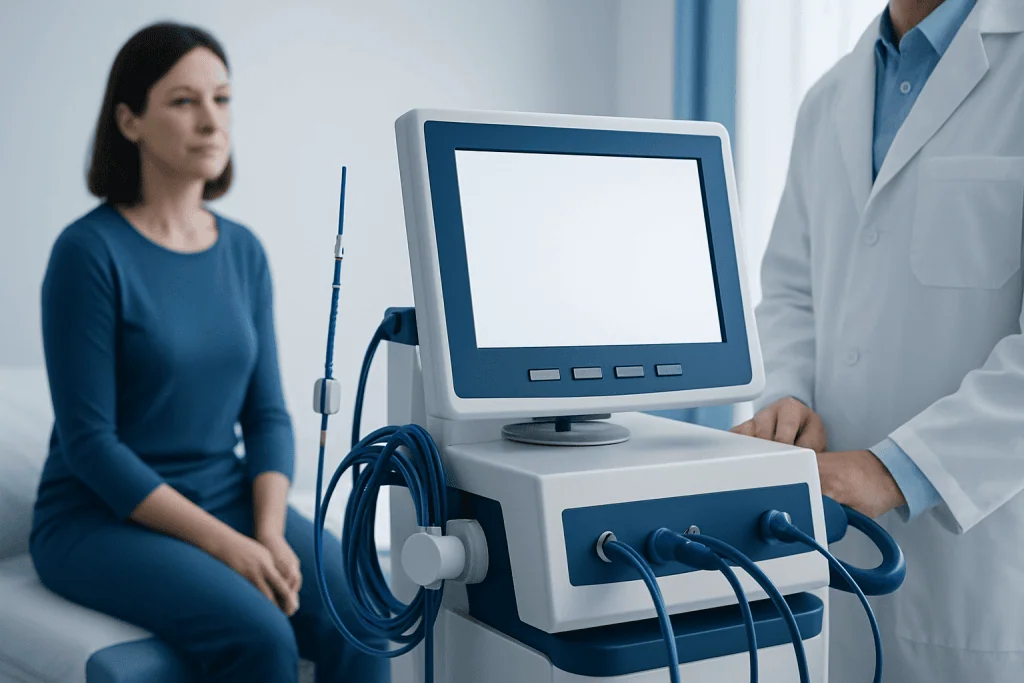
A clinician may recommend anorectal manometry when bowel symptoms have persisted despite basic treatment or when the pattern of symptoms suggests a coordination problem. It is especially useful when a patient has constipation but imaging or colonoscopy does not fully explain why stool is difficult to pass.
Common reasons for referral include chronic constipation, excessive straining, a sensation of blockage during bowel movements, fecal incontinence, rectal pain linked to muscle dysfunction, and evaluation before or after treatment for anorectal conditions. It can also be used in selected children and adults with suspected nerve or muscle disorders affecting bowel control.
Sometimes the test is part of a broader assessment that may also include stool habit review, physical examination, transit studies, or endoscopy. In patients with constipation or leakage, doctors may also consider related conditions such as constipation or hemorrhoids if symptoms overlap, although these conditions are not diagnosed by manometry alone.
How the test is done and what to expect

Anorectal manometry is usually performed in an outpatient setting. After simple preparation, often including instructions to empty the bowel beforehand, the patient lies on an examination couch while a thin, flexible catheter with sensors is gently inserted a short distance into the rectum. The procedure is designed to be as comfortable as possible and usually does not require sedation.
During the test, the patient may be asked to relax, squeeze as if trying to prevent a bowel movement, cough, and push as if trying to pass stool. A small balloon attached to the catheter may be inflated in the rectum to test sensation, urge, and reflex responses. These steps allow the team to measure resting pressure, squeeze pressure, rectal sensitivity, and coordination of the muscles during defecation.
The test itself is typically brief, but timing varies by center and by whether other evaluations are done the same day. Most people can return to usual activities afterward. Mild temporary discomfort or embarrassment is more common than pain, and serious complications are uncommon when the test is performed by trained professionals.
Understanding the results
Anorectal manometry results are not simply labeled “good” or “bad.” Instead, they describe several aspects of anorectal function. These may include the resting tone of the internal anal sphincter, the voluntary squeeze strength of the external sphincter, rectal sensation thresholds, and whether the anal muscles relax appropriately when the person pushes.
One important pattern is dyssynergic defecation, sometimes called pelvic floor dyssynergia, where the muscles do not coordinate normally during attempted bowel movements. A person may push but the anal muscles tighten or fail to relax enough. Another pattern is low sphincter pressure, which can contribute to fecal incontinence. Reduced rectal sensation or unusually heightened sensitivity can also influence symptoms.
Results are interpreted in context. Age, previous childbirth, anorectal surgery, nerve injury, medications, and coexisting digestive diseases can all affect the findings. For that reason, doctors usually combine manometry with history, examination, and sometimes tests such as balloon expulsion testing, imaging, or endoscopy before making a treatment plan.
Conditions and factors that can affect anorectal function
Anorectal function can be altered by muscle weakness, pelvic floor incoordination, nerve injury, inflammation, scarring, or habits that develop over time in response to pain or chronic straining. Symptoms do not always point to one single cause, which is why functional testing can be so helpful.
Examples of factors that may contribute include chronic constipation, repeated straining, aging, childbirth-related pelvic floor injury, previous anorectal surgery, diabetes-related nerve damage, spinal or neurological conditions, and longstanding bowel disorders. Some people also develop altered rectal sensation, meaning they may not feel stool normally or may feel urgency at lower volumes than expected.
Medication effects matter too. Opioids, some antidepressants, iron supplements, and other medicines may worsen constipation, while conditions such as diarrhea or inflammatory bowel irritation can aggravate leakage or urgency. If there is concern for a structural bowel problem, a doctor may recommend further investigation such as colonoscopy to look inside the large intestine.
Treatment options after anorectal manometry
Treatment depends on what the test shows and on the person’s symptoms. If the main issue is dyssynergia, one of the most effective next steps may be pelvic floor retraining with biofeedback. This therapy teaches the patient how to coordinate relaxation and pushing using guided feedback from sensors. It is different from simply being told to “push correctly,” because it uses measurable muscle activity to support learning.
If low sphincter strength contributes to leakage, management may include bowel habit adjustment, stool consistency management, pelvic floor exercises, and treatment of contributing conditions. If constipation is the dominant problem, doctors may review fiber intake, hydration, toileting routine, physical activity, and medications, and may recommend targeted therapies depending on bowel transit and pelvic floor findings.
Some patients need additional evaluation or treatment for related anorectal or digestive conditions. Depending on the clinical picture, this may include gastroenterology evaluation or symptom-specific care. The goal is not only to improve test numbers, but to reduce straining, improve emptying, lessen leakage, and support quality of life in a practical, sustainable way.
For international patients who need coordinated assessment, Acibadem International’s multidisciplinary specialists and JCI-accredited hospitals diagnose and treat anorectal functional disorders, combining testing with individualized follow-up care.
Preparation, self-care, and practical tips
Before the test, the care team usually gives clear instructions about preparation. This may include using a small enema, avoiding certain medicines for a short time if advised, and arriving with the lower bowel empty. Patients should tell the team about pregnancy, severe rectal pain, recent anorectal surgery, bleeding, or any condition that may affect the procedure.
Good bowel self-care remains important whether manometry is normal or abnormal. Helpful measures may include regular toilet timing, not delaying the urge to have a bowel movement, keeping stools soft but formed, and avoiding repeated prolonged straining. Sudden major diet changes are not always necessary; a clinician or dietitian can suggest the most suitable approach based on the symptom pattern.
People often worry that an abnormal result means surgery will be needed, but that is not usually the first conclusion. Many bowel function problems improve with conservative treatment, especially when the cause is identified clearly. The test is often most useful because it points toward the right non-surgical therapy rather than because it leads directly to an invasive procedure.
When to seek medical care
A person should seek medical advice if constipation lasts for weeks, bowel movements require regular severe straining, there is ongoing fecal leakage, or there is a persistent feeling of incomplete emptying. These symptoms are often treatable, but they deserve proper assessment when they interfere with daily life or do not improve with basic measures.
Urgent medical care is important if bowel symptoms are accompanied by heavy rectal bleeding, severe abdominal pain, vomiting, fever, black stools, sudden inability to pass stool or gas, or unexplained weight loss. These symptoms may signal problems that need prompt evaluation and are not diagnosed by manometry alone.
Medical review is also wise if there is a history of neurological disease, recent anorectal injury, or worsening symptoms after childbirth or surgery. In some cases, doctors may combine functional testing with direct examination methods such as endoscopy to ensure that both function and structure are assessed appropriately.
Frequently asked questions
Is anorectal manometry painful?
Most people describe anorectal manometry as uncomfortable or awkward rather than painful. The catheter is small, the test is brief, and the team guides each step carefully. If there is significant anal pain, recent surgery, or active inflammation, the patient should tell the clinician in advance.
How long does anorectal manometry take?
The procedure itself is often completed within a short outpatient visit, although the total appointment time can vary. Some centers combine it with balloon expulsion testing or other assessments. The care team can explain the exact schedule beforehand.
What can anorectal manometry diagnose?
It does not diagnose every bowel condition by itself, but it can identify abnormal anal sphincter pressures, reduced or increased rectal sensation, and poor muscle coordination during attempted defecation. These findings help doctors evaluate chronic constipation, fecal incontinence, and pelvic floor dysfunction. Results are interpreted together with symptoms and other tests.
Do patients need bowel preparation before the test?
Preparation is usually simple and may involve emptying the lower bowel, sometimes with a small enema, according to the center’s instructions. Patients should follow the written guidance carefully and ask whether any medications need to be paused. Preparation is generally much lighter than for a full colonoscopy.
Can anorectal manometry help with constipation?
Yes, especially when constipation may be related to difficulty coordinating the pelvic floor and anal muscles during bowel movements. The test can show whether a person is pushing effectively and whether the anal canal relaxes as expected. That information can guide targeted treatment such as biofeedback therapy.
What happens after an abnormal anorectal manometry result?
An abnormal result usually leads to a treatment plan that matches the type of dysfunction found. This may include pelvic floor retraining, bowel habit changes, medication review, management of stool consistency, or additional testing if needed. Surgery is not automatically required simply because the test is abnormal.
References
- American Gastroenterological Association
- American Society of Colon and Rectal Surgeons
- National Institute of Diabetes and Digestive and Kidney Diseases
- International Foundation for Gastrointestinal Disorders
- National Institute for Health and Care Excellence
This article is for general information only and is not a substitute for professional medical advice. Please consult a qualified doctor about your individual situation.
Persistent digestive symptoms? Get evaluated in Turkey
JCI-accredited · board-certified surgeons · reply within 24h