Hair Transplant: Techniques, Candidacy, and Expected Results

Hair transplant surgery is most commonly used for androgenetic alopecia, also called male or female pattern hair loss. The two main techniques are follicular unit extraction, known as FUE, and follicular unit transplantation, known as FUT.
Key Takeaways
- Hair transplant surgery is most commonly used for androgenetic alopecia, also called male or female pattern hair loss.
- The two main techniques are follicular unit extraction, known as FUE, and follicular unit transplantation, known as FUT.
- Good candidates usually have stable hair loss, adequate donor hair, and realistic expectations about density and coverage.
- New hair growth is gradual, and the final cosmetic result may take up to a year or longer to mature.
- A qualified doctor should evaluate the cause of hair loss before any surgical treatment is planned.
A hair transplant is a surgical hair restoration procedure that moves healthy hair follicles from a donor area to areas affected by thinning or baldness. Careful assessment, realistic planning, and appropriate aftercare are essential for natural-looking, long-term results.
Overview
A hair transplant is a medical procedure designed to improve areas of thinning hair by relocating hair follicles from one part of the scalp or body to another. The transplanted follicles are usually taken from areas that are more resistant to genetic hair loss, most often the back or sides of the scalp. Once moved, these follicles can continue to grow hair in their new location.
Hair transplantation is most often considered for androgenetic alopecia, commonly known as male or female pattern hair loss. It may also help selected patients with hair loss from scars, burns, previous surgery, or certain stable inflammatory scalp conditions. However, it is not suitable for every type of hair loss, and a correct diagnosis is important before treatment.
The goal of a modern hair transplant is not simply to add hair, but to create a natural hairline, appropriate density, and a result that matches the patient’s age, facial proportions, and future hair loss pattern. A thoughtful plan helps avoid an overtreated or unnatural appearance and preserves donor hair for possible future needs.
Hair Transplant Techniques: FUE and FUT
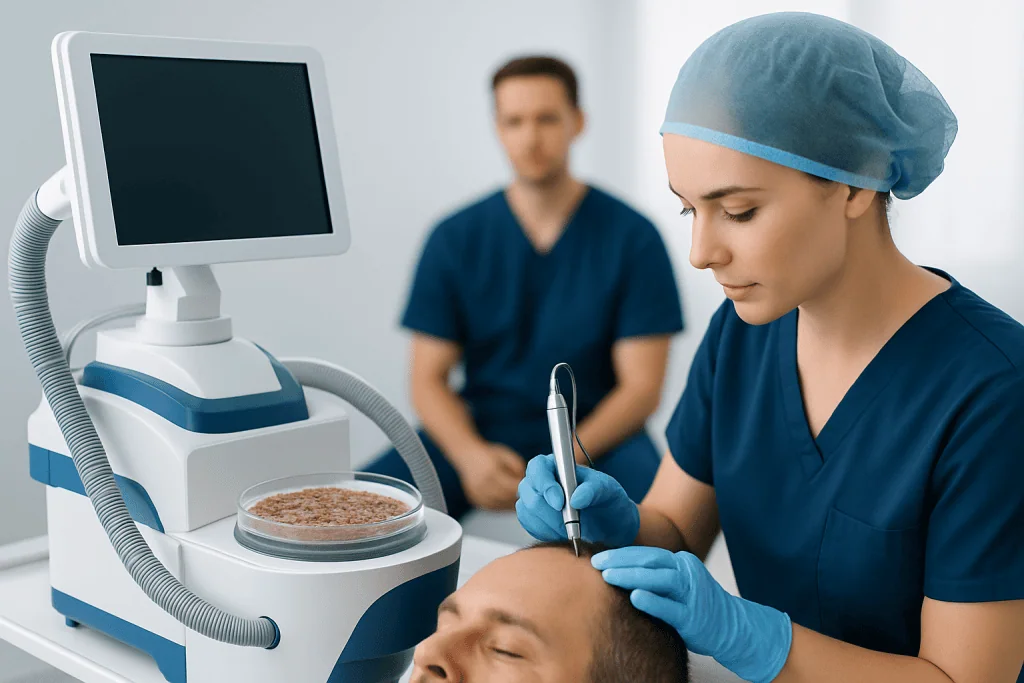
The two main hair transplant techniques are follicular unit extraction and follicular unit transplantation. Follicular unit extraction, or FUE, removes individual follicular units one by one using small circular instruments. These follicles are then placed into tiny recipient sites in the thinning or bald area. FUE avoids a long linear scar, although it creates many small extraction points that usually heal as tiny, less visible marks.
Follicular unit transplantation, or FUT, involves removing a narrow strip of scalp from the donor area. The strip is carefully divided under magnification into natural follicular units, which are then transplanted into the recipient area. FUT may be useful when a larger number of grafts is needed and donor hair characteristics are favorable. It does leave a linear scar, which is usually hidden by surrounding hair when healed.
The best technique depends on several factors, including hair density in the donor area, scalp flexibility, hairstyle preferences, the size of the area needing coverage, previous procedures, and the surgeon’s assessment. Some patients may benefit from one method, while others may be candidates for a combined or staged approach. Both techniques require precise graft handling and careful placement to achieve a natural result.
Who May Be a Good Candidate?

A suitable candidate for hair transplant surgery generally has a clear diagnosis, a stable or predictable pattern of hair loss, and enough donor hair to support the treatment plan. Donor hair supply is limited, so it must be used strategically. Patients with very advanced hair loss, diffuse thinning across the entire scalp, or poor donor density may have fewer surgical options.
Age is not the only factor, but timing matters. Younger patients with early, rapidly progressing hair loss may need careful counseling because their hair loss pattern may continue to change. In some cases, medical therapy or observation may be recommended before surgery to better understand the future pattern of thinning.
Good candidates also have realistic expectations. A hair transplant can improve coverage and framing of the face, but it may not restore the same density the person had in adolescence. Important candidacy factors include:
- Confirmed cause of hair loss and absence of active scalp disease
- Adequate donor hair quality, density, and distribution
- Stable overall health for a minor surgical procedure
- Understanding of recovery, gradual growth, and possible need for future treatments
- Willingness to follow medical and aftercare instructions
Diagnosis and Treatment Planning
Before a hair transplant is recommended, a doctor evaluates the scalp, hair loss pattern, family history, medical history, and any medications or recent illnesses. Hair loss can be caused by genetics, thyroid disease, iron deficiency, hormonal changes, stress, autoimmune conditions, certain medications, or scalp inflammation. Treating an underlying cause may reduce shedding or make surgery safer and more effective.
Planning includes assessment of the donor area and the recipient area. The doctor may examine hair shaft thickness, follicular unit density, hair color contrast with skin, curl or wave, and scalp condition. These features influence how much coverage can be achieved and how the grafts should be distributed. The design of the hairline is especially important because it must look natural at the time of surgery and as the person ages.
Some patients may be advised to use non-surgical treatments before or after surgery. Commonly discussed options include topical or oral medications approved or used for pattern hair loss, anti-inflammatory treatment for specific scalp conditions, platelet-rich plasma in selected settings, and changes in hair care practices. The appropriate plan should be individualized and supervised by a qualified clinician.
What Happens During the Procedure and Recovery?
Hair transplant surgery is usually performed under local anesthesia, sometimes with sedation depending on the patient and the clinic setting. The donor follicles are harvested by FUE or FUT, prepared carefully, and then placed into recipient sites created at the correct angle, depth, and direction. The artistry of placement is important because hair naturally grows in different directions across the hairline, temples, crown, and mid-scalp.
After the procedure, the scalp may feel tender, tight, or mildly swollen for a short time. Small crusts can form around the transplanted grafts and usually shed gradually. Patients are typically given instructions on gentle washing, sleeping position, physical activity, sun protection, and when to return for follow-up. It is important not to pick at scabs or rub the recipient area during early healing.
Most people can return to light daily activities within a few days, depending on the extent of the procedure and their doctor’s advice. Strenuous exercise, swimming, saunas, and direct sun exposure may need to be avoided temporarily. Recovery instructions can vary, so patients should follow the specific plan provided by their medical team.
Expected Results, Limitations, and Risks
Hair transplant results develop gradually. Many transplanted hairs shed within the first weeks after surgery, which can be a normal part of the growth cycle. New growth often begins over the following months, with increasing thickness and cosmetic improvement over time. Final maturation may take up to a year or longer, especially in the crown area.
The result depends on donor hair quality, the number of grafts, the size of the area treated, hair characteristics, ongoing hair loss, and the skill of the surgical team. Patients with fine, straight, light-density hair may need different expectations than patients with thicker or wavier hair. Because genetic hair loss may continue, medical maintenance or future sessions may be discussed.
As with any surgical procedure, there are possible risks. These may include bleeding, infection, swelling, temporary numbness, itching, folliculitis, scarring, poor growth of some grafts, or an unnatural appearance if planning or placement is inadequate. Choosing a qualified team, having a proper medical evaluation, and following aftercare instructions help reduce avoidable problems.
Prevention, Self-Care, and When to See a Doctor
Not all hair loss can be prevented, especially when genetics are the main factor. However, early evaluation can help identify treatable contributors such as nutritional deficiencies, thyroid disorders, medication effects, or scalp inflammation. Gentle hair care, avoiding tight hairstyles, limiting harsh chemical treatments, and treating dandruff or scalp irritation may support overall scalp health.
A doctor should be consulted if hair loss is sudden, patchy, associated with redness or scaling, accompanied by pain or itching, or linked to recent illness, childbirth, new medication, or major weight change. Medical advice is also important before starting any hair loss medication, especially for women who are pregnant, trying to conceive, or breastfeeding, and for people with chronic medical conditions.
Patients considering hair transplant surgery should seek assessment from a qualified dermatologist, plastic surgeon, or hair restoration surgeon with experience in diagnosis as well as surgical planning. Acibadem International’s multidisciplinary specialists and JCI-accredited hospitals evaluate and treat hair loss conditions for international patients, including those considering hair transplantation. The right approach should always be based on an individual medical assessment and realistic goals.
Frequently asked questions
Is a hair transplant permanent?
Transplanted follicles are usually taken from donor areas that are more resistant to pattern hair loss, so they often continue growing long term. However, existing non-transplanted hair may continue to thin over time. This is why treatment planning may include medical therapy or future maintenance.
Does a hair transplant hurt?
The procedure is typically performed with local anesthesia, so patients should not feel sharp pain during graft harvesting or placement. Some tenderness, tightness, or mild swelling can occur during recovery. The medical team provides instructions to help manage comfort safely.
How long does it take to see results after a hair transplant?
Early shedding of transplanted hairs is common in the first weeks and does not usually mean the procedure has failed. New growth generally appears gradually over several months. The final appearance may take up to a year or longer to fully mature.
Which is better, FUE or FUT?
Neither technique is best for everyone. FUE may be preferred by patients who want to avoid a linear scar or keep shorter hairstyles, while FUT may be suitable when a larger graft number is needed and donor conditions are favorable. A specialist can recommend the most appropriate method after examining the scalp and donor area.
Can women have a hair transplant?
Yes, some women are good candidates, especially when thinning is localized and donor hair is strong. However, many women have diffuse hair loss or medical causes that need evaluation before surgery. A proper diagnosis is essential to decide whether transplantation or another treatment is more appropriate.
Can a hair transplant fix a completely bald scalp?
A hair transplant can improve coverage in selected cases, but donor hair is limited. If the bald area is very large, the result may provide framing and improved appearance rather than full original density. The surgeon should explain what is realistically achievable before treatment.
Will people be able to tell that someone had a hair transplant?
Modern hair transplantation can look very natural when the hairline design, graft selection, and placement angles are carefully planned. During early healing, temporary crusting or redness may be visible. Once growth matures, the goal is for the transplanted hair to blend with surrounding hair.
References
- American Academy of Dermatology Association
- International Society of Hair Restoration Surgery
- British Association of Dermatologists
- Mayo Clinic
- Cleveland Clinic
This article is for general information only and is not a substitute for professional medical advice. Please consult a qualified doctor about your individual situation.
Hair transplant in Turkey — costs, graft counts & a free assessment
JCI-accredited · board-certified surgeons · reply within 24h

More from the Health Library



Related Specialists

Assoc. Prof. Dr. Serdar Baylançiçek
Otorhinolaryngology
Prof. Dr. Mehmet Veli Karaaltın
Aesthetic Plastic & Reconstructive Surgery
Prof. Dr. Ömer Yalçın
Pathology
Dr. Gülhan Sarıaydın
Ophthalmology