Hot Oil Treatment: Diagnosis, Outlook, and Modern Treatment Approaches

A hot oil treatment injury is a thermal burn caused by contact with overheated oil. Immediate cooling with cool running water can limit skin damage if done promptly.
Key Takeaways
- A hot oil treatment injury is a thermal burn caused by contact with overheated oil.
- Immediate cooling with cool running water can limit skin damage if done promptly.
- Burn depth, size, location, and symptoms such as blistering help guide treatment decisions.
- Scalp, face, hand, and widespread burns should be assessed by a qualified clinician.
- Modern burn care may include dressings, pain control, infection monitoring, and specialist wound management.
Hot oil treatment usually refers to medical care for a burn caused by overheated cosmetic oil, often affecting the scalp, face, neck, shoulders, or hands. Most mild burns improve with prompt first aid and careful skin care, while deeper or larger burns need medical assessment to protect healing and reduce scarring.
Overview
Hot oil treatment is a common phrase in hair care, but in medical use it can also describe the treatment needed after a burn caused by overheated oil. These burns may happen during home hair treatments, salon procedures, or cooking accidents. Because oil can hold heat longer than water, it may continue to damage the skin for longer after contact.
In most cases, a hot oil burn affects the scalp, forehead, ears, neck, shoulders, hands, or upper back. The injury can range from mild redness and tenderness to blistering or deeper skin damage. The outlook depends on how hot the oil was, how long it stayed on the skin, and how quickly first aid was started.
Many minor burns heal well with simple care. However, burns on delicate areas, larger burns, or burns with severe pain, open skin, or signs of infection need prompt medical evaluation. Early assessment helps reduce discomfort, supports healing, and lowers the risk of complications such as scarring or changes in skin color.
Symptoms and What the Burn May Look Like
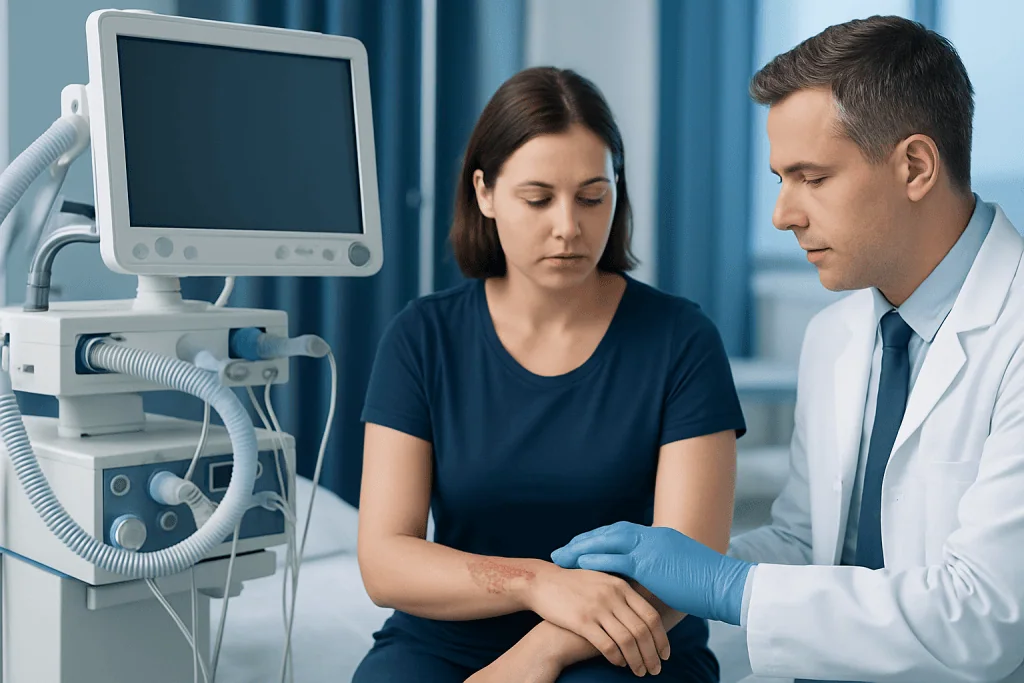
The symptoms of a hot oil burn depend mainly on the depth of injury. A mild superficial burn often causes redness, warmth, tenderness, and mild swelling. The skin may feel tight or sting when touched, but it usually remains dry and intact.
A deeper partial-thickness burn may lead to blisters, more significant swelling, stronger pain, and shiny or moist-looking skin. If the skin becomes pale, leathery, numb, charred, or unusually firm, the burn may be more serious and should be assessed urgently.
Symptoms can also vary by location. On the scalp, oil may become trapped in the hair and continue heating the skin. On the face or around the eyes, swelling can be more noticeable and needs closer attention. Some people later develop peeling, temporary darkening or lightening of the skin, itching, or sensitivity during healing.
- Redness and pain
- Swelling
- Blisters
- Peeling skin
- Shiny, wet, or weeping areas
- Numbness or reduced sensation in a deeper burn
Causes and Risk Factors

Hot oil burns happen when heated oil is applied to the hair or skin at an unsafe temperature or spills during use. This may occur if oil is microwaved unevenly, overheated on a stove, or used without first testing the temperature. Containers can also become very hot and cause contact burns when handled.
Several factors increase risk. Thick oils retain heat, and oil may spread across the skin before a person can wipe it away. Hair can trap the liquid close to the scalp. Children are particularly vulnerable because their skin is thinner and because they may accidentally pull down hot containers.
People with reduced sensation, limited mobility, diabetes, or some neurologic conditions may not feel the heat quickly enough to avoid injury. Burns may also be worse if there is a delay in rinsing and cooling the area. In some cases, a hot oil burn may resemble or occur alongside other skin injuries that need a clinician to distinguish them from burns.
Diagnosis and How Clinicians Assess Severity
Diagnosis is usually based on the history of exposure and a careful examination of the skin. A clinician looks at the size of the burn, the depth, whether blisters are present, and which body areas are involved. The scalp, face, ears, hands, feet, genitals, and major joints often need extra attention because these areas are functionally and cosmetically sensitive.
Burn depth is generally described as superficial, partial-thickness, or full-thickness. This classification helps guide treatment and follow-up. The clinician may also ask about pain level, allergies, tetanus vaccination status, and any medical conditions that could affect healing, such as diabetes or poor circulation.
If there is concern about deeper tissue injury, infection, or delayed healing, referral to a burn or wound specialist may be advised. In selected cases, photographs and measurements are used to track progress over time. If a patient has significant redness spreading beyond the wound, fever, drainage, or worsening pain, the doctor may evaluate for complications such as skin infection.
Treatment Options and Modern Approaches
The first step in hot oil treatment is immediate first aid. The burned area should be cooled under cool running water as soon as possible; ice and very cold packs are generally avoided because they can further injure the skin. Rings, clips, or tight accessories near the area should be removed early if swelling is expected. Oily residue may need gentle washing once the skin has cooled.
For minor burns, treatment often includes non-adherent dressings, gentle wound cleansing, and pain relief recommended by a clinician. Intact small blisters are usually protected rather than opened at home. Moist wound healing with appropriate dressings can reduce friction and support repair. If the scalp is affected, hair care may need to be simplified for a period to avoid further irritation.
More significant burns may require expert wound care, blister management, prescription medications, or debridement when dead tissue needs to be removed. If the burn is deep or healing is delayed, specialists may consider advanced wound care strategies, including wound care and hyperbaric oxygen therapy in selected cases. Where appearance and scar prevention are major concerns, follow-up with teams experienced in plastic and reconstructive surgery may be helpful after the acute phase.
When burns are extensive, involve critical areas, or need close monitoring, hospital-based care may be appropriate. In complex cases, doctors may use coordinated approaches that can include burn treatment by specialists in surgery, dermatology, pain control, and rehabilitation. Near the end of recovery, scar management may include massage guidance, sun protection, silicone-based products, and tailored follow-up.
Recovery, Outlook, and Possible Complications
The outlook for a hot oil burn is usually good when the injury is mild and treated promptly. Superficial burns often improve within days, while deeper partial-thickness burns can take longer and may need repeated dressing changes and checkups. Recovery is influenced by burn depth, body location, age, and overall health.
Some discomfort, itching, peeling, and sensitivity are common as the skin heals. Temporary changes in skin color may follow, especially in people with darker skin tones. Most color changes gradually improve, but some may last longer if the burn was deeper.
Potential complications include infection, delayed healing, thicker scars, or restricted movement if the burn lies across a joint. Burns on the scalp can also make hair care difficult during healing, and deep scalp burns may rarely affect hair growth in the injured area. Good follow-up is important if symptoms are not improving as expected.
For international patients who need specialist evaluation, Acibadem International’s multidisciplinary teams in JCI-accredited hospitals diagnose and treat burn-related injuries with individualized care plans.
Prevention and Self-care
Prevention starts with safe handling of heated oils. Hair oils should be warmed cautiously, mixed evenly, and tested on a small area such as the inner wrist before use. Microwave heating can create hot spots, so products should be stirred well and checked carefully before application.
During use, it helps to protect the face, ears, and neck with towels and to apply only small amounts at a time. Containers should be kept stable and out of children’s reach. Instructions on commercial products should be followed closely, especially around heating methods and contact times.
At home after a mild burn, the area should be kept clean and protected. It is usually best to avoid scrubbing, fragranced products, and home remedies such as butter or toothpaste, which can irritate the skin or raise infection risk. Sun protection is important after healing because new skin is more likely to darken or discolor.
- Test heated oils before applying them
- Avoid overheated containers and uneven microwave heating
- Cool a fresh burn promptly with cool running water
- Do not pop blisters at home
- Use gentle skin care and protect healing skin from the sun
When to Seek Medical Care
Medical care is recommended if a hot oil burn affects the face, eyes, ears, scalp extensively, hands, feet, genitals, or a large area of skin. A doctor should also assess burns with significant blistering, severe pain, white or blackened skin, numbness, or signs that the injury is deeper than a simple surface burn.
Urgent review is also important if the burn occurs in a young child, an older adult, or someone with diabetes, poor circulation, or a weakened immune system. Patients should seek help if redness spreads, pus appears, fever develops, pain worsens, or healing is not progressing after several days.
If there is concern about scarring, prolonged open areas, or function around a joint, specialist review may help guide next steps. In more complex situations, doctors may work with services such as dermatology and burn-focused teams to support both healing and long-term skin recovery.
Frequently asked questions
What does hot oil treatment mean medically?
Medically, hot oil treatment can refer to the care needed after a burn caused by overheated oil touching the skin or scalp. It is different from a cosmetic hair treatment itself, because the medical focus is on burn first aid, wound healing, and preventing complications.
How should a hot oil burn be treated right away?
The area should be cooled with cool running water as soon as possible. Tight items near the burn should be removed early if swelling may occur, and the skin should not be covered with ice, butter, or harsh home remedies. If the burn is large, blistered, or on a sensitive area, medical care is important.
Should blisters from a hot oil burn be popped?
Blisters should generally not be popped at home. Intact blisters can help protect the underlying skin and lower infection risk. A clinician can decide whether any blister needs professional drainage or dressing.
Can a hot oil burn on the scalp affect hair growth?
A mild scalp burn usually does not cause permanent hair loss. However, a deep burn can damage hair follicles and may affect growth in the injured area. A doctor can assess this risk during follow-up.
How long does it take a hot oil burn to heal?
Healing time depends on how deep the burn is and where it is located. Superficial burns may improve within days, while deeper burns can take weeks and may need repeat dressing changes or specialist review.
When should someone worry about infection after a hot oil burn?
Possible warning signs include spreading redness, increasing pain, swelling, pus, unpleasant odor, or fever. If any of these occur, or if the wound is not improving, a healthcare professional should assess it promptly.
References
- World Health Organization
- American Burn Association
- National Institute for Health and Care Excellence
- American Academy of Dermatology
- MedlinePlus
This article is for general information only and is not a substitute for professional medical advice. Please consult a qualified doctor about your individual situation.
Hair transplant in Turkey — costs, graft counts & a free assessment
JCI-accredited · board-certified surgeons · reply within 24h