

How Long Do Chemotherapy Treatments Take: How It Works, Results and What to Expect

Chemotherapy is usually given in cycles, with treatment days followed by recovery time. An individual appointment can be brief or can last several hours, depending on the medicines and method of delivery.
Key Takeaways
- Chemotherapy is usually given in cycles, with treatment days followed by recovery time.
- An individual appointment can be brief or can last several hours, depending on the medicines and method of delivery.
- The number of cycles varies widely and is tailored to the cancer type, stage, treatment goal and response.
- Side effects may be strongest at different points in each cycle, but supportive care can help manage many symptoms.
- Blood tests, examinations and imaging help the oncology team assess safety and whether treatment is working.
- Urgent symptoms such as fever during chemotherapy require prompt medical advice.
How long do chemotherapy treatments take depends on the cancer type, treatment goal, medicines used and how the body responds. A single infusion may take minutes to several hours, while a chemotherapy plan commonly involves repeated cycles over weeks or months.
How long do chemotherapy treatments take?
How long do chemotherapy treatments take? One treatment visit may last from a few minutes to several hours, depending on the medications, whether they are given by infusion or injection, and whether monitoring is needed. Chemotherapy tablets or capsules may be taken at home on a schedule set by the oncology team.
The complete course is usually arranged in cycles. A cycle includes one or more treatment days followed by time for the body to recover. Many cycles are two, three or four weeks long, and a treatment plan may continue for several months. However, duration differs greatly between individuals: chemotherapy may be given before surgery, after surgery, with radiotherapy, or as ongoing treatment to control advanced cancer.
The oncologist develops the schedule around the specific cancer, its extent, pathology results, a person’s general health and the intended benefit of treatment. Changes to timing are sometimes needed if blood counts are low or side effects need additional recovery time; this does not necessarily mean the treatment is failing.
How chemotherapy works and why treatment is given in cycles
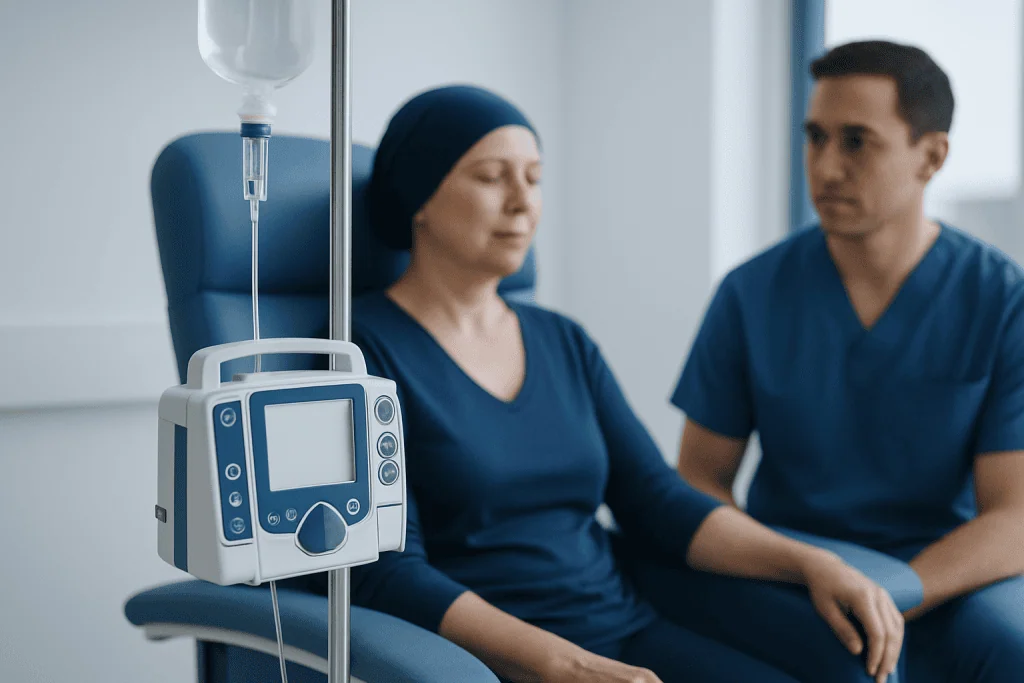
Chemotherapy refers to medicines that destroy cancer cells or slow their growth. Because cancer cells often divide more rapidly than many healthy cells, they can be especially vulnerable to these medicines. Chemotherapy can also affect healthy fast-growing cells in the bone marrow, digestive tract and hair follicles, which explains why side effects can occur.
Cycles allow time for healthy tissues, particularly the bone marrow, to recover between doses. This approach also gives medicines repeated opportunities to target cancer cells as they move through different stages of growth. The exact medicines and schedule are selected carefully because different cancers respond to different drug combinations.
Chemotherapy may be the main treatment, or it may be combined with surgery, radiotherapy, immunotherapy, targeted therapy or hormone therapy. It can be used with a curative aim, to lower the chance of cancer returning after local treatment, to shrink a tumor before surgery, or to relieve symptoms and slow cancer growth when cure is not possible.
Who may be offered chemotherapy?

Whether chemotherapy is appropriate depends on much more than a cancer diagnosis alone. The cancer type, stage, grade, molecular and genetic test results, prior treatments and expected sensitivity to particular medicines all matter. For some cancers, surgery or radiotherapy is the main treatment; for others, systemic treatment such as chemotherapy is central to care.
The oncology team also considers overall health, kidney and liver function, heart health, nutrition, current medicines, pregnancy status and personal treatment goals. Older age alone does not rule out chemotherapy, but a person’s functional ability and other medical conditions should be assessed.
Before treatment begins, patients usually have blood tests and may have scans, heart tests or other assessments. The team explains the likely benefits, potential harms, alternatives and practical implications. Shared decision-making helps ensure that the proposed plan reflects both medical evidence and the individual’s priorities.
- Neoadjuvant chemotherapy may be used before surgery or radiotherapy.
- Adjuvant chemotherapy may be used after local treatment to reduce recurrence risk.
- Systemic chemotherapy may treat cancer that has spread or cannot be removed surgically.
What happens during a chemotherapy treatment visit?
Before each treatment, a nurse or clinician typically asks about symptoms, medicines and any side effects since the previous cycle. Blood tests are often reviewed to check white blood cells, platelets, red blood cells, kidney function and liver function. If it is safe to proceed, treatment is prepared specifically for that day’s plan.
Chemotherapy may be administered through a vein in the arm, a central line, a port placed under the skin, an injection, or oral medication. Infusion treatments are usually delivered in a chemotherapy unit, where nurses monitor for reactions and can provide medicines for nausea, allergy symptoms or other concerns. Some regimens include fluids or pre-treatment medicines, which can lengthen the visit.
After treatment, the team provides written instructions about medications, hydration, diet, infection precautions and contact numbers. It is helpful to arrange transport for the first few visits, particularly if medicines may cause drowsiness or fatigue. Patients should ask their care team before taking supplements, herbal products or over-the-counter medicines, as some can interact with cancer treatment.
Recovery timeline: what to expect between cycles
Recovery differs by regimen and person. Some people feel relatively well shortly after an infusion, while others develop fatigue, nausea, appetite changes, bowel changes or aches over the next few days. Blood counts may reach their lowest point several days to around two weeks after treatment, depending on the medicines used, before recovering ahead of the next cycle.
Fatigue can build across several cycles and may continue for weeks or months after chemotherapy ends. Hair loss, numbness or tingling in the hands and feet, changes in taste, and menstrual or fertility effects also vary by drug. Not everyone experiences every side effect, and some side effects are temporary while others need longer follow-up.
Rest, regular fluids, small nourishing meals, gentle activity when possible and accepting practical support can make recovery more manageable. The oncology team may adjust anti-sickness medicines, prescribe growth factor support, modify treatment timing or offer other measures when side effects interfere with daily life. Patients should not wait until the next appointment to report severe or worsening symptoms.
What is the hardest week of chemo?
There is no single hardest week of chemotherapy for everyone. For many regimens, side effects such as tiredness, nausea, bowel changes or mouth soreness may be more noticeable in the days after treatment. The period when white blood cells are at their lowest, sometimes called the nadir, can occur roughly one to two weeks after a dose, although timing depends on the medicines used.
Some people find later cycles harder because fatigue and other effects can accumulate. Others feel most concerned during the first cycle because the schedule and physical response are new. The oncology team can explain the expected pattern for the specific regimen and should be told about any symptoms affecting day-to-day functioning.
Supportive medications and early symptom management can make a meaningful difference. Keeping a brief record of symptoms, temperature, food intake and energy levels can help the clinical team identify patterns and tailor care.
What are good signs that chemo is working?
Feeling better can be encouraging, particularly when chemotherapy is being used to relieve symptoms caused by cancer. For example, less pain, easier breathing, improved appetite or a reduction in a visible lump may occur in some situations. However, symptoms and side effects alone cannot reliably show whether chemotherapy is working.
The most dependable assessment combines clinical examinations, blood tests when appropriate, tumor markers for selected cancers and imaging studies such as CT, MRI or PET scans. These checks are often performed after a planned number of cycles rather than immediately after each treatment, because tumors may take time to show a measurable response.
Side effects are not proof that chemotherapy is effective, and having few side effects does not mean it is ineffective. The oncology team reviews results in context and discusses whether to continue, adjust or change the treatment plan.
What organ is chemo hard on, and how are risks monitored?
Chemotherapy can affect different organs depending on the specific medicine. Bone marrow is commonly affected, which can lower infection-fighting white blood cells, red blood cells or platelets. Certain drugs may also affect the kidneys, liver, heart, lungs, nerves, bladder or hearing, which is why treatment is individualized and monitored closely.
Before and during treatment, clinicians use blood tests and, when needed, heart scans, urine tests, lung assessments or neurological examinations. Dose changes, protective medicines, hydration plans and selecting an alternative regimen may reduce risk for some patients. It is important to tell the team about pre-existing heart, kidney, liver, lung or nerve conditions.
The potential benefits of chemotherapy are balanced against its risks for each individual. Patients should ask which side effects are most relevant to their own medicines, what can be done to prevent them, and which symptoms require a same-day call.
How many rounds of chemo do you normally get?
There is no standard number of chemotherapy rounds for all cancers. A plan may involve a few cycles, such as three to six cycles, or more prolonged treatment. Some medicines are given weekly, while others are administered every two, three or four weeks; oral chemotherapy may follow a different rhythm.
The number of cycles depends on the cancer type, stage, whether treatment is before or after surgery, the goal of treatment, response on scans and blood tests, and tolerability. When chemotherapy is used after surgery, the planned duration is often defined in advance. When it is used for advanced cancer, it may continue for as long as benefit outweighs side effects, with regular reassessment.
Delays or dose adjustments can be appropriate for safety and quality of life. Patients are encouraged to discuss the expected number of cycles at the start of treatment and ask how the team will decide whether to continue or stop.
When to seek medical care during chemotherapy
Patients should follow the urgent contact instructions provided by their oncology service. A fever during chemotherapy can be a sign of infection when immune defenses are reduced and should be reported promptly, even if other symptoms seem mild. The care team will provide the temperature threshold and local emergency guidance relevant to the individual regimen.
Urgent medical advice is also important for chills, shortness of breath, chest pain, confusion, uncontrolled vomiting or diarrhea, inability to drink fluids, unusual bleeding or bruising, severe abdominal pain, a painful or swollen arm or leg, or an allergic-type reaction during or after infusion. It is safer to call early rather than wait for a routine visit.
Acibadem International’s multidisciplinary specialists and JCI-accredited hospitals support international patients undergoing cancer assessment and treatment. A qualified oncology team can explain the expected duration, monitoring plan and supportive care for an individual chemotherapy regimen.
Frequently asked questions
How long does a chemotherapy infusion take?
An infusion can take from minutes to several hours. The duration depends on the medicines, the delivery method, pre-treatment medications, fluids and observation needed for that regimen. The oncology team can estimate the length of each visit before treatment begins.
Can chemotherapy be given at home?
Some chemotherapy is taken as tablets or capsules at home, while certain infusion treatments may be offered at home in selected settings. This depends on the medication, safety requirements and local services. Oral chemotherapy still requires careful monitoring and regular communication with the oncology team.
Do chemotherapy side effects start immediately?
Some side effects, including infusion reactions, can occur during treatment or soon afterward. Others may develop over the following days, and low blood counts often occur later in the cycle. The expected timing depends on the drugs used.
Will chemotherapy always cause hair loss?
No. Hair loss depends on the specific chemotherapy medicines and doses. Some regimens cause complete hair loss, some cause thinning, and others do not usually affect hair. The oncology team can explain the likelihood for the planned treatment.
Can a chemotherapy schedule be delayed?
Yes, a cycle may be delayed or adjusted if blood counts have not recovered, side effects are significant or an infection develops. Such changes are made to protect safety and do not automatically mean treatment is not working. The clinical team weighs the importance of maintaining treatment intensity against the need for recovery.
What should a person bring to a chemotherapy appointment?
Comfortable clothing, water, snacks if permitted, entertainment and a list of medicines can be useful for longer visits. It may also help to bring a support person if allowed by the treatment center. The care team can advise on any specific items needed for the regimen.
References
- National Cancer Institute
- American Cancer Society
- American Society of Clinical Oncology
- National Health Service
- World Health Organization
This article is for general information only and is not a substitute for professional medical advice. Please consult a qualified doctor about your individual situation.
Chemotherapy in Turkey — costs, top hospitals & a free quote
JCI-accredited · board-certified surgeons · reply within 24h

Hematology Department
17 specialists in this unitMore from the Health Library



Related Specialists

Dr. Mustafa Mert Okumuş (m)
Aesthetic Plastic and Reconstructive Surgery
Dr. Murat Apaydın
Pulmonary Medicine
Dt. Ebru İspirgil
Oral & Dental Health
Dr. Jirayr Ağazaryan
General Surgery