It Band Pain: Common Causes, Related Conditions, and When to See a Doctor

IT band pain usually affects the outer side of the knee, but it can also be felt at the outer hip or thigh. Overuse, sudden training changes, poor movement mechanics, and muscle weakness commonly contribute.
Key Takeaways
- IT band pain usually affects the outer side of the knee, but it can also be felt at the outer hip or thigh.
- Overuse, sudden training changes, poor movement mechanics, and muscle weakness commonly contribute.
- Many cases improve with activity adjustment, physical therapy, and targeted strengthening.
- Persistent, severe, or unexplained pain should be assessed to rule out other causes of outer knee or hip pain.
- Early evaluation can help identify related problems such as tendon, joint, or spinal conditions.
IT band pain most often refers to pain along the outside of the knee or hip caused by irritation of the iliotibial band, a thick band of connective tissue on the outer thigh. It is common in runners, cyclists, and active adults, but it can also develop with changes in activity, biomechanics, or muscle strength.
Overview: What IT Band Pain Means
IT band pain usually describes discomfort caused by irritation of the iliotibial band, often called the IT band. This strong band of connective tissue runs from the outer pelvis down the outside of the thigh to just below the knee. When it becomes irritated, a person may feel pain on the outer side of the knee, outer hip, or less commonly along the outer thigh.
In many people, the problem is related to iliotibial band syndrome, an overuse condition seen especially in runners, cyclists, hikers, and people whose exercise routine changes quickly. The pain is often linked to repeated bending and straightening of the knee or to movement patterns that place extra stress on the outer leg.
Although IT band pain is common, it is not the only reason for pain in this area. Problems involving tendons, the knee joint, the hip joint, or even the lower back can create similar symptoms. Because of that, ongoing or unclear pain deserves a proper assessment rather than self-diagnosis alone.
Where the Pain Is Felt and Common Symptoms
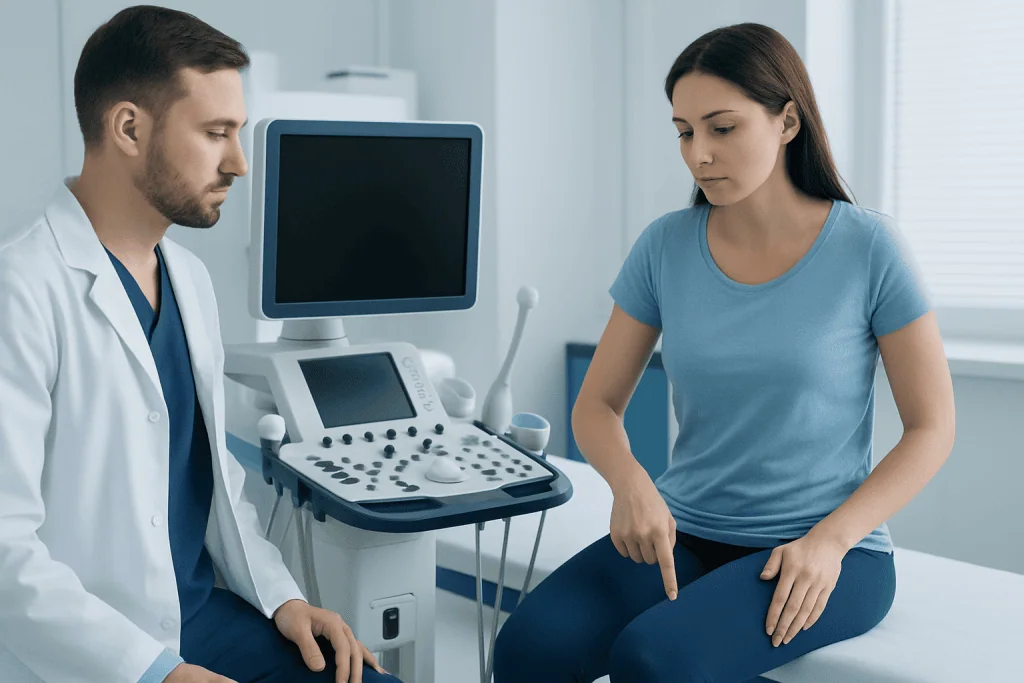
The classic symptom is pain at the outside of the knee, especially during repetitive activity. Many people notice that discomfort starts after a certain distance or duration of exercise, then gradually worsens if they continue. Some describe the sensation as sharp, stinging, burning, or aching.
Others feel IT band pain higher up, around the outer hip. This may be accompanied by tenderness when lying on that side, climbing stairs, standing from a chair, or walking uphill. In some cases, the pain seems to travel along the side of the thigh, though the main tender area is usually near the knee or hip.
Common features can include:
- Pain on the outer side of the knee during running, cycling, or prolonged walking
- Outer hip tenderness or soreness
- Pain that worsens with downhill running or stairs
- A feeling of tightness along the outer thigh
- Tenderness when pressing the painful area
- Reduced ability to continue usual exercise comfortably
Swelling is usually not prominent in straightforward IT band syndrome. If a person has significant swelling, a locked knee, instability, fever, or pain after a clear injury, another cause may be more likely and should be evaluated.
Common Causes and Why IT Band Pain Develops

IT band pain often develops when repeated movement irritates structures near the outer knee or hip. It is frequently triggered by training patterns rather than one single injury. A sudden increase in running distance, adding hills, changing cycling intensity, or returning to exercise too quickly after time off can all play a role.
Movement mechanics also matter. Weakness in the hip muscles, reduced control of the pelvis, tight surrounding tissues, or foot and leg alignment differences can increase strain on the outer leg. These factors do not mean the IT band itself is always the only problem; rather, they can create a pattern of overload that leads to pain.
Common contributing factors include:
- Rapid increases in exercise volume or intensity
- Frequent running on sloped or uneven surfaces
- Long-distance running or repetitive cycling
- Weak hip abductors or gluteal muscles
- Limited flexibility in the hips or thighs
- Poorly fitted equipment, such as bicycle setup issues
- Returning to sport before full recovery
In some people, IT band pain overlaps with other musculoskeletal conditions. Outer hip pain may be related to hip pain from tendon irritation or bursal inflammation, while persistent knee symptoms may need evaluation for knee pain caused by joint or cartilage problems.
Related Conditions That Can Mimic IT Band Pain
Not all outer knee or outer hip pain is caused by the IT band. One reason this symptom can be confusing is that nearby structures can produce very similar discomfort. A careful history and physical examination help narrow the cause and guide the most appropriate treatment.
At the knee, possible alternatives include a meniscus problem, ligament irritation, early arthritis, tendon-related pain, or referred pain from the hip or lower back. At the hip, outer pain may come from gluteal tendinopathy, greater trochanteric pain syndrome, bursitis, or joint conditions. Sometimes pain that seems to be on the side of the leg is actually related to the spine, especially when there is numbness, tingling, or pain radiating below the knee.
People should be particularly cautious about assuming every sports-related ache is just IT band syndrome if symptoms are unusual. Pain at rest, nighttime pain, rapid swelling, fever, weakness, or pain after a fall may suggest a different diagnosis. If symptoms persist despite rest and exercise modification, it is reasonable to ask a clinician whether imaging or specialist review is needed.
How Doctors Diagnose IT Band Pain
Diagnosis is usually based on the pattern of symptoms and a physical examination. A doctor or physical therapist will often ask when the pain started, what activities bring it on, whether training recently changed, and exactly where the pain is located. They may observe walking, squatting, balance, and single-leg movement to identify muscle weakness or control problems.
During the examination, the clinician may check for tenderness along the outside of the knee or hip, hip strength, flexibility, knee range of motion, and signs that point toward another source of pain. The goal is not only to confirm IT band irritation but also to understand why it developed.
Imaging is not always necessary for typical cases. However, if symptoms are severe, long-lasting, or atypical, tests may help rule out other causes. Depending on the situation, a clinician may recommend MRI or X-ray to assess bones, joints, and surrounding soft tissues. In more complex cases, especially where spinal symptoms are present, further evaluation may also be considered.
When pain is persistent or the diagnosis is uncertain, assessment by specialists in orthopedics and traumatology can help clarify the problem and create a tailored treatment plan.
Treatment Options and Recovery
Most cases of IT band pain improve with conservative treatment. The first step is usually to reduce or temporarily modify the activity that triggers pain, rather than pushing through symptoms. This may mean shortening runs, avoiding hills, reducing cycling intensity, or taking a brief break from the provoking movement while staying active in other comfortable ways.
Physical therapy is often central to recovery. Treatment commonly focuses on strengthening the hip and gluteal muscles, improving movement control, and gradually reloading the irritated tissues. Stretching may be used when appropriate, but long-term improvement usually depends more on correcting load and mechanics than on stretching alone.
Other measures can include ice after activity, short-term use of pain-relieving medicines when suitable and approved by a doctor, soft tissue techniques, and adjustments to footwear, training surfaces, or bicycle fit. A guided return-to-sport plan helps reduce the chance of symptoms coming back.
If pain does not improve, a clinician may reconsider the diagnosis or look for overlapping problems around the hip, knee, or lower back. In selected situations, further treatment may be directed at an associated condition rather than the IT band itself. Near the end of the care pathway, some patients may benefit from multidisciplinary assessment; Acibadem International’s specialists in JCI-accredited hospitals diagnose and treat musculoskeletal conditions for international patients.
Prevention and Self-Care
Preventing IT band pain usually involves managing training load and supporting good movement patterns. A gradual increase in exercise is one of the most effective strategies. Abrupt changes in speed, distance, hills, or workout frequency commonly trigger symptoms, especially after a break from activity.
Regular strengthening of the hips, gluteal muscles, and core may help reduce excess stress on the outer knee and hip. Runners and cyclists may also benefit from reviewing technique, training schedule, and equipment. These steps are not a guarantee against injury, but they often reduce repeated overload.
Helpful self-care habits include:
- Increase training volume and intensity gradually
- Warm up before exercise and cool down afterward
- Include hip and leg strengthening exercises regularly
- Vary routes and surfaces when possible
- Replace worn footwear if advised by a professional
- Allow enough recovery between demanding sessions
- Seek guidance early if pain starts to become recurrent
If a person has frequent recurrences, it can be useful to have a sports medicine, rehabilitation, or orthopedic assessment instead of repeatedly resting and restarting. Identifying the underlying movement or training issue may prevent a longer interruption to activity.
When to Seek Medical Care
A person should consider medical assessment if IT band pain does not start improving after a short period of activity modification, if it keeps returning, or if it interferes with normal walking, work, sleep, or exercise goals. Persistent pain may mean the condition needs structured rehabilitation or that another diagnosis is present.
Medical care is especially important if there is significant swelling, redness, warmth, fever, a popping injury, knee instability, inability to bear weight, numbness, weakness, or pain that spreads below the knee. These features are less typical of simple IT band irritation and may need prompt evaluation.
Early review can also be helpful for athletes preparing for an event, people with repeated injuries, and anyone who is unsure whether the pain is coming from the knee, hip, or back. A clinician can advise on safe return to activity and whether further testing or specialist referral is needed.
Frequently asked questions
What does IT band pain feel like?
IT band pain often feels like sharp, burning, or aching pain on the outer side of the knee. Some people also feel soreness or tenderness at the outer hip or a sense of tightness along the side of the thigh. It often becomes more noticeable during repetitive exercise such as running or cycling.
Can IT band pain cause hip pain as well as knee pain?
Yes. Although many people associate the IT band with outer knee pain, irritation can also be felt near the outer hip. In some cases, the main problem may involve nearby hip tendons or other outer-hip structures rather than the IT band alone.
How long does IT band pain take to improve?
Recovery time varies depending on how long symptoms have been present and whether the underlying cause is addressed. Mild cases may improve over weeks with activity changes and strengthening, while persistent cases can take longer. Returning too quickly to full activity may delay healing.
Is it safe to keep running with IT band pain?
It depends on the severity of symptoms. Mild discomfort that does not worsen may sometimes be managed with reduced training, but pain that builds during exercise is a sign the area is being irritated further. A clinician or physical therapist can help decide how much activity is safe during recovery.
Do I need imaging for IT band pain?
Not always. Typical cases are often diagnosed based on symptoms and examination alone. Imaging may be recommended if pain is severe, lasts longer than expected, or suggests another condition involving the knee, hip, or lower back.
What is the best treatment for IT band pain?
There is no single best treatment for everyone, but a combination of activity modification and targeted rehabilitation is often most effective. Strengthening the hip and gluteal muscles, correcting training errors, and returning to sport gradually are key parts of care. Treatment should be individualized when symptoms persist or recur.
References
- American Academy of Orthopaedic Surgeons
- National Institute of Arthritis and Musculoskeletal and Skin Diseases
- American Physical Therapy Association
- Mayo Clinic
- MedlinePlus
This article is for general information only and is not a substitute for professional medical advice. Please consult a qualified doctor about your individual situation.
Joint and spine care in Turkey — expert assessment & treatment
JCI-accredited · board-certified surgeons · reply within 24h

More from the Health Library



Related Specialists

Dt. Nupelda Ayçiçek Yalçındağ
Dentistry
Dr. Ferah Sarıca
Anesthesiology
Dr. Serpil Pırmit
Dermatology
Fzt. Sevgi Nama
Physical Medicine and Rehabilitation