Kidney Stones: Pain, Diagnosis, Treatment, and Prevention

Kidney stones may cause severe flank pain, blood in the urine, nausea, and frequent or painful urination. Diagnosis usually involves urine tests, blood tests, and imaging such as ultrasound or CT scan.
Key Takeaways
- Kidney stones may cause severe flank pain, blood in the urine, nausea, and frequent or painful urination.
- Diagnosis usually involves urine tests, blood tests, and imaging such as ultrasound or CT scan.
- Small stones may pass with hydration, pain control, and medical supervision, while larger stones may need procedures.
- Stone type matters because prevention depends on the underlying cause and urine chemistry.
- Anyone with fever, persistent vomiting, severe pain, or reduced urination should seek urgent medical care.
Kidney stones are hard mineral deposits that form in the urinary tract and may cause intense pain when they move or block urine flow. Most stones can be treated effectively, and many future stones can be prevented with the right medical evaluation and lifestyle guidance.
Overview
Kidney stones, also called renal calculi or urinary stones, are hard deposits made from minerals and salts that crystallize in the kidneys or elsewhere in the urinary tract. They vary in size from tiny grains to larger stones that can block urine flow. A stone may remain in the kidney without causing symptoms, or it may travel into the ureter, the narrow tube that carries urine from the kidney to the bladder.
The pain associated with kidney stones can be intense, especially when a stone moves or causes obstruction. However, kidney stones are common and highly treatable. The best approach depends on the stone size, location, symptoms, kidney function, and whether there is infection or another medical condition involved.
Kidney stones are not all the same. The most common types contain calcium, often combined with oxalate or phosphate. Other types include uric acid stones, struvite stones linked to certain infections, and cystine stones related to a rare inherited condition. Identifying the type can help doctors recommend more targeted prevention.
Symptoms of Kidney Stones
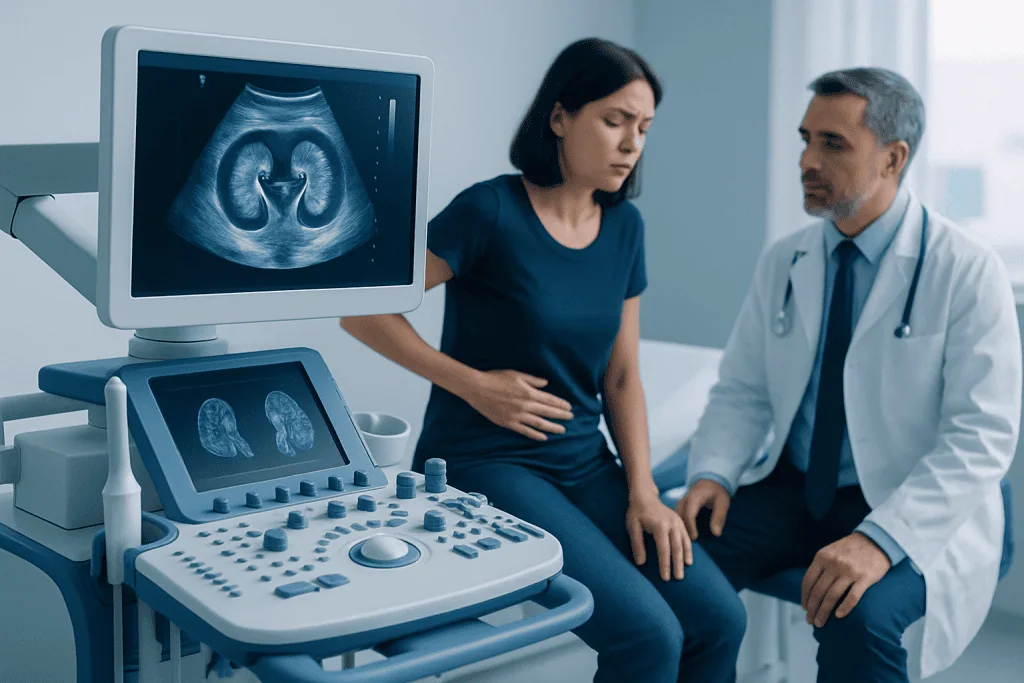
Some kidney stones cause no symptoms and are found during imaging for another reason. Symptoms usually begin when a stone moves within the kidney or enters the ureter. Pain can come in waves because the urinary tract contracts as it tries to move the stone along.
Typical kidney stone symptoms may include:
- Sharp or cramping pain in the side or back, often below the ribs
- Pain that spreads to the lower abdomen, groin, or genital area
- Blood in the urine, which may look pink, red, brown, or may only be seen on testing
- Burning or pain during urination
- Frequent or urgent need to urinate
- Nausea and vomiting
- Cloudy or foul-smelling urine, especially if infection is present
The location and intensity of pain can change as the stone moves. A small stone may cause significant discomfort, while a larger stone may sometimes cause less pain if it is not moving. Fever, chills, or feeling very unwell may suggest a urinary infection with obstruction, which needs urgent medical attention.
Causes and Risk Factors
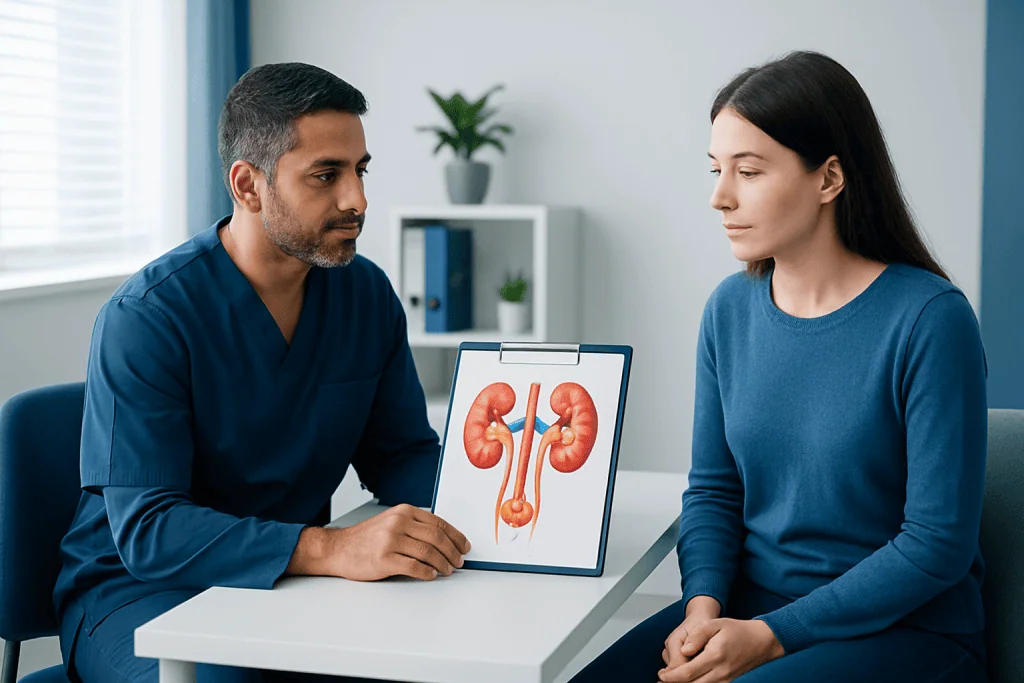
Kidney stones form when urine contains more crystal-forming substances than the fluid can dilute, or when there are not enough natural inhibitors to prevent crystals from sticking together. Low urine volume is one of the most important contributors. When urine is concentrated, minerals have a higher chance of forming crystals.
Several factors can increase the risk of kidney stones. These include a personal or family history of stones, not drinking enough fluids, hot climates or heavy sweating, high salt intake, diets very high in animal protein, obesity, and some digestive conditions that affect absorption. Certain medications and supplements may also influence stone risk, so patients should discuss their full medication list with a doctor.
Medical conditions can also play a role. Recurrent urinary tract infections can lead to struvite stones. Gout and high uric acid levels can contribute to uric acid stones. Hyperparathyroidism, some kidney disorders, and rare inherited conditions such as cystinuria may cause recurrent stones. Because causes differ, repeated stones should be evaluated rather than treated as isolated events.
Diagnosis
Diagnosis starts with a medical history and physical examination. The doctor asks about the pain pattern, urinary symptoms, fever, past stones, diet, fluid intake, medications, and family history. The examination may check for tenderness in the flank area and signs of dehydration or infection.
Urine and blood tests are commonly used. A urinalysis can look for blood, crystals, infection markers, and urine acidity. Blood tests may assess kidney function, calcium, uric acid, electrolytes, and signs of infection when appropriate. If a stone is passed, collecting it for laboratory analysis can provide valuable information about its type.
Imaging helps confirm the diagnosis and locate the stone. Ultrasound is often used because it does not involve radiation and can show kidney swelling or some stones. A non-contrast CT scan is highly sensitive for detecting stones and may be recommended when the diagnosis is uncertain, symptoms are severe, or complications are suspected. The choice of imaging depends on the patient, pregnancy status, previous imaging, and clinical urgency.
Treatment Options
Treatment depends on stone size, location, severity of symptoms, kidney function, and whether infection is present. Many small stones pass naturally through the urinary tract. In these cases, treatment may include drinking fluids as advised, pain relief, anti-nausea medicine if needed, and sometimes medication that helps relax the ureter. Patients are often asked to strain urine so the stone can be collected and analyzed.
Urgent treatment is needed if a stone is blocking urine flow and there is infection, worsening kidney function, uncontrolled pain, persistent vomiting, or a solitary kidney. In these situations, doctors may need to drain the kidney using a ureteral stent or a nephrostomy tube before or alongside definitive stone treatment.
Procedural options may be recommended for stones that are too large to pass, continue to cause symptoms, or are unlikely to pass safely. Common options include shock wave lithotripsy, which uses sound waves to break certain stones into smaller pieces; ureteroscopy, in which a thin scope is passed through the urinary tract to remove or fragment the stone; and percutaneous nephrolithotomy, a minimally invasive surgery used for larger or more complex kidney stones. The urologist chooses the method based on stone characteristics and the patient’s overall health.
Prevention and Self-care
Prevention begins with understanding why stones formed. General measures help many people, but patients with recurrent stones, children with stones, a single kidney, kidney disease, or unusual stone types may need a more detailed metabolic evaluation. This can include 24-hour urine testing to measure urine volume, calcium, oxalate, citrate, uric acid, sodium, and other factors.
Staying well hydrated is one of the most effective prevention strategies. The goal is usually to produce pale urine throughout the day, although individual needs vary with climate, activity, heart or kidney conditions, and medical advice. People who sweat heavily may need extra fluids. Water is the preferred choice; sugary drinks and excessive cola intake are generally discouraged.
Dietary prevention should be personalized, but common recommendations include limiting excess salt, avoiding very high animal-protein intake, and maintaining normal dietary calcium rather than eliminating calcium completely. Patients prone to calcium oxalate stones may be advised to moderate high-oxalate foods and pair them with calcium-containing foods during meals. Uric acid stones may require attention to purine-rich foods and urine acidity. Any major diet change or supplement use should be discussed with a qualified clinician or dietitian.
When to See a Doctor
Medical evaluation is important when kidney stone symptoms appear, especially if the person has never had a stone before. Pain in the side or back, blood in the urine, or urinary symptoms can have several causes, so testing is needed to confirm the diagnosis and rule out other conditions.
Urgent care should be sought for fever, chills, severe or worsening pain, persistent vomiting, inability to drink fluids, difficulty passing urine, or signs of dehydration. People who are pregnant, have one kidney, have known kidney disease, are immunocompromised, or have a history of complicated urinary infections should seek prompt medical advice.
Follow-up is also important after a stone passes or is treated. The doctor may check that the stone has cleared, kidney swelling has resolved, and kidney function is stable. For international patients, Acibadem International provides multidisciplinary evaluation and treatment for kidney stones in JCI-accredited hospitals, including urology, nephrology, imaging, and laboratory services when needed.
Frequently asked questions
What does kidney stone pain feel like?
Kidney stone pain is often described as sharp, cramping, or wave-like pain in the side or back below the ribs. It may move toward the lower abdomen or groin as the stone travels. Some people also have nausea, vomiting, or urinary urgency.
Can kidney stones pass on their own?
Many small stones can pass naturally with time and medical supervision. Whether a stone passes depends on its size, shape, location, and the person’s anatomy. A doctor may recommend pain control, hydration guidance, and follow-up imaging.
How are kidney stones diagnosed?
Doctors usually use a combination of medical history, physical examination, urine tests, blood tests, and imaging. Ultrasound or CT scan can help locate the stone and show whether it is blocking urine flow. If the stone is collected, laboratory analysis can identify its type.
Do all kidney stones need surgery?
No. Many kidney stones do not require surgery and may pass with conservative treatment. Procedures are considered when stones are large, painful, blocking urine, associated with infection, or unlikely to pass safely.
What foods should be avoided with kidney stones?
There is no single diet for everyone because stone types differ. Many patients benefit from reducing excess salt and avoiding very high animal-protein intake. People with calcium oxalate stones may need to moderate high-oxalate foods, while those with uric acid stones may need different guidance.
How can someone prevent kidney stones from coming back?
Prevention often includes drinking enough fluids, reducing excess salt, eating a balanced diet, and following advice based on stone analysis or urine testing. Some patients need prescription medication to correct specific urine chemistry problems. Regular follow-up helps adjust the plan over time.
References
- European Association of Urology
- American Urological Association
- National Institute of Diabetes and Digestive and Kidney Diseases
- Mayo Clinic
- Cleveland Clinic
This article is for general information only and is not a substitute for professional medical advice. Please consult a qualified doctor about your individual situation.
Explore treatments in Turkey — costs, top hospitals & a free quote
JCI-accredited · board-certified surgeons · reply within 24h

More from the Health Library


Related Specialists

Assoc. Prof. Dr. Nilüfer Aykaç
Pulmonology
Dt. Nadin Gemrekoğlu
Oral & Dental Health
Dr. Hakan Özbay
Orthopedic Surgery & Traumatology
Assoc. Prof. Dr. Elif Şenocak Taşçı
Medical Oncology