Laser Dental Whitening: What Patients Need to Know
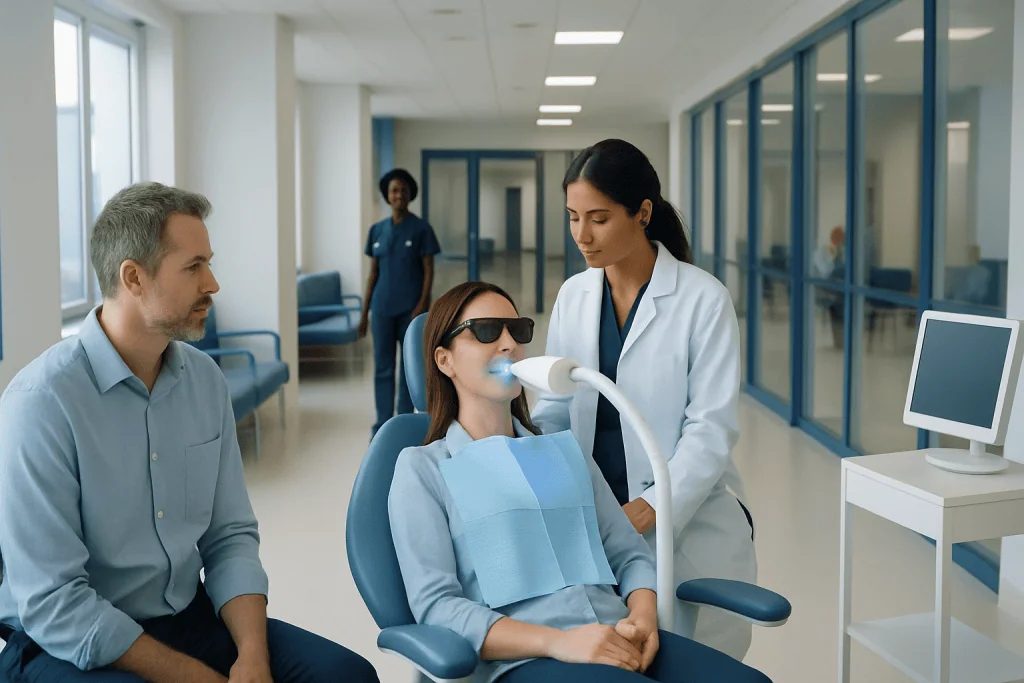
Laser dental whitening uses a peroxide-based gel, often with a light or laser device, to lighten natural tooth enamel and dentin. A dental examination is important before whitening because cavities, gum disease, cracks, and exposed roots can increase discomfort or need treatment first.
Key Takeaways
- Laser dental whitening uses a peroxide-based gel, often with a light or laser device, to lighten natural tooth enamel and dentin.
- A dental examination is important before whitening because cavities, gum disease, cracks, and exposed roots can increase discomfort or need treatment first.
- Temporary tooth sensitivity and gum irritation are the most common side effects and usually settle soon after treatment.
- Crowns, veneers, fillings, and bonding do not whiten, so color matching may need to be considered before treatment.
- Whitening results are not permanent; limiting tobacco and strongly pigmented foods and drinks can help preserve the outcome.
Laser dental whitening is a professionally supervised, in-office method for lightening the color of natural teeth. It may provide noticeable improvement in a single visit, but results, comfort, and longevity vary according to the cause of discoloration and a person’s oral health.
What Is Laser Dental Whitening?
Laser dental whitening is a professional, in-office teeth-whitening procedure designed to lighten the color of natural teeth. A dentist applies a whitening gel, usually containing a peroxide-based bleaching agent, and may use a laser or other light source as part of the treatment. The process can brighten teeth that have become darker or yellowed from aging, food and drink pigments, tobacco use, or some other causes of staining.
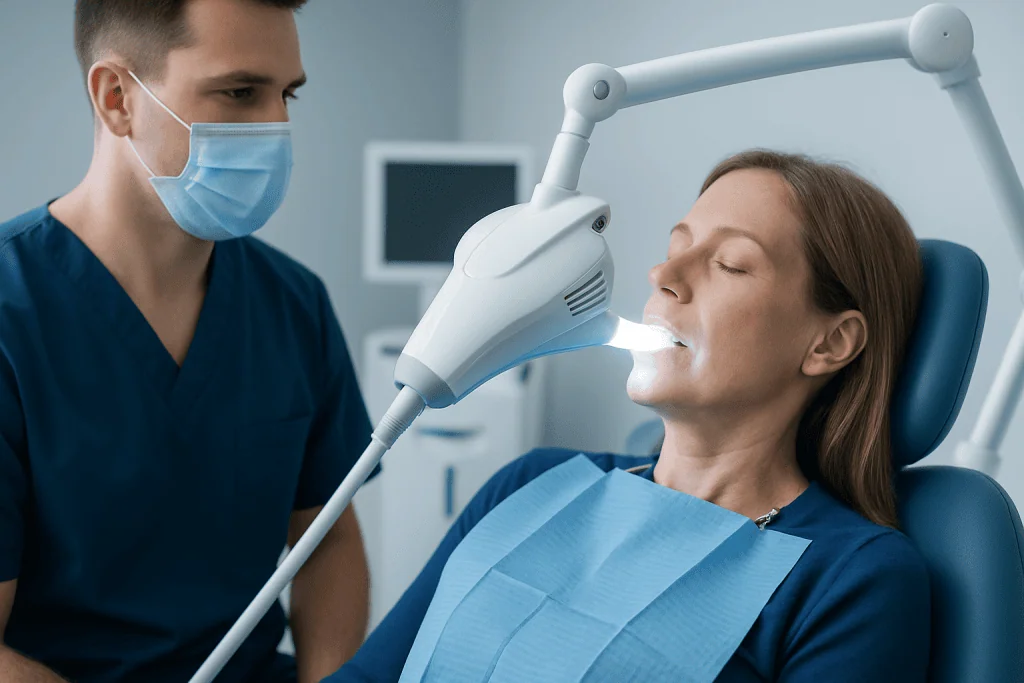
The laser itself does not change tooth color. The bleaching gel is the active part of treatment: it breaks down stain molecules within the tooth structure so they reflect less visible color. Light activation may be used to support or speed the process, depending on the dental system and the clinician’s approach.
Professional whitening is different from routine dental cleaning. Cleaning removes plaque, tartar, and surface stains, while whitening changes the shade of the tooth itself. A clinician should assess the teeth and gums first to determine whether whitening is appropriate and whether another dental concern needs attention.
Who May Benefit and What Results to Expect
Laser dental whitening may be suitable for adults with healthy teeth and gums who would like to improve the appearance of discoloration. It tends to work best for yellow or brown staining related to dietary pigments, tobacco, and normal changes in tooth color over time. Results differ from person to person, and the aim is a naturally brighter shade rather than an identical result for every patient.
Some types of discoloration can be more difficult to lighten. Grayish color changes, staining related to certain medicines taken during tooth development, trauma-related darkening, and some developmental enamel conditions may respond less predictably. In these situations, a dentist may discuss alternatives such as restorations or cosmetic treatments after identifying the underlying cause.
Whitening only affects natural tooth tissue. Dental crowns, veneers, implants, fillings, and bonded areas will not lighten with bleaching. If these are visible when smiling, the dentist may discuss the possibility that existing restorations could look different in color after whitening and may need replacement or adjustment later for a better match.
How the Appointment Usually Works

Before treatment, the dentist reviews medical and dental history, examines the mouth, and may record the starting tooth shade. Teeth are usually cleaned if needed, because plaque and surface deposits can interfere with an even result. The clinician also checks for decay, leaking fillings, gum inflammation, tooth cracks, and exposed root surfaces.
During the procedure, the lips and gums are protected, and the whitening gel is placed on the visible surfaces of the teeth. The gel is left in place for a controlled period and may be activated with a laser or specialized light. It may be renewed in cycles during the same visit, depending on the product used and the desired response.
Most people remain awake and comfortable throughout the appointment. A temporary tingling sensation or sensitivity may occur, particularly if teeth are already sensitive. At the end of treatment, the gel is removed and the teeth are assessed. The dentist may provide individualized aftercare guidance and, when appropriate, discuss at-home maintenance options.
Safety, Sensitivity, and Possible Side Effects
When carried out after an appropriate dental assessment, professional tooth whitening is generally considered safe for suitable patients. The most common side effect is temporary tooth sensitivity, especially to cold air, cold drinks, or sweet foods. This often improves within a short time, although the duration varies.
Some people may also have temporary gum irritation if whitening gel comes into contact with soft tissues. Protective barriers and careful application help reduce this risk. It is important not to use unregulated or overly strong whitening products without professional advice, as improper use can irritate gums or worsen sensitivity.
Whitening does not remove enamel when performed as directed, but it is not appropriate for every mouth at every moment. Untreated cavities, gum disease, worn enamel, significant sensitivity, or cracked teeth may need care first. A dentist can also advise whether whitening should be delayed during pregnancy or breastfeeding, as elective cosmetic treatment is commonly postponed when evidence is limited.
- Tell the dentist about tooth sensitivity, gum bleeding, dental restorations, and any recent dental pain.
- Follow product and aftercare instructions rather than repeating treatment sooner than advised.
- Do not use whitening as a substitute for regular brushing, interdental cleaning, and dental check-ups.
Preparing for Whitening and Caring for Teeth Afterwards
A dental examination and professional cleaning, when needed, are useful before whitening. Treating active dental problems first helps protect comfort and supports a more even result. People who use tobacco or have frequent staining from coffee, tea, red wine, or strongly colored foods may wish to discuss realistic expectations and a maintenance plan with their dentist.
After laser dental whitening, teeth can be temporarily more sensitive. A dentist may suggest avoiding very cold or very hot foods and drinks for a short period if sensitivity occurs. Using a soft toothbrush, a fluoride toothpaste suitable for sensitive teeth, and gentle brushing technique can help protect enamel and reduce discomfort.
For the first day or two, clinicians commonly advise limiting tobacco and strongly pigmented foods and beverages, such as coffee, tea, red wine, cola, berries, and richly colored sauces. This is sometimes described as a “white diet,” but it does not need to be restrictive or prolonged. Long-term, regular oral hygiene and moderating staining exposures are more important for maintaining a brighter appearance.
Alternatives and Complementary Dental Care
Not everyone needs or wants laser dental whitening. Professionally supervised take-home whitening trays can offer gradual lightening over a longer period. Over-the-counter products may be suitable for some people, but they are generally less customized and should not be used to mask tooth pain, gum disease, or unexplained darkening.
For stains limited to the outer surface, a professional cleaning and polishing may be enough. When a single tooth becomes darker after an injury or root canal treatment, the dentist may investigate the tooth and recommend a more targeted approach. Persistent bleeding gums, swelling, or loose teeth should be assessed for conditions such as gum disease before cosmetic whitening is considered.
If discoloration does not respond well to bleaching, cosmetic restorations may be discussed. These can include dental veneers or other restorative options, depending on the tooth structure, bite, and overall oral health. The most appropriate choice is individualized and should preserve healthy tooth tissue whenever possible.
When to Seek Medical Care
Dental whitening is an elective procedure, but new or worsening changes in tooth color can occasionally signal a dental problem. A person should arrange a dental assessment if one tooth suddenly turns gray, brown, or pink; if discoloration follows an injury; or if there is pain, swelling, sensitivity that persists, or a bad taste in the mouth.
Prompt dental care is also important for bleeding or swollen gums, pus, fever, facial swelling, a broken tooth, or pain that disrupts sleep or daily activities. These symptoms may require treatment rather than whitening. People with a history of extensive dental work, severe sensitivity, or ongoing oral health concerns should seek individualized advice before any bleaching procedure.
Acibadem International’s multidisciplinary dental specialists and JCI-accredited hospitals assess oral health and provide appropriate dental treatments for international patients. A consultation can help determine whether whitening is suitable or whether another dental treatment should come first.
Frequently asked questions
Is laser dental whitening painful?
Most people do not find the procedure painful, although temporary tooth sensitivity is common. Some may notice brief sensitivity during or after treatment, particularly with cold foods and drinks. A dentist can adapt the approach and recommend ways to manage sensitivity.
How long does laser dental whitening last?
Results vary with the original tooth shade, the cause of staining, oral hygiene, diet, and tobacco use. The brighter appearance can gradually fade over time as new stains develop. A dentist can advise on safe maintenance based on the individual’s teeth and sensitivity.
Can laser whitening whiten crowns or veneers?
No. Whitening gel changes the shade of natural tooth tissue but does not lighten crowns, veneers, fillings, bonding, or implants. A dentist should evaluate visible restorations before whitening so that possible color differences can be discussed.
Is laser dental whitening safe for sensitive teeth?
It may be possible for some people with sensitivity, but an examination is important first. The dentist may recommend treating the cause of sensitivity, using a lower-intensity plan, or choosing a different whitening method. Whitening should be postponed if there is untreated decay, gum disease, or significant enamel damage.
Can anyone have laser dental whitening?
No. Suitability depends on oral health, the cause of discoloration, existing restorations, and personal circumstances. Children and adolescents, people with untreated dental problems, and those with certain forms of discoloration may need other approaches or should delay treatment.
What should be avoided after laser dental whitening?
If advised by the dentist, avoiding tobacco and heavily pigmented foods and drinks for a short period may help reduce early staining. Very hot or cold items may also be uncomfortable if sensitivity develops. Maintaining regular brushing, interdental cleaning, and dental visits helps protect both tooth appearance and oral health.
References
- American Dental Association
- National Institute of Dental and Craniofacial Research
- NHS
- FDI World Dental Federation
This article is for general information only and is not a substitute for professional medical advice. Please consult a qualified doctor about your individual situation.
Explore treatments in Turkey — costs, top hospitals & a free quote
JCI-accredited · board-certified surgeons · reply within 24h