Linea Alba Mouth — Explained by Medical Evidence, Not Myths

Linea alba mouth is typically a benign white line on the inner cheek caused by chronic friction. It often appears at the level where the upper and lower teeth come together.
Key Takeaways
- Linea alba mouth is typically a benign white line on the inner cheek caused by chronic friction.
- It often appears at the level where the upper and lower teeth come together.
- It is different from oral infections, ulcers, and many potentially serious white patches.
- Treatment mainly focuses on reducing irritation, such as cheek biting or dental rubbing.
- A dentist or doctor should assess any mouth lesion that is painful, enlarging, bleeding, or not improving.
Linea alba mouth is a common, usually harmless white line that appears on the inside of the cheek where the teeth meet. It is most often linked to repeated friction, pressure, or cheek biting rather than infection or cancer, but persistent or changing lesions still deserve professional evaluation.
What Is Linea Alba Mouth?
Linea alba mouth refers to a thin white line or slightly raised pale streak on the inner lining of the cheek, usually at the level where the teeth close together. In most cases, it is a benign change caused by repeated rubbing, pressure, or mild trauma over time. It is not generally considered dangerous on its own.
The term linea alba simply means “white line.” In the mouth, it commonly forms along the bite line because the soft cheek tissue is repeatedly pressed against the teeth. Some people notice it only by chance in a mirror or during a dental visit, while others feel a slight roughness with the tongue.
This finding is best understood as a tissue response to mechanical irritation rather than a disease in itself. The lining of the mouth can become thicker in response to ongoing friction, producing a whitish appearance. This is why linea alba is often grouped with friction-related changes in the mouth.
Although linea alba mouth is usually harmless, a white patch in the mouth should not automatically be assumed to be linea alba. Other oral conditions can also look white at first glance, so persistent or unusual lesions should be examined by a qualified clinician, especially if they are new, painful, or changing.
What Does It Look and Feel Like?
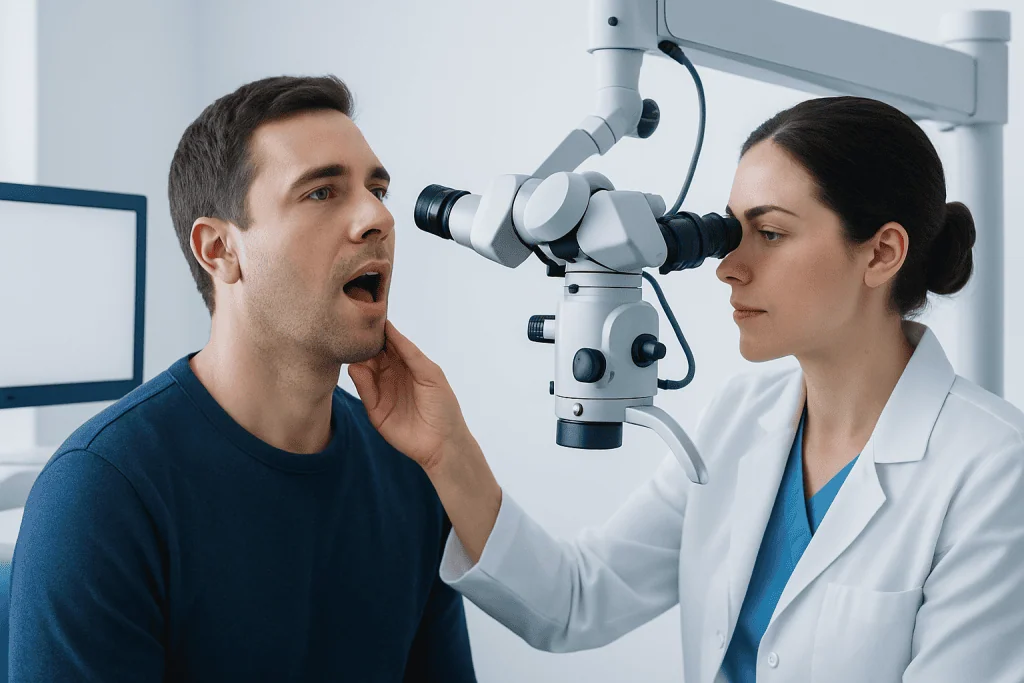
Linea alba mouth typically appears as a horizontal white line on the inner cheek, often on both sides. It usually follows the level where the upper and lower teeth meet. The line may be smooth, slightly raised, or faintly scalloped if nearby teeth leave impressions on the tissue.
Most people have no symptoms. The area is often painless and does not interfere with eating, speaking, or swallowing. Some may notice mild roughness or a feeling that the cheek catches between the teeth, especially if cheek biting happens frequently.
Unlike many ulcers or inflammatory lesions, linea alba usually does not have a red border, open sore, or significant tenderness. It also tends to stay in a predictable location rather than appearing in random places throughout the mouth. This pattern helps clinicians distinguish it from other causes of white oral lesions.
- Usually a thin white or gray-white line
- Most often found on the inside of the cheeks
- Commonly symmetrical on both sides
- Typically painless
- May be more visible in people who clench, grind, or bite their cheeks
Why It Happens: Causes and Risk Factors

The main cause of linea alba mouth is chronic friction. The inner cheek is delicate tissue, and repeated contact with the teeth can make the surface layer thicken. This thickening is a protective response, similar in principle to how skin can form a callus after repeated rubbing.
Common triggers include cheek biting, jaw clenching, tooth grinding, and pressure from the way the teeth come together. In some people, rough dental edges, misaligned teeth, or dental restorations may contribute to local irritation. Stress can also play an indirect role if it increases clenching or unconscious biting habits.
Linea alba is not generally caused by infection, and it is not contagious. It is also not usually linked to poor oral hygiene alone. However, keeping the mouth healthy can make it easier to notice changes early and can reduce irritation from other sources.
Doctors and dentists may also consider whether a white lesion could represent another condition, especially if it does not fit the typical appearance of linea alba. Depending on the situation, they may compare it with changes seen in leukoplakia or other oral mucosal disorders before confirming that it is simply friction-related.
How Linea Alba Differs From Other White Mouth Lesions
Many myths online suggest that any white mark inside the mouth is either completely normal or automatically a sign of cancer. Neither extreme is reliable. Linea alba mouth has a characteristic location and pattern, but clinicians still consider other possibilities when a lesion is thick, irregular, one-sided, painful, or persistent.
For example, fungal infection such as oral thrush often forms creamy white patches that may wipe off, leaving a red base. Traumatic ulcers are usually sore and open rather than a simple white line. Certain inflammatory conditions can create lacy, patchy, or widespread white changes. Tobacco use and chronic irritation may also be associated with other lesions that need closer attention.
A key difference is that linea alba is generally a narrow line exactly along the bite plane, whereas more concerning lesions may appear in unusual locations, become thicker over time, bleed, ulcerate, or occur with a lump. If a clinician is uncertain, they may recommend follow-up, treatment of the source of irritation, or further testing.
When symptoms include significant soreness, jaw tension, or repeated tissue trauma from grinding, clinicians may also assess related problems such as temporomandibular joint disorders because the same habits that stress the jaw can also increase cheek friction.
How Doctors and Dentists Diagnose It
Diagnosis is usually clinical, meaning it is based on a careful history and examination of the mouth. A dentist, oral medicine specialist, or doctor looks at the lesion’s color, shape, texture, and exact location. They also ask about symptoms, cheek biting, teeth grinding, recent dental work, tobacco exposure, and how long the lesion has been present.
Typical linea alba often does not require complex testing. If the appearance is classic and there are no warning signs, the clinician may simply explain the finding and recommend reducing friction. Follow-up may be suggested to make sure the area remains stable.
If the lesion looks unusual or does not improve after removing possible sources of irritation, additional evaluation may be needed. This may include a more detailed oral examination, dental assessment of the bite, or referral for specialist care. In selected cases, a biopsy may be considered to rule out other conditions.
Diagnostic work-up focuses on making sure a seemingly simple white lesion is not something else. This is why self-diagnosis from photos alone can be misleading. A professional exam is the safest way to confirm whether the line is benign frictional change or whether it needs further investigation.
Treatment and Self-Care
Because linea alba mouth is usually harmless, treatment often centers on removing or reducing the source of irritation. If cheek biting, clenching, or grinding is contributing, addressing those habits may allow the tissue to become less prominent over time. Some cases remain visible even after the cause is reduced, but they are still benign.
If teeth rubbing, sharp edges, or bite alignment are involved, a dental evaluation can be helpful. Depending on the underlying issue, the care plan may include smoothing a rough surface, adjusting a restoration, or considering bite-related management. For patients with significant grinding, clinicians may discuss supportive options such as dental treatment tailored to the source of irritation.
Self-care usually includes avoiding chewing on the inside of the cheeks, being mindful of stress-related jaw tension, and maintaining good oral hygiene. Gentle toothbrushing, routine dental visits, and avoiding unnecessary trauma from hard or sharp foods may also help. If the area becomes sore, a clinician can advise on appropriate soothing measures.
It is important not to scrape, pick, or repeatedly inspect the area with fingernails or objects, as this can create more irritation. Any product marketed online as a “cure” for white mouth lines should be approached carefully. Since linea alba is a friction-related tissue change, management works best when the mechanical cause is identified and addressed.
When to Seek Medical Care
Although linea alba mouth is usually not serious, medical or dental advice is important when a white lesion does not clearly fit the usual pattern. A prompt assessment is sensible if the area is painful, thickening, spreading, bleeding, ulcerated, or present on only one side without an obvious cause. The same is true if there is a lump, persistent bad taste, difficulty chewing, or unexplained weight loss.
People who smoke, use other tobacco products, drink heavily, or have a history of oral lesions should be especially careful not to dismiss a persistent white patch. A lesion that lasts for more than a couple of weeks despite avoiding trauma deserves examination. Early review helps distinguish harmless frictional changes from conditions that need treatment.
If repeated cheek biting is related to jaw pain, headaches, or nighttime grinding, clinicians may assess the teeth and jaw more broadly. In some cases, evaluation by specialists in oral and dental health or maxillofacial surgery may be appropriate, depending on the suspected cause and whether structural dental factors are involved.
For international patients who need further evaluation, Acibadem International’s multidisciplinary specialists and JCI-accredited hospitals diagnose and treat oral and dental conditions with coordinated care based on individual findings.
Frequently asked questions
Is linea alba mouth dangerous?
In most cases, no. Linea alba mouth is usually a harmless friction-related change on the inside of the cheek. Even so, any mouth lesion that changes, becomes painful, or does not improve should be checked by a dentist or doctor.
Can linea alba mouth be a sign of oral cancer?
Linea alba itself is typically benign and has a characteristic location along the bite line. However, not every white lesion in the mouth is linea alba. If a white patch is irregular, thick, one-sided, ulcerated, or persistent, professional evaluation is important.
Does linea alba mouth go away on its own?
It can become less noticeable if the source of irritation is reduced, such as cheek biting or clenching. In some people, it may remain visible without causing harm. The key issue is whether the lesion behaves like a stable friction line or shows unusual changes.
What causes the white line inside the cheek?
The usual cause is repeated pressure or rubbing where the cheek touches the teeth. This can happen with cheek biting, jaw clenching, teeth grinding, or irritation from dental surfaces. The tissue responds by becoming slightly thicker and whiter.
How is linea alba mouth diagnosed?
A clinician usually diagnoses it by examining the mouth and asking about symptoms and habits such as biting or grinding. Most typical cases do not need special tests. If the appearance is unusual or the lesion persists, follow-up or a biopsy may be considered.
Should I treat linea alba mouth at home?
Home care is mainly about reducing irritation rather than using special medicines. Avoiding cheek biting, managing jaw tension, and keeping up with good oral hygiene are sensible steps. It is best not to scrape or pick at the area, as this can worsen irritation.
References
- American Dental Association
- National Institute of Dental and Craniofacial Research
- Oral Health Foundation
- Merck Manual Professional Edition
- World Health Organization
This article is for general information only and is not a substitute for professional medical advice. Please consult a qualified doctor about your individual situation.
Oncology care in Turkey — second opinion and treatment plan
JCI-accredited · board-certified surgeons · reply within 24h

More from the Health Library



Related Specialists

Dr. Özgür Özer
Gynecology & Obstetrics
Fzt. Elif Tokgöz Nizam
Physical Medicine and Rehabilitation
Prof. Dr. Murat Yayla
Gynecology & Obstetrics
Dr. Özge Kaymaz Yılmaz
Gynecology & Obstetrics