Liposarcoma Treatment: How It Works, Results and What to Expect
Surgery is the main treatment for many localized liposarcomas, with the aim of removing the tumor with a margin of healthy tissue where possible. Radiation therapy may be given before or after surgery to lower the chance of local recurrence in selected cases.
Key Takeaways
- Surgery is the main treatment for many localized liposarcomas, with the aim of removing the tumor with a margin of healthy tissue where possible.
- Radiation therapy may be given before or after surgery to lower the chance of local recurrence in selected cases.
- Chemotherapy and other systemic treatments are more often considered for certain subtypes, advanced disease, or tumors that cannot be fully removed.
- Recovery after liposarcoma surgery varies widely with the operation site and extent, and rehabilitation can be an important part of care.
- Long-term follow-up imaging is important because some liposarcomas can return locally or spread after treatment.
Liposarcoma treatment is planned by a specialist sarcoma team and commonly centers on complete surgical removal of the tumor. Radiation therapy, chemotherapy, targeted medicines, or clinical trials may also be considered depending on the liposarcoma subtype, grade, size, location, and whether it has spread.
Overview: How liposarcoma treatment works
Liposarcoma treatment is individualized care for a rare cancer that develops in fatty tissue. For a tumor that has not spread, surgery is usually the central treatment because it offers the best opportunity to remove all visible disease. Depending on the tumor’s subtype, grade, size, location, and relationship to nearby organs or nerves, treatment may also include radiation therapy or systemic medicines.
A biopsy reviewed by an experienced sarcoma pathologist helps the team identify the exact kind of liposarcoma. Important subtypes include well-differentiated, dedifferentiated, myxoid, pleomorphic, and round cell liposarcoma. These can behave differently, so one person’s treatment plan and outlook may not apply to another person with the same general diagnosis.
Care is ideally coordinated by a multidisciplinary team that may include surgical oncologists, orthopedic oncologists, medical oncologists, radiation oncologists, radiologists, pathologists, rehabilitation professionals, and supportive-care specialists. The team’s goal is to control the cancer while preserving function and quality of life as much as possible.
Assessment and candidacy for treatment
Before treatment begins, specialists assess whether the tumor can be removed safely and completely, whether it has spread, and which approaches are most likely to help. Imaging commonly includes magnetic resonance imaging (MRI) for tumors in the limbs or body wall, and computed tomography (CT) for tumors in the abdomen or retroperitoneum. Chest imaging is often used to check for spread to the lungs.
A core-needle biopsy is usually performed before major surgery. It is carefully planned so that the biopsy pathway can be removed during an operation if needed. The pathology report can identify the subtype and grade, which describe how abnormal the cancer cells look and how likely the tumor may be to grow or spread.
Candidacy for surgery depends on the tumor’s location and extent as well as the person’s overall health, organ function, mobility, and treatment goals. Even when complete removal is not possible, treatment may still help control symptoms, slow progression, or improve comfort and daily function.
- Localized tumors may be treated with surgery alone or surgery combined with radiation.
- Large, high-grade, recurrent, or difficult-to-remove tumors may require more than one treatment method.
- Metastatic liposarcoma may be managed with systemic therapy, selected surgery or radiation, and symptom-focused care.
Liposarcoma surgery: step by step
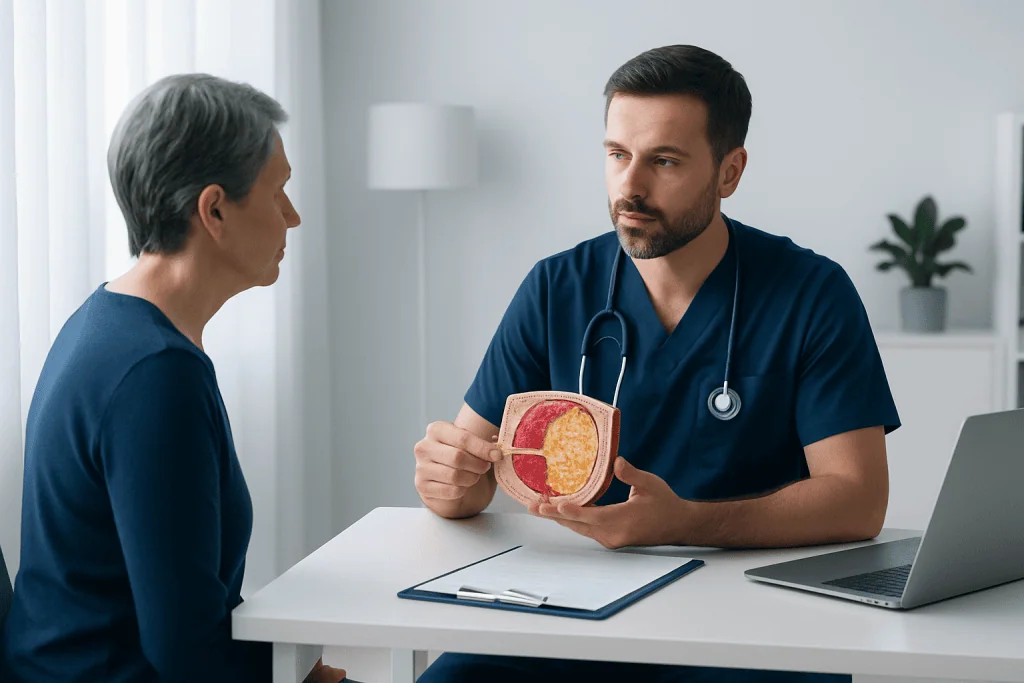
Liposarcoma surgery aims to remove the tumor in one piece along with a surrounding rim of normal tissue, called a surgical margin, when this can be done safely. A negative margin means no cancer cells are seen at the edge of the removed tissue under the microscope. The amount of tissue that must be removed depends greatly on whether the tumor is in an arm or leg, the abdomen, the pelvis, or another area.
Before the procedure, the surgical team reviews imaging and discusses the likely operation, reconstruction needs, possible changes in function, and expected hospital stay. For a limb tumor, surgery may involve removing part of a muscle or other nearby tissue. Reconstructive surgery may occasionally be needed to close the wound or restore function. For retroperitoneal tumors, surgery can be more complex because tumors may sit close to, displace, or involve organs and major blood vessels.
During the operation, the patient receives anesthesia. The surgeon removes the planned tissue and sends the specimen for detailed pathological examination. Drains may be placed temporarily to prevent fluid buildup. After surgery, the final pathology report confirms the subtype, tumor grade, tumor size, and margin status, which helps guide decisions about further treatment and follow-up.
When complex sarcoma surgery is needed, evaluation at a center with experience in sarcoma care can help coordinate surgical, medical, radiation, and rehabilitation planning. Acibadem International’s multidisciplinary specialists and JCI-accredited hospitals provide diagnosis and treatment planning for international patients with liposarcoma.
Radiation therapy and medicine-based treatments
Radiation therapy uses carefully targeted high-energy radiation to damage cancer cells. It may be recommended before surgery to shrink or better define a tumor, or after surgery when there is a meaningful risk of the cancer returning in the same area. It is often considered for selected tumors in the arms, legs, trunk, or pelvis, but its role varies by location and subtype.
For tumors in the retroperitoneum, radiation decisions require particularly careful discussion because nearby organs can be sensitive to radiation. The likely benefit must be balanced against possible short- and long-term effects. Radiation can cause tiredness, skin changes in the treatment area, and site-specific effects such as bowel or bladder irritation, depending on where treatment is delivered.
Chemotherapy is not needed for every person with liposarcoma. It may be considered for advanced disease, cancer that cannot be removed fully, tumors that have spread, or particular subtypes that are more likely to respond to drug treatment. Depending on the situation, medical oncologists may discuss chemotherapy, targeted therapies, or participation in a clinical trial. Treatment choices are based on the individual cancer and the person’s health rather than on a single standard regimen.
Systemic treatments can cause side effects, including fatigue, nausea, lowered blood counts, infection risk, or effects specific to a medicine. The oncology team monitors patients closely and can adjust supportive care to help manage symptoms during treatment.
Benefits, risks and recovery timeline
The main benefit of treatment for localized liposarcoma is the possibility of long-term cancer control and, in some cases, cure. Surgery may relieve pressure, pain, or reduced movement caused by a growing tumor. Radiation or systemic treatment may reduce recurrence risk or help control cancer that cannot be treated with surgery alone.
Risks depend on the treatment and the area of the body involved. Surgical risks include bleeding, infection, wound-healing problems, blood clots, fluid collection, numbness, weakness, reduced range of motion, and the need for further surgery. In rare situations, a limb-preserving operation may not be feasible. The care team discusses realistic risks before treatment and recommends strategies to reduce them.
Recovery after a smaller limb or superficial tumor operation may take several weeks, while recovery from major abdominal, pelvic, or reconstructive surgery can take months. Hospitalization may range from a short stay to longer monitoring after complex surgery. Pain control, wound care, gradual movement, nutrition, and prevention of blood clots are early priorities.
Physical therapy or occupational therapy can help rebuild strength, mobility, and confidence with daily activities. Follow-up visits and scheduled scans are essential after treatment. The timing and type of surveillance imaging are tailored to the subtype, grade, location, and risk of recurrence.
When to seek medical care
A new lump that is enlarging, deep beneath the skin, firm, painful, or larger than roughly a golf ball should be assessed by a doctor. Although most lumps are not cancer, soft-tissue sarcomas can initially cause few symptoms. Early evaluation can help ensure that appropriate imaging and biopsy planning are arranged before any attempt at removal.
People already diagnosed with liposarcoma should contact their treatment team promptly for new or worsening pain, rapidly increasing swelling, unexplained breathlessness, persistent cough, fever after surgery, wound redness or drainage, heavy bleeding, or a sudden reduction in limb function. These symptoms have many possible causes, but they deserve timely medical assessment.
After treatment, it is important to attend scheduled surveillance appointments even when a person feels well. Some liposarcomas can recur without causing symptoms at first, and imaging is part of follow-up care.
Outlook and questions patients commonly ask
How quickly does liposarcoma spread? The speed of growth and spread varies considerably by subtype and grade. Well-differentiated liposarcoma often grows slowly and is more likely to recur locally than spread to distant organs, while high-grade or dedifferentiated and pleomorphic tumors can behave more aggressively. Imaging, pathology, and regular follow-up help the team understand an individual tumor’s risk.
Can liposarcoma be cured completely? Some localized liposarcomas can be cured, particularly when the tumor can be removed completely and has not spread. However, no clinician can promise a cure for an individual person. Recurrence can occur years later, especially in certain subtypes or locations, which is why long-term monitoring remains important.
What is the survival rate for patients with liposarcoma? Survival differs substantially between people because liposarcoma includes several biologically different cancers. Prognosis is influenced by subtype, grade, size, site, completeness of surgery, whether the cancer has spread, and response to treatment. A sarcoma specialist can interpret these factors more accurately than a single overall survival figure.
How long does it take to recover from liposarcoma surgery? Initial healing commonly takes weeks, but full recovery may take months and can be longer after complex abdominal, pelvic, or limb surgery. Recovery is influenced by the extent of tissue removal, reconstructive procedures, complications, baseline health, and rehabilitation needs. The surgical team can provide a more personal timeline once the operation is planned.
Frequently asked questions
Is surgery always needed for liposarcoma?
Surgery is the main treatment for many localized liposarcomas because it can remove the tumor completely. However, it may not be appropriate or possible in every situation, especially if the cancer has spread or involves critical structures. Radiation therapy, systemic treatment, or supportive care may be used alone or in combination with surgery.
Does liposarcoma return after treatment?
Liposarcoma can return in the original area or, in some cases, elsewhere in the body. The chance of recurrence depends on the subtype, grade, location, tumor size, surgical margins, and other clinical factors. Regular follow-up examinations and imaging are important for finding recurrence early.
Will radiation therapy be needed after liposarcoma surgery?
Not everyone needs radiation therapy after surgery. It may be considered when there is a higher likelihood of local recurrence or when the tumor’s features and location suggest a likely benefit. The radiation oncology team weighs this potential benefit against possible effects on nearby tissues and organs.
Can a liposarcoma biopsy make the cancer spread?
A properly planned core-needle biopsy is a standard and important part of diagnosing many suspected sarcomas. The biopsy route is chosen carefully so it can be included in the surgical area if surgery is needed. Biopsy should ideally be coordinated by clinicians experienced in sarcoma evaluation.
What follow-up is needed after liposarcoma treatment?
Follow-up usually includes clinical examinations and imaging at intervals set by the sarcoma team. The schedule depends on the subtype, grade, location, treatment received, and risk of recurrence. Follow-up may continue for many years because some tumors can recur late.
Can exercise help during liposarcoma recovery?
Appropriate movement and rehabilitation can support circulation, strength, flexibility, and independence after treatment. The safest type and timing of exercise depend on the surgery site, wound healing, radiation treatment, and any restrictions from the care team. A physiotherapist can provide an individualized plan.
References
- National Cancer Institute
- American Cancer Society
- European Society for Medical Oncology
- National Comprehensive Cancer Network
- World Health Organization
This article is for general information only and is not a substitute for professional medical advice. Please consult a qualified doctor about your individual situation.
Joint and spine care in Turkey — expert assessment & treatment
JCI-accredited · board-certified surgeons · reply within 24h
Add us as a Preferred Source to see more of our trusted health content across Google Search, AI Overviews and Discover.