Metatarsus Adductus Treatment: How It Works, Results and What to Expect

Metatarsus adductus is a common inward curve of the forefoot that is often noticed at birth or in early infancy. Flexible feet commonly improve without invasive treatment as a child grows.
Key Takeaways
- Metatarsus adductus is a common inward curve of the forefoot that is often noticed at birth or in early infancy.
- Flexible feet commonly improve without invasive treatment as a child grows.
- Rigid deformity, worsening shape, or difficulty fitting shoes may prompt assessment by a pediatric orthopedic specialist.
- Serial casts gradually guide a stiff foot toward a straighter position and are usually considered in infancy.
- Surgery is uncommon and is generally reserved for older children with a persistent, symptomatic, rigid deformity.
Metatarsus adductus treatment depends on how flexible the inward curve of the front of the foot is and the child’s age. Many infants improve naturally, while more rigid or persistent cases may benefit from guided stretching, serial casting, bracing, or, rarely, surgery.
Metatarsus Adductus Treatment: How It Works
Metatarsus adductus treatment aims to improve an inward curve at the front of the foot, when that curve is unlikely to correct naturally or is causing functional concerns. In many babies, the foot is flexible and can be gently moved into a straighter position. These cases often improve over time with observation and routine developmental follow-up.
The treatment plan is based less on how the foot looks in one photograph and more on its flexibility, degree of curvature, the child’s age, and whether the position affects walking, footwear, or comfort. A clinician may recommend no active treatment, parent-guided stretching, serial casting, a brace after casting, or rarely an operation.
Metatarsus adductus affects the forefoot rather than the whole foot. It can occur by itself or alongside other foot-position differences, so a careful examination is important. A pediatrician or pediatric orthopedic specialist can distinguish it from conditions such as clubfoot and determine whether any further evaluation is needed.
How Is Metatarsus Adductus Assessed and Who May Need Treatment?

During the assessment, the clinician looks at the shape of the foot from the sole, the position of the heel, and how easily the forefoot can be moved outward. A flexible foot can usually be corrected gently by hand. A partially flexible or rigid foot resists this movement and may be more likely to remain curved as the child grows.
Most children do not need X-rays. Imaging may be considered in an older child with a persistent deformity, pain, unusual stiffness, or a concern about another structural foot condition. The assessment also includes watching an older child stand and walk, including whether there is in-toeing or trouble with shoes.
Active treatment is most often discussed when the deformity is rigid, remains marked beyond early infancy, does not respond to simple measures, or later causes symptoms or functional limitations. A foot that is flexible, painless, and developing normally is commonly monitored rather than treated aggressively.
- Usually observed: flexible, mild curves in infants and young children.
- May need guided treatment: stiff or moderately severe curves that persist.
- May need specialist review: pain, limping, skin pressure from shoes, or a deformity that interferes with daily activity.
Step by Step: Stretching, Casting and Surgery
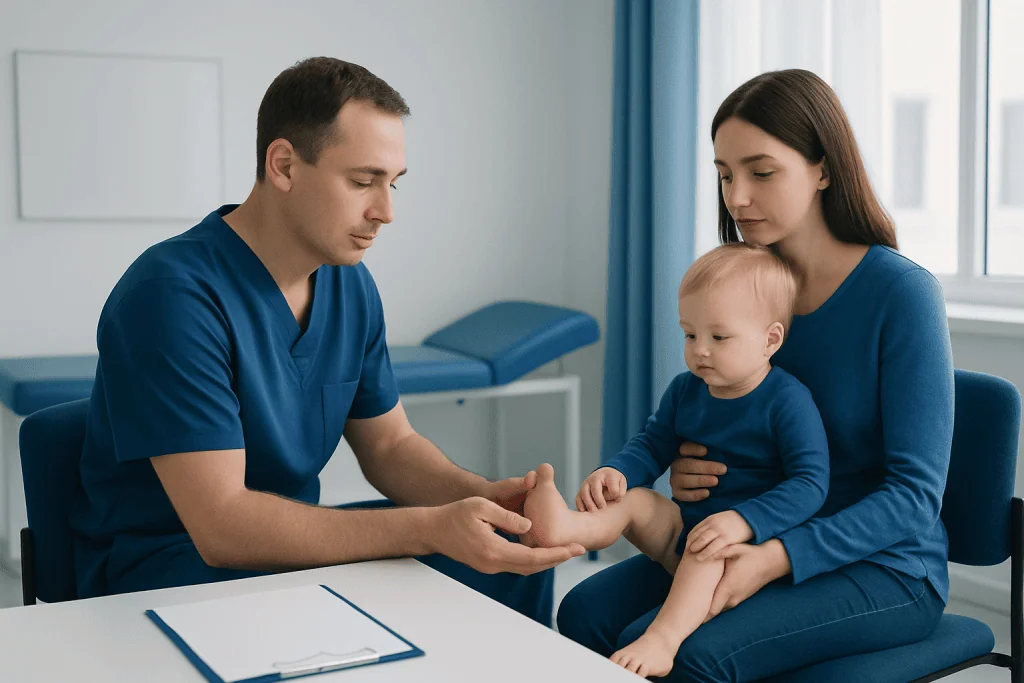
For a flexible foot, a clinician may show parents or caregivers how to hold the heel steady and gently guide the forefoot outward during calm moments such as diaper changes. Stretching should never force the foot or cause distress. It is not a substitute for a clinical review when the foot is stiff, appears painful, or is not improving.
For a more rigid deformity in infancy, serial casting may be recommended. At each appointment, the foot is gently positioned closer to correction and a cast is applied to hold that position. The cast is changed at planned intervals, allowing gradual adjustment over several weeks. After the desired correction, some children use a brace or special footwear plan for a period determined by the orthopedic team.
Surgery is rarely the first approach. It may be considered for an older child or adolescent with a substantial, rigid deformity that remains symptomatic despite non-surgical care. The operation is individualized and may involve releasing tight soft tissues, changing the alignment of one or more bones, or both. The surgical team explains the specific technique, anesthesia, immobilization, and rehabilitation plan before treatment.
Children needing advanced evaluation can be supported by pediatric orthopedics, rehabilitation, and imaging services. Acibadem International’s multidisciplinary specialists and JCI-accredited hospitals diagnose and treat orthopedic conditions for international patients.
Benefits, Risks and Recovery Timeline
The potential benefit of treatment is a more neutral forefoot position that supports comfortable shoe wear and age-appropriate movement. For infants receiving casts, the goal is gradual correction while the foot is still developing. Even when some inward positioning remains, many children have normal function and do not experience meaningful limitations.
During serial casting, parents should follow instructions for keeping the cast dry, checking the toes, and attending all scheduled changes. Urgent advice should be sought if toes become cold, blue, very swollen, difficult to move, or if there is a strong odor, drainage, fever, or persistent inconsolable distress. These signs can indicate a cast-related problem that needs prompt assessment.
Recovery varies with the approach. Gentle observation and stretching do not require a recovery period. Casting generally takes weeks, followed by monitoring and sometimes bracing. After surgery, a child may need a cast or protective boot, activity restrictions, follow-up imaging, and rehabilitation; recovery can take several months and should follow the surgeon’s individualized guidance.
Possible risks of casting include skin irritation, pressure areas, swelling, or incomplete correction. Surgery carries additional risks such as infection, stiffness, nerve or blood vessel injury, overcorrection or undercorrection, recurrence, and the possible need for further treatment. These complications are uncommon but should be discussed openly before any procedure.
What Is the Prognosis for Metatarsus Adductus?
The prognosis for metatarsus adductus is generally very good. Many flexible cases improve spontaneously during infancy and early childhood as the feet grow, muscles develop, and weight-bearing patterns mature. A mild residual inward curve may remain in some children without causing pain or limiting sport, play, or everyday activities.
Rigid deformities have a greater chance of persisting, but early assessment allows treatment to be tailored to the child. When casting is appropriate, it can improve alignment without surgery in many cases. A small number of children with persistent, severe symptoms may need an operation later, and long-term follow-up helps assess alignment and function.
Parents should remember that the appearance of the feet alone does not determine outcome. Comfort, flexibility, walking ability, footwear tolerance, and progression over time are all important. Regular reviews provide reassurance and help identify the uncommon cases that need further care.
Is Metatarsus Adductus Painful?
Metatarsus adductus is usually not painful in babies and young children. A child may have a visibly inward-curved forefoot but remain comfortable, active, and able to wear normal shoes. The condition is often found because a parent or clinician notices the foot shape rather than because the child reports symptoms.
Pain is more likely to have another explanation, especially in a young child. It should be assessed if it is persistent, occurs at night, causes limping or refusal to bear weight, follows an injury, or is accompanied by redness, swelling, fever, or a sudden change in the foot’s appearance.
In older children, a pronounced persistent deformity may occasionally contribute to shoe pressure or discomfort with activity. A medical assessment can determine whether symptoms are related to foot alignment, footwear, overuse, or another orthopedic condition.
Can You Fix Metatarsus Adductus?
Yes. Many cases correct or improve without formal intervention, particularly when the foot is flexible. For a child with a persistent or rigid curve, treatment can often improve alignment through carefully supervised stretching, serial casting, and sometimes bracing. The earlier a stiff deformity is evaluated, the more non-surgical options may be available.
“Fixing” the condition does not always mean that both feet must look perfectly straight. The most important outcomes are a comfortable foot, suitable footwear, normal or near-normal function, and the ability to participate in usual activities. Treatment decisions should balance the potential benefits of correction against the burden and risks of intervention.
For the small group of children with a severe rigid deformity that remains troublesome later in childhood, corrective surgery may be an option. The decision is made with a pediatric orthopedic surgeon after considering symptoms, examination findings, growth, imaging where needed, and the child’s individual goals.
What Are the Long-Term Effects of Metatarsus Adductus?
Most children with flexible metatarsus adductus have no important long-term effects. They typically walk, run, and take part in sports normally. An inward-facing walking pattern can be noticeable in some children, but metatarsus adductus is only one possible cause of in-toeing, and many in-toeing patterns improve as children develop.
A persistent rigid deformity may affect shoe fit or contribute to pressure on the outside of the foot in some individuals. In uncommon cases, ongoing alignment differences may be associated with discomfort or activity-related problems later in life. These concerns are reasons for reassessment, not a reason to assume that future problems will occur.
Supportive, appropriately fitting shoes are usually sufficient for comfortable daily activity. Custom inserts or special shoes are not routinely needed for every child and should be recommended only when a clinician identifies a specific indication. Continued monitoring is especially useful if symptoms emerge during growth spurts or as activity levels increase.
Frequently asked questions
At what age should metatarsus adductus be treated?
Flexible metatarsus adductus in infants often only needs observation because it may improve naturally. A stiff or marked curve should be assessed early by a pediatric clinician or orthopedic specialist, as casting is generally most effective when the foot is still developing.
Does metatarsus adductus always need a cast?
No. Most flexible cases do not need a cast. Serial casting is typically reserved for feet that are rigid or do not improve as expected with observation and clinician-guided measures.
Can metatarsus adductus cause in-toeing?
Yes, an inward-curved forefoot can make the feet point inward while walking. However, in-toeing can also come from the lower leg or hip, so an examination is helpful when the gait is pronounced, uneven, painful, or worsening.
Are special shoes helpful for metatarsus adductus?
Special shoes are not routinely required for flexible metatarsus adductus. In selected cases, an orthopedic specialist may recommend a brace or specific footwear after casting or as part of an individualized treatment plan.
Can metatarsus adductus come back after treatment?
Some degree of recurrence or residual inward positioning can occur, particularly in more rigid deformities. Scheduled follow-up helps the care team monitor foot growth and decide whether any further support is needed.
When should a child with metatarsus adductus see a doctor?
Medical review is appropriate if the foot is very stiff, the shape is worsening, one foot is much more affected than the other, or there are concerns about walking or shoe fit. Prompt assessment is also important for pain, swelling, redness, fever, limping, or refusal to bear weight.
References
- American Academy of Orthopaedic Surgeons
- Pediatric Orthopaedic Society of North America
- American Academy of Pediatrics
- OrthoInfo
This article is for general information only and is not a substitute for professional medical advice. Please consult a qualified doctor about your individual situation.
Explore treatments in Turkey — costs, top hospitals & a free quote
JCI-accredited · board-certified surgeons · reply within 24h
Add us as a Preferred Source to see more of our trusted health content across Google Search, AI Overviews and Discover.