Muscle Cramps, Weakness, and Numbness: When Nerve Testing Is Needed

Muscle cramps, weakness, and numbness can come from muscles, nerves, the spine, circulation, medications, or metabolic conditions. Nerve testing usually refers to electromyography (EMG) and nerve conduction studies, which help locate and clarify nerve or muscle problems.
Key Takeaways
- Muscle cramps, weakness, and numbness can come from muscles, nerves, the spine, circulation, medications, or metabolic conditions.
- Nerve testing usually refers to electromyography (EMG) and nerve conduction studies, which help locate and clarify nerve or muscle problems.
- Testing is often considered when symptoms last, recur, spread, worsen, or are accompanied by pain, balance problems, or loss of function.
- A careful medical history, physical examination, and sometimes blood tests or imaging are usually done alongside nerve testing.
- Early evaluation can help guide treatment and rule out serious conditions that need prompt care.
Muscle cramps, weakness, and numbness are common symptoms with many possible causes, from temporary strain to nerve or muscle disorders. Nerve testing may be recommended when symptoms are persistent, progressive, unexplained, or affecting daily life.
Overview
Muscle cramps, weakness, and numbness are symptoms many people experience at some point. Sometimes they happen after exercise, poor posture, dehydration, or a minor nerve compression and settle on their own. In other cases, they may be signs of a problem affecting the nerves, muscles, spinal roots, or the way the body regulates salts, vitamins, and energy use.
Because these symptoms can overlap, it is not always possible to know the cause from symptoms alone. A cramp may come from muscle overuse, but it may also occur with nerve irritation. Weakness may reflect fatigue, pain, or true loss of muscle power. Numbness may stem from a compressed nerve in the wrist, neck, or lower back, or from a more widespread nerve condition.
When symptoms are ongoing or difficult to explain, doctors may recommend nerve testing. In neurophysiology, this usually means electromyography and nerve conduction studies. These tests can provide useful information about how nerves send signals and how muscles respond, helping the care team decide whether the symptoms are most likely due to a nerve disorder, muscle disorder, or another condition.
Common Symptoms and What They May Feel Like
Muscle cramps are sudden, involuntary contractions that may cause a tight, painful knot in the calf, foot, hand, or another muscle. Some people notice cramps mainly at night, while others develop them during exercise or after long periods of standing or sitting. Occasional cramps are common, but frequent or severe cramps deserve attention, especially if they occur with weakness or sensory changes.
Weakness can mean different things to different people. Some describe it as heaviness, easy fatigue, or reduced endurance, while doctors look for true weakness, meaning the muscle cannot generate normal force. True weakness may show up as trouble climbing stairs, lifting objects, opening jars, raising the foot while walking, or holding the arms up for routine tasks.
Numbness may feel like reduced sensation, tingling, pins and needles, burning, or a “falling asleep” feeling. It can affect a small area, such as a few fingers, or involve larger regions like an entire limb. Symptoms that follow a pattern, such as numbness in the thumb and first fingers or along the outer leg and foot, can sometimes point toward a specific nerve or spinal root.
- Cramps that are frequent, severe, or disrupt sleep
- Weakness that affects walking, grip, balance, or daily activities
- Numbness, tingling, or burning that persists or spreads
- Symptoms linked to neck pain, back pain, or radiating limb pain
- New problems with coordination, hand function, or foot drop
Possible Causes and Risk Factors

These symptoms have a wide range of causes. Temporary triggers can include overexertion, dehydration, prolonged sitting, awkward sleeping position, or pressure on a nerve. Nutritional or metabolic issues may also contribute, such as low levels of certain electrolytes, vitamin deficiencies, thyroid disorders, or diabetes. Some medications can cause cramps, tingling, or muscle-related side effects as well.
Nerve-related causes include compression or irritation of a nerve at common pressure points, as in the wrist or elbow, as well as nerve root problems in the neck or lower back. This may occur with conditions such as carpal tunnel syndrome or a spinal disc problem causing radiating pain and numbness. More widespread nerve disorders, called peripheral neuropathies, can affect sensation, strength, or both.
Muscle and neuromuscular causes are another important group. In some cases, symptoms may be related to inflammation, inherited muscle disorders, problems at the nerve-muscle junction, or motor neuron disorders. Doctors also consider circulation problems, autoimmune disease, infection, and systemic illnesses depending on the overall pattern of symptoms and examination findings.
Risk factors can include diabetes, heavy alcohol use, kidney disease, thyroid disease, repetitive hand motions, prolonged computer use, previous injuries, spinal wear and tear, and family history of neuromuscular disease. However, many people who need nerve testing do not have an obvious risk factor, which is why clinical assessment is so important.
When Nerve Testing Is Needed
Nerve testing is usually considered when symptoms are not improving as expected, keep returning, or are affecting normal function. It can be especially helpful when the location of the problem is uncertain. For example, numb fingers could be caused by a wrist nerve compression, a neck problem, or a more generalized nerve disorder. Testing helps narrow these possibilities.
Doctors may recommend testing if there is true weakness on examination, muscle wasting, persistent numbness, repeated cramping with fasciculations, or symptoms that suggest a nerve root or peripheral nerve problem. It may also be used when a patient has radiating arm or leg pain, unexplained foot drop, gait changes, or symptoms after an injury.
Nerve testing is not always needed right away. If symptoms are mild, clearly related to overuse or posture, and improving, a doctor may first suggest observation, activity changes, stretching, splinting, or treatment of an obvious underlying cause. But if symptoms progress, disturb sleep, or interfere with work, mobility, or hand use, testing becomes more useful.
Urgent medical assessment is important if symptoms come on suddenly, involve one side of the body, include bowel or bladder changes, severe back or neck pain with weakness, trouble breathing, trouble swallowing, or rapidly worsening weakness. These situations may need prompt evaluation beyond routine outpatient nerve testing.
How EMG and Nerve Conduction Studies Work
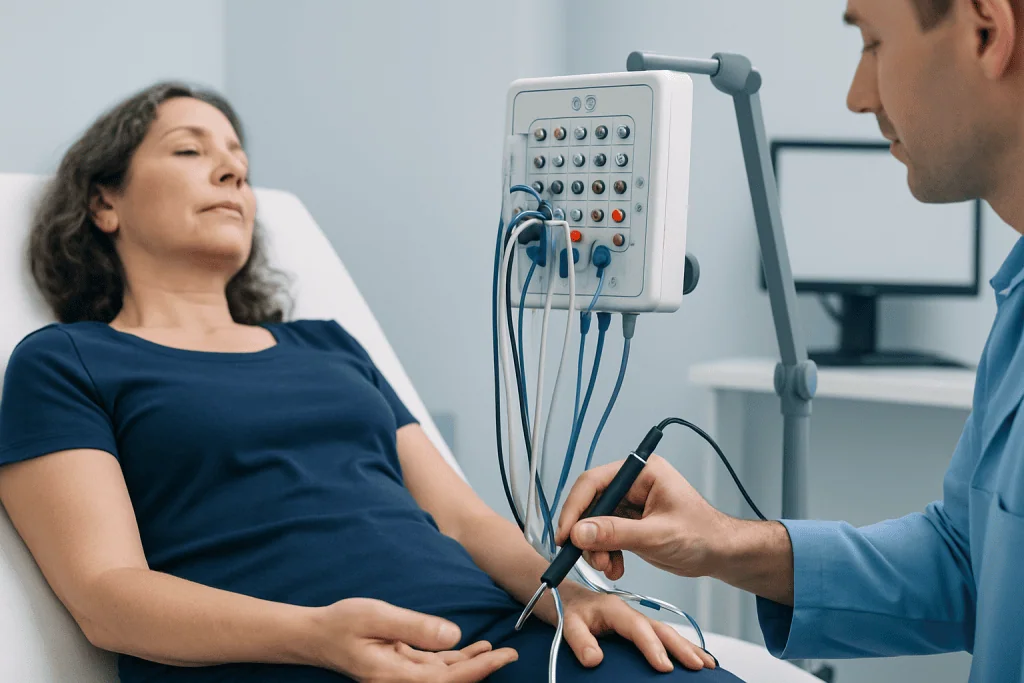
The two most common neurophysiology tests are nerve conduction studies and electromyography, often called EMG. Nerve conduction studies evaluate how quickly and effectively electrical signals travel through a nerve. Small electrodes are placed on the skin, and brief electrical pulses are delivered to measure the nerve’s response. This can help detect nerve compression, nerve damage, or other disorders affecting peripheral nerves.
EMG looks at the electrical activity of muscles. A very fine needle electrode is inserted into selected muscles so the specialist can assess how the muscle behaves at rest and during gentle contraction. EMG can help show whether weakness is due to a nerve problem, a muscle problem, or reduced input from a spinal root.
Together, these tests can help diagnose conditions such as nerve entrapment, radiculopathy from the spine, peripheral neuropathy, and some muscle diseases. For patients with symptoms suggestive of hand nerve compression or spine-related symptoms, they are often used alongside clinical evaluation and imaging such as MRI scanning when appropriate.
The tests are generally well tolerated, though they can be briefly uncomfortable. Preparation is simple in most cases. Patients are usually advised to keep the skin clean and free of lotions and to tell the doctor about blood thinners, pacemakers, implanted devices, or bleeding disorders. The specialist will decide which nerves and muscles to test based on the symptom pattern.
Diagnosis and What Else May Be Checked
Nerve testing is only one part of diagnosis. The process usually begins with a detailed history covering when the symptoms started, whether they are symmetrical or one-sided, what makes them better or worse, and whether there is pain, fatigue, balance difficulty, or loss of dexterity. A neurological examination checks strength, reflexes, sensation, coordination, and muscle bulk.
Depending on the situation, doctors may request blood tests to look for common reversible causes. These can include checks for blood sugar problems, vitamin deficiencies, thyroid disease, kidney function, inflammation, or other metabolic abnormalities. If a spine problem is suspected, imaging may be helpful. If a primary muscle disorder is possible, additional laboratory tests or imaging may be advised.
Sometimes the findings suggest a specific localized condition, such as ulnar nerve entrapment or a pinched nerve in the back or neck. In other cases, a broader workup is needed to distinguish between a peripheral neuropathy, a muscle disorder, or a problem affecting the nerve roots. Neurophysiology helps answer these questions by showing the pattern, severity, and distribution of involvement.
If symptoms suggest a structural spinal cause, doctors may combine neurophysiology with neurology and neurosurgery evaluation or other specialist assessment. This stepwise approach helps avoid unnecessary treatment and supports a more precise care plan.
Treatment Options and Symptom Relief
Treatment depends on the cause rather than the symptom alone. If testing shows a compressed nerve, treatment may include posture changes, splinting, physiotherapy, activity modification, anti-inflammatory approaches, or procedures when needed. If the problem is related to diabetes, vitamin deficiency, thyroid disease, or medication effects, addressing the underlying issue is often central to improvement.
For spinal root irritation or disc-related symptoms, care may include exercise-based rehabilitation, pain management, and selected imaging-guided or surgical options depending on severity. Some patients may be referred for physical therapy and rehabilitation to improve strength, flexibility, nerve mobility, and safe movement patterns. If a muscle or neuromuscular disorder is found, treatment may involve neurology follow-up, immunotherapy in specific conditions, or long-term supportive care.
Simple self-care can also help many people with cramps and nerve-related symptoms. Gentle stretching, adequate hydration, avoiding prolonged pressure on nerves, taking regular movement breaks, and optimizing sleep posture may reduce discomfort. For hand symptoms, ergonomic adjustments at work can be useful. For leg cramps, calf stretching before bed may help some individuals.
Near the end of the care pathway, some patients benefit from multidisciplinary review, especially when symptoms are complex or involve more than one possible cause. Acibadem International’s multidisciplinary specialists in JCI-accredited hospitals diagnose and treat neuromuscular and nerve-related conditions for international patients when advanced evaluation is needed.
When to See a Doctor
Medical review is a good idea if cramps, weakness, or numbness last more than a short time, keep coming back, or start interfering with work, sleep, walking, grip, or exercise. It is also worth seeking care if symptoms are asymmetrical, involve one limb more than the other, or are linked to neck pain, back pain, or radiating pain down an arm or leg.
A doctor should assess any visible muscle wasting, dropping objects, repeated tripping, unexplained falls, or persistent burning and tingling. People with diabetes, thyroid disease, kidney disease, or a history of cancer or autoimmune disease should mention these conditions during the visit, as they can shape the evaluation.
Emergency care is important for sudden severe weakness, facial drooping, speech changes, loss of bladder or bowel control, trouble breathing, or rapidly progressive symptoms. These signs can indicate a serious neurological problem that needs urgent attention.
Most causes of these symptoms are treatable or manageable, especially when the source is identified early. A qualified doctor can decide whether nerve testing is appropriate and what next steps are most useful for the individual situation.
Frequently asked questions
What does nerve testing show for muscle cramps, weakness, and numbness?
Nerve testing can show whether symptoms are coming from a peripheral nerve, a nerve root near the spine, the muscle itself, or the connection between nerve and muscle. It helps doctors identify the location and pattern of the problem, which can guide treatment.
Is EMG the same as a nerve conduction study?
No. They are related but different tests that are often done together. Nerve conduction studies measure how signals travel along nerves, while EMG measures electrical activity inside muscles.
When should someone consider nerve testing?
Testing is often considered when symptoms are persistent, progressive, recurrent, or affecting daily activities. It may also be helpful when there is true weakness, unexplained numbness, muscle wasting, or symptoms suggesting a compressed or injured nerve.
Are muscle cramps always a sign of nerve disease?
No. Many cramps are caused by overuse, dehydration, prolonged position, or other non-neurological factors. However, frequent cramps combined with weakness, numbness, or twitching may justify a medical evaluation.
Is nerve testing painful?
Most people find the test tolerable, though parts of it can be briefly uncomfortable. The nerve conduction part involves small electrical pulses, and EMG uses a fine needle in selected muscles.
Can blood tests or scans replace nerve testing?
Not always. Blood tests and imaging can be very helpful, but they answer different questions. Nerve testing directly evaluates nerve and muscle function, which is why it is often used together with examination, lab tests, and scans.
References
- National Institute of Neurological Disorders and Stroke
- American Association of Neuromuscular & Electrodiagnostic Medicine
- National Institute of Diabetes and Digestive and Kidney Diseases
- Mayo Clinic
- NHS
This article is for general information only and is not a substitute for professional medical advice. Please consult a qualified doctor about your individual situation.
Joint and spine care in Turkey — expert assessment & treatment
JCI-accredited · board-certified surgeons · reply within 24h
Add us as a Preferred Source to see more of our trusted health content across Google Search, AI Overviews and Discover.