Neuropsych Testing for Children: Learning, Attention, and Behavior Concerns

Neuropsych testing looks at how a child’s brain-based skills affect learning, attention, emotions, and behavior. The evaluation identifies both strengths and areas of difficulty, not just a diagnosis.
Key Takeaways
- Neuropsych testing looks at how a child’s brain-based skills affect learning, attention, emotions, and behavior.
- The evaluation identifies both strengths and areas of difficulty, not just a diagnosis.
- Results can help guide school supports, therapy, medical care, and family strategies.
- Testing is often useful when concerns are persistent, unclear, or affecting daily functioning.
- Parents usually receive a written report and practical recommendations tailored to the child.
Neuropsych testing for children is a detailed evaluation of thinking, learning, attention, memory, language, and behavior. It helps families and clinicians understand why a child may be struggling and what types of support may help at home, in school, and in daily life.
Overview
Neuropsych testing for children is a specialized assessment that examines how a child thinks, learns, pays attention, remembers, communicates, and manages behavior. It is usually performed by a pediatric neuropsychologist or another trained clinician using age-appropriate tasks, questions, and rating scales. The goal is to understand how brain-based skills are functioning in real life, rather than simply measuring intelligence or academic performance alone.
Families may hear different terms for this process, such as pediatric neuropsychological evaluation, child cognitive testing, or learning and attention assessment. While the names vary, the purpose is similar: to build a clear picture of a child’s strengths and challenges. This can be especially helpful when a child is having trouble in school, showing changes in behavior, or struggling with tasks that seem harder than expected for their age.
Neuropsych testing does not label a child as “good” or “bad” at learning. Instead, it helps explain how the child processes information and why certain activities may feel difficult. For example, one child may have strong reasoning skills but weak working memory, while another may understand spoken language well but struggle with visual organization or impulse control.
The findings are often used to guide next steps. These may include school accommodations, tutoring, speech or occupational therapy, behavioral support, medical follow-up, or further evaluation for conditions such as ADHD or autism spectrum disorder.
When a Child May Need Neuropsych Testing
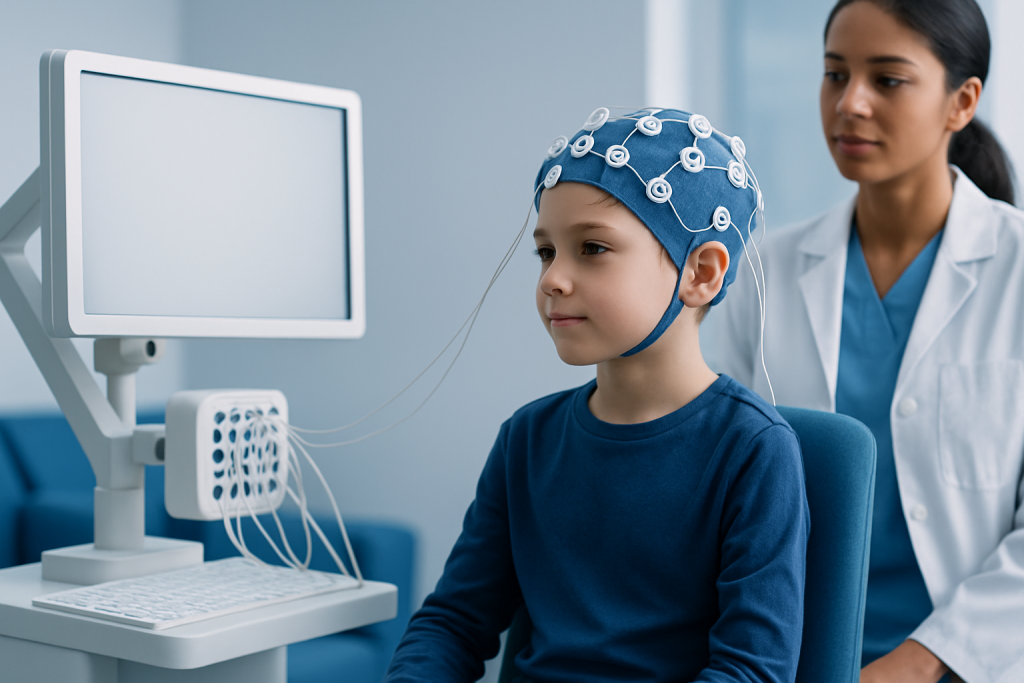
Children are often referred for testing when parents, teachers, or doctors notice persistent concerns with learning, attention, or behavior. Sometimes the issue is obvious, such as major difficulty reading, frequent emotional outbursts, or inability to stay focused in class. In other cases, the problem is less clear, and a child may seem bright but still underperform, become frustrated easily, or avoid schoolwork.
Testing may be considered when there are concerns about academic progress, language development, memory, executive functioning, social skills, or emotional regulation. It can also be useful after a medical event or condition that may affect the brain, such as epilepsy, head injury, prematurity, genetic conditions, or neurological illness. In these situations, the evaluation helps show how the child is functioning now and what support may be needed.
Common reasons families seek an evaluation include:
- Difficulty with reading, writing, math, or overall school performance
- Problems with attention, hyperactivity, or organization
- Behavior concerns such as impulsivity, anger, or poor self-control
- Memory, processing speed, or problem-solving difficulties
- Speech, language, or social communication concerns
- Emotional changes, anxiety, or low frustration tolerance
- Monitoring after a neurological or medical condition
A neuropsychological evaluation is not only for children who are struggling significantly. It may also help when a child’s pattern of strengths and weaknesses is uneven, when previous assessments have not answered the family’s questions, or when a more detailed plan is needed for school and home.
What the Evaluation Assesses

Neuropsych testing is broader than many standard school-based assessments. It often examines intellectual abilities as well as the mental skills needed for everyday learning and functioning. The exact testing plan depends on the child’s age, developmental level, medical history, and the reason for referral.
Areas commonly assessed include attention, concentration, memory, language, visual-spatial skills, problem-solving, processing speed, executive functions, fine motor coordination, and academic skills such as reading, writing, and math. Emotional and behavioral functioning are also important, because stress, anxiety, mood, sleep, and self-esteem can strongly affect performance.
Executive functions are a frequent focus. These are the skills that help a child plan, organize, start tasks, switch between activities, control impulses, and monitor mistakes. When executive functions are weak, a child may know the material but still struggle to complete homework, follow multi-step directions, or manage time effectively.
The evaluation does not depend on one single test. Instead, the clinician looks at patterns across several measures, along with observations, family history, school information, and parent or teacher questionnaires. This broader approach can help distinguish between overlapping issues, such as whether inattention is more consistent with ADHD, anxiety, poor sleep, a language disorder, or a specific learning difficulty like dyslexia.
How Neuropsych Testing Is Done
The process usually begins with a detailed clinical interview. Parents are asked about pregnancy and birth history, developmental milestones, medical conditions, school progress, social functioning, emotional concerns, and family history. Teachers’ reports, school records, and past evaluations may also be reviewed. This background information is important because test scores are only one part of the overall picture.
The child then completes a series of tasks chosen for their age and needs. Some activities may involve answering questions, solving puzzles, remembering information, drawing shapes, reading words, listening carefully, or sorting items under time pressure. Breaks are usually provided, and younger children may complete the evaluation in shorter segments. The goal is to see how the child approaches tasks, not to create unnecessary pressure.
Parents often wonder whether they should prepare their child. In most cases, simple preparation is best. The child can be told that they will do activities that show how they learn best and that some parts may feel easy while others may be hard. A good night’s sleep, regular meals, usual medications unless the doctor advises otherwise, and glasses or hearing devices if needed can all help provide the most accurate results.
After testing, the clinician interprets the findings and prepares a report. This usually includes the child’s strengths, the areas of difficulty, possible diagnoses when appropriate, and practical recommendations. In some centers, additional services such as electroencephalography (EEG) or MRI may be considered if the medical history suggests a neurological issue, but these are not routine parts of every neuropsychological evaluation.
What the Results Can Show
Results can clarify why a child is struggling and whether a recognizable pattern is present. For example, a child with strong verbal skills but poor reading accuracy and spelling may have a specific learning disorder. Another child may show broad difficulty with sustained attention, inhibition, and working memory, which may support evaluation for ADHD. Some children have emotional symptoms that interfere with concentration, while others have developmental or neurological conditions affecting multiple areas.
Just as importantly, the evaluation identifies strengths that can be used in support planning. A child may have excellent visual reasoning, strong vocabulary, creativity, or good long-term memory even while having challenges in another area. Recognizing these strengths can make interventions more realistic and encouraging for both the child and family.
The report may help with school-based planning. Recommendations can include classroom seating changes, extra time, reduced-distraction environments, assistive technology, speech-language support, organizational coaching, or behavioral strategies. For some families, the most valuable part of testing is finally having a clear explanation for difficulties that had previously seemed confusing or inconsistent.
Results are best understood in context. A diagnosis alone does not define a child’s abilities or future. Development changes over time, and many children improve meaningfully when they receive the right combination of support, skill-building, and understanding from adults around them.
Treatment, Support, and Next Steps
Neuropsych testing itself is an assessment, not a treatment. Its value lies in guiding the next steps with greater precision. Depending on the findings, a child may benefit from school interventions, psychological support, speech-language therapy, occupational therapy, tutoring, behavioral treatment, or medical care. In some cases, medication evaluation may be appropriate, especially when attention or mood symptoms are significantly affecting daily function.
Support plans are usually most effective when they are individualized. Two children with the same diagnosis may need very different strategies based on their age, learning profile, temperament, and environment. Recommendations often work best when parents, teachers, therapists, and doctors share information and use consistent goals.
Examples of possible next steps include:
- Educational support for reading, writing, math, or study skills
- Behavioral therapy to improve routines, self-regulation, and coping
- Speech-language therapy for language or social communication needs
- Occupational therapy for fine motor or sensory-related concerns
- Medical review for sleep problems, seizures, headaches, or developmental issues
- Further specialized care such as child and adolescent psychiatry when emotional or behavioral symptoms are prominent
Near the end of the process, families usually meet with the clinician to review the results and ask questions. If needed, Acibadem International’s multidisciplinary specialists in JCI-accredited hospitals evaluate and treat children with learning, attention, and behavior concerns for international patients, coordinating neuropsychology with pediatric neurology, psychiatry, and rehabilitation services.
How Parents Can Help Before and After Testing
Parents play a central role in making the evaluation useful. Before testing, it helps to gather report cards, teacher comments, prior assessments, medical records, and examples of schoolwork that show the concern. Sharing specific observations can also be valuable, such as when problems started, whether they are seen at home and school, and what seems to make them better or worse.
After the evaluation, parents can support progress by focusing on practical recommendations rather than on labels alone. This may include setting up structured routines, breaking tasks into smaller steps, using visual schedules, communicating regularly with teachers, and helping the child understand their own learning style in a positive way. Children often do better when expectations are clear and praise is specific.
It is also helpful to review the report over time. As children grow, school demands increase, and new challenges can appear even when earlier goals were met. Follow-up visits or repeat testing may be recommended if there is a significant change in functioning, a new medical issue, or a need to update school planning.
Parents should remember that no test can capture every part of a child’s personality, motivation, creativity, or potential. Neuropsych testing is one tool among many, but when combined with careful observation and supportive care, it can provide a strong foundation for informed decisions and meaningful help.
When to Seek Professional Advice
Parents should consider discussing an evaluation with a pediatrician, child psychologist, neurologist, psychiatrist, or school professional if concerns about learning, attention, or behavior are ongoing and affecting daily life. It is especially important to seek advice when a child is falling behind academically, becoming increasingly distressed about school, or showing changes in mood, sleep, or social functioning.
Prompt evaluation may also be important after a concussion, seizure, neurological illness, developmental regression, or another medical event that seems to affect thinking or behavior. In these situations, the child may need coordinated assessment that includes both neuropsychological and medical input. Some children also benefit from pediatric rehabilitation services when cognitive, motor, or functional challenges overlap.
Urgent medical attention is needed if a child shows warning signs such as sudden confusion, loss of consciousness, seizures, severe headache with neurological symptoms, major personality change, self-harm thoughts, or a sudden decline in speech or movement. These symptoms are not typical reasons to wait for routine testing and should be assessed promptly by a qualified clinician.
When concerns are less urgent but persistent, a professional evaluation can bring clarity and direction. Early understanding often reduces frustration for both the child and family and helps support development in a more targeted, compassionate way.
Frequently asked questions
What is neuropsych testing for children?
Neuropsych testing for children is a detailed evaluation of cognitive, academic, emotional, and behavioral functioning. It helps explain how a child learns and why certain tasks may be difficult, so families and clinicians can plan the right support.
How is neuropsych testing different from school testing?
School testing often focuses on academic achievement and eligibility for educational services. A neuropsychological evaluation is usually more comprehensive and may assess attention, memory, language, executive functioning, behavior, and emotional factors in greater detail.
How long does a pediatric neuropsychological evaluation take?
The length varies depending on the child’s age and the questions being asked. Some evaluations are completed in one day, while others are divided into shorter sessions to reduce fatigue and get the most accurate picture.
Can neuropsych testing diagnose ADHD or learning disorders?
Testing can provide important evidence that supports diagnoses such as ADHD, dyslexia, or other learning disorders. However, diagnosis is based on the full clinical picture, including history, observations, and reports from parents and teachers.
How should parents prepare their child for testing?
Parents can explain that the visit is meant to understand how the child learns best and that some activities may be easy while others may feel challenging. It also helps to make sure the child is well rested, has eaten, and brings any needed glasses, hearing devices, or school records.
Will the results help at school?
In many cases, yes. The report may offer practical recommendations for classroom accommodations, learning strategies, and supports that can be discussed with the school.
References
- American Academy of Pediatrics
- American Psychological Association
- National Institute of Mental Health
- Centers for Disease Control and Prevention
- Child Neurology Foundation
This article is for general information only and is not a substitute for professional medical advice. Please consult a qualified doctor about your individual situation.
Explore treatments in Turkey — costs, top hospitals & a free quote
JCI-accredited · board-certified surgeons · reply within 24h
Add us as a Preferred Source to see more of our trusted health content across Google Search, AI Overviews and Discover.