Neuropsychological Assessment After Stroke: Why Cognitive Testing Matters

Stroke can affect thinking skills even when physical recovery appears to be going well. Neuropsychological assessment measures memory, attention, language, executive function, mood, and behavior.
Key Takeaways
- Stroke can affect thinking skills even when physical recovery appears to be going well.
- Neuropsychological assessment measures memory, attention, language, executive function, mood, and behavior.
- Test results help tailor rehabilitation, home support, return-to-work planning, and safety decisions.
- Cognitive testing is not a pass-or-fail exam; it is a clinical tool to understand strengths and challenges.
- Follow-up testing may be useful because recovery can change over time.
Neuropsychological assessment after stroke helps doctors understand how a stroke has affected memory, attention, language, problem-solving, and mood. This detailed cognitive testing can guide rehabilitation, daily support, and long-term recovery planning.
Overview: What Is Neuropsychological Assessment After Stroke?
Neuropsychological assessment after stroke is a detailed evaluation of how the brain is functioning in everyday thinking and behavior. It looks at areas such as attention, memory, language, visual-spatial skills, processing speed, judgment, planning, and emotional adjustment. The goal is to understand the specific pattern of changes caused by the stroke and how those changes may affect daily life.
A stroke can cause obvious physical symptoms, such as weakness or speech difficulty, but it may also lead to less visible cognitive problems. Some people notice forgetfulness, mental slowing, trouble organizing tasks, or difficulty focusing. Others may feel that something is different but cannot easily describe it. Formal testing can make these changes clearer and more measurable.
This kind of assessment is usually carried out by a neuropsychologist, often as part of a broader stroke care team. The results can support diagnosis, rehabilitation planning, and communication between the patient, family, and healthcare professionals. In this way, testing becomes an important part of personalized recovery after stroke.
Why Cognitive Testing Matters in Stroke Recovery
Cognitive testing matters because recovery after stroke is not only about movement, speech, or swallowing. Thinking skills play a major role in independence, safety, communication, relationships, work, and quality of life. Even mild changes in attention or planning can make tasks like taking medication, managing money, driving, or following medical advice more difficult.
Neuropsychological assessment helps identify challenges that may otherwise be missed during a routine neurological exam. A person may speak well and appear physically recovered, yet still struggle with multitasking, problem-solving, or remembering instructions. Recognizing these issues early can prevent frustration and guide practical support.
Testing also highlights strengths. This is important because rehabilitation works best when it builds on the abilities a person still has. For example, someone with stronger verbal skills may benefit from spoken reminders, while someone with better visual memory may use calendars or written checklists. Results can also help families understand that certain behaviors are related to brain injury rather than lack of effort.
In many cases, cognitive findings help shape a broader rehabilitation plan, including stroke rehabilitation and, when communication has been affected, speech and language therapy.
What Problems Can a Stroke Cause in Thinking and Behavior?

The effects of stroke depend on which part of the brain was injured, how large the stroke was, and the person’s age, health, and pre-stroke functioning. Some people mainly experience attention problems, such as becoming easily distracted or mentally fatigued. Others may have difficulty learning new information, recalling recent events, finding words, understanding language, or organizing steps in a task.
Executive function changes are also common. Executive functions include planning, decision-making, self-monitoring, impulse control, and flexible thinking. When these skills are affected, a person may seem less organized, less aware of mistakes, or more overwhelmed by complex situations. Visual-spatial problems can make reading maps, judging distances, or finding objects on one side more difficult.
Emotional and behavioral changes may appear alongside cognitive symptoms. A person may become more irritable, anxious, depressed, apathetic, or emotionally sensitive. These changes can influence motivation and day-to-day functioning just as much as memory or attention problems do. In some cases, testing may also help doctors distinguish post-stroke cognitive impairment from other conditions such as dementia or depression.
- Attention and concentration problems
- Memory difficulties
- Language and word-finding changes
- Reduced processing speed
- Planning and problem-solving difficulties
- Visual-spatial or perceptual problems
- Mood or behavior changes
When Is Neuropsychological Assessment Recommended?
Assessment may be recommended when a person, family member, or clinician notices changes in memory, concentration, communication, behavior, or decision-making after stroke. It is especially useful when these changes are affecting rehabilitation progress, daily independence, return to work, or safety at home. Sometimes the referral is made early during hospital recovery, while in other cases it happens later if problems continue.
The ideal timing depends on the person’s medical condition and goals. In the first days after a stroke, severe fatigue, delirium, or communication problems may limit full testing. Short cognitive screening may be used at that stage. A more complete neuropsychological assessment is often done once the person is medically stable and can participate meaningfully.
Follow-up testing may also be advised months later. Recovery can continue over time, and some problems become more noticeable only after a person returns to work, driving, or complex daily routines. Repeat assessment can show whether cognitive abilities are improving, staying stable, or needing additional support.
What Happens During the Assessment?
Neuropsychological assessment usually begins with a clinical interview. The neuropsychologist asks about the stroke, current symptoms, education, occupation, medical history, mood, sleep, medications, and daily functioning. Family input can be very helpful, especially if the person has reduced insight into changes or struggles to describe them clearly.
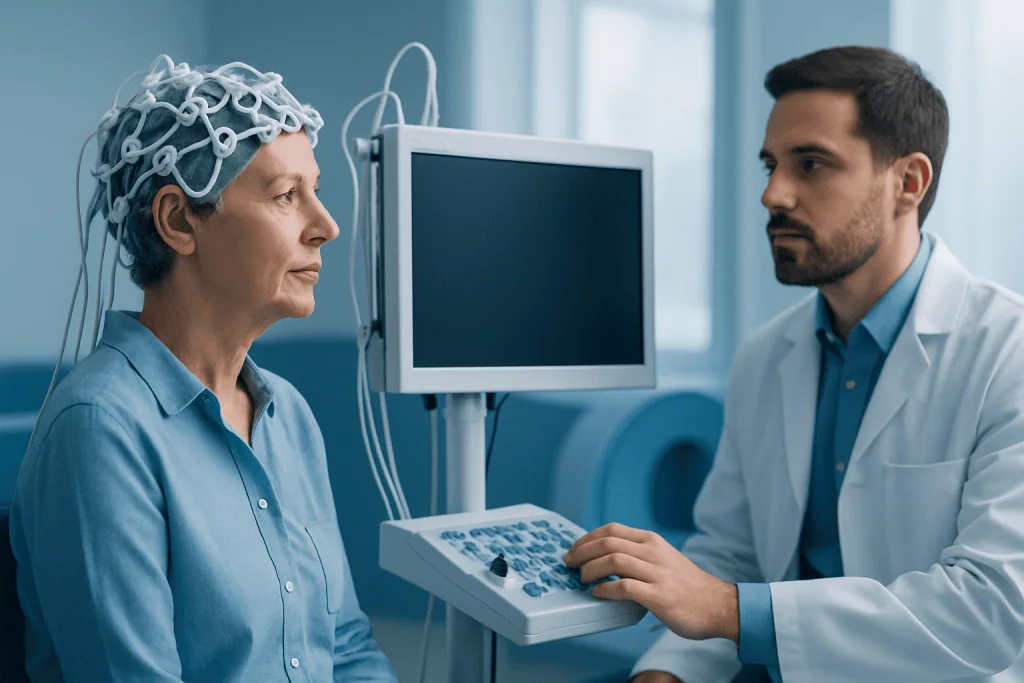
The testing itself involves structured tasks rather than invasive procedures. These may include answering questions, remembering words or stories, copying designs, naming pictures, solving problems, reading, writing, and performing timed tasks. The tests are chosen based on the person’s language, cultural background, physical limitations, and the questions the care team wants to answer.
It is not a test that someone passes or fails. Instead, it compares performance across different thinking skills to identify patterns of strength and weakness. Breaks are usually offered, because fatigue is common after stroke. If needed, the assessment can sometimes be split into shorter sessions.
Results are interpreted alongside brain imaging, neurological findings, and rehabilitation assessments. In some cases, doctors may combine cognitive testing with MRI or other evaluations to better understand how changes in brain structure relate to symptoms.
How Results Help Guide Treatment and Daily Support
The main value of neuropsychological assessment is practical guidance. Test results can help the healthcare team choose the most appropriate therapies, set realistic goals, and adapt communication methods. If attention is reduced, therapy sessions may need to be shorter and more structured. If memory is impaired, written instructions and routine-based strategies may be emphasized.
Assessment findings can also support decisions about work, school, driving, finances, and independent living. For example, a person may physically appear ready to resume usual activities but still have slowed processing speed or impaired judgment that affects safety. Clear information can help families and clinicians make supportive, individualized decisions.
Treatment may involve cognitive rehabilitation, occupational therapy, speech and language therapy, mood treatment, and home-based strategies. Depending on the person’s needs, the team may suggest memory aids, visual reminders, step-by-step checklists, environmental adjustments, or caregiver education. Some patients may also benefit from neurological rehabilitation programs that bring several therapies together.
Near the end of the recovery pathway, some international patients seek multidisciplinary evaluation at centers such as Acibadem International, where JCI-accredited hospitals and specialists diagnose and treat stroke-related cognitive and neurological conditions.
Self-care, Family Support, and Recovery Tips
Recovery from cognitive changes after stroke often improves with time, rehabilitation, and supportive routines. Consistent sleep, regular meals, hydration, physical activity as advised by a doctor, and management of blood pressure and other vascular risk factors can support overall brain health. It also helps to reduce distractions during important tasks and to schedule demanding activities for times of day when energy is best.
Practical tools can make daily life easier. Many people benefit from calendars, alarms, pill organizers, written instructions, labeled cupboards, and simple step-by-step task lists. Families are often encouraged to give one instruction at a time, allow extra response time, and avoid correcting mistakes in a harsh or rushed way.
Emotional support matters too. Frustration, embarrassment, low mood, and anxiety are common after stroke, especially when cognitive problems are invisible to others. Encouraging open communication and involving family in education can reduce misunderstanding. Support groups, counseling, and rehabilitation psychology may also help adjustment.
- Use routines to lower mental effort
- Take breaks to manage fatigue
- Keep instructions simple and written down
- Attend follow-up appointments
- Ask about rehabilitation if daily tasks remain difficult
When to See a Doctor
A doctor should be consulted if there are ongoing or worsening problems with memory, attention, language, confusion, judgment, or behavior after a stroke. These symptoms may affect medication safety, falls risk, work ability, and independent living. Early evaluation can help identify the cause and guide support before daily difficulties become more stressful.
Medical review is also important if new cognitive symptoms appear suddenly, because this may signal another stroke or a different urgent problem. Emergency care is needed for sudden face drooping, arm weakness, speech difficulty, severe confusion, or other signs of possible stroke recurrence.
Even when symptoms seem mild, an assessment can still be worthwhile if the person is struggling to return to usual routines. A qualified clinician can determine whether formal neuropsychological testing, rehabilitation referral, or further neurological evaluation is appropriate.
Frequently asked questions
What is the purpose of neuropsychological assessment after stroke?
Its purpose is to identify how a stroke has affected thinking, memory, attention, language, mood, and daily functioning. The results help doctors and rehabilitation teams plan more personalized treatment and support.
Does everyone who has a stroke need cognitive testing?
Not everyone needs a full neuropsychological assessment, but many people benefit from at least some cognitive screening. More detailed testing is usually recommended when there are concerns about memory, concentration, communication, behavior, independence, or return to work.
How long after a stroke should testing be done?
The timing varies depending on medical stability, fatigue, communication ability, and the reason for referral. Some people have brief screening early on and a more complete assessment later, once they can participate fully.
Is neuropsychological testing stressful or painful?
The assessment is not painful and does not involve surgery or needles. It can be mentally tiring, but breaks are usually provided, and the tasks are adjusted as much as possible to the person’s needs.
Can cognitive problems improve after a stroke?
Yes, many people show improvement over time, especially with rehabilitation and supportive strategies. Recovery differs from person to person, and some difficulties may last longer or need ongoing adaptation.
Can the results help with return to work or driving decisions?
Yes, testing can provide useful information about attention, processing speed, judgment, and other skills needed for work or driving. These decisions are usually made by combining test results with medical advice, functional assessment, and local regulations.
References
- World Stroke Organization
- American Stroke Association
- National Institute of Neurological Disorders and Stroke
- American Psychological Association
- National Institute on Aging
This article is for general information only and is not a substitute for professional medical advice. Please consult a qualified doctor about your individual situation.
Explore treatments in Turkey — costs, top hospitals & a free quote
JCI-accredited · board-certified surgeons · reply within 24h
Add us as a Preferred Source to see more of our trusted health content across Google Search, AI Overviews and Discover.