

Ocular Migraines: What Patients Need to Know

Ocular migraines most often describe temporary visual symptoms related to migraine aura. Symptoms can include flashing lights, zigzag lines, blind spots, or shimmering areas in vision.
Key Takeaways
- Ocular migraines most often describe temporary visual symptoms related to migraine aura.
- Symptoms can include flashing lights, zigzag lines, blind spots, or shimmering areas in vision.
- True vision loss in one eye needs prompt medical evaluation because it can have causes other than migraine.
- Diagnosis focuses on symptom history and excluding eye, vascular, or neurologic conditions.
- Treatment may involve trigger management, headache medicines, and preventive strategies when episodes are frequent.
Ocular migraines are episodes of temporary visual disturbance that may happen with or without headache. Most are linked to migraine aura and are not dangerous, but sudden vision loss or new symptoms should be assessed by a doctor to rule out other eye or brain conditions.
Overview: what ocular migraines mean
Ocular migraines usually refer to short-lived visual symptoms caused by migraine activity. A person may see flashing lights, zigzag patterns, shimmering spots, or areas of missing vision, and these changes often clear within minutes to an hour. Some people also develop a headache, while others have visual symptoms without significant pain.
The term can be confusing because it is used in different ways. In everyday use, many people mean migraine with visual aura. Less commonly, clinicians use the related term retinal migraine for temporary vision changes that affect only one eye. Because one-eye vision loss can also be caused by eye or blood vessel problems, it should not be assumed to be migraine without medical assessment.
For many patients, these episodes are unsettling but not harmful. The main clinical question is whether the symptoms fit a migraine pattern or whether another cause needs urgent attention. Careful evaluation helps guide treatment and offers reassurance when serious causes have been excluded.
How ocular migraines feel
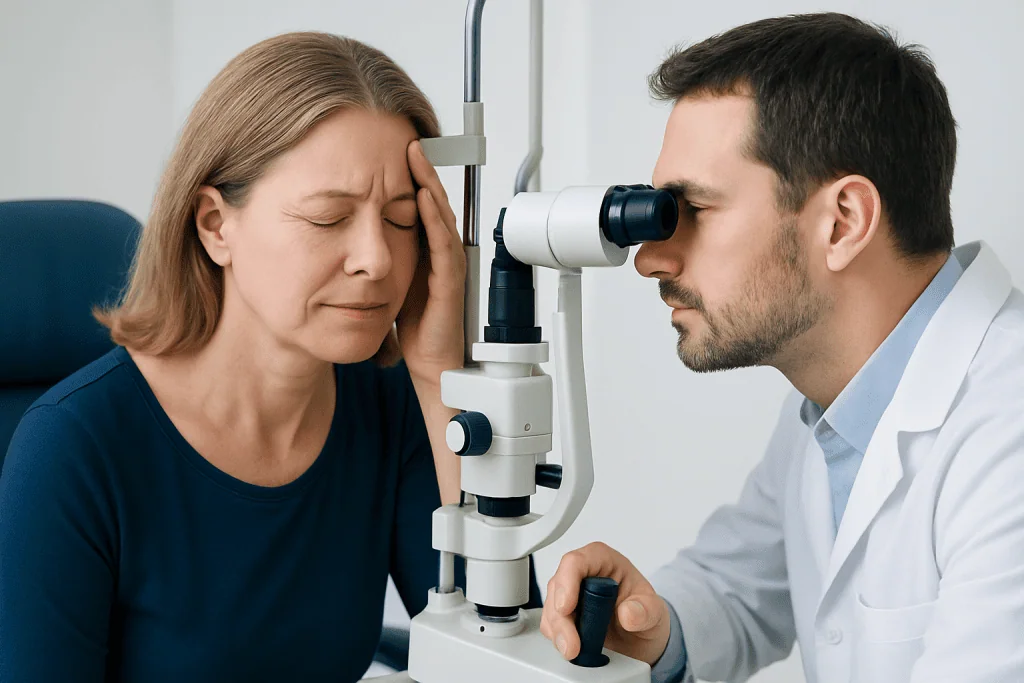
Visual symptoms often begin gradually and spread over several minutes. People may notice shimmering lights, jagged lines, blind spots, tunnel-like vision, or a patch that makes reading difficult. The disturbance can affect both eyes, even if it seems stronger on one side, because migraine aura usually starts in the brain’s visual pathways rather than inside the eye itself.
Some patients describe the image as if they are looking through heat waves, cracked glass, or a kaleidoscope. These effects usually last between 5 and 60 minutes and then fade completely. A headache may follow, occur at the same time, or not happen at all.
Other migraine-related symptoms can include:
- Sensitivity to light, sound, or smell
- Nausea or mild stomach upset
- Tingling or numbness
- Difficulty finding words during some aura episodes
- Fatigue before or after the event
If symptoms are truly limited to one eye, the episode may feel like a curtain, dimming, or blank area over part of the visual field. That pattern deserves particular attention because it overlaps with non-migraine causes of temporary vision loss.
Causes and risk factors

Ocular migraines are linked to migraine biology. Experts believe visual aura is caused by a wave of altered nerve activity in the brain followed by changes in blood flow. This process can temporarily disrupt how visual information is processed, leading to the characteristic flashing or distorted images.
As with other migraine types, episodes may be influenced by personal triggers. Triggers vary widely from one person to another, and not every attack has an obvious cause. Common patterns include lack of sleep, dehydration, stress, skipped meals, hormonal shifts, bright light, prolonged screen exposure, and certain foods or alcohol in susceptible individuals.
A family or personal history of migraine increases the likelihood of ocular migraines. They can occur at any age but are often seen in people who already have migraine headaches or other aura symptoms. Some patients are also evaluated for related headache disorders, especially if the episodes are recurrent or difficult to classify, such as migraine or other visual-neurologic conditions.
Not every visual disturbance is migraine. Conditions affecting the retina, optic nerve, circulation, or brain can produce similar complaints. That is why new, severe, or unusual symptoms should be assessed rather than self-diagnosed.
How doctors make the diagnosis
Diagnosis begins with a detailed description of the episode. Doctors usually ask what was seen, how quickly it started, how long it lasted, whether one or both eyes were involved, and whether headache or neurologic symptoms followed. This history is often the most important part of identifying migraine aura.
Because many people are unsure whether symptoms came from one eye or both, a clinician may ask them to cover one eye at a time during a future episode if it is safe to do so. A full eye examination may be recommended, especially if the symptoms are new, strictly one-sided, prolonged, or associated with reduced visual acuity.
In some cases, additional assessment is needed to rule out other causes such as retinal disease, transient ischemic attack, seizure, or inflammation. Depending on the presentation, evaluation may involve neuro-ophthalmologic review, blood pressure assessment, or imaging such as MRI when there are red flags or uncertainty.
Patients with recurring headaches and aura may also benefit from specialist assessment through neurology consultation to confirm the diagnosis and plan treatment. The goal is not only to label the symptoms accurately, but also to identify any signs that suggest a condition other than migraine.
Treatment options and practical management
Treatment depends on how often episodes happen, how disruptive they are, and whether headache is present. Many visual aura episodes pass on their own and need only a calm, safe environment until they resolve. Resting in a dim room, avoiding driving, and reducing screen or bright light exposure during the episode can help.
When ocular migraines occur as part of a broader migraine disorder, doctors may recommend acute migraine treatment for associated headache and nausea. If episodes are frequent or disabling, preventive treatment may be considered. The specific medicine or strategy depends on the person’s age, general health, blood pressure, other symptoms, and migraine pattern.
Non-drug measures are also important. Keeping a symptom diary can help identify links with sleep changes, fasting, stress, menstrual cycles, or specific environmental triggers. Good hydration, regular meals, consistent sleep, and stress management often reduce attack frequency.
If symptoms are persistent, atypical, or associated with eye findings, referral to an eye specialist may be advised. Depending on the suspected cause, evaluation can include a detailed eye examination to look for retinal or optic nerve problems. For patients with complex visual complaints, a coordinated approach between neurology and ophthalmology is often the most helpful.
Prevention and self-care between episodes
Although ocular migraines cannot always be prevented, patients can often lower the chance of attacks by protecting the body’s regular rhythms. A consistent sleep schedule, balanced meals, enough fluids, and breaks from intense visual tasks are simple measures that support migraine control. For some people, these habits make a meaningful difference.
It can also help to notice patterns rather than focusing on one suspected trigger. Stress, hormonal changes, weather shifts, travel, and overstimulation may combine to lower the threshold for an episode. A diary that records timing, food, sleep, stress, and symptoms can give a doctor useful information during follow-up.
Patients should avoid driving or using machinery when visual symptoms start. During an episode, it is usually safest to sit or lie down until vision returns to normal. If the symptoms differ from prior events, last longer than usual, or are accompanied by weakness, confusion, or severe pain, they should seek urgent medical advice instead of waiting it out.
When to seek medical care
Medical assessment is important if ocular migraines are new, changing, frequent, or difficult to distinguish from other conditions. A first episode should be reviewed by a qualified doctor, especially in adults who have never had migraine before. This is also true when symptoms clearly affect only one eye.
Prompt care is needed if there is sudden vision loss, a dark curtain over vision, symptoms lasting longer than 60 minutes, new weakness, fainting, trouble speaking, chest pain, or the worst headache the person has ever experienced. These features are not typical of a simple migraine aura and may point to a different problem requiring urgent evaluation.
People with vascular risk factors, pregnancy, autoimmune disease, or known eye disorders should be especially cautious about self-diagnosing visual symptoms. Near the end of the diagnostic pathway, some patients may benefit from multidisciplinary care. Acibadem International’s specialists in neurology, ophthalmology, and imaging at JCI-accredited hospitals evaluate and treat international patients with migraine-related and other causes of visual disturbance.
Frequently asked questions
Are ocular migraines the same as migraine aura?
Often, yes. In everyday use, ocular migraines commonly refer to visual aura from migraine, such as flashing lights or zigzag lines. However, some clinicians use separate terms for vision loss that affects only one eye, so a medical review can help clarify the diagnosis.
How long do ocular migraines usually last?
Most visual symptoms last from 5 to 60 minutes. They usually begin gradually, spread, and then resolve completely. Symptoms that last longer than an hour should be discussed with a doctor, especially if they are new or severe.
Can ocular migraines happen without a headache?
Yes. Some people have visual aura without a significant headache, which is sometimes called acephalgic migraine or silent migraine. Even without pain, new visual symptoms still deserve evaluation to confirm that migraine is the cause.
Is an ocular migraine dangerous?
Most migraine-related visual auras are not dangerous and clear on their own. The concern is that some serious eye, blood vessel, or neurologic conditions can look similar. That is why sudden one-eye vision loss, prolonged symptoms, or unusual neurologic signs need prompt medical care.
What can trigger ocular migraines?
Triggers vary by person and may include stress, dehydration, missed meals, poor sleep, bright light, long screen time, hormonal changes, or certain foods and alcohol. Keeping a diary can help identify patterns. Sometimes no obvious trigger is found.
Should a person drive during an ocular migraine?
No. Because visual symptoms can interfere with safe vision and concentration, driving should be avoided until vision returns to normal. If symptoms start while driving, the person should pull over safely as soon as possible.
References
- World Health Organization
- American Migraine Foundation
- National Eye Institute
- National Institute of Neurological Disorders and Stroke
- Mayo Clinic
This article is for general information only and is not a substitute for professional medical advice. Please consult a qualified doctor about your individual situation.
Migraine in Turkey — costs, top hospitals & a free quote
JCI-accredited · board-certified surgeons · reply within 24h

More from the Health Library



Related Specialists

Asst. Prof. Dr. Ebru Kazancı
Neonatal Intensive Care Unit
Fzt. Sevilay Lumbuku
Physical Medicine and Rehabilitation
Dr. Yunus Öztürk
Emergency Service
Dr. Seval Eren
Inpatient Clinic Physicians Clinical Service