Operation for Crossed Eyes: Procedure, Recovery and Results
Strabismus surgery adjusts the eye muscles; it does not remove the eye or usually change its focusing power. The procedure may improve eye alignment, appearance, double vision, head posture, and, in some children, the opportunity for binocular visual development.
Key Takeaways
- Strabismus surgery adjusts the eye muscles; it does not remove the eye or usually change its focusing power.
- The procedure may improve eye alignment, appearance, double vision, head posture, and, in some children, the opportunity for binocular visual development.
- Most people have temporary redness, irritation, and mild-to-moderate discomfort, with everyday recovery often taking days to weeks.
- Results are individualized, and some patients need glasses, vision therapy, prisms, botulinum toxin treatment, or a further operation.
- A sudden new eye turn or sudden double vision needs prompt medical assessment, especially when accompanied by neurological symptoms.
An operation for crossed eyes, also called strabismus surgery, changes the pull of one or more eye muscles so the eyes can point in a more coordinated direction. It is performed in children and adults when alignment is unlikely to improve sufficiently with glasses, patching, prisms, or other non-surgical care.
Overview: what an operation for crossed eyes does
An operation for crossed eyes is a procedure used to treat strabismus, a condition in which the eyes do not consistently line up together. One eye may turn inward, outward, upward, or downward. The surgeon works on the muscles on the surface of the eye to change their tension or attachment, helping the eyes rest in a more balanced position.
Strabismus surgery is performed in children and adults. It may be recommended to improve the alignment of the eyes, reduce troublesome double vision, correct an abnormal head turn, support visual development in childhood, or address the social and emotional effects of a noticeable eye turn. It is important to understand that surgery improves alignment but does not automatically correct all vision problems or eliminate the need for glasses.
The exact approach depends on the type and size of the misalignment, which eye muscles are involved, previous treatments, vision in each eye, and the person’s age and health. A specialist assessment is needed to determine whether eye correction surgery for crossed eyes is appropriate and to set realistic expectations.
Who may be a candidate for strabismus surgery
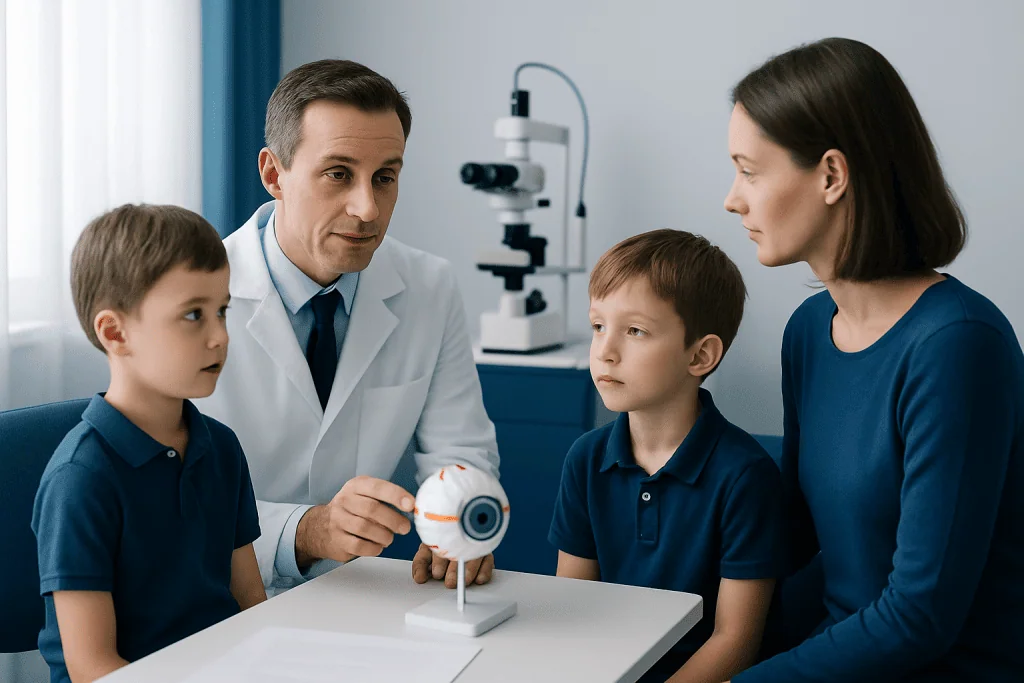
Patients may be considered for surgery when an eye turn remains despite appropriate treatment with glasses, patching for amblyopia where needed, prisms, or other measures. Some people have a constant turn, while others have an intermittent turn that becomes more frequent, causes symptoms, or affects daily activities. Surgery can also be considered for certain forms of double vision caused by eye muscle imbalance.
For surgery for crossed eyes in toddlers, the decision is individualized. Early assessment is particularly important because some childhood eye turns are linked with refractive errors, amblyopia, or less commonly an eye or neurological condition that needs separate treatment. In selected children, aligning the eyes at an appropriate time may help create better conditions for binocular visual development, although outcomes vary.
Adults can also benefit. Adult strabismus may have been present since childhood or may develop after thyroid eye disease, nerve palsy, trauma, previous eye surgery, or other conditions. A full examination helps distinguish long-standing misalignment from a new problem and assesses whether the brain can adapt to the planned alignment.
- Measurements are usually repeated at more than one visit when the deviation varies.
- Children may need assessment for amblyopia and refractive error before or alongside surgery.
- Adults with new double vision may require additional eye, neurological, or imaging assessment.
How the procedure for crossed eyes is performed
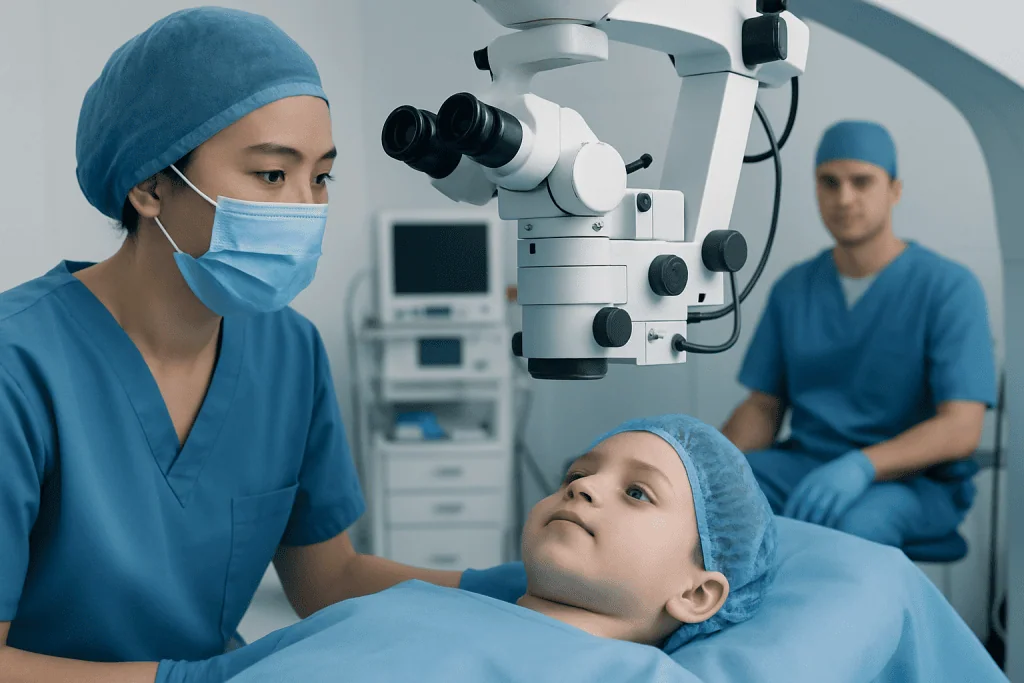
Before surgery, an ophthalmologist with expertise in strabismus measures eye alignment in different directions of gaze and reviews vision, eye movements, glasses prescription, and medical history. The surgical plan identifies which muscles need adjustment. In some adults, adjustable sutures may be used so alignment can be fine-tuned shortly after the operation while the person is awake.
Most children have general anaesthesia. Adults may have general anaesthesia or, in selected situations, local anaesthesia with sedation. The surgeon makes a small incision in the conjunctiva, the clear tissue covering the white of the eye. The eye muscles are reached beneath this tissue; the eyeball itself is not removed or operated on internally.
A muscle may be weakened by moving its attachment farther back on the eye, known as recession. It may be strengthened by shortening it or moving its attachment forward, known as resection or plication. More than one muscle, and sometimes both eyes, may be treated to achieve the intended balance. The conjunctiva is then closed with dissolving stitches, and the procedure is commonly completed as day surgery.
The operation typically takes about one to two hours, depending on how many muscles are treated and whether the surgery is a first or repeat procedure. The total time at the hospital is longer because of preparation, anaesthesia, monitoring, and discharge checks.
How long does it take to recover from cross eye surgery?
Cross eye surgery recovery time differs between patients, but many people return to light everyday activities within several days. The eye commonly looks red and feels scratchy, watery, or sensitive to light during the first week. Redness can take several weeks, and sometimes longer, to fade fully because the surface tissues need time to heal.
Vision may be temporarily blurred from ointment, tears, swelling, or the healing surface of the eye. Some adults experience short-term double vision as the brain adjusts to the new eye position. This is often monitored at follow-up visits; persistent or severe double vision should be discussed with the surgeon.
Children may be more tired, irritable, or reluctant to open their eyes on the day of surgery. “Open eyes recovery” is usually gradual: they may keep their eyes partly closed because of light sensitivity or irritation initially, then become more comfortable over the next day or two. Parents should follow the surgeon’s instructions about school, swimming, sports, eye rubbing, and prescribed drops.
Follow-up appointments are essential. Alignment can continue to settle over the first weeks, and the care team checks healing, eye position, vision, and whether glasses or additional amblyopia treatment remain necessary.
Is cross eye surgery painful?
Cross eye surgery is not felt during general anaesthesia. Afterward, most patients describe discomfort rather than severe pain. Common sensations include grittiness, burning, tearing, mild aching around the eye, and discomfort when moving the eyes. These symptoms usually improve steadily over the first few days.
The surgeon may recommend suitable pain relief and eye drops or ointment. It is important to use medications exactly as directed and not to use non-prescribed eye drops unless the clinical team confirms they are appropriate. Cool compresses over closed eyelids can be soothing for some patients when advised by the care team.
Increasing pain, significant swelling, worsening redness after initial improvement, discharge, a marked reduction in vision, or fever should prompt urgent contact with the surgeon or another healthcare professional. These symptoms are uncommon but need assessment to rule out infection or another complication.
Is adult strabismus surgery worth it? Benefits, limits and risks
Whether adult strabismus surgery is worth it depends on the individual’s goals, symptoms, examination findings, and tolerance for uncertainty. For many adults, better eye alignment can reduce double vision or an abnormal head posture and may improve confidence and comfort in social or work settings. Some people also gain better binocular cooperation, though this cannot be promised and depends on the cause and duration of the strabismus.
The main benefit is improved alignment in primary gaze, the position used for straight-ahead activities such as conversation and walking. Surgery may not create perfect alignment in every direction of gaze, and alignment can change over time. Glasses, prisms, or other treatments may still be required after surgery.
All operations carry risks. Specific risks include undercorrection or overcorrection of the eye turn, recurrent misalignment, temporary or persistent double vision, scarring, infection, bleeding, and reaction to anaesthesia. Serious loss of vision is very rare, but the ophthalmologist discusses this and other individual risks during consent. A further operation is sometimes needed, particularly in complex or long-standing cases.
At Acibadem International, multidisciplinary ophthalmology teams in JCI-accredited hospitals assess and treat strabismus in international patients, coordinating care when neurological, paediatric, endocrine, or other specialist input is needed.
What is the success rate of cross eye surgery?
There is no single success rate of cross eye surgery that applies to every patient. Studies use different definitions of success, such as alignment within a particular range, reduced double vision, improved head posture, or patient satisfaction. Results also depend on the type of strabismus, size and variability of the deviation, age at treatment, visual potential, prior surgery, and conditions affecting the eye muscles or nerves.
Many patients achieve a meaningful improvement in alignment after one operation. However, a small residual turn may remain, an overcorrection may occur, or the eyes may drift again over time. This does not necessarily mean the procedure failed; the relevance depends on symptoms, appearance, eye function, and the patient’s goals.
For children, surgery is often one part of a longer treatment plan that can include glasses and amblyopia therapy. For adults, outcomes are assessed not only by the measured angle but also by comfort, double vision, ability to read or drive where appropriate, and quality of life. The surgeon can provide a more personalized outlook after detailed measurements and discussion.
When to seek medical care
A child with a constant eye turn, an eye that turns after about four months of age, a frequent intermittent turn, or a family history of strabismus should have an eye assessment. Prompt evaluation is also important when a child squints, closes one eye in bright light, tilts the head often, or seems to have difficulty using both eyes together. Early assessment can identify treatable focusing problems or amblyopia.
Adults should seek timely care for new double vision or a newly noticed eye turn. Urgent medical assessment is needed when double vision or eye misalignment begins suddenly, particularly with severe headache, facial weakness, speech difficulty, weakness or numbness, dizziness, loss of balance, drooping eyelid, unequal pupils, eye pain, or a significant vision change.
After surgery, patients should contact their surgical team if symptoms are worsening rather than improving, or if there is severe pain, fever, pus-like discharge, loss of vision, or inability to keep fluids down. Follow-up care is the safest way to monitor healing and the eventual alignment result.
Frequently asked questions
What is an operation for crossed eyes?
An operation for crossed eyes is strabismus surgery. It changes the position or tension of selected muscles on the outside of the eye so the eyes can align more closely. It does not usually change the eye’s focusing prescription or replace the need for glasses.
How long does it take to recover from cross eye surgery?
Many patients return to quiet daily activities within a few days, although redness and mild irritation may last several weeks. The final alignment is usually assessed over follow-up visits because the eyes can settle during healing. Recovery instructions vary according to age, procedure, and the surgeon’s recommendations.
Is adult strabismus surgery worth it?
For appropriately selected adults, surgery can improve eye alignment, reduce double vision or an abnormal head posture, and improve comfort in daily interactions. The value depends on the cause of the strabismus, the individual’s symptoms and goals, and the likelihood of needing glasses, prisms, or additional treatment afterward. A strabismus specialist can explain the expected benefits and limitations in an individual case.
What is the success rate of cross eye surgery?
A single percentage is not reliable because success is measured differently across patients and studies. Many people have meaningful improvement after one procedure, but some have residual or recurrent misalignment and may need further treatment. The most relevant estimate comes from an individual examination and discussion of the specific type of strabismus.
Is cross eye surgery painful?
The operation itself is not painful under general anaesthesia. After surgery, temporary grittiness, burning, aching, tearing, and light sensitivity are common and usually improve over several days. Severe or increasing pain should be reported to the surgical team.
Can surgery for crossed eyes in toddlers improve vision?
Surgery primarily improves eye alignment. In some toddlers, timely alignment can support the development of binocular vision, but results vary and surgery does not directly treat amblyopia. Glasses and patching or other amblyopia treatment may still be important.
References
- American Academy of Ophthalmology
- American Association for Pediatric Ophthalmology and Strabismus
- National Eye Institute
- Mayo Clinic
This article is for general information only and is not a substitute for professional medical advice. Please consult a qualified doctor about your individual situation.
Explore treatments in Turkey — costs, top hospitals & a free quote
JCI-accredited · board-certified surgeons · reply within 24h