Cataract to Glaucoma: An Evidence-Based Patient Guide

Cataracts cloud the eye’s natural lens, while glaucoma damages the optic nerve, often in association with high eye pressure. Most cataracts do not become glaucoma, but a swollen or very advanced cataract can rarely trigger pressure-related glaucoma.
Key Takeaways
- Cataracts cloud the eye’s natural lens, while glaucoma damages the optic nerve, often in association with high eye pressure.
- Most cataracts do not become glaucoma, but a swollen or very advanced cataract can rarely trigger pressure-related glaucoma.
- Cataract surgery may lower eye pressure in some people, particularly those with narrow angles, but it is not a substitute for glaucoma monitoring.
- Some people benefit from combined cataract and glaucoma surgery when both conditions require treatment.
- Glaucoma-related vision loss cannot usually be restored, so prescribed drops and follow-up visits are essential.
- Sudden eye pain, redness, halos around lights, nausea, or rapid vision loss requires urgent medical assessment.
A cataract does not normally turn into glaucoma because the two conditions affect different parts of the eye. However, an advanced cataract can sometimes contribute to raised eye pressure, and cataract and glaucoma may occur together, making regular eye care especially important.
Overview: understanding cataract to glaucoma
Cataract to glaucoma describes a common concern about whether a cloudy lens can lead to optic nerve damage. A cataract is clouding of the natural lens inside the eye, which can cause blurred vision, glare, faded colours, and difficulty seeing in dim light. Glaucoma is a group of conditions that progressively damage the optic nerve, the nerve that carries visual information from the eye to the brain.
In most cases, a cataract does not transform into glaucoma. They are separate conditions and can develop independently, especially with increasing age. They may also coexist in the same eye, and their symptoms can overlap: both may affect vision, although early glaucoma often causes no noticeable symptoms.
Glaucoma is often linked with increased intraocular pressure, but it can also occur when measured pressure is within the usual range. The main goal of glaucoma care is to protect the remaining optic nerve function by lowering pressure when appropriate and monitoring the eye over time.
Can a cataract turn into glaucoma?
No. A routine age-related cataract does not turn into glaucoma. Cataract affects the lens, whereas glaucoma affects the optic nerve. Still, a very enlarged, swollen, or long-standing untreated cataract can occasionally alter the flow of fluid inside the eye and raise pressure. This may lead to a secondary form of glaucoma that needs prompt ophthalmology care.
For example, the lens may gradually become thicker with cataract development. In people with naturally narrow drainage angles, this can crowd the front of the eye and increase the risk of angle-closure glaucoma. Removing the lens through cataract surgery can deepen this space and may improve fluid drainage in suitable patients.
Having cataract surgery does not mean glaucoma can be ignored. People with diagnosed glaucoma should continue their prescribed treatment and attend pressure, optic nerve, and visual field checks as advised. An ophthalmologist can explain whether cataract removal alone is likely to help pressure control or whether additional glaucoma treatment is needed.
Symptoms, causes and factors that raise risk

Cataracts commonly cause gradually worsening blurred or hazy vision, increased sensitivity to glare, halos around lights, reduced night vision, double vision in one eye, or more frequent changes in glasses prescription. Cataracts are usually painless and do not typically cause a red eye.
Open-angle glaucoma, the most common form, is often silent at first. It may slowly reduce side vision before affecting central vision later. Risk is higher with older age, a family history of glaucoma, diabetes, significant short-sightedness or long-sightedness, previous eye injury, long-term corticosteroid use, and certain eye conditions. Regular comprehensive eye examinations are important because symptoms alone cannot reliably detect early glaucoma.
Acute angle closure is different and can cause sudden severe eye pain, headache, blurred vision, coloured halos around lights, nausea, vomiting, and a red eye. These symptoms may indicate a rapid rise in eye pressure and require urgent assessment. They should not be assumed to be caused by a simple cataract.
- Cataract risk factors include age, ultraviolet exposure, smoking, diabetes, eye trauma, some medicines, and previous eye surgery.
- Glaucoma risk may be influenced by family history, eye anatomy, pressure, race or ethnicity, medical conditions, and medication use.
- Only a complete eye examination can determine whether either condition is present and how it should be managed.
Diagnosis and cataract treatment guidelines
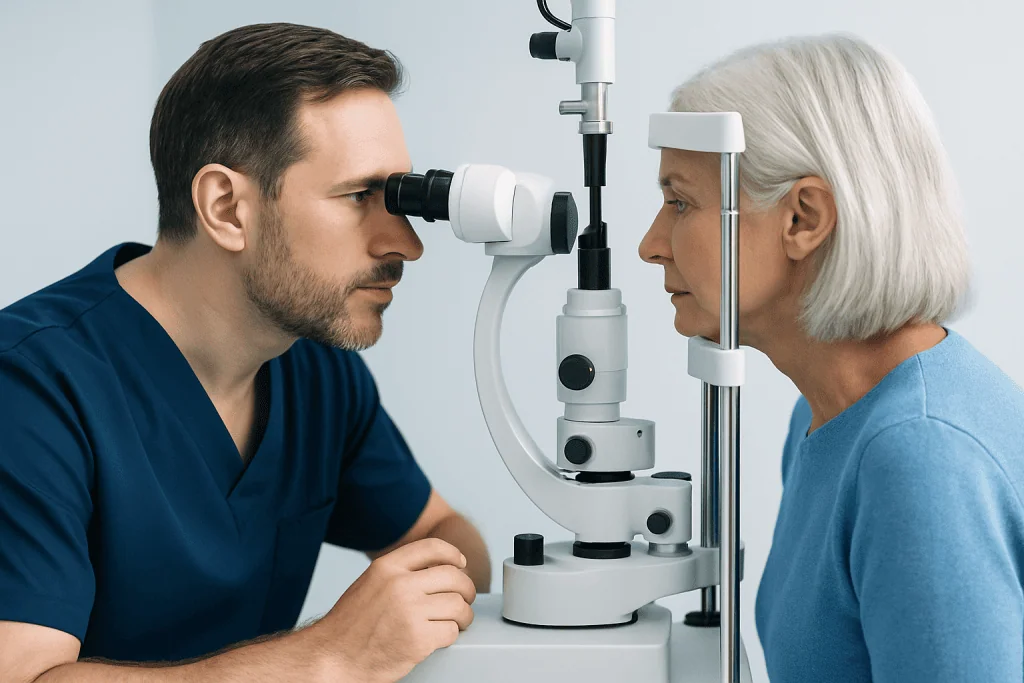
Assessment usually begins with a discussion of visual symptoms, daily activities, medical history, medicines, and family history of eye disease. For cataract, the ophthalmologist examines the lens with a slit lamp and checks how much the clouding affects vision. Cataract treatment guidelines generally support surgery when visual symptoms interfere with daily life or when lens removal is needed to manage another eye problem; a cataract does not need to be removed solely because it is present.
For glaucoma evaluation, clinicians measure intraocular pressure, inspect the drainage angle, examine the optic nerve, assess the cornea, and perform visual field testing. Optical coherence tomography may be used to measure nerve fibre layers around the optic nerve. No single result confirms or excludes glaucoma, so findings are considered together and often tracked over time.
People being considered for cataract surgery should have glaucoma status assessed beforehand. This helps the team plan the procedure, select an appropriate intraocular lens, set a safe follow-up schedule, and decide whether glaucoma drops or another pressure-lowering approach should be adjusted around surgery.
Treatment planning: drops, laser and surgery
Glaucoma treatment commonly starts with pressure-lowering eye drops, although laser treatment or surgery may be recommended first in selected circumstances. Cataract and glaucoma eye drops have different purposes: glaucoma drops lower eye pressure, while cataract cannot be cleared with drops. Cataract treatment is usually observation until symptoms are bothersome, followed by lens-removal surgery when appropriate.
Cataract surgery is typically performed using ultrasound to break up and remove the cloudy lens, followed by placement of a clear artificial intraocular lens. It is usually an outpatient procedure performed with local anaesthesia. The eye is measured in advance to help select the lens, and the surgical team provides individual instructions about medicines, eating or drinking before surgery, and transport home.
For some people, cataract and glaucoma surgery at the same time is appropriate. Combined procedures may include cataract removal plus a minimally invasive glaucoma procedure, a trabeculectomy, or a drainage device, depending on the glaucoma type, target eye pressure, medication burden, and severity of optic nerve damage. The potential advantage is addressing two needs in one operation; however, combined care is not right for every patient and may involve a more complex recovery.
The benefits of cataract surgery include clearer vision and, in some eyes, lower pressure or improved angle anatomy. Risks include infection, inflammation, bleeding, retinal problems, pressure changes, lens-position problems, and the need for further treatment. Glaucoma procedures can lower pressure but may also involve temporary blurred vision, low or high pressure, scarring, infection, or additional surgery. The ophthalmologist will discuss individual benefits and risks before a decision is made.
What is the new glaucoma treatment for 2026?
There is no single “new glaucoma treatment for 2026” that is best for everyone. Glaucoma care continues to develop through improved sustained-release medicines, laser approaches, minimally invasive glaucoma surgeries, drainage implants, imaging, and methods for supporting adherence to treatment. Availability and suitability vary by country, glaucoma type, and individual eye anatomy.
The most important point is that newer does not automatically mean better for every person. An established eye drop, laser procedure, or conventional surgery may be the safest and most effective choice depending on the target pressure and the stage of optic nerve damage. Newer options should be discussed with an ophthalmologist who can compare expected benefits, risks, follow-up needs, and alternatives.
Research into restoring optic nerve tissue is ongoing, but current glaucoma treatment is primarily aimed at preventing or slowing further damage rather than reversing vision that has already been lost. Consistent follow-up remains important regardless of which treatment is chosen.
What is the rule of 5 for glaucoma?
“The rule of 5” is not a universal medical guideline for glaucoma. The phrase may be used informally in different clinics or online discussions, sometimes to refer to reminders about regular monitoring or treatment routines. It should not replace an individual glaucoma plan from an eye specialist.
Follow-up intervals are based on glaucoma type, eye pressure, optic nerve appearance, visual field results, treatment changes, and risk of progression. A person with newly diagnosed or unstable glaucoma may need more frequent review than someone whose condition has remained stable for years.
A practical approach is to use prescribed drops exactly as directed, attend scheduled examinations, report side effects, and ask the clinician to clarify the personal target pressure and testing schedule. This is more useful and reliable than following a general rule found online.
What not to drink with glaucoma?
Most people with glaucoma do not need to avoid ordinary beverages completely. However, drinking a very large volume of fluid in a short time can temporarily raise eye pressure in some people. It is generally sensible to spread fluid intake across the day rather than rapidly drinking a large amount at once, unless another clinician has given different advice for a medical condition.
Caffeine can cause a small, short-lived pressure rise in some individuals, particularly when consumed in large amounts. Moderate intake is often acceptable, but people should ask their ophthalmologist if they have uncontrolled glaucoma, unusually high pressure, or concerns about coffee, energy drinks, or strong tea. Alcohol is not a glaucoma treatment and should not be used for pressure control.
People should not stop prescribed glaucoma drops or replace them with supplements, herbal drinks, or dietary changes. Some products can interact with medications or affect overall health. A pharmacist or doctor can provide individualized advice, especially for people managing diabetes, blood pressure conditions, kidney disease, or other long-term illnesses.
Recovery, self-care and when to seek medical care
After uncomplicated cataract surgery, vision may begin to improve within days, although full stabilization can take several weeks. The eye may feel mildly scratchy, watery, or light-sensitive at first. Patients are commonly given postoperative drops and instructions to avoid rubbing the eye, protect it from injury, and attend follow-up appointments. Those having combined glaucoma surgery may need closer monitoring and a longer or more variable recovery period.
Glaucoma self-care focuses on protecting vision over the long term. This includes taking drops consistently, using correct drop technique, bringing medication lists to appointments, and keeping scheduled tests even when vision feels normal. Healthy lifestyle measures support general wellbeing, but they do not replace medical pressure control.
When to seek medical care: Urgent eye assessment is needed for sudden eye pain, marked redness, sudden blurred vision or vision loss, halos with headache, nausea or vomiting, or significant injury to the eye. After eye surgery, worsening pain, rapidly declining vision, increasing redness, discharge, or flashing lights and a curtain-like shadow should be reported promptly to the surgical team.
Acibadem International’s multidisciplinary ophthalmology specialists at JCI-accredited hospitals assess cataract and glaucoma for international patients and can coordinate individualized surgical and follow-up planning.
Frequently asked questions
Can cataract surgery cure glaucoma?
Cataract surgery does not cure glaucoma or repair optic nerve damage that has already occurred. It may lower eye pressure in some people, especially those with narrow angles, but glaucoma monitoring and treatment may still be needed.
Can glaucoma develop after cataract surgery?
Glaucoma can be diagnosed after cataract surgery, particularly if it was previously early or unrecognized. Some people also experience a temporary pressure rise after surgery, which is why follow-up appointments are important. Persistent pressure problems need assessment by an ophthalmologist.
Can cataract and glaucoma surgery be done at the same time?
Yes, combined surgery can be considered when a person has a visually significant cataract and glaucoma that needs additional pressure control. The most suitable procedure depends on the glaucoma type, severity, eye anatomy, medication use, and target pressure.
Should glaucoma eye drops be used before cataract surgery?
Patients should usually continue or adjust glaucoma drops only according to their ophthalmologist’s instructions. Some medicines may need special timing around surgery, so the surgical team should know about every eye drop, prescription medicine, and supplement being used.
How often should someone with cataract and glaucoma have eye checks?
The schedule is individualized. Cataract reviews depend on visual symptoms and eye health, while glaucoma follow-up is based on pressure, optic nerve tests, visual field results, and whether treatment is stable. The ophthalmologist will recommend an appropriate interval.
Are halos around lights always caused by cataracts?
No. Cataracts can cause glare and halos, particularly at night, but halos can also occur with corneal problems, migraine, medication effects, or a sudden rise in eye pressure. Halos with pain, redness, headache, nausea, or rapid vision change need urgent medical evaluation.
References
- American Academy of Ophthalmology
- National Eye Institute
- Glaucoma Research Foundation
- National Health Service
- World Glaucoma Association
This article is for general information only and is not a substitute for professional medical advice. Please consult a qualified doctor about your individual situation.
Glaucoma in Turkey — costs, top hospitals & a free quote
JCI-accredited · board-certified surgeons · reply within 24h

Ophthalmology
Comprehensive eye care from laser vision correction to retina, cornea and cataract surgery.
75 specialists in this unitMore from the Health Library


Related Specialists

Fzt. Nursena Altınkaya
Physical Medicine and Rehabilitation
Prof. Dr. Tayfun Karahasanoğlu
General Surgery
Prof. Dr. Beril Akman
Internal Medicine
Dr. Sema Tekin Koşargelir
Cosmetic Dermatology