Troy Al Treatment for Melanoma Skin Cancer: How It Works, Results and What to Expect

“Troy AL” is not a standard medical term for a guideline-supported melanoma treatment. Surgery is often the main treatment for early melanoma and may be curative when the cancer is localized.
Key Takeaways
- “Troy AL” is not a standard medical term for a guideline-supported melanoma treatment.
- Surgery is often the main treatment for early melanoma and may be curative when the cancer is localized.
- Advanced melanoma may be treated with immunotherapy, targeted medicines for certain gene changes, surgery, radiation or a combination of approaches.
- The speed at which melanoma progresses varies greatly and cannot be reliably predicted from a single timeline.
- A new, changing or non-healing pigmented skin lesion should be assessed promptly by a qualified clinician.
Troy AL treatment for melanoma skin cancer is not a recognised name for an evidence-based melanoma treatment in major clinical guidelines. Melanoma care is selected according to the cancer’s stage, genetic features, location and a person’s overall health, with surgery, immunotherapy, targeted therapy, radiation therapy and clinical trials among the established options.
Overview: What Is Troy AL Treatment for Melanoma Skin Cancer?
Troy AL treatment for melanoma skin cancer is not a recognised treatment name in major melanoma guidelines or standard oncology terminology. People may encounter unfamiliar treatment names online, in informal discussions or through misspellings, but it is important to verify any proposed therapy with a dermatologist or cancer specialist before making care decisions.
Melanoma is a cancer that begins in melanocytes, the cells that produce skin pigment. It can occur in existing moles or develop as a new spot on the skin, and it can also arise in less common sites such as the eye, nail bed or mucosal surfaces. Early diagnosis matters because localized melanoma can often be removed with surgery.
Evidence-based treatment is individualized after careful staging. The care team considers the thickness and ulceration of the original tumour, whether lymph nodes are involved, whether melanoma has spread elsewhere, molecular test results and the patient’s general health. For a broader explanation of the condition, see melanoma skin cancer.
How Established Melanoma Treatments Work
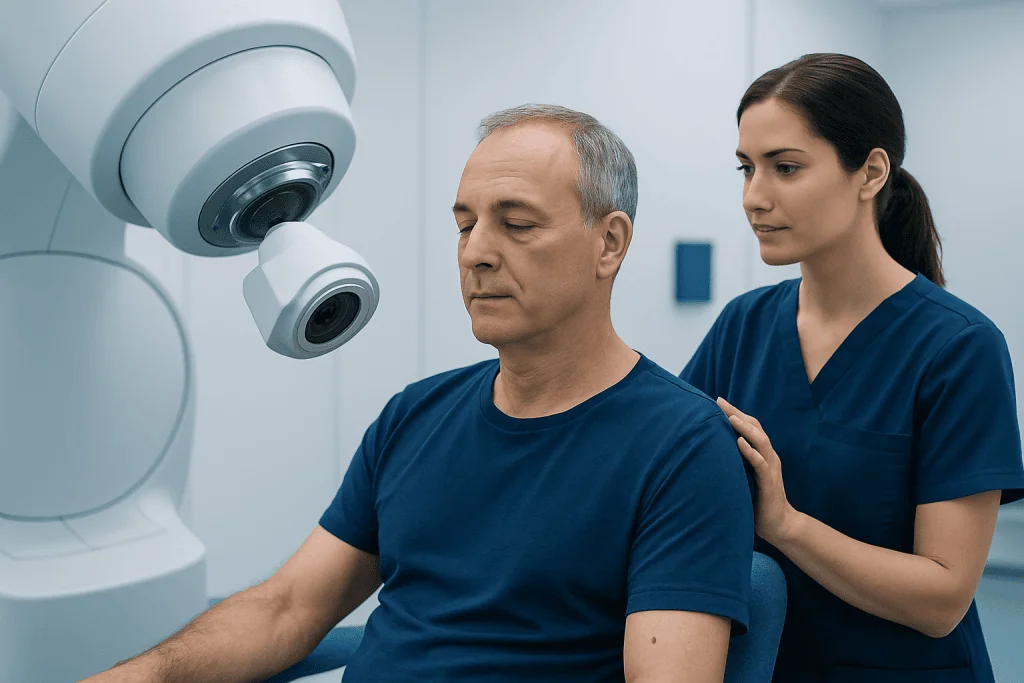
For most early melanomas, the first treatment is wide local excision. During this operation, the surgeon removes the melanoma and a margin of normal-appearing skin around it to reduce the chance that cancer cells remain. Depending on the melanoma’s depth and features, a sentinel lymph node biopsy may be recommended to check the first lymph nodes likely to receive drainage from the tumour area.
Immunotherapy helps the immune system recognize and attack cancer cells. Checkpoint inhibitor medicines are commonly used for higher-risk melanoma after surgery and for melanoma that cannot be fully removed or has spread. They can produce durable responses for some patients, but they may also cause inflammation in healthy organs and require close monitoring.
Targeted therapy is used when testing finds an actionable gene change, most commonly a BRAF mutation in cutaneous melanoma. These medicines block signals that help cancer cells grow. Chemotherapy is less commonly used than it was in the past, while radiation therapy may be appropriate in selected situations, such as symptom relief or treatment of particular metastatic sites.
Planning may involve dermatology, surgical oncology, medical oncology, pathology, radiology and radiation oncology. Immunotherapy for cancer and targeted therapy are assessed in the context of the individual tumour and treatment goals.
Who May Be a Candidate for Each Treatment?
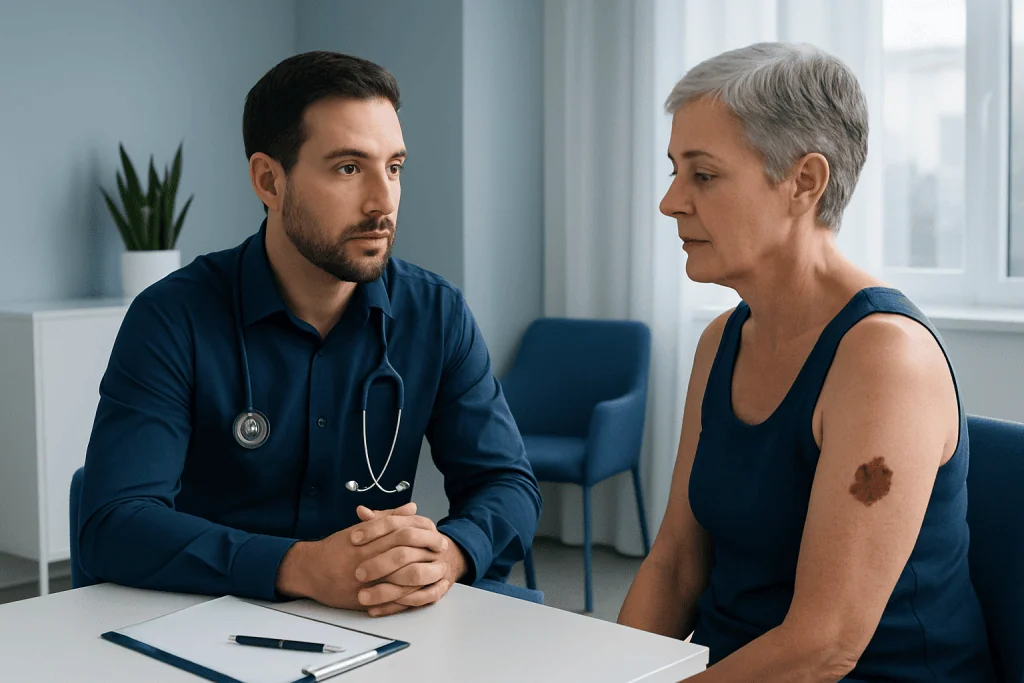
People with a thin, localized melanoma are often candidates for surgery alone. The pathology report helps determine whether further testing or treatment is needed. Features such as greater tumour thickness, ulceration, involved lymph nodes or spread beyond the original skin site can increase the likelihood that additional treatment will be discussed.
Immunotherapy may be considered after surgery for some higher-risk stage II or stage III melanomas, as well as for stage IV melanoma or disease that cannot be removed surgically. Suitability depends on medical history, organ function, autoimmune conditions, prior therapies and the potential balance of benefit and side effects.
Targeted therapy is only appropriate when molecular testing identifies a gene alteration that the medicine is designed to target. A BRAF mutation test is commonly performed in advanced melanoma and may also be useful in some high-risk resected cases. Not every melanoma has a targetable change, and a positive result does not mean targeted therapy is always the preferred first option.
Clinical trials can be an appropriate option for eligible patients at different stages of melanoma. A specialist can explain whether a trial is available, what it involves and how it compares with standard care.
What to Expect: Diagnosis, Treatment Steps and Recovery
Assessment usually begins with a skin examination and biopsy. A dermatologist or surgeon removes part or all of the suspicious lesion and sends it to a pathology laboratory. The report identifies whether melanoma is present and describes features that guide staging, including tumour thickness, ulceration and the rate of cell division in some settings.
When indicated, staging may include a sentinel lymph node biopsy, ultrasound, CT, PET-CT or MRI. Imaging is not routinely needed for every early melanoma, but it can help clarify whether cancer has spread in people with higher-risk disease or symptoms that need investigation.
For a simple excision, the procedure is often performed with local anaesthetic. The wound may be closed with stitches, and recovery commonly involves keeping the area clean, protecting it from friction and attending follow-up for wound review or stitch removal. The location and size of the excision influence healing time and whether a skin graft or reconstructive procedure is needed.
Systemic treatments are delivered in cycles over time, with scheduled blood tests, examinations and imaging as appropriate. Patients should report new symptoms promptly, particularly diarrhoea, persistent cough, shortness of breath, severe fatigue, rash, yellowing of the skin or eyes, visual changes, headaches or unusual weakness. These symptoms can have many causes but may need urgent assessment during immunotherapy or targeted treatment.
Benefits, Risks and Follow-Up Care
The principal benefit of treatment is to remove, control or slow melanoma while preserving quality of life as much as possible. Surgery can be curative for many localized melanomas. For advanced melanoma, modern systemic therapies have improved treatment options, although responses differ among individuals and no approach can promise a particular outcome.
Surgical risks include bleeding, infection, pain, scarring, delayed wound healing and altered sensation around the scar. Sentinel lymph node surgery can occasionally lead to fluid collection, nerve irritation or lymphoedema. The clinical team explains the expected risks for the specific body area and procedure.
Immunotherapy can cause immune-related side effects because the immune system may inflame normal tissues. Targeted therapy can also cause side effects, including fever, fatigue, skin changes and effects on organs that need monitoring. Early reporting allows the oncology team to investigate symptoms and provide supportive care, pause treatment or use other measures when necessary.
Follow-up visits are important after any melanoma diagnosis. They may include skin examinations, lymph node checks, review of symptoms and imaging for selected patients. Regular self-examination and sun protection complement, but do not replace, professional follow-up.
How Long Does It Take for Melanoma to Go From Stage 1 to 4?
There is no reliable fixed timeline for melanoma to progress from stage 1 to stage 4. Some melanomas grow slowly over years, while others can grow or spread more quickly. The behaviour depends on the melanoma subtype, thickness, ulceration, genetic characteristics, immune response and whether cancer cells have already entered lymphatic channels or the bloodstream.
Staging is a description of what is known at diagnosis, not a clock that predicts exactly when progression will occur. A stage I melanoma found and treated promptly may never progress. Conversely, a melanoma that appears small on the surface can occasionally already have features that require more detailed assessment.
For this reason, a changing mole or new suspicious lesion should not be watched indefinitely at home. Prompt clinical assessment and biopsy, when appropriate, provide the clearest answer about what the lesion is and what care is needed.
What Is the 2 Week Rule for Melanoma?
The “2 week rule” is not a universal melanoma rule or a substitute for medical diagnosis. In some healthcare systems, it refers to an urgent referral pathway intended to help people with suspected cancer be assessed quickly, often within about two weeks. Local referral systems and waiting-time targets vary by country and healthcare provider.
For patients, the practical message is to seek medical evaluation promptly for a concerning skin change. Warning signs include a mole that changes in size, shape or colour; an irregular border; several colours; a lesion that bleeds, crusts, itches or hurts; or a spot that looks noticeably different from the person’s other moles.
The ABCDE guide can support skin awareness: asymmetry, border irregularity, colour variation, diameter that is increasing, and evolution or change. It does not identify every melanoma, so any persistent concern deserves professional review even if a lesion does not match every ABCDE feature.
What Is the Most Effective Treatment for Melanoma Skin Cancer?
The most effective treatment depends on the stage and biology of the melanoma. For early, localized melanoma, complete surgical removal with an appropriate margin is generally the most important treatment and may be curative. A sentinel lymph node biopsy may add staging information and guide further care for certain patients.
For melanoma that is high risk after surgery, has reached lymph nodes, cannot be removed completely or has spread to distant organs, immunotherapy is a central treatment option. Targeted therapy can be highly effective for people whose tumours carry certain mutations, particularly BRAF mutations. Some people benefit from combinations of treatments, while others may need a sequential approach.
There is no single treatment that is best for every person. Review by a multidisciplinary melanoma team helps ensure that pathology findings, imaging, molecular testing, possible surgery and systemic treatment options are considered together. Cancer care and oncology treatment can coordinate these decisions across the relevant specialties.
How Long Do You Live With Melanoma Skin Cancer?
Life expectancy with melanoma varies widely, so no individual prediction can be made from the diagnosis name alone. Many people with melanoma that is detected early and completely removed live normal lifespans. Outcomes are influenced by stage at diagnosis, tumour characteristics, response to treatment, overall health and ongoing follow-up.
Melanoma that has spread requires specialist care, but treatment options have expanded significantly. Some people experience long-lasting disease control with immunotherapy or targeted therapy. Others may need different treatments over time, and supportive care remains an important part of maintaining comfort and quality of life at every stage.
A treating oncology team is best placed to discuss prognosis because it has access to the pathology report, scan results, treatment response and full medical history. Patients may find it helpful to bring a family member or prepare questions before consultations so information can be reviewed clearly.
When to Seek Medical Care
A person should arrange a medical assessment promptly for a new or changing mole, a dark spot that looks different from other marks, a lesion that repeatedly bleeds or crusts, or a sore that does not heal. People with a personal or strong family history of melanoma, many moles, past intense ultraviolet exposure or a weakened immune system may benefit from discussing regular skin checks with a clinician.
Urgent medical advice is appropriate for new neurological symptoms, persistent unexplained breathlessness, severe or persistent pain, jaundice, or other significant new symptoms in someone with a history of melanoma. These symptoms are often caused by conditions other than melanoma, but should be evaluated rather than assumed to be harmless.
Sun protection can reduce future skin cancer risk: seek shade when practical, wear protective clothing and broad-brimmed hats, use broad-spectrum sunscreen as directed, and avoid indoor tanning devices. Acibadem International’s multidisciplinary specialists and JCI-accredited hospitals diagnose and treat melanoma for international patients, with care planned around each person’s clinical needs.
Frequently asked questions
Is Troy AL treatment an approved treatment for melanoma skin cancer?
Troy AL is not a recognized standard name for a melanoma treatment in major clinical guidelines. Anyone offered a treatment under an unfamiliar name should ask for its generic name, evidence of benefit, possible risks and whether it is approved or recommended for their type and stage of melanoma.
Can melanoma be cured?
Many early melanomas can be cured with complete surgical removal. For melanoma that has spread, treatment may control the disease for long periods in some people, but the outlook varies and should be discussed with the treating oncology team.
Does every melanoma need lymph node surgery?
No. Sentinel lymph node biopsy is considered based on the melanoma’s thickness, ulceration and other pathology features. Very thin melanomas often do not require it, while thicker or higher-risk melanomas may warrant discussion of the procedure.
What tests are used to diagnose melanoma?
A biopsy is the main test used to diagnose melanoma. If melanoma is confirmed, the pathology report guides staging, and selected patients may need lymph node assessment, molecular testing or imaging studies.
Can melanoma return after surgery?
Melanoma can recur after treatment, particularly when the original cancer had higher-risk features. Follow-up appointments, skin self-examinations and reporting new symptoms promptly can help detect a recurrence or a new skin cancer early.
Should a changing mole be removed without a biopsy?
A clinician should first assess the lesion and decide on the most appropriate biopsy method. Removing a suspicious lesion in a way that allows accurate pathology evaluation is important for diagnosis and planning any further treatment.
References
- National Cancer Institute
- American Cancer Society
- European Society for Medical Oncology
- American Academy of Dermatology
- World Health Organization
This article is for general information only and is not a substitute for professional medical advice. Please consult a qualified doctor about your individual situation.
Melanoma Skin Cancer in Turkey — costs, top hospitals & a free quote
JCI-accredited · board-certified surgeons · reply within 24h

Hematology Department
17 specialists in this unitMore from the Health Library


Related Specialists

Dr. Tuğçe Baykara
Gynecology & Obstetrics
Dr. Ayşe Gökçe Çiçek Çimen
Internal Medicine
Prof. Dr. İbrahim Tuncay
Orthopedic Surgery & Traumatology
Prof. Dr. Uğur Işık
Pediatric Neurology